Blood On The Tracks – First recording session

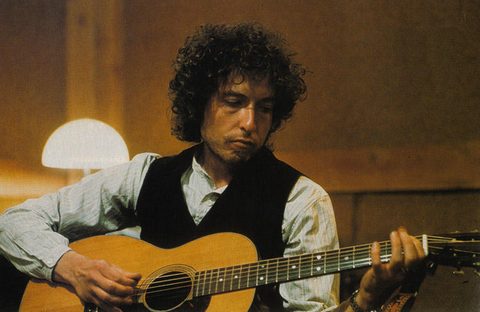
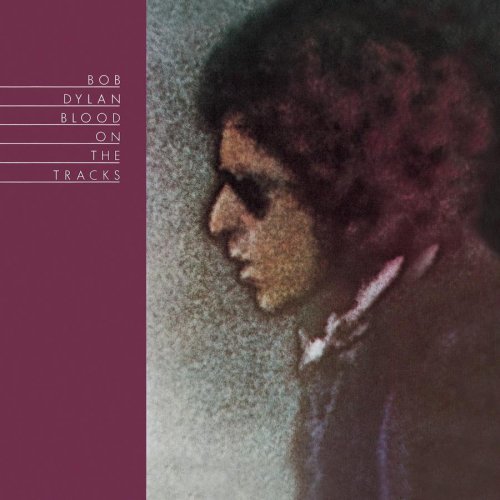
Bob Dylan started recording Blood On The Tracks September 16, 1974.
The event needs to be acknowledged.

Here are some quotes, facts & music….

When Dylan began work at A&R one Monday afternoon in September he seemed unusually keen to get on with the recording process. The songs themselves were no more than 2 months old, and he was still excited by the new approach to language he had uncovere.
Even behind closed studio doors he was determined to get the songs out of his system as quickly, and with as much impact, as possible
~Clinton Heylin (The Recording Sessions)

From Wikipedia:

Dylan arrived at Columbia Records’ A&R Recording Studios in New York City on September 16, 1974, where it was soon realized that he was taking a “spontaneous” approach to recording. The session engineer at the time, Phil Ramone, later said that he would “go from one song to another like a medley. Sometimes he will have several bars, and in the next version, he will change his mind about how many bars there should be in between a verse. Or eliminate a verse. Or add a chorus when you don’t expect”. Eric Weissberg and his band, Deliverance, originally recruited as session men, were rejected after two days of recording because they could not keep up with Dylan’s pace. Dylan retained bassist Tony Brown from the band, and soon added organist Paul Griffin (who had also worked on Highway 61 Revisited) and steel guitarist Buddy Cage. After ten days and four sessions with the current lineup, Dylan had finished recording and mixing, and, by November, had cut a test pressing on the album. Columbia soon began to prepare for the album’s imminent release, but, three months later, just before the scheduled launch, Dylan re-recorded several songs at the last minute, in Minneapolis’ Sound 80 Studios, utilizing local musicians organized by his brother, David Zimmerman. Even with this setback, Columbia managed to release Blood on the Tracks by January 17, 1975.

Albums involved:

ALBUM Release date CODE
Blood On The Tracks 1975-01-17 BOTT
The Bootleg Series Volumes 1–3
(Rare & Unreleased) 1961-1991
1991-03-26 TBS1-3
Blood On The Tracks – Test pressing  Nov 74  BOTT-TP


Studio A, A & R Recording, New York City, New York
September 16, 1974, 6 pm-midnight.

Produced by Bob Dylan
Engineers: Phil Ramone & Glenn Berger (“Phil & Lenn”)

  1. If You See Her, Say Hello
  2. If You See Her, Say Hello – TBS1-3

    I once read a book of Nathaniel Hawthorne’s letters to some girl, and they were extremely private and personal, and I didn’t feel there was any of myself in those letters, but I could identify with what he was saying. A lot of myself crosses over into my songs. I’ll write something and say to myself, I can change this, I can make this not so personal, and at other times I’ll say, I think I’ll leave this on a personal level, and if somebody wants to peek at it and make up their own minds about what kind of character I am, that’s up to them. Other times I might say, well, it’s too personal, I think I’ll turn the corner on it, because why do I want somebody thinking about what I’m thinking about, especially if it’s not to their benefit.
    ~Bob Dylan to Scott Choen (SPIN), 1985

  3. You’re A Big Girl Now
  4. You’re A Big Girl Now
  5. Simple Twist Of Fate
  6. Simple Twist Of Fate
  7. You’re A Big Girl Now
  8. Up To Me
  9. Lily, Rosemary And The Jack Of Hearts – BOTT-TP

    The one challenge left now was to see if he could record this epic fifteen-verse narrative with a similar minimum of fuss. Which it appears he did. And again it came first. On day one of the sessions at the old Studio A in New York (now known as A&R Studios) – before the band called up to lend a hand had even arrived – Dylan had cut the song in a single take, making it the first song to be assigned to the album. Nor did he feel throughout the New York sessions the slightest need to return to the song.
    ~Clinton Heylin (Still On The Road)

  10. Simple Twist Of Fate
  11. Simple Twist Of Fate
  12. Simple Twist Of Fate
  13. Call Letter Blues
  14. Meet Me In The Morning – BOTT & BOTT-TP
  15. Call Letter Blues – TBS1-3
    The one song cut on the sixteenth with the sound of deliverance was one of those prototypical blues tunes Dylan had been playing at the afternoon session. “Call Letter Blues” , when released on “The Bootleg Series”, took most fans by surprise.  Rather than being a previously unknown song in it’s own right, it was in fact “Meet Me In The Morning” with an alternate set of lyrics.
    ~Clinton Heylin (The Recording Sessions) 

  16. Idiot Wind
  17. Idiot Wind
  18. Idiot Wind
  19. Idiot Wind
  20. Idiot Wind
  21. Idiot Wind – BOOT-TP (overdubbed version)
    If you’ve heard both versions [of ‘Idiot Wind’], you realize, of course, that there could be a myriad of verses for the thing. It doesn’t stop… Where do you end?… It’s something that could be a work continually in progress.
    ~Bob Dylan to Paul Zollo, 1991
  22. You’re Gonna Make Me Lonesome When You Go
  23. You’re Gonna Make Me Lonesome When You Go
  24. You’re Gonna Make Me Lonesome When You Go
  25. You’re Gonna Make Me Lonesome When You Go
  26. You’re Gonna Make Me Lonesome When You Go
  27. You’re Gonna Make Me Lonesome When You Go
  28. You’re Gonna Make Me Lonesome When You Go
  29. You’re Gonna Make Me Lonesome When You Go
  30. Tangled Up In Blue – TBS1-3
    This version suggest he quickly abandoned any idea of putting a band behind the song/s. A second guitar (Weissberg’s?) picks out the parts of the melody Dylan’s scratchy rhythm has left unsaid, while Tony Brown’s bass underpins the clack-clack of the singer’s jacket-buttons. But something ain’t right. Weissberg recalled how ‘Bob  … seemed a bit ill at ease in the studio, as though he wanted to get it over with.’ Having hurried through the song, he knew he’d have to return to it.
    ~Clinton Heylin (Still On The Road) 

Musicians:

  • Bob Dylan (guitar, vocal)
  • Charles Brown III (guitar)
  • Barry Kornfeld (guitar)
  • Eric Weissberg (guitar)
  • Thomas McFaul (keyboards)
  • Tony Brown (bass)
  • Richard Crooks (drums).

Related posts on JV:

References:

-Egil

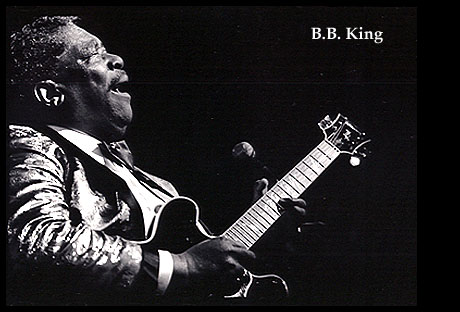
Today: B.B. King is 87

From Wikipedia:

Birth name Riley King
Also known as B.B. King

King of the Blues

Born September 16, 1925 (age 87)
Origin Itta Bena, Mississippi, United States
Genres Blues, soul blues, jazz, blues rock, electric blues, rhythm and blues, soul
Occupations Musician, songwriter, producer
Instruments Vocals, guitar, piano
Years active 1949–present
Labels Geffen/Interscope/Universal,Bullet Records, RPM Records,Crown, ABC, MCA,Reprise/Warner Bros.,Virgin/EMI
Associated acts Bobby BlandEric Clapton,PappoBig Krit


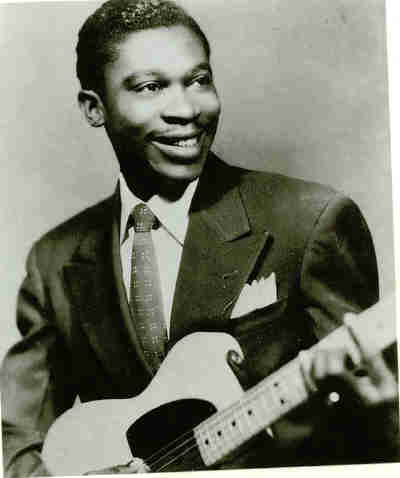
Riley B. King (born September 16, 1925), known by the stage name B.B. King, is an American songwriter, vocalist, and famed blues guitarist.

Rolling Stone magazine ranked him at No. 6 on its list of the 100 greatest guitarists of all time. and No. 17 in Gibson’s Top 50 Guitarists of All Time. According to Edward M. Komara, King “introduced a sophisticated style of soloing based on fluid string bending and shimmering vibrato that would influence virtually every electric blues guitarist that followed.” King was inducted into the Rock and Roll Hall of Fame in 1987. He is widely considered one of the most influential blues musicians of all time, because of this he is often nicknamed ‘The King of Blues’. He is also known for performing tirelessly throughout his musical career appearing at 250-300 concerts per year until his seventies. In 1956 it was noted that he appeared at 342 shows, still at the age of 86 King appears at 100 shows a year.

Over a period of 63 years, King has played in excess of 15,000 performances.

The Thrill Is Gone (Live at Montreux 1993):

Everyday I have the Blues:

How Blue Can You Get (Legends of Rock ‘n’ Roll):

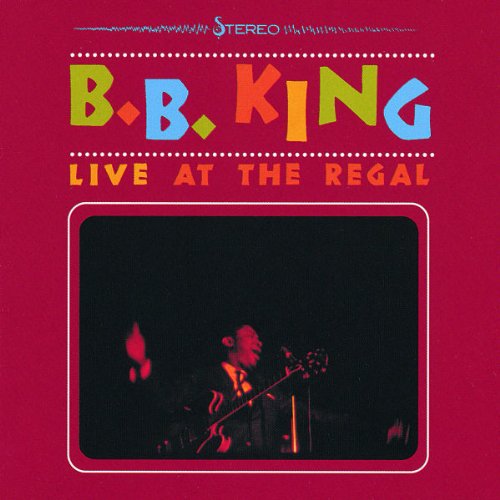
Album of the day – Live At The Regal (1965):


Other September 16:

Continue reading Today: B.B. King is 87

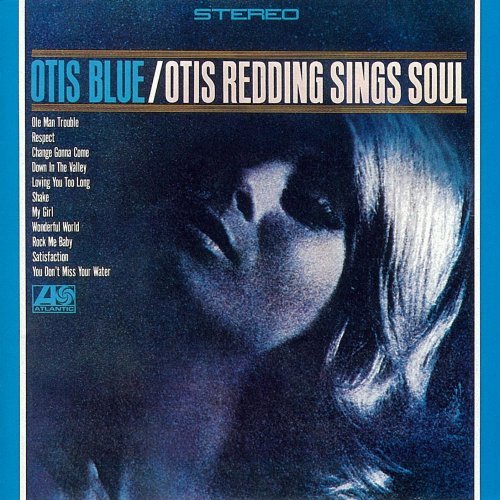
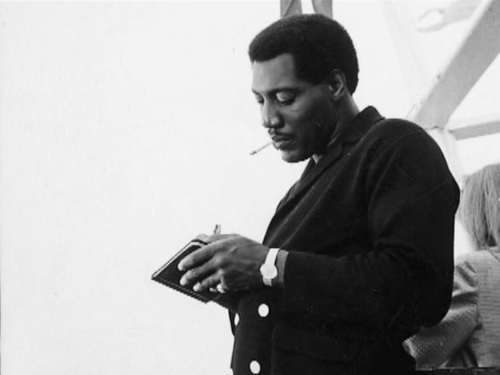
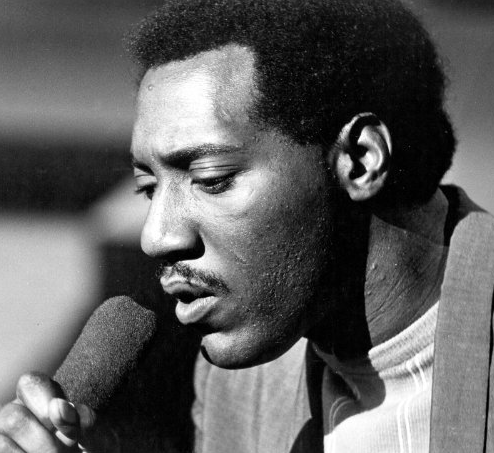
Otis Blue: Otis Redding Sings Soul


From Wikipedia:

Released September 15, 1965
Recorded April 19 and July 9–10, 1965
Stax Recording Studios
(Memphis, Tennessee)
Genre Soul, R&B
Length 32:22
Label Volt/Atco
Volt 412
Producer Jim StewartIsaac HayesDavid Porter

Otis Blue: Otis Redding Sings Soul, or simply Otis Blue, is the third studio album by soul singer Otis Redding, released September 15, 1965 on Stax Records. “I’ve Been Loving You Too Long” was originally recorded and released as a mono single in April 1965 whilst the rest of Otis Blue was recorded in a 24-hour period over July 9/10, and mainly features cover songs by popular R&B and soul artists. Two other original songs, “Ole Man Trouble” and “Respect”, were written during the sessions in the Stax Recording Studios in Memphis, Tennessee.

Otis Blue was critically acclaimed upon release and became Redding’s most successful studio album to date, peaking at number 6 on the UK Albums Chart, and his first to reach the top spot of the Billboard R&B chart. Furthermore, it produced three popular singles, all charting at least in the top 50 on both the Billboard R&B and the Billboard Hot 100 chart. It is considered by many critics to be Redding’s first fully realized album.

Recording:

After Otis Redding‘s appearance in a session with guitarist Johnny Jenkins, producer and co-founder of Stax RecordsJim Stewart. was so deeply affected by Redding’s rendition of “These Arms of Mine” that he signed him immediately. Following the moderately successful Pain in My Heart and The Great Otis Redding Sings Soul Ballads, both of which performed well in the newly-established Billboard R&B LP chart but not in the Billboard 200, preparations for the third studio album followed soon after. The album would be Redding’s third studio album and second on Stax’s sister label Volt.

Redding recorded the album with the Stax’s house band Booker T. & the M.G.’s—guitarist Steve Cropper, bassist Donald “Duck” Dunn, drummer Al Jackson Jr.—pianist Isaac Hayes and a horn section consisting of members of the Mar-Keys and the Memphis Horns. The album was recorded in two sessions, lasting from July 9 to 10, between Saturday 10 pm and Sunday 2 am,  as the backing band had to omit several gigs. The album opens with “Ole Man Trouble”, which was finished on the sessions earlier than other songs, and was later released as a B-side of “Respect“. 

The fifth track, “I’ve Been Loving You Too Long“, was the only one not recorded during the 24-hour session. It was, together with “Respect”, recut in stereo during the Otis Blue-session, with the remarkable change that on the latter song the line “hey hey hey” was sung by Earl Sims and not by Redding, while the first song was completely rewritten. “I’ve Been Loving You Too Long” was released with B-side “I’m Depending on You” and became a number-two hit on Billboard‘s R&B chart.

Critical Response:

  • Otis Blue has been regarded by music critics as the Redding’s best work. Bruce Eder of Allmusic wrote that “Redding’s powerful, remarkable singing throughout makes Otis Blue gritty, rich, and achingly alive, and an essential listening experience.” He also felt the album “presents his talent unfettered, his direction clear, and his confidence emboldened.”
  • Angus Taylor of BBC Music viewed that it stands “at the crossroads of pop, rock, gospel, blues and soul”, and asserted that the album contains “a set of short, punchy covers and originals, flawlessly ordered to ebb and flow between stirring balladry and foot stomping exuberance”. He dubbed the album “[Redding’s] definitive statement.”
  • Blender music critic Robert Christgau called Otis Blue “the first great album by one of soul’s few reliable long-form artists” and gave its 2004 collector’s edition four out of five stars, which he said “comes with many useless alternate takes, but also with live tracks that preserve for history Redding’s country-goes-uptown style of fun”.
  • Nate Patrin of Pitchfork Media cited the album as “[the] 1960s’ greatest studio-recorded soul LP”, and furthermore stated, “[the album is] a hell of a record, the crowning achievement of a man who could sound pained and celebratory and tender and gritty and proud all at once, with a voice that everyone from John Fogerty to Swamp Dogg to Cee-lo owes a debt to.”
  •  Claudrena N. Harold of PopMatters also praised the diverse sound, which, according to her, is a mixture of “Motown pop, the blues, British rock, and Southern Soul”, although she cited Complete & Unbelievable: The Otis Redding Dictionary of Soul as Redding’s best album.
  • Rolling Stone described the album as “Redding’s true dictionary of soul, a stunning journey through the past and future vocabulary of R&B … documenting a masterful artist rising to … the immense challenge of his times.
  • In The New Rolling Stone Album Guide (2004), Rolling Stone journalist Paul Evans gave Otis Blue five out of five stars and cited the album as Redding’s “first masterwork”.

  • NME ranked it 35 on their list of the “Greatest Albums of All Time”.
  • The album was also ranked 74 on the Rolling Stone magazine’s 500 Greatest Albums of All Time list
  • 92 on Time magazine’s list of the All-Time 100 Greatest Albums
  • included in Q magazine’s Best Soul Albums of All Time list.
  • The album appeared in “1001 Albums You Must Hear Before You Die”

Track listing

  1. “Ole Man Trouble” Otis Redding
  2. “Respect” Redding
  3. “Change Gonna Come” Sam Cooke
  4. “Down in the Valley” Bert Berns, Solomon Burke, Babe Chivian, Joe Martin
  5. “I’ve Been Loving You Too Long” Redding, Jerry Butler
  6.  “Shake” Cooke
  7. “My Girl” Smokey Robinson, Ronald White
  8. “Wonderful World” Cooke, Lou Adler, Herb Alpert
  9. “Rock Me Baby” B. B. King
  10. “Satisfaction” Mick Jagger, Keith Richards
  11. “You Don’t Miss Your Water” William Bell

Musicians

I’ve Been Loving You Too Long (Monterey ’67):

Respect:

Satisfaction:

Album:

Also check out this one:  The Best Songs – ” Rock Me Baby”

-Egil

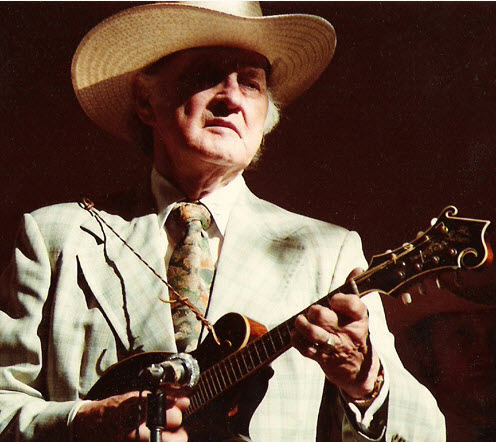
Today: The late Bill Monroe was born in 1911 – 101 years ago

I’m a farmer with a mandolin and a high tenor voice.
~Bill Monroe

From Wikipedia:

Birth name William Smith Monroe
Also known as Bill Monroe
Born September 13, 1911
Origin Rosine, Kentucky, USA
Died September 9, 1996 (aged 84)
Genres Bluegrass, Bluegrass gospel
Occupations Bluegrass artist
Instruments Mandolin
Years active 1930s–1996

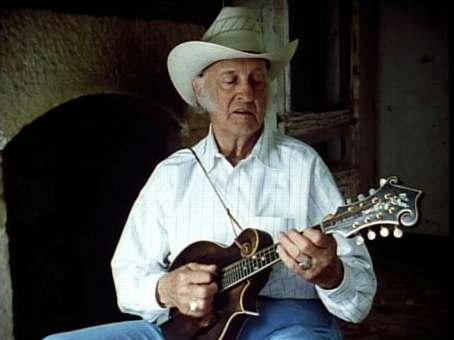
William Smith Monroe (September 13, 1911 – September 9, 1996) was an American musician who created the style of music known as bluegrass, which takes its name from his band, the “Blue Grass Boys,” named for Monroe’s home state of Kentucky. Monroe’s performing career spanned 60 years as a singer, instrumentalist, composer and bandleader. He is often referred to as The Father of Bluegrass.

From allmusic.com – Stephen Thomas Erlewine:

Bill Monroe is the father of bluegrass. He invented the style, invented the name, and for the great majority of the 20th century, embodied the art form. Beginning with his Blue Grass Boys in the ’40s, Monroe defined a hard-edged style of country that emphasized instrumental virtuosity, close vocal harmonies, and a fast, driving tempo. The musical genre took its name from the Blue Grass Boys, and Monroe‘s music forever has defined the sound of classical bluegrass — a five-piece acoustic string band, playing precisely and rapidly, switching solos and singing in a plaintive, high lonesome voice. Not only did he invent the very sound of the music, Monroe was the mentor for several generations of musicians. Over the years, Monroe‘s band hosted all of the major bluegrass artists of the ’50s and ’60s, including Flatt & ScruggsReno & SmileyVassar ClementsCarter Stanley, and Mac Wiseman. Though the lineup of the Blue Grass Boys changed over the years, Monroe always remained devoted to bluegrass in its purest form.
Read more @ allmusic 

Awards & Legacy:

  • made an honorary Kentucky colonel in 1966
  • inducted into the Country Music Hall of Fame in 1970
  • inducted into the Nashville Songwriters Hall of Fame in 1971
  • inducted into the Rock and Roll Hall of Fame (as an “early influence”) in 1997
    (Jimmie RodgersBob WillsHank Williams Sr., and Johnny Cash are the only other performers honored in all three)
  • As the “father of bluegrass,” he was also an inaugural inductee into the International Bluegrass Music Hall of Honor in 1991.
  • In 1993, he received the Grammy Lifetime Achievement Award
  • he was awarded the National Medal of Arts in 1995
  • His well-known song “Blue Moon of Kentucky” has been covered not only by bluegrass but also rock and country artists, most notably Elvis Presley, Paul McCartney, and Patsy Cline.
  • In 2003, CMT had Bill Monroe ranked No. 16 on CMT 40 Greatest Men of Country Music.

Artists that claimed to be influenced by or to be playing the bluegrass genre were often bullied by Bill Monroe. He always considered himself the father and caretaker of bluegrass. He would often say of new bands that did not perform to his standards, “That ain’t no part of nothin’.” Even those who question the scope of bluegrass refer to Monroe as a “musical giant” and recognize that “there would be no bluegrass without Bill Monroe.”

“Uncle Pen” from 1956 at the Ryman Auditorium:

“Blue Moon of Kentucky” – live:

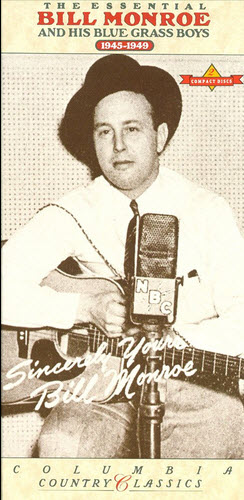
Album of the day: The Essential Bill Monroe and His Blue Grass Boys (1945-1949) (1992):

Other September 13:

Continue reading Today: The late Bill Monroe was born in 1911 – 101 years ago

The birthday boy’s 5 best songs (George Jones that is)

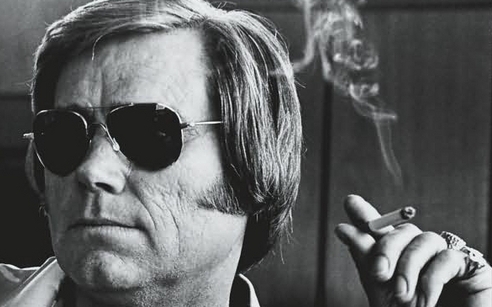
George Glenn Jones (born September 12, 1931) is an American country music singer known for his long list of hit records, his distinctive voice and phrasing, and his marriage to Tammy Wynette.

Over the past 20 years, Jones has frequently been referred to as “the greatest living country singer.”

 Country music scholar Bill C. Malone writes,

“For the two or three minutes consumed by a song, Jones immerses himself so completely in its lyrics, and in the mood it conveys, that the listener can scarcely avoid becoming similarly involved.”

Throughout his long career, Jones made headlines often as much for tales of his drinking, stormy relationships with women, and violent rages as for his prolific career of making records and touring.

His wild lifestyle led to Jones missing many performances, earning him the nickname “No Show Jones.” With the help of his fourth wife, Nancy, he has been sober for over 10 years. Jones has had more than 150 hits during his career, both as a solo artist and in duets with other artists.

The shape of his nose and facial features have given Jones the nickname “The Possum.” Jones said in an interview that he has chosen to tour only about 60 dates a year.

He has the greatest voice in country music, and he is so goddam cool!

These are the 5 best songs by George Jones:

5.  If drinking don’t kill me (her memory will) audio:

Continue reading The birthday boy’s 5 best songs (George Jones that is)