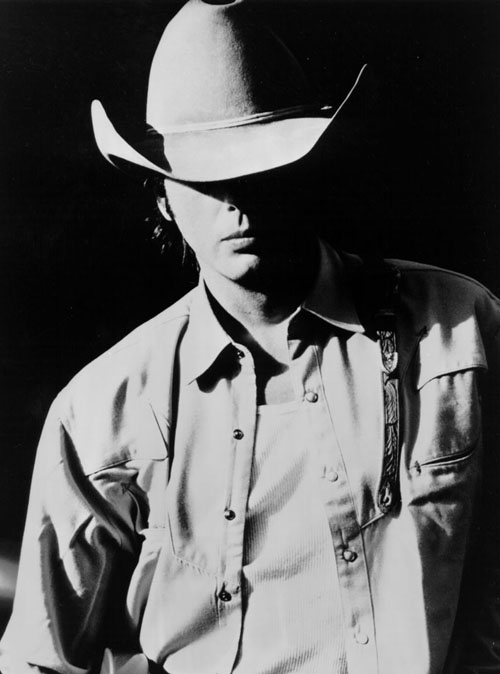
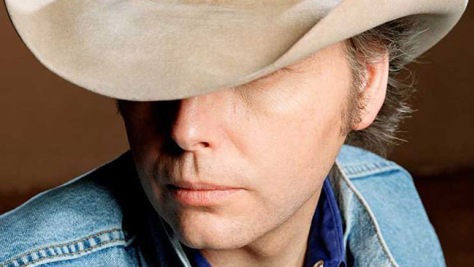
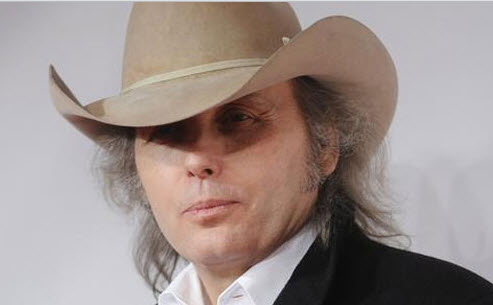
I’ve liked Dwight Yoakam since the late eighties. There was a music magazine here in Norway, Beat, that really championed those new country artists and I was smitten. His first two records really got worn out at my student home in Bergen.
Today I am going to list his 10 best videos (you know he came up at the same time as MTV and he’s always had great music videos). This is my own list and it is not discussed with Egil (the other half of JV) before putting it out here.
1. Guitars, Cadillacs:
2. Streets of Bakersfield (with Buck Owens):
Dwight Yoakam to the magazine Country Guitar in 1994:
‘Bakersfield’ really is not exclusively limited to the town itself but encompasses the larger California country sound of the Forties, Fifties and on into the Sixties, and even the Seventies, with the music of Emmylou Harris, Gram Parsons, the Burrito Brothers and the Eagles — they are all an extension of the ‘Bakersfield Sound’ and a byproduct of it. I’ve got a poster of Buck Owens performing at the Fillmore West in 1968 in Haight Asbury! What went on there led to there being a musical incarnation called country rock. I don’t know if there would have been a John Fogerty and Creedence Clearwater Revival had there not been the California country music that’s come to be known as the ‘Bakersfield Sound’.
The primary purpose in [performing] is to receive that pure inspiration that I derived from it when I was a kid the first time I saw one of those guitar slingers on television cock his leg and throw that guitar down and start doing a song and became completely infatuated with that and the moment that I was able to transport myself to another place, another plane of existence, by doing it alone in a room, you know, and realizing the enormous satisfaction from doing that … I don’t ever want to risk losing that as the primary catalyst for what I do musically.~
~Dwight Yoakam
From Wikipedia:
Birth name
Dwight David Yoakam
Born
October 23, 1956 (age 56)
Pikeville, Kentucky,United States
Dwight David Yoakam (born October 23, 1956) is an American singer-songwriter, actor and film director, most famous for his pioneering country music. Popular since the early 1980s, he has recorded more than twenty-one albums and compilations, charted more than thirty singles on the Billboard Hot Country Songs charts, and sold more than 25 million records.
Guitars, Cadillacs:
From allmusic.com – Stephen Thomas Erlewine:
With his stripped-down approach to traditional honky tonk and Bakersfield country, Dwight Yoakamhelped return country music to its roots in the late ’80s. Like his idols Buck Owens, Merle Haggard, andHank Williams, Yoakam never played by Nashville’s rules; consequently, he never dominated the charts like his contemporary Randy Travis. Then again, Travis never played around with the sound and style of country music like Yoakam. On each of his records, he twists around the form enough to make it seem like he doesn’t respect all of country’s traditions. Appropriately, his core audience was composed mainly of roots rock and rock & roll fans, not the mainstream country audience. Nevertheless, he was frequently able to chart in the country Top Ten, and he remained one of the most respected and adventurous recording country artists well into the ’90s. …read more over @ allmusic.com
a medley performed @ The Grand Ole Opry:
Album of the day – Guitars, Cadillacs, etc etc (1986):
From allmusic.com – Thom Jurek:
Dwight Yoakam’s Guitars, Cadillacs, Etc., Etc. began as an EP issued on the California Oak label. When Reprise signed him, they added four more tracks to the mix to round it out as an album. Yoakam, a Kentuckian, brought country music back into its own medium by reviving the classic Bakersfield sound with the help of his producer and lead guitarist, former Detroiter Pete Anderson. As a result, the “new traditionalist” movement was born, but Yoakam was always a cut or three above the rest, as this album displays in spades. Guitars, Cadillacs, Etc., Etc. kicks off with a smoking cover of Johnny Horton’s “Honky Tonk Man,” a song now so closely associated with Yoakam, the original has all but been forgotten. But this is only the beginning. Yoakam’s own songs such as “Bury Me,” a duet with Maria McKee, and “South of Cincinnati” reference both the pastoral and dark sides of his native state. “South of Cincinnati” is a paean to those who left Kentucky for Ohio in search of jobs, and “Bury Me” celebrates the land itself. In addition, the title track, with Anderson’s Don Rich-influenced guitar style, walks the Buck Owens line until the line extends to Yoakam. With fiddles and backing vocals, Yoakam’s street poetry is both poignant and profound, built into a barroom anthem. In addition to this there is the gorgeous “Miner’s Prayer,” an acoustic number powered by dobro (courtesy of David Mansfield), flat-picked guitar, and Yoakam’s singing of his grandfather and generations like him who lived and died in the mines of Kentucky. Here Bill Monroe meets Ralph Stanley meets Bob Dylan. .. read more @ allmusic.com
Gene Clark (1944-1991) was one of the founding members of the legendary The Byrds, and this is what he is known for among the majority. This is too bad…In 1974 he made a solo album “No Other”. It was released on David Geffen’s Asylum Records. Apparently, after spending more than 100 000 $ to record the album (with an all-star cast of musicians, singers, and Thomas Jeffereson Kaye at the helm producing), the album was named “uncommercial” , it was considered the “Heavens Gate” of records.
When it finally came out it was not appreciated by his contemporaries and sold very poorly. Before 1976 it was out of distribution.
Today, most critics will agree that this is a so-called “Lost Masterpiece” or “Burried Treasure”. They are certainly right about that.
I had heard and read about the album for nearly 20 years, before I finally bought it after having heard it in passing in a local record store.
“I volunteered for the Army on my birthday They draft the white trash , ´round here anyway I done two tours of duty in Vietnam And I came home with a brand new plan…”
“”This record is definitely going to keep me off the Grand Ole Opry. I think we’ve made a real rock ‘n roll album. People that only know me from Guitar Town might be freaked out a bit, although anyone who also followed Exit O and the live thing won’t be taken aback at all. Sonically, the rhythm section’s a lot tougher.” – Steve Earle (to Spectator)
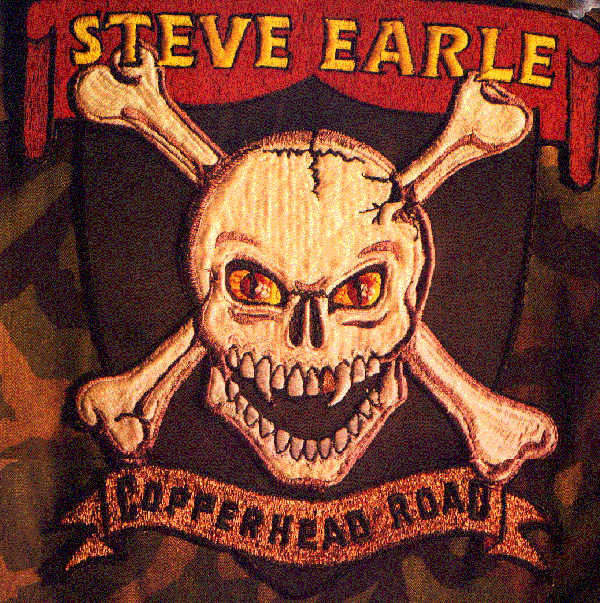
Copperhead Road is an American alternative country/country rock album released in 1988 by Steve Earle. Often referred to as Earle’s first “rock record”, Earle himself calls it the world’s first blend ofheavy metal and bluegrass, while in their January 26, 1989 review of the album Rolling Stone suggested the style be known as “power twang”. (read more at Wikipedia)
Released
October 17, 1988
April 29, 2008 (Deluxe)
Genre
Heartland rock, Alt-Country, Country rock, Americana
Length
43:36
Label
Uni Records (USA/Canada)
MCA
Producer
Steve Earle, Tony Brown
Official video for the song Copperhead Road
The songs on the album are a mix of personal/love songs and political/story-songs. The title track is about a road used for drug/alcohol traffic through generations, the song “Snake Oil” compares then president Ronald Reagan to a traveling con man. The title track and “Johnny Come Lately” ( with The Pogues) both describe the experiences of returning veterans.
Steve Earle and Pogues recording Johnny Come Lately:
OLD post … You’re being redirected to a newer version……
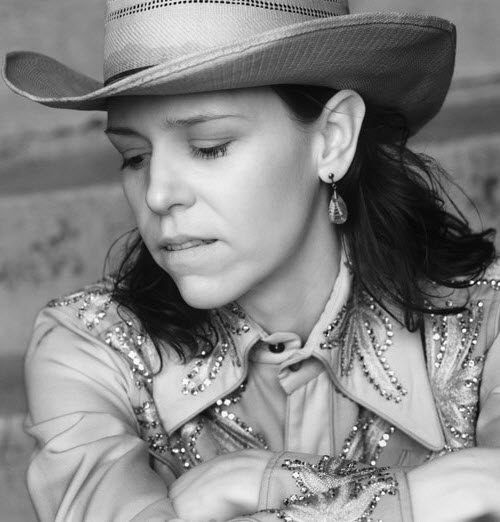
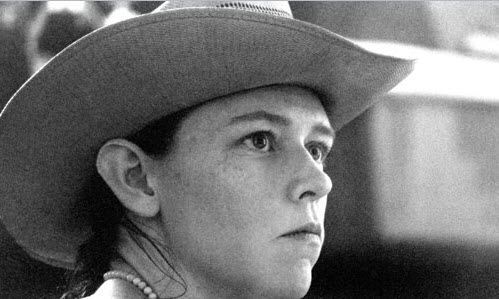
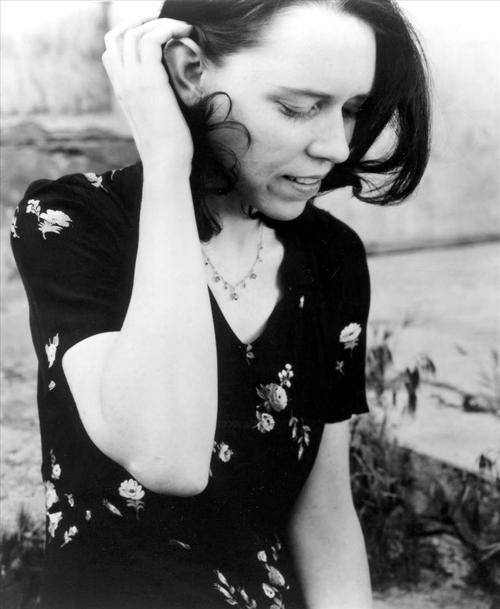
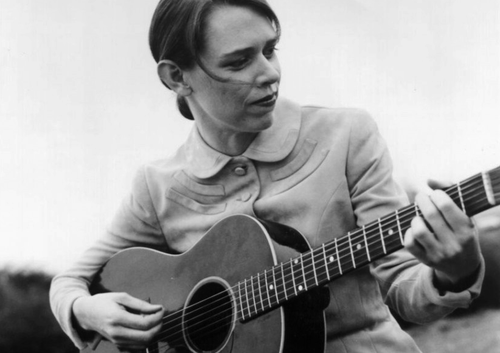
“Each person comes to have this musical experience, this moment with us, where they get to sink into our world for a little while. It’s this very unhurried world. It’s fairly quiet, it’s contemplative, but it can be quite panoramic. I think people think interesting thoughts at our shows, and they go rather deeply into some personal experience of their own. I’m really proud that our music seems to connect, because it’s not for everybody. But for the people that our music works for, it really gets down pretty deep in there.” ~Gillian Welch on her live shows (via Acoustic Guitar)
From Wikipedia:
Born
October 2, 1967 (age 45) Los Angeles, California, U.S.
Gillian Welch (born October 2, 1967) is an American singer-songwriter. She performs with her musical partner, guitarist David Rawlings. Their sparse and dark musical style, which combines elements of Appalachian music, Bluegrass, and Americana, is described by The New Yorker as “at once innovative and obliquely reminiscent of past rural forms”. Welch and Rawlings have released five critically acclaimed albums. Their 1996 debut, Revival, and the 2001 release Time (The Revelator), received nominations for the Grammy Award for Best Contemporary Folk Album. Their 2003 album, Soul Journey, introduced electric guitar, drums and a more upbeat sound to their body of work. After a gap of eight years, they released their fifth studio album, The Harrow & The Harvest, in 2011. Welch was an associate producer and performed on two songs of the O Brother, Where Art Thou? soundtrack, a platinum album that won the Grammy Award for Album of the Year in 2002. Welch has collaborated and recorded with distinguished musicians such as Alison Krauss, Ryan Adams, Jay Farrar, Emmylou Harris, The Decemberists, and Ani DiFranco.
“Stingy critics give Ms. Welch a hard time because she’s a California city girl, not an Appalachian coal miner’s daughter. But as Lucinda or Emmylou might attest, love of the music is not a birthright, but an earned right. Listen to Ms. Welch yodel, in a tune about that no-good “gal” Morphine, and you know she’s as mountain as they come.” ~Taylor Holliday (The Wall Street Journal)
Musical Style: Welch and Rawlings incorporate elements of early twentieth century music such as old time, classic country, gospel and traditional bluegrass with modern elements of rhythm and blues, rock ‘n’ roll, jazz, and punk rock. The New Yorker‘s Alec Wilkinson maintained their musical style is “not easily classified—it is at once innovative and obliquely reminiscent of past rural forms”. Reception:
Geoffrey Himes of The Washington Post described Welch as “one of the most interesting singer-songwriters of her generation”
In 2003, Tom Kielty of The Boston Globe observed that she was “quietly establishing one of the most impressive catalogs in contemporary roots music”
in a 2007 piece in The Guardian by John Harris called Welch “one of the decade’s greatest talents”
Critic Robert Hilburn of the Los Angeles Times wrote, “At every turn, she demonstrates a spark and commitment that should endear her to anyone from country and folk to pop and rock fans who appreciate imagination and heart.”