Feb 20: Bob Dylan Grammy Award Ceremony 1991

bob dylan 1991 grammy

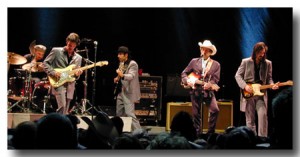
To see and hear how the band looked and sounded in February 1991, you just need to view television footage of the Grammy awards ceremony from New York on the 20th , when Dylan was given a Grammy Lifetime Achievement Award. Dylan’s appearance caused a media stir par excellence on two counts. Talking point one was his performance; number two was his acceptance speech.

Dylan performed his damning anti-war3 indictment, “Masters Of War” – a striking choice given that the Gulf War was still going on and hawkish jingoism was rife. However, since he chose to sing it without a pause for breath, and backed by this hapless/hamstrung band, no-one who did not already know the song would have got the message. In fact, many who were familiar with the song did not even recognise it. Not only did Dylan’s nasal passages sound blocked (he later revealed he’d had a cold) but it seemed he had swallowed a burst of helium before starting to sing. Some observers thought he was singing in Hebrew. The tuxedoed crowd looked on in utter bewilderment. The next day’s newspapers marvelled how only Dylan had performed a song with any meaning and purpose, but then, being Dylan, he had made it completely incomprehensible.
~Andrew Muir (One More Night: Bob Dylan’s Never Ending Tour)

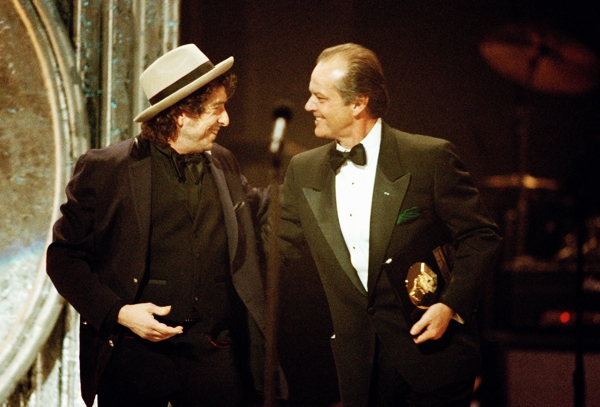
Bob Dylan receives his Lifetime Achievement Award. The award is presented by Jack Nicholson.

Continue reading Feb 20: Bob Dylan Grammy Award Ceremony 1991
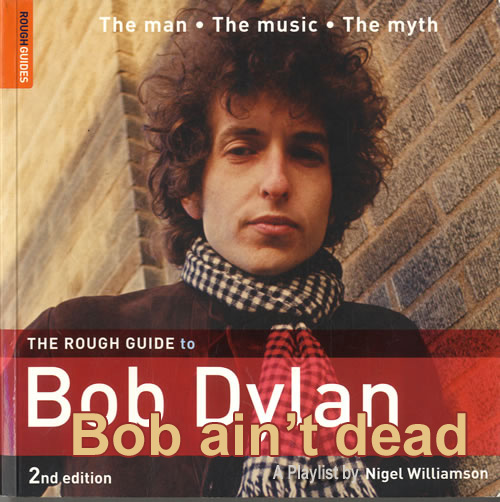
Nigel Williamson playlist: Bob ain’t dead

bobaintdead

“You thought it was all over after Blood On The Tracks? Well it’s not dark yet. In fact, it’s not even getting there. Here are ten songs you need, from Street Legal onwards.”
– Nigel Williamson

Nigel Williamson is a British journalist and author. Educated at University College London, Williamson worked as a reporter on Tribune (1982–84) and was then briefly its literary editor (1984) before becoming editor (1984–87) as successor to Chris Mullin.

He writes on pop and world music for a variety of publications, including the magazines Uncut and Songlines. He has also written books, among them, The Rough Guide to Bob Dylan. He made 4 Bob Dylan playlists for The Rough Guide Book of playlists.

His first three playlists:
Nigel Williamson playlist 1 – Bob Dylan The Protest Years
Nigel Williamson playlist 2 – Bob Dylan Electric Messiah
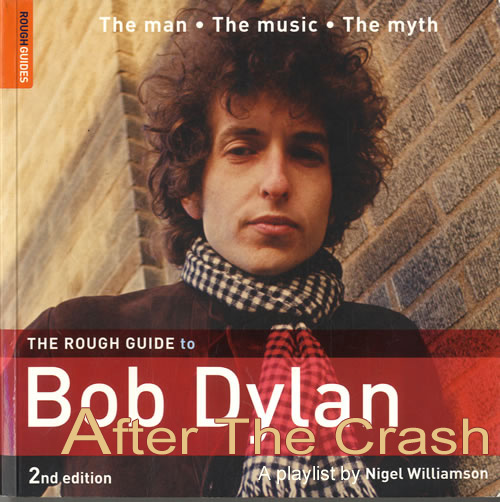
Nigel Williamson playlist 3 – Bob Dylan After the crash

…and here is the 4th:

Continue reading Nigel Williamson playlist: Bob ain’t dead

Nigel Wiliamson playlist – Bob Dylan After The Crash

Bob-Dylan-After The Crash

“After the motorcycle crash in the autumn of 1966, Dylan retreated to Woodstock. When he re-emerged with John Wesley Harding, he sounded very different. His output over the next eight years was decidedly patchy. Yet it contained some fine songs, even before the release of 1975’s Blood On The Tracks, one of his absolute masterpieces.”
– Nigel Williamson (The Rough Guide Book of Playlists)

Nigel Williamson is a British journalist and author. Educated at University College London, Williamson worked as a reporter on Tribune (1982–84) and was then briefly its literary editor (1984) before becoming editor (1984–87) as successor to Chris Mullin.

He writes on pop and world music for a variety of publications, including the magazines Uncut and Songlines. He has also written books, among them, The Rough Guide to Bob Dylan.

His first two playlists:
Nigel Williamson playlist 1 – Bob Dylan The Protest Years
Nigel Williamson playlist 2 – Bob Dylan Electric Messiah

He made 4 Bob Dylan playlists for The Rough Guide Book of playlists, this is the 3rd of them:

Continue reading Nigel Wiliamson playlist – Bob Dylan After The Crash

Feb 18: Bob Dylan’s 5th recording session for “Nashville Skyline” (w/Johnny Cash) in 1969

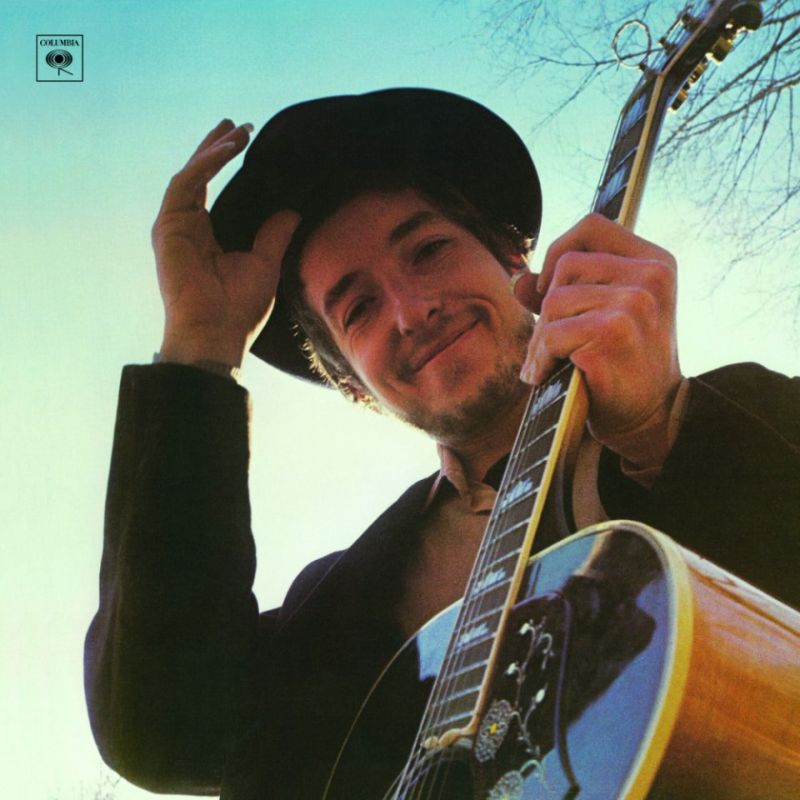
bob dylan nashville skyline

I like Johnny Cash a lot. I like everything he does really.
~Bob Dylan (to Nat Hentoff – Autumn 1965)

In the end, Nashville Skyline is a lovely album but not a heavyweight contender, though its effects were major ones. Country music was despised, hick music when Dylan took it up. People were divided into the hip and the non-hip. The counterculture was in full swing and riddled with its own self-importance and snobbery. Nashville Skyline was a hard pill to swallow: but it did ’em good.
~Michael Gray (Bob Dylan Encyclopedia)

The 5th recording session for ‘Nashville Skyline’ took place on February 18, 1969. One master versions emerged.. the lovely “Girl from the North Country”. Johnny Cash shared vocal on all 38 takes…this is a highly bootlegged sessions… and people have uploaded most of it on youtube… 

bob-dylan-and-johnny-cash-tv-special
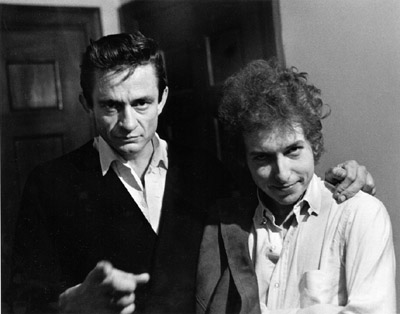
picture of Johnny Cash & Bob Dylan.. NOT from the studio sessions


Some background from wikipedia:

Nashville Skyline is the ninth studio album by American singer-songwriter Bob Dylan, released in April 1969 by Columbia Records.

Building on the rustic style he experimented with on John Wesley HardingNashville Skyline displayed a complete immersion into country music. Along with the more basic lyrical themes, simple songwriting structures, and charming domestic feel, it introduced audiences to a radically new singing voice from Dylan—a soft, affected country croon.

The result received a generally positive reaction from critics, and was a commercial success. Reaching number 3 in the US, the album also scored Dylan his fourth UK number 1 album.

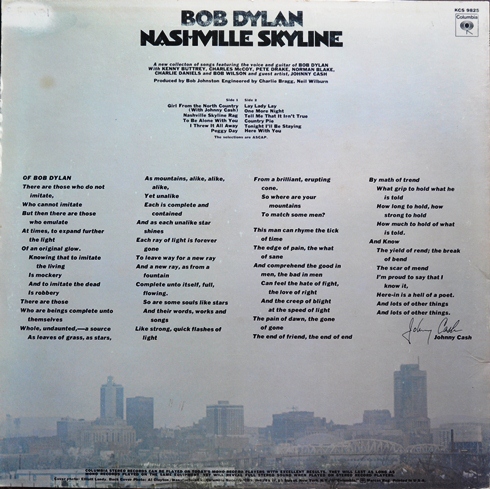
bob dylan nashville skyline back

Continue reading Feb 18: Bob Dylan’s 5th recording session for “Nashville Skyline” (w/Johnny Cash) in 1969

Feb 18: Bob Dylan @ BancorpSouth Center, Tupelo, Mississippi – 2002

bob dylan tupelo 2002_

BancorpSouth Center
Tupelo, Mississippi
18 February 2002

  • Bob Dylan (vocal & guitar)
  • Charlie Sexton (guitar)
  • Larry Campbell (guitar, mandolin, pedal steel guitar & electric slide guitar)
  • Tony Garnier (bass)
  • George Recile (drums & percussion)

Continue reading Feb 18: Bob Dylan @ BancorpSouth Center, Tupelo, Mississippi – 2002