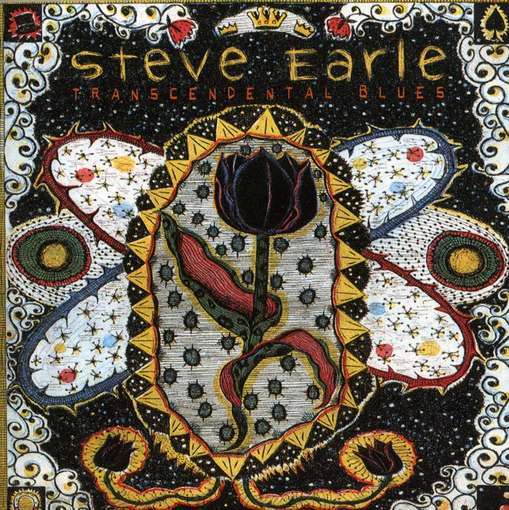
Today: Steve Earle released Transcendental Blues in 2000

transcendental blues cover

“Everybody wants to be somebody’s something
Ain’t nobody wants to be blue”

Transcendental realism: “…is a concept stemming from the philosophy of Immanuel Kant that implies individuals have a perfect understanding of the limitations of their own minds.” (-wikipedia)

Blues: “…refers to the “blue devils”, meaning melancholy and sadness…a depressed mood.” (-wikipedia)

Transcendental Blues:  A philosophy that implies individuals have a perfect understanding of their own sadness and the limitations of their own minds (- me)

“transcendence is about being still enough long enough to know when it’s time to move on.” (- Steve Earle, liner notes)

Transcendental Blues (the song, live ACL):

“…what truly makes this one of Earle’s best records is that he refuses to be pulled down by musical decisions. It’s as if he never faced a problem of whether or not to add this or that instrument, or to veer off in this or that direction. He simply had the idea and went with it.”Ryan Kearny, Pitchfork
Continue reading Today: Steve Earle released Transcendental Blues in 2000
Bob Dylan: 4 Great Live versions of “The Man In Me”

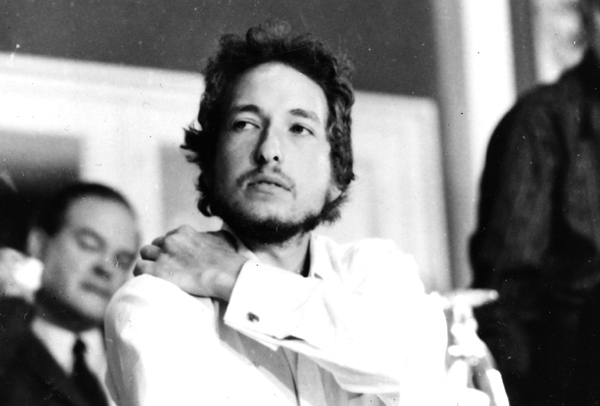
bob dylan 1970

The man in me will do nearly any task,
And as for compensation, there’s little he would ask.
Take a woman like you
To get through to the man in me.

Storm clouds are raging all around my door,
I think to myself I might not take it any more.
Take a woman like your kind
To find the man in me.

Today Bob Dylan recorded the master version of “The Man In Me” for the album “New Morning” in 1970.

Here is the “New Morning” version:

Studio E
Columbia Recording Studios
New York City, New York
5 June 1970 

The Man in Me by Bob Dylan on Grooveshark


Continue reading Bob Dylan: 4 Great Live versions of “The Man In Me”

Video of the day: Hotel California LA from the Byrds to the Eagles BBC documentary


screenshot_neil_paint

First broadcast on 27 May 2007
Produced and Directed by Chris Wilson

The music and mythology of a golden era in the culture of California is explored in this feature-length documentary.

At the start of the 1960s Los Angeles was a kooky backwater, barely visible on the musical map. By the end of the 1970s it was the artistic and industrial hub of the American music industry. This film explores how the socially-conscious folk rock of young hippies with acoustic guitars was transformed into the coked-out stadium excesses of the late 70s, and the biggest-selling album of all time.

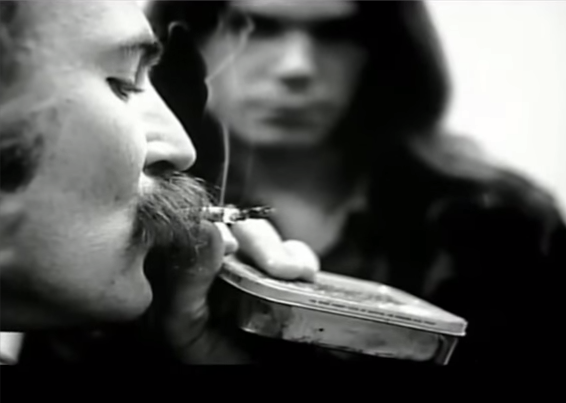
screenshot_david

Alongside never before seen archive footage, the programme features first-hand accounts of the key figures including musicians, David Crosby, Graham Nash, JD Souther, Bernie Leadon, Bonnie Raitt, Andrew Gold, Mark Volman and Van Dyke Parks, and music industry bosses, David Geffen, Jac Holzman, Ron Stone and Peter Asher, and legendary LA scenesters including Henry Diltz, Pamela Des Barres and Ned Doheny.

Set amongst the sun-dappled porches of Laurel Canyon and perched above LA’s iconic Sunset Strip, this is an epic tale of drugs, genius and greed – all set to a terrific soundtrack.

This fascinating documentary from BBC4, Hotel California: LA from The Byrds to The Eagles charts the evolution of the Southern California/Laurel Canyon rock scene of the sixties thru the seventies. … but it is also the sad story of the transformation into a corporate and money-driven scene in a relatively brief period of time.The film is very blunt in presenting criticisms of the Eagles from a number of different musicians for their approach to music.

David Crosby: “They’re boring, they take no chances, ever!”

It is based on Barney Hoskin’s book of the same name.

Hotel California L.A. from the Byrds to the Eagles BBC documentary:

– Hallgeir

June 05 in music history

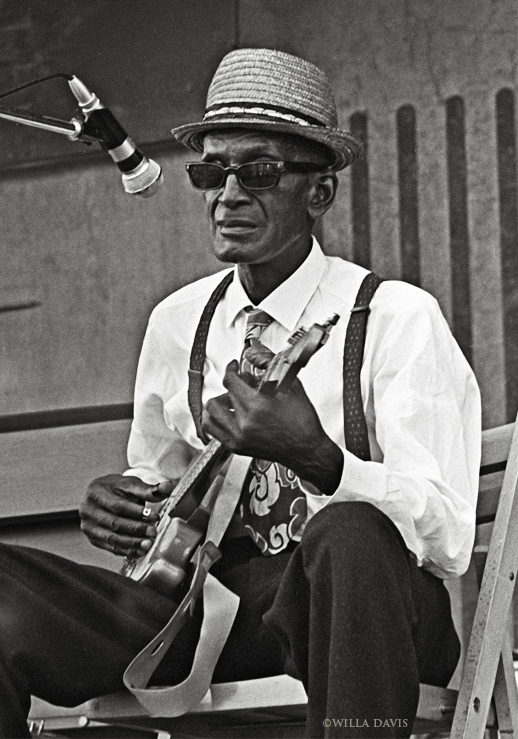
Today: Sleepy John Estes passed away in 1977, 37 years ago (read more)

sleepyJohnEstes-03_fullsize
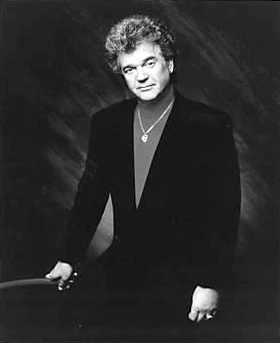
Conway Twitty (September 1, 1933 – June 5, 1993), born Harold Lloyd Jenkins, was an American country music artist. He also had success in early rock and roll, R&B and pop music. He held the record for the most number one singles of any act with 40 #1 Billboard country hits until George Strait broke the record in 2006. From 1971-76, Twitty received a string of Country Music Association awards for duets with Loretta Lynn. He was never a member of the Grand Ole Opry, but was inducted into both the Country Music and Rockabilly Halls of Fame.  Conway_Twitty
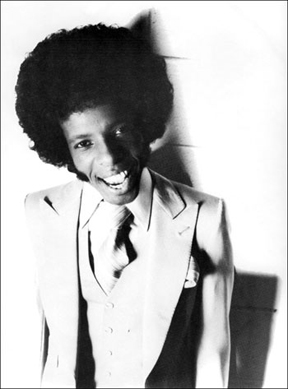
 Freddie Stone (born Frederick Stewart, June 5, 1947, Vallejo, California, United States) is an African-American musician, best known for his role as co-founder, guitarist, and vocalist in the band Sly and the Family Stone, the frontman for which was his brother Sly Stone. His sisters Rosie Stone and Vet Stone were also members of the band.  freddie stone
 Essence (released June 5, 2001) is Lucinda Williams‘ sixth album. It was released in 2001. The album debuted on the Billboard 200 at number 28, selling about 44,500 copies in its first week. According to Billboard as of February 2008, the album had sold 336,000 copies in the U.S.  Lucinda_Williams_Essence-[Front]-[www.FreeCovers.net]
 Bob Dylan recorded “The Man In Me” @ Studio E, Columbia Recording Studios, NYC in 1970

Spotify Playlist – June 05

June 4 in music history

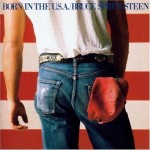
30 year anniversary for Bruce Springsteen’s Born in the USA (read more)

Born in the U.S.A. is the seventh studio album by  Bruce Springsteen, it was released on June 4, 1984. A critical and commercial triumph, it found Springsteen marking a departure in his sound.

While the predecessor, the dark and acoustic Nebraska featured songs of pessimism and isolation, Born in the U.S.A.’s lyrics expressed signs of hope in the daily fight of the standard American in following the American Dream, a new feeling complemented by synthesized arrangements and a pop-flavored, radio-oriented sound that helped Springsteen to extend his popularity and appeal to mainstream audiences.

born in the usa

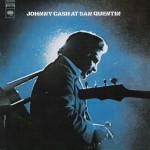
45 year anniversary for Johnny Cash’s Live at San Quentin (read more)

At San Quentin is the 31st overall album and a recording of a live concert given by Johnny Cash to the inmates of San Quentin State Prison. As well as being released on record the concert was filmed by Granada Television.

The album was a follow-up to Cash’s previous live album, the critically acclaimed and commercially successful At Folsom Prison.

On the original LP release, the song order was changed and several songs were cut, probably for space reasons. Despite the title of the version released on CD in 2000 – At San Quentin (The Complete 1969 Concert) – the CD does not contain the entire concert uncut, but does feature additional tracks and running order that parallels the actual set list.

Johnny_Cash_At_San_Quentin

The Ballad of John and Yoko” released Jun 4, 1969, in the US (May 30 in the UK)

a song written by John Lennon, attributed to Lennon–McCartney as was the custom, and released by the Beatles as a single in May 1969. The song, chronicling the events surrounding Lennon’s marriage to Yoko Ono, was the Beatles’ 17th and final UK number one single

The song was recorded without George Harrison (who was on holiday) and Ringo Starr (who was filming The Magic Christian). In his biography, McCartney recalls that Lennon had a sudden inspiration for the song and had suggested that the two of them should record it immediately, without waiting for the other Beatles to return. Reflecting this somewhat unusual situation, the session recordings include the following exchange:


Lennon (on guitar): “Go a bit faster, Ringo!”
McCartney (on drums): “OK, George!”


uk_ballad-of-john-and-yoko

Kasey Chambers (born 4 June 1976)

Australian country singer-songwriter. She is the daughter of steel guitar player Bill Chambers, and the sister of musician and producer Nash Chambers.

Chambers was born in Mount Gambier, South Australia. She grew up on the Nullarbor Plain where her family lived seven to eight months a year until 1986.

In late 2005, Chambers married Australian singer-songwriter Shane Nicholson.

 kasey chambers

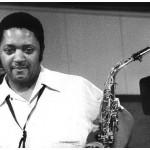
Oliver Edward Nelson (June 4, 1932 in St. Louis, Missouri – October 28, 1975)

American jazz saxophonist, clarinetist,arranger and composer.Oliver Nelson was a distinctive soloist on alto, tenor, and even soprano, but his writing eventually overshadowed his playing skills. He became a professional early on in 1947, playing with the Jeter-Pillars Orchestra and with St. Louis big bands headed by George Hudson and Nat Towles. In 1951, he arranged and played second alto for Louis Jordan‘s big band, and followed with a period in the Navy and four years at a university. After moving to New York, Nelson worked briefly with Erskine HawkinsWild Bill Davis, and Louie Bellson (the latter on the West Coast). In addition to playing with Quincy Jones’ orchestra (1960-1961), between 1959-1961 Nelson recorded six small-group albums and a big band date; those gave him a lot of recognition and respect in the jazz world. Blues and the Abstract Truth (from 1961) is considered a classic and helped to popularize a song that Nelson had included on a slightly earlier Eddie “Lockjaw” Davis session, “Stolen Moments.” He also fearlessly matched wits effectively with the explosive Eric Dolphy on a pair of quintet sessions. But good as his playing was, Nelson was in greater demand as an arranger, writing for big band dates of Jimmy SmithWes Montgomery, and Billy Taylor, among others. By 1967, when he moved to Los Angeles, Nelsonwas working hard in the studios, writing for television and movies. He occasionally appeared with a big band, wrote a few ambitious works, and recorded jazz on an infrequent basis, but Oliver Nelson was largely lost to jazz a few years before his unexpected death at age 43 from a heart attack.
-Scott Yanow (allmusic)

oliver nelson

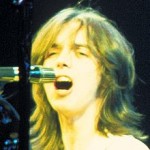
James ‘Jimmy’ McCulloch (4 June 1953 – 27 September 1979)

Scottish musician and songwriter best known for playing lead guitar in Paul McCartney’s Wings from 1974 to 1977. McCulloch was a member of the Glasgow psychedelic band One in a Million (formerly known as The Jaygars), Thunderclap Newman, and Stone the Crows.[1] He also made appearances on many albums, including John Entwistle’s Whistle Rymes in 1972, as lead guitarist playing alongside Peter Frampton on “Apron Strings” and “I Feel Better”; and onRoy Harper’s album, Bullinamingvase, and Ricci Martin’s album, Bleached, both in 1977. McCulloch also played guitar on Roger Daltrey’s album One of the boys which was released in 1977. McCulloch was a friend of The Who and a member of the band Thunderclap Newman, which was created and produced by his mentor Pete Townshend.

220px-Jimmy_McCulloch_-_Wings_-_1976

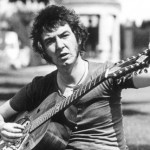
Ronald Frederick “Ronnie” Lane (1 April 1946 – 4 June 1997)

English musician, songwriter, and producer who is best known as the bass guitarist and founding member of two prominent English rock and roll bands: Small Faces where he was nicknamed “Plonk” (1965–69), and, after losing the band’s frontman, Faces, with two new members added to the line-up, (from the Jeff Beck Group), who dubbed him “Three-Piece” (1969–73). It was for his work in both Small Faces and Faces that Lane was inducted posthumously into theRock and Roll Hall of Fame in 2012.

Subsequently Lane collaborated with other musicians, leading his own bands as well as pursuing a solo career while remaining close to his former bandmates. In the late 1970s he was diagnosed with multiple sclerosis and, despite charity projects and financial support from friends, former bandmates and fans, Lane, after suffering from the disease for 21 years, died at 51.

Ronnie Lane

Spotify Playlist – June 4: