‘ Not Dark Yet ‘ is many folks’ favourite song on Dylan’s 1997 album, and for sure it pushes all the right buttons: a gorgeous vocal, a brooding melody, the darkling worldview and that seemingly effortless way he captured the dusk in his veins.
~Clinton Heylin (Still On The Road)[/vc_message][/vc_column][/vc_row]
[vc_row][vc_column][vc_message message_box_color=”mulled_wine” icon_fontawesome=”fa fa-quote-left”]It’s in my system. I don’t really have enough time to talk about it. If someone really wants to know, I can explain it to them, but there are other people who can do it just as well. I don’t feel compelled to do it. I was doing a bit of that last year on the stage. I was saying stuff I figured people needed to know. I thought I was giving people an idea of what was behind the songs. I don’t think it’s necessary any more. When I walk around some of the towns we go to, however, I’m totally convinced people need Jesus. Look at the junkies and the winos and the troubled people. It’s all a sickness which can be healed in an instant. The powers that be won’t let that happen. The powers that be say it has to be healed politically.
~Bob Dylan (to Robert Hilburn – Nov 1980)
Musically, this is probably Dylan’s finest record, a rare coming together of inspiration, desire and talent that completely fuse strength, vision and art.
~Jann S. Wenner (rollingstone.com – Sept. 1979)
Slow Train Coming was a collection of songs Dylan had originally intended to donate to backing singer Carolyn Dennis.
~Clinton Heylin (The Recording Sessions)[/vc_message][/vc_column][/vc_row]
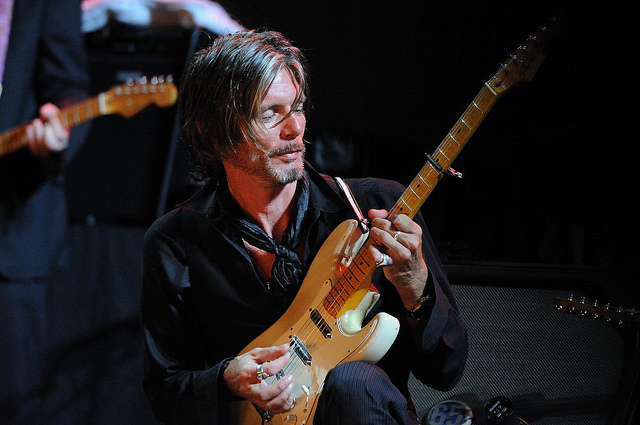
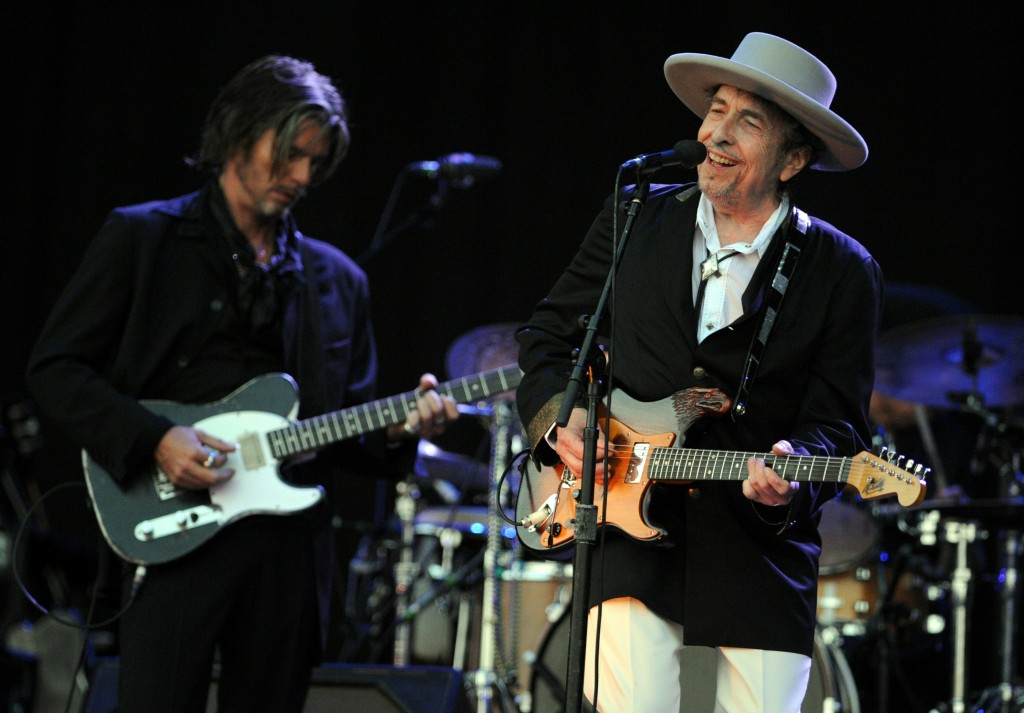
Charles Wayne Sexton (born August 11, 1968) is an American guitarist, singer and songwriter best known for the 1985 hit “Beat’s So Lonely” and as the guitarist for Bob Dylan’s backing band from 1999 to 2002 and since 2009. His style of playing has varied and he has been associated with artists in the blues, folk, rock and punk genres.
I first saw Charlie Sexton in the 80s and I have his first two vinyls in the attic (I don’t play vinyls anymore). He was promoted as this wonder kid, a new guitar god and he sounded and looked great. He was good then and he has gotten better. His first records suffered by that “eighties sound” but there are some good songs on them, and the guitar playing is tremendous.
Charlie Sexton Interview
–
Association with Bob Dylan
In 1999, Sexton was hired by Bob Dylan to replace Bucky Baxter. Sexton had previously played with Dylan during a pair of Austin, Texas, concerts in 1996, and on some demos recorded in the fall of 1983.
Sexton’s residency with Dylan from 1999–2002 brought him great exposure, with many critics singling out the interplay between him and Larry Campbell, who was also a guitarist in Dylan’s backing band. Hailed as one of Dylan’s best bands, the group recorded a number of studio recordings, including Things Have Changed (from the 2000 film Wonder Boys) and 2001’s critically acclaimed album, Love and Theft. He also performed and appeared with them in 2003’s Masked & Anonymous.
In October 2009, Sexton rejoined Dylan’s touring band, replacing Denny Freeman.
He is also an actor and did a very fine role in Richard Linklater’s masterpiece, Boyhood. He is also set to play Townes Van Zant in Ethan Hawke’s biopic about Blaze Foley, Blaze.
[vc_row][vc_column][vc_message message_box_color=”mulled_wine” icon_fontawesome=”fa fa-quote-left”]I can hear the turning of the key
I’ve been deceived by the clown inside of me
I thought that he was righteous but he’s vain
Oh, something’s a-telling me I wear the ball and chain[/vc_message][/vc_column][/vc_row]
[vc_row][vc_column][vc_message message_box_color=”mulled_wine” icon_fontawesome=”fa fa-quote-left”]’Abandoned Love’ marks the very point at which Dylan decided to (temporarily) abandon love, and particularly forsaken love, as the prime subject-matter for his songs.
~Clinton Heylin (Still On The Road)[/vc_message][/vc_column][/vc_row]
Bob Dylan & George Harrison: August 1, 1971, New York
The Concert for Bangladesh (or Bangla Desh, as the country name was spelt originally) was the name for two benefit concerts organised by George Harrison and Ravi Shankar, held at 2.30 and 8 pm on Sunday, 1 August 1971, playing to a total of 40,000 people at Madison Square Garden in New York City. The shows were organised to raise international awareness and fund relief efforts for refugees from East Pakistan (now Bangladesh), following the 1970 Bhola cyclone and the civil war-related Bangladesh atrocities. The concerts were followed by a bestselling live album, a boxed three-record set, and Apple Films’ concert documentary, which opened in cinemas in the spring of 1972.The event was the first-ever benefit concert of such a magnitude and featured a supergroup of performers that included Harrison, fellow ex-Beatle Ringo Starr, Bob Dylan, Eric Clapton, Billy Preston, Leon Russell and the band Badfinger. In addition, Shankar and another legend of Indian music, Ali Akbar Khan, performed a separate set. Decades later, Shankar would say of the overwhelming success of the event: “In one day, the whole world knew the name of Bangladesh. It was a fantastic occasion …” ~Wikipedia
[vc_row][vc_column][vc_message message_box_color=”mulled_wine” icon_fontawesome=”fa fa-quote-left”]This was Dylan’s first live performance in two years. Harrison had to twist his arm to get him to take part in the benefit concert, and we can be very glad he did: it’s a stunning performance (both shows), modest, confident, richly textured, with Dylan feeling and communicating genuine love for the music he’s playing (in the case of” Blowin’ in the Wind” this was his first public performance of the song in seven years). Most of all, Dylan’s voice on this midsummer afternoon and evening has a rare, penetrating beauty that is immediately noticeable to almost anyone who hears it. This is, in a very real sense, the Dylan a large part of his audience dreams of hearing; this is the voice to fit the stereotyped or mythic image of Bob Dylan, guitar strumming poet laureate of the 1960s.
~Paul Williams (Bob Dylan Performing Artist I: The Early Years 1960-1973)[/vc_message][/vc_column][/vc_row]
Madison Square Garden New York City, New York 1 August 1971 Rehearsals before the Bangla Desh Concert

 )[/vc_message][/vc_column][/vc_row]