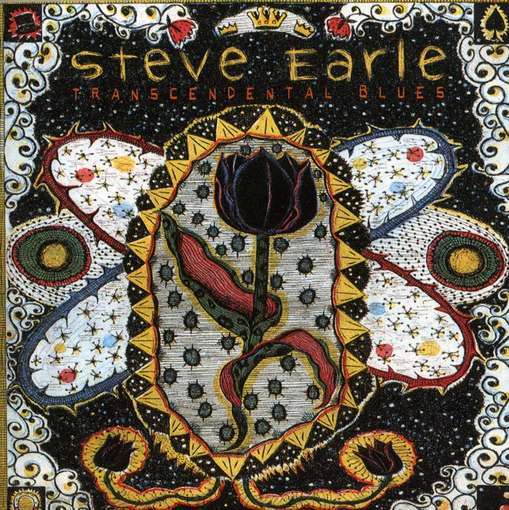
“Everybody wants to be somebody’s something Ain’t nobody wants to be blue”
Transcendental realism: “…is a concept stemming from the philosophy of Immanuel Kant that implies individuals have a perfect understanding of the limitations of their own minds.” (-wikipedia)
Blues: “…refers to the “blue devils”, meaning melancholy and sadness…a depressed mood.” (-wikipedia)
Transcendental Blues: A philosophy that implies individuals have a perfect understanding of their own sadness and the limitations of their own minds (- me)
“transcendence is about being still enough long enough to know when it’s time to move on.” (- Steve Earle, liner notes)
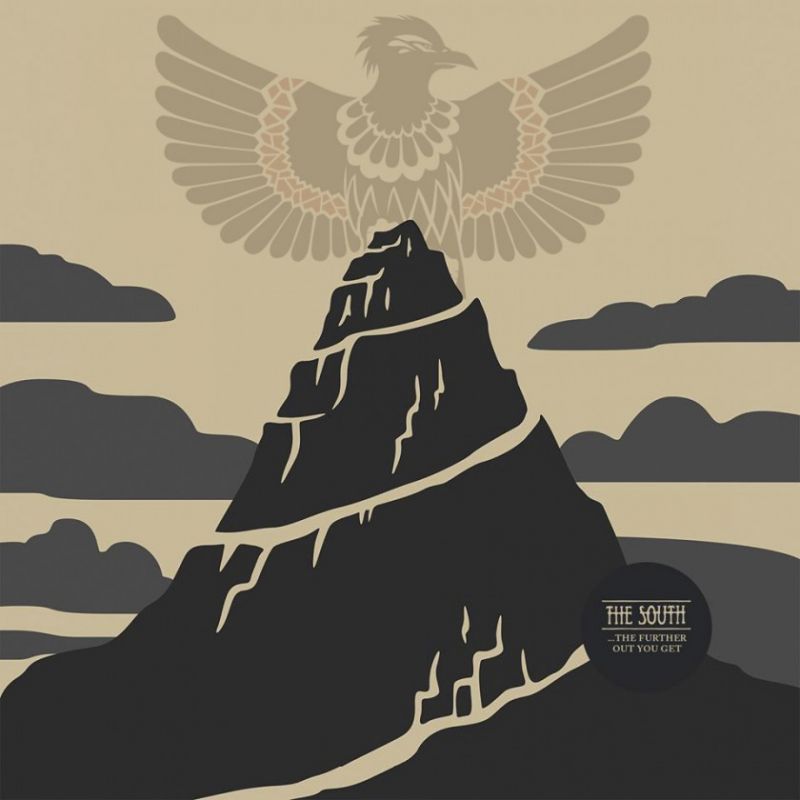
A slightly altered cover of …The Further Out You Get
Johannasvisions: What would you say is the biggest difference from the previous album? Alexander Pettersen: I guess you could call it “the evil twin”…
The follow-up to The South’s 2013 album “The Further Inside You Go…” is a more demanding affair, but also an even more rewarding one. It opens with the 11 minute song, No Escape/Don’t Let Go, a track that is quite a departure for the band.
We’re no longer in the southern parts of the USA (well, not all the time anyway) it sounds like an Alan Parsons produced english band from around 1973. It swirls and changes its course as we listen, and this is something that we will encounter on the following songs as well. It starts off with gentle guitar and vocal, the sound is very delicate. The vocals are repeated and doubled, we get a subtle choir. The mood gets darker, but at about 2:40 into the song the drums and electric guitar lifts us up. The Keyboard echoes the melody. The pedal steel comes in, but it has no country-twang, it is airy and elegant. What a great start!
JV: The country-sound is all but gone, is this a conscious choice or did it “just happen”? AP: It is not something we decided, it is a natural progression for us, I think.
I write the songs I do, the only decision-making concerns choosing songs for the record, and the way we put them together to form a complete album.
This time I wanted to do something new, something else than before. And we did, we managed to pull off something special, something “more” than we’ve done before. I think we have succeeded in this, especially on the tracks, 1,2/3,5 and 6.
The South, Mono, Oslo, 2013
Desert Sounds takes us into more familiar territory, to the breezy Californian coast line. It starts off with a strumming acoustic guitar and then a beautiful melody hovers over the acoustic. The guitar is doubled and the keyboard fills in. It is a very finely arranged intro to the track, Glimpse of what we had. The South is in no hurry, they take their time and it builds up wonderfully. I see it as one song.
The second part of the track has a more up-beat melody, but the lyrics are filled with longing for past times and are bittersweet in tone. The electric guitar in the song is an Allman Brothers/Grateful Dead mix, but new and fresh and not retro in feel at all. The bass is subtly restrained and incredibly well played.
Glimpse of what we had (Spotify):
Now, The South takes us for a ride into, well, “The South” as in the musical landscape of the Southern US. They give us a superb Muscle Shoals sounding song, We Got Lucky. A lover reassure his girlfriend that all will be all right and we believe him. The track has some very fine horn arrangements (by Bendik Brænne) and both The Band and Little Feat would have been proud to include it in their catalogue.
Then we’re back on the road, we get a rousing boogie/Texas shuffle in the raw, Psb6u-blues. A steady “motor rhythm” of an accord on el-guitar lays the foundation, and we get a playful guitar that’s just “all over the place” above the steady beat. And then more guitar and keyboard. It reminds me of driving or taking the train, traveling. The vocal starts at 3:35(!) and it is no sweet blues, it is aggressive and insisting. It ends in a wild crescendo and I long to see it in a live setting. It is just fabulous, so far this is my favorite song on the record along with the last track, …The Further Out You Get.
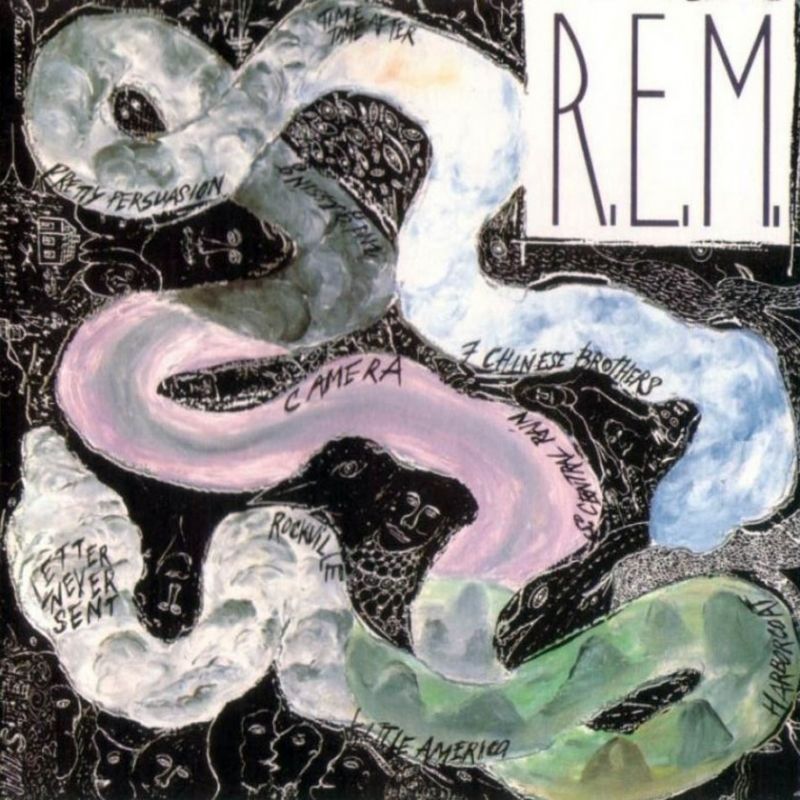
Reckoning is the second album by the American alternative rock band R.E.M., released April 9 in 1984 by I.R.S. Records.
It was produced by Mitch Easter and Don Dixon and was recorded at Reflection Sound Studio in Charlotte, North Carolina over 16 days in December 1983 and January 1984. Dixon and Easter intended to capture the sound of R.E.M.’s live performances, and used binaural recording on several tracks. Singer Michael Stipe dealt with darker subject matter in his lyrics, and water imagery is a recurring theme on the record. Released to critical acclaim, Reckoning reached number 27 in the United States—where it was certified gold by the Recording Industry Association of America in 1991—and peaked at number 91 in the United Kingdom.
R.E.M. – So.Central.Rain:
I had bought Murmur and loved it, but it was this album that really sealed my love for R.E.M. , and you could (most of the time) hear what Michael Stipe was singing! Reckoningbuilds on the energy of Murmur, but they sound more mature. They had been touring and recording and sound so much more sure of where they want to go, this album is the culmination of energy, experience and a clear view of what R.E.M. should be about. It is a classic album! Continue reading Today: R.E.M. released Reckoning in 1984 30 years ago→
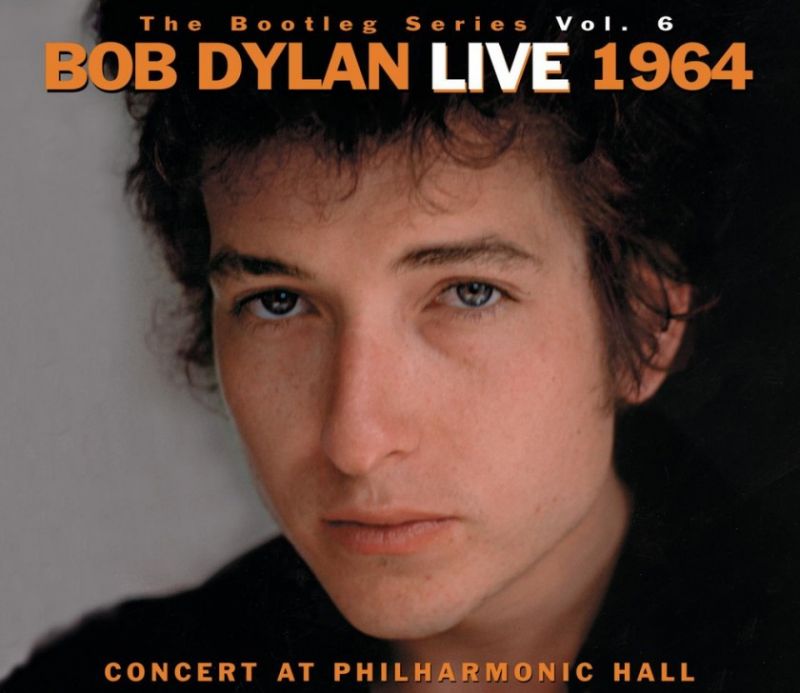
The Bootleg Series Vol. 6: Bob Dylan Live 1964, Concert at Philharmonic Hall is a complete recording of Bob Dylan’s October 31, 1964 “Halloween” show at New York’s Philharmonic Hall. It was released 30 March in 2004.
Although some collectors of Dylan bootlegs was aware of this material for years, this cleaned-up authorized version is a superb technical feat from Columbia. Its focus is on the 23-year-old Bob Dylan both as a folksinger in the making and the mind-expanding artist later exploring new horizons offered by acid, free verse and electricity.
The set list was dominated by Dylan’s protest songs, including “The Times They Are a-Changin’,” “A Hard Rain’s a-Gonna Fall,” and “The Lonesome Death of Hattie Carroll”. Joan Baez, a major supporter of Dylan’s in his early career, duets with Dylan on three songs, as well as singing another alone (“Silver Dagger”). However, Dylan performed these songs along early versions of three songs from the soon-to-be-recorded Bringing It All Back Home. New compositions like “It’s Alright Ma (I’m Only Bleeding)” and “Mr. Tambourine Man” showed Dylan moving in a new direction, becoming more immersed in evocative, stream-of-consciousness lyrics and moving away from social, topical songwriting. Even as he was moving in this new direction, Dylan was still portrayed as a symbol of the civil rights and anti-war movements, and the Halloween concert of 1964 caught Dylan in transition.
The album debuted on the Billboard 200 album chart on April 17, 2004 at number 28. It spent 4 weeks on the chart. It also reached number 33 in the U.K.
The Bootleg Series Vol. 6: Bob Dylan Live 1964, Concert at Philharmonic Hall onSpotify:
Thom Jurek (Allmusic): “…the sound is spectacular, wonderfully warm and immediate, and the transfer is extremely clean with wonderful dynamics. Secondly, the package is deluxe. In addition to a fine essay by Princeton historian and author Sean Wilentz (he made the gig when he was 13), there are a truckload of killer photos from the show and the period, along with complete discographical information that puts the bootleg packages to shame. For those interested in the acoustic Bob Dylan, this concert is like the grail; his voice is in impeccable shape, and his delivery is revelatory. For those interested in the transition from acoustic to electric, this show is the seam, and for those who are die-hard fans, this is another welcome item in the official catalog.”
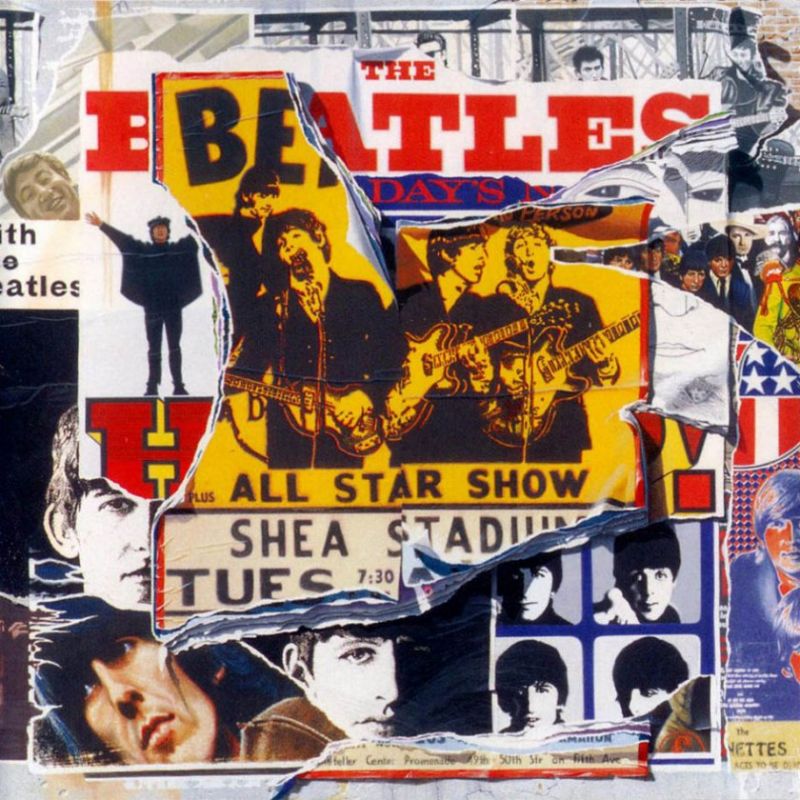
Anthology 2 is a compilation album by The Beatles, released by Apple Records 18 March 1996. It is the second of the three-volume Anthology collection, all of which tie-in with the televised special The Beatles Anthology. The opening track is “Real Love”, the second of the two recordings that reunited the Beatles by means of magnetic tape. Like its predecessor, the album topped the Billboard 200 album chart.
Anthology 2 features outtakes, rarities, and alternative performances from the 1965 sessions for Help! to sessions just prior to their trip to India in February 1968