I am, and always will be, a blues guitarist.
~Eric Clapton
“I found my God in music and the arts, with writers like Hermann Hesse, and musicians like Muddy Waters, Howlin’ Wolf, and Little Walter. In some way, in some form, my God was always there, but now I have learned to talk to him.”
~Eric Clapton
….Paul Simon writes great songs. George Harrison great songs, a lot of people, Eric Clapton produces wonderful music.
~Bob Dylan (Press Conference, July 1981)
Robbie Robertson inducts Eric Clapton Rock and Roll Hall of Fame in 2000:
Layla:
Birth name
Eric Patrick Clapton
Also known as
Slowhand
Born
March 30, 1945 (age 68)
Ripley, Surrey, England, UK
Genres
Rock, blues rock, psychedelic rock, hard rock
Occupations
Musician, singer-songwriter, record producer, artist
Instruments
Vocals, guitar, piano, mandolin
Years active
1962–present
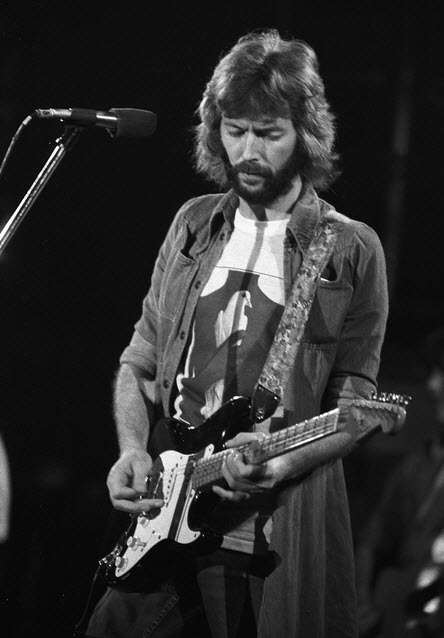
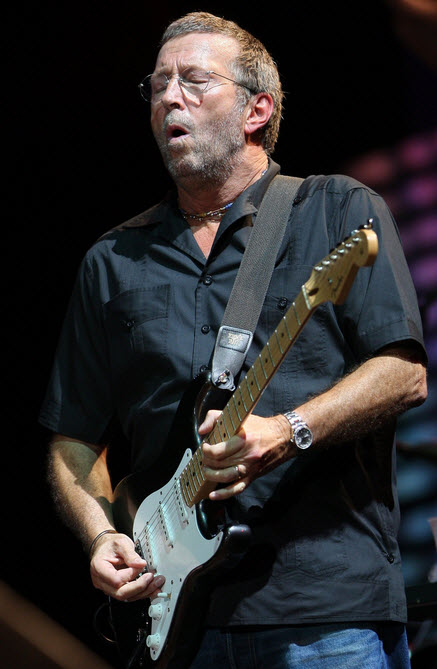
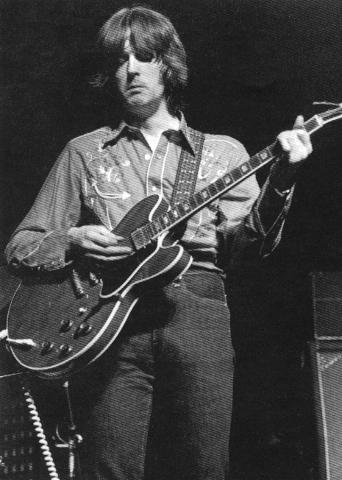
Eric Patrick Clapton, CBE, (born 30 March 1945) is an English guitarist and singer-songwriter. He is the only three-time inductee to the Rock and Roll Hall of Fame: once as a solo artist, and separately as a member of The Yardbirds and Cream. Clapton has been referred to as one of the most important and influential guitarists of all time. Clapton ranked second in Rolling Stone magazine’s list of the “100 Greatest Guitarists of All Time” and fourth in Gibson’s Top 50 Guitarists of All Time.
In the mid-1960s, Clapton departed from the Yardbirds to play blues with John Mayall & the Bluesbreakers. In his one-year stay with Mayall, Clapton gained the nickname “Slowhand”. Immediately after leaving Mayall, Clapton joined Cream, a power trio with drummer Ginger Baker and bassist Jack Bruce in which Clapton played sustained blues improvisations and “arty, blues-based psychedelic pop.” For most of the 1970s, Clapton’s output bore the influence of the mellow style of J.J. Cale and the reggae of Bob Marley. His version of Marley’s “I Shot the Sheriff” helped reggae reach a mass market. Two of his most popular recordings were “Layla”, recorded by Derek and the Dominos, another band he formed, and Robert Johnson’s “Crossroads”, recorded by Cream. Following the death of his son Conor in 1991, Clapton’s grief was expressed in the song “Tears in Heaven”, which featured in his Unplugged album.
Tears in heaven (live 1999, NYC)
A recipient of seventeen Grammy Awards, and the Brit Award for Outstanding Contribution to Music, in 2004 Clapton was awarded a CBE at Buckingham Palace for services to music. In 1998, Clapton, a recovering alcoholic and drug addict, founded the Crossroads Centre on Antigua, a medical facility for recovering substance abusers.
Always on my Mind is seldom considered among the best of Elvis’ 70’s output, but if you ask me it’s at the top of the list. The recording sessions was great, it included Burnin Love and For the good times. I almost cry when I listen to it, it embodies everything, everything I love about Elvis, heartbreak, slow ballads, emphathy and true feelings. What a voice!
Peter Guralnick writes in his book Careless Love:
The trouble was, he (Elvis) wasn’t interested in cutting a hit record. “He was trying to get something out of his system.”
…
On the second night Felton finally got his way, but he was under no illusion that Elvis was doing it for any other reason than to indulge his producer. With encouragement from Joe Esposito and Jerry Schilling, and with Charlie pounding away on acoustic guitar, they got a good, energetic version of “Burning love”, the song Felton had brought to the session, but it was tossed off in six quick takes, in almost throwaway style, and everyone could see that Elvis’ heart wasn’t really in it. They kept working till four in the morning but got only one more song that night and two the following night, including “Always on my mind”…
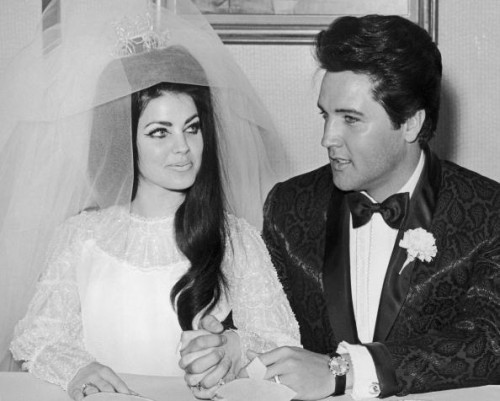
Elvis seems very wore down after his divorce from Pricilla and in no mood for Rock’n Roll, but he really let it all out in this great ballad.
Maybe I didn’t love you Quite as often as I could have Maybe I didn’t treat you Quite as good as I should have If I made you feel second best Girl I’m sorry I was blind
Always on my mind recorded by Elvis:
The feeling embodied in that song is tremendous, how a man can put this much feeling into a song is hard to conceive!
Here’s another version recorded by Elvis on the 29th of March in 1972:
From Wikipedia:
“Always on My Mind” is an American country music song by Johnny Christopher, Mark James and Wayne Carson.
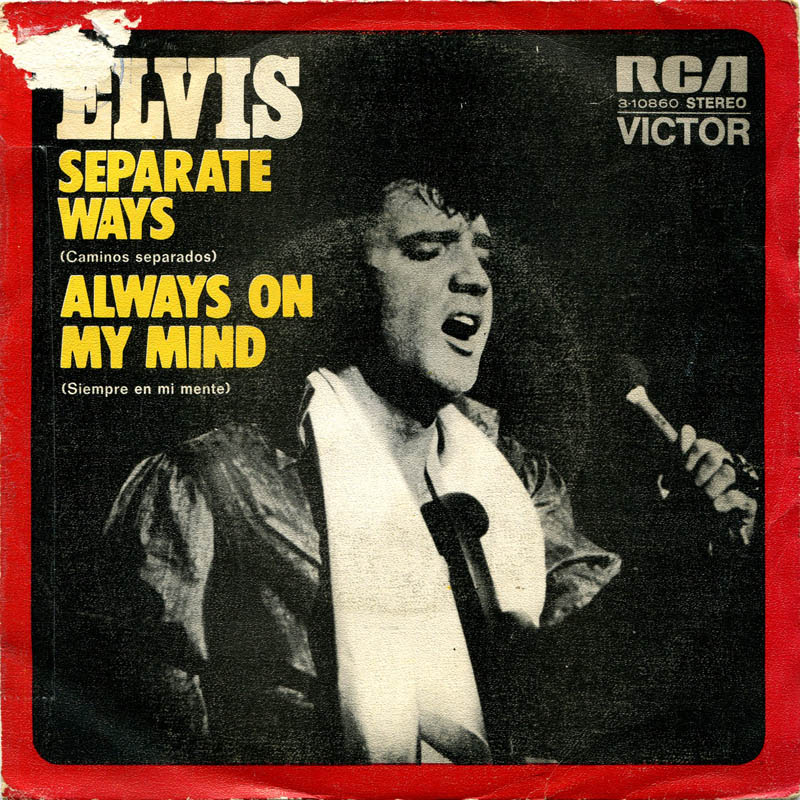
Elvis Presley recorded his version of “Always on My Mind” on March 29, 1972, a few weeks after his February separation from wifePriscilla. The song was released as the B-side of the “Separate Ways” single, which reached Gold status in the U.S for sales of over half a million copies. It was listed as a double sided hit reaching number 16 on Billboard magazine’s Hot Country Singles chart in November 1972. In the UK “Always on My Mind” was the hit song and “Separate Ways” was the B-side.
The epic scale suited Zeppelin: They had the largest crowds, the loudest rock songs, the most groupies, the fullest manes of hair. Eventually excess would turn into bombast, but on Houses, it still provided inspiration.
~Gavin Edwards (rollingstone.com)
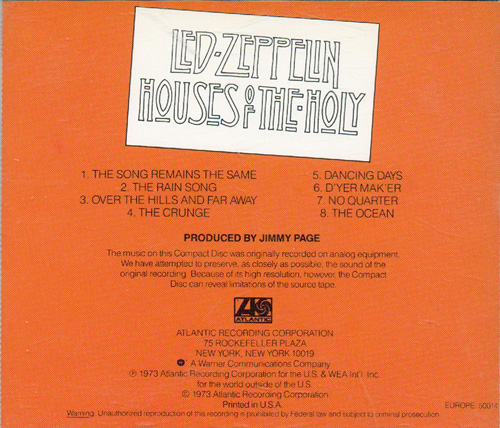
#1 – The Song Remains The Same
Wikipedia
Released
28 March 1973
Recorded
January–August 1972, Stargrovesand Headley Grange with the Rolling Stones Mobile Studio, and Island Studios, London; Mixed at Olympic Studios, London and Electric Lady Studios, New York
Genre
Hard rock, heavy metal
Length
40:58
Language
English
Label
Atlantic
Producer
Jimmy Page
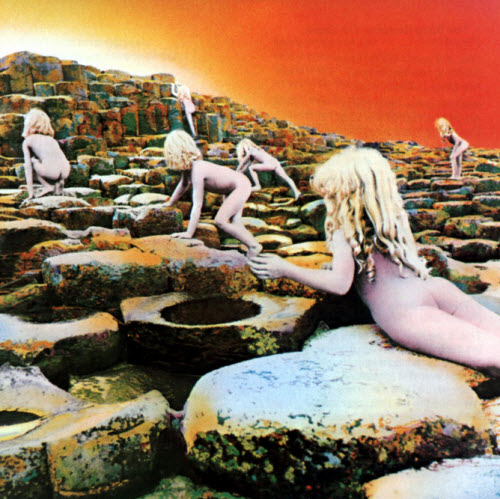
Houses of the Holy is the fifth studio album by English rock band Led Zeppelin, released by Atlantic Records on 28 March 1973. It is the first Led Zeppelin album composed of entirely original material, and represents a musical turning point for the band, who had begun to record songs with more layering and production techniques.
During the sessions, Led Zeppelin also recorded a song named “Houses of the Holy”, and planned to make it the album’s title track. However, the band eventually decided that it didn’t fit in, and the song was instead released on their next album, Physical Graffiti.
Houses of the Holy was certified 11× Platinum by the RIAA
In 2012, it was ranked number 148 on Rolling Stone magazine’s list of the 500 greatest albums of all time.
But side two begins with two amazing, well, dance tracks–the transmogrified shuffle is actually called “Dancing Days,” while “D’Yer Mak’er” is a reggae, or “reggae”
~Robert Christgau (http://www.robertchristgau.com)
#5 – Dancing Days
Album Sleeve Design
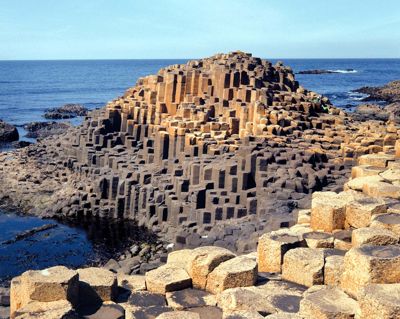
The cover art for Houses of the Holy was inspired by the ending of Arthur C. Clarke’s novel Childhood’s End, which involves several hundred million naked children, only slightly and physically resembling the human race in basic forms. The cover is a collage of several photographs which were taken at the Giant’s Causeway, Northern Ireland, by Aubrey Powell of Hipgnosis. This location was chosen ahead of an alternative one in Peru which was being considered.
Giant’s Causeway, Northern Ireland
Critical reaction
Upon its release, the album received some mixed reviews, with much criticism from the music press being directed at the off-beat nature of tracks such as “The Crunge” and “D’yer Mak’er”. However, the album was very successful commercially, entering the UK chart at number one, while in America its 39-week run (2 of them spent at number one) on the Billboard Top 40 was their longest since their third album.
My travels led me to where I am today. Sometimes these steps have felt painful, difficult, but led me to greater happiness and opportunites.
~Diana Ross
You know, you do need mentors, but in the end, you really just need to believe in yourself.
~Diana Ross
Love Child (1968)
Wikipedia:
Birth name
Diana Ernestine Earle Ross
Born
March 26, 1944 (age 69)
Detroit, Michigan
Genres
R&B, soul, disco, jazz, pop, dance
Occupations
Singer, record producer, actress
Years active
1959–present
Labels
Lu Pine, Motown, RCA, EMI
Associated acts
The Supremes, The Temptations, The Jackson 5, Marvin Gaye, Michael Jackson, Lionel Richie
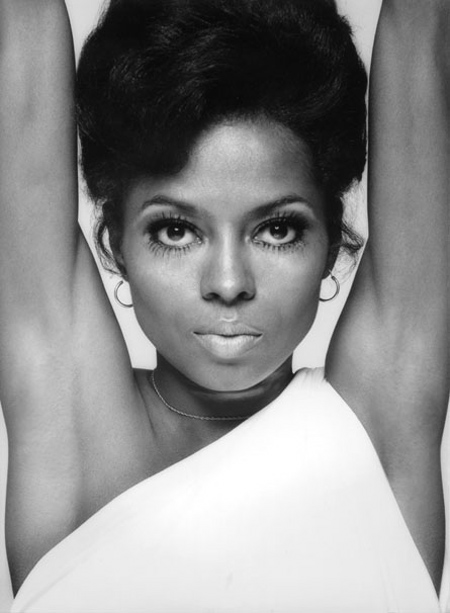
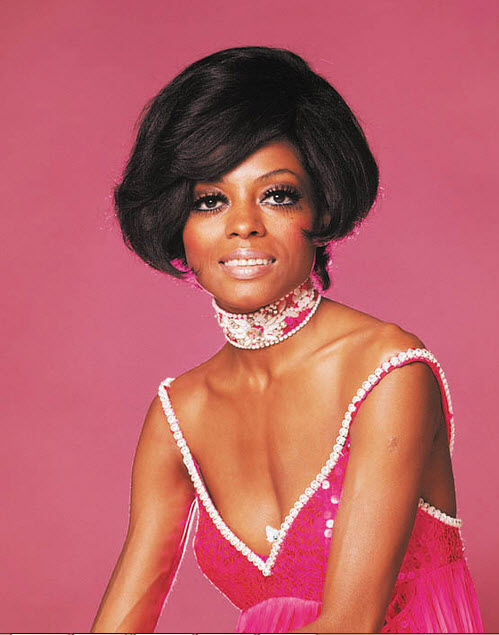
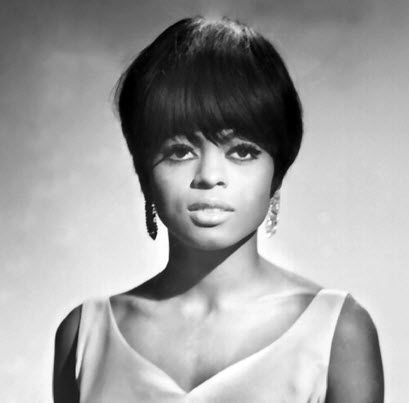
Diana Ernestine Earle Ross (born March 26, 1944) is an American vocalist, music artist and actress.
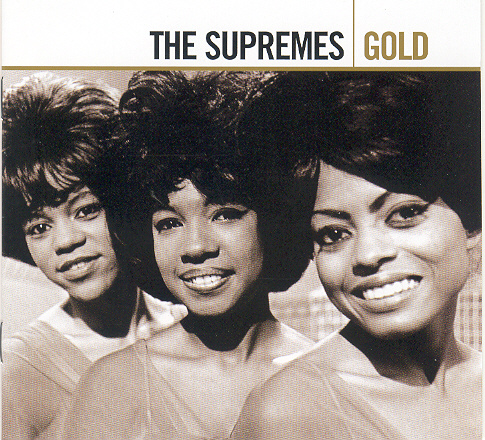
Ross first rose to fame as a founding member and lead singer of the Motown group The Supremes during the 1960s. After leaving the group in 1970, Ross began a solo career that has included successful ventures into film and Broadway. She received a Best Actress Academy Award nomination for her role as Billie Holiday in Lady Sings the Blues (1972), for which she won a Golden Globe award for most promising female newcomer. She has won seven American Music Awards, and won a Special Tony Award for her one-woman show, An Evening with Diana Ross, in 1977.
When The Lovelight Starts Shining Through His Eyes:
In 1976, Billboard magazine named her the “Female Entertainer of the Century.”
In 1993, the Guinness Book of World Records declared Diana Ross the most successful female music artist in history due to her success in the United States and United Kingdom for having more hits than any female artist in the charts with a career total of 70 hit singles.
Diana Ross has sold more than 100 million records worldwide.
In 1988, Ross was inducted to the Rock and Roll Hall of Fame as member of the Supremes alongside Florence Ballard and Mary Wilson.
Ross is one of the few recording artists to have two stars on the Hollywood Walk of Fame—one as a solo artist and the other as a member of The Supremes.
In December 2007, she received the Kennedy Center Honors.
In 2012, Diana was finally honored by NARAS with a Lifetime Achievement Grammy Award in her 50th year in the music business.
“It in no way denies the horrible things that happened in the South during the civil rights struggle, … The KKK and church bombings – all of those things did happen, but at the same time there were people like my father making Aretha Franklin records, these southern white boys who made their living playing on some of the best soul records ever made.”
~Patterson Hood
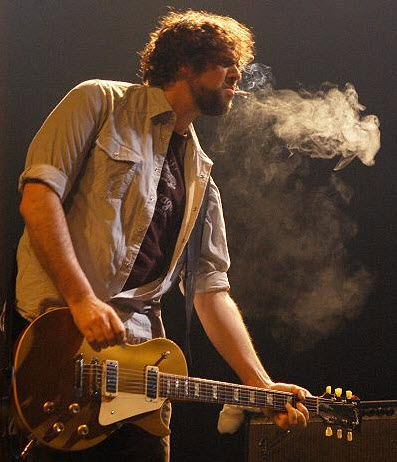
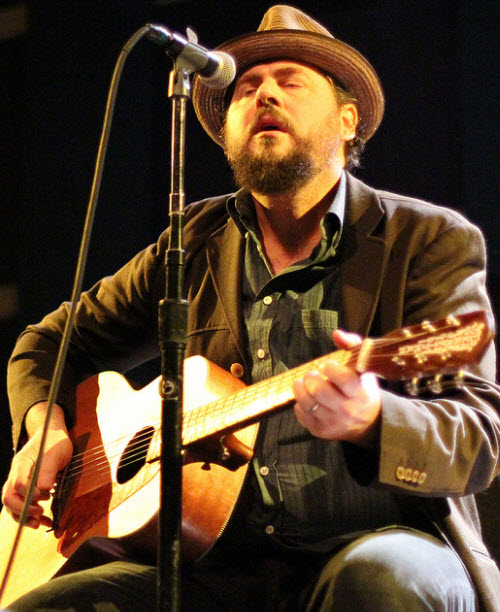
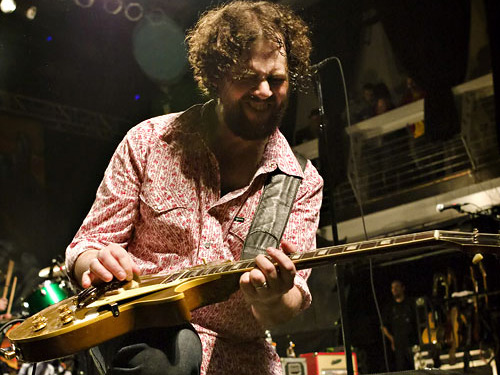
American musician and singer/songwriter, plays Guitar, Banjo, Mandolin, Piano and works as producer and mixing engineer, born March 24, 1964. He is best known as leader of the Drive-By Truckers.
His father is David Hood, longtime bassist of the Muscle Shoals Rhythm Section.
One of last years best songs from no.3 album on JV’s “The 25 best albums of 2012” is “Come back little Star”.
“Come Back Little Star” (Live at WFUV):
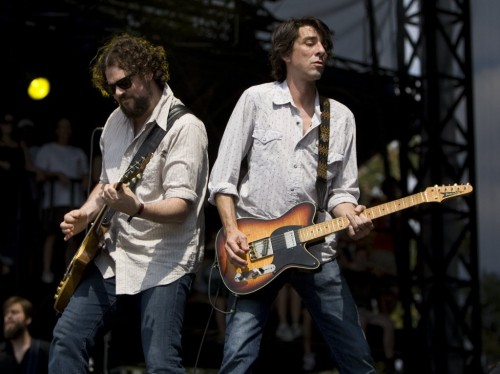
Mike Cooley & Patterson Hood formed the Drive-By Truckers in 1996, following a mutual relocation to Athens, GA. Drawing equal influence from country and rock & roll, the Drive-By Truckers released their first album, Gangstabilly, in 1998. However, it was with their ambitious double-disc set, 2001’s Southern Rock Opera, that garnered the Truckers their first dose of nationwide critical acclaim. Southern Rock Opera’s success as an independent release helped earn the a band a contract with Lost Highway Records, which soon reissued the album on a wider scale. After the label had a falling out with the DBTs over their somber follow-up, Decoration Day, the group bought the album back from Lost Highway and, instead, partnered with the independent label New West Records. Decoration Day was then released to rave reviews in 2003. Mark Deming (allmusic.com)
One of the best songs from DBT’s brilliant “Southern Rock Opera”:
Another song from his great solo album from 2012: “Heat Lightning Rumbles in the Distance ”
Leaving Time:
Album of the day:
Heat Lightning Rumbles in the Distance (2012)
….While Patterson Hood’s first two solo albums were full of fine music, they often seemed to have been created as a venue for songs that just didn’t suit the DBTs. Heat Lightning Rumbles in the Distance, on the other hand, stands on its own as a catalog of troubled hearts and souls, and it’s a brave, compelling collection from an artist who continues to evolve in remarkable and unexpected ways. Mark Deming – allmusic.com