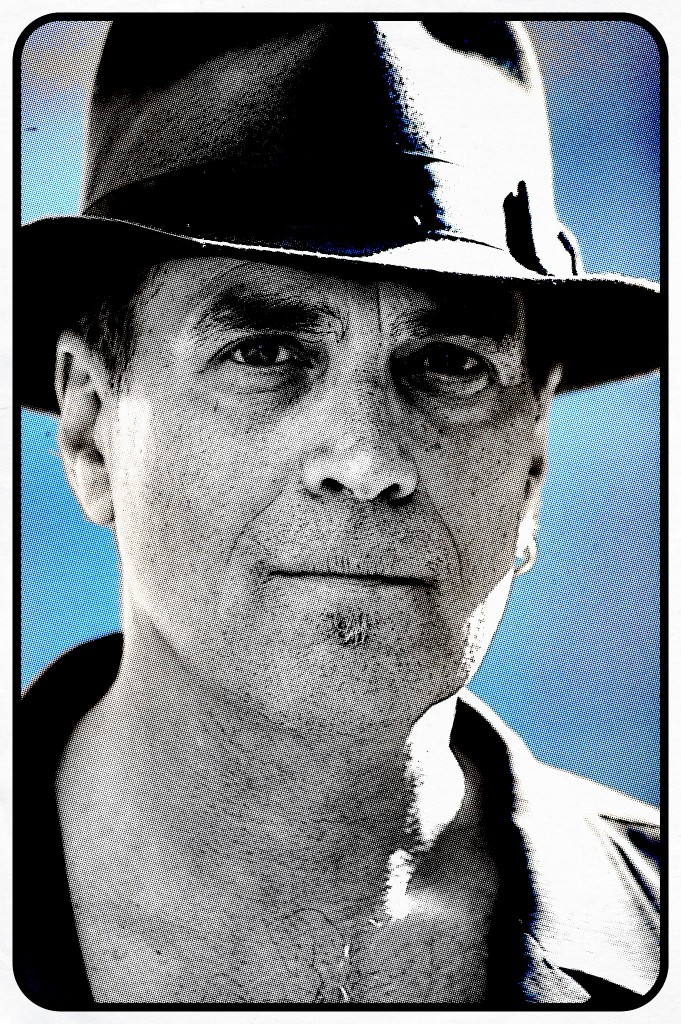
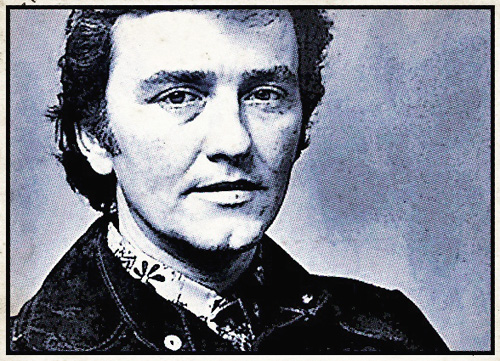
Eric Andersen (born February 14, 1943, Pittsburgh, Pennsylvania) is an American singer-songwriter.
Eric Andersen has maintained a career as a folk-based singer/songwriter since the 1960s. In contrast to such peers as Tom Paxton and Phil Ochs, Andersen’s writing has had a romantic/philosophical/poetic bent for the most part, rather than a socially conscious one, though one of his best-known songs, “Thirsty Boots,” has as its background the Freedom Rides of the early ’60s. (The song has been recorded by Judy Collins and others.) (allmusic.com/William Ruhlmann)
Eric Andersen on “The Johnny Cash Show” Jan. 6, 1971, singing Born Again:
Rolling Stone hailed it as the best ever live album, and they may still be right…
~Chris Jones (BBC – 2007)
From youtube: The Who at Leeds for their greatest live in 1970! it’s the ONLY VIDEO of this concert!
Fortune Teller (0:00 to 0:05) – Happy Jack (0:06 to 0:13) – I’m a Boy (0:14 to 0:33) – A Quick One While He’s Away (0:34 to 2:09) – Christmas (2:10 to 3:05) – Pinball Wizard (3:06 to 3:22) – Go to The Mirror (3:22 to 3:26) – Smash The Mirror (3:27 to 3:35)- Tommy’s Holliday Camp (3:36 to 3:45) – We’re Not Gonna Take It (with See Me, Feel Me) (3:46 at the end)
1970 Original LP – Full Album:
Wikipedia:
Released
16 May 1970
Recorded
14 February 1970,
University of Leeds,
Leeds, West Riding of Yorkshire,
England, United Kingdom
Genre
Rock
Length
36:24
Label
Decca/MCA
Producer
Jon Astley, Kit Lambert, and The Who
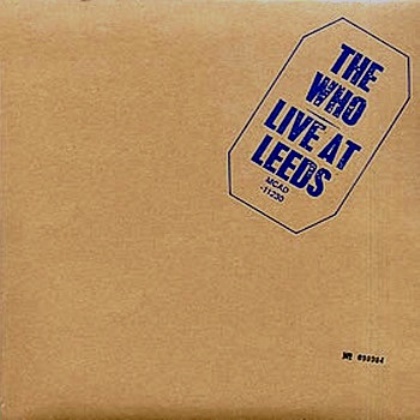
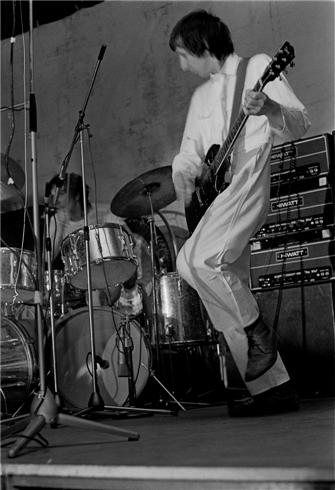
Live at Leeds is The Who’s first live album, and is the only live album that was released while the group were still actively recording and performing with their best known line-up of Roger Daltrey, Pete Townshend, John Entwistle and Keith Moon. Initially released in the United States on 16 May 1970, by Decca and MCA and the United Kingdom on 23 May 1970, by Track and Polydor, the album has been reissued on several occasions and in several different formats. As of 2005, the album is ranked number 170 on Rolling Stone magazine’s list of the 500 greatest albums of all time.
The album has been cited as the best live rock recording of all time by The Telegraph, The Independent, The New York Times,the BBC, and Rolling Stone. It is included in the book 1001 Albums You Must Hear Before You Die, and in Q magazine’s list of Loudest Albums of All Time. A Rolling Stone readers’ poll in 2012 ranked it the best live album of all time.
Shakin’ All Over:
Release History:
The original LP was released on 16 May 1970 in stereophonic format. The album was reissued on Compact Disc in 1985 by MCA in the US, and in 1987 by Polydor in Germany.
In 1995, the album was reissued as a remixed CD including more songs than the original vinyl edition, as well as song introductions and other banter that had been edited out of the original release. For the remix, new vocal overdubs from Daltrey, Townshend and Entwistle were recorded to address occasional flaws in the original tapes or performances.
In 2001, the album was released again as a part of the Universal Deluxe Edition series. The Deluxe Edition includes more chat between the songs, and the entirety of the band’s Tommy set as performed at Leeds. Again, new overdubs from the vocalists were employed at select points.
In October 2010, Universal Music announced the impending release of a 40th Anniversary edition of the album which would not only contain the full Leeds show from 14 February 1970 but also the band’s complete performance from Hull which was recorded the following evening as well as a heavyweight vinyl reproduction of the original six-track album, memorabilia and a replica 7 Inch Single of ‘Summertime Blues/ Heaven & Hell’. This performance had previously been unavailable because of a problem with the recording of John Entwistle’s bass guitar on the first six songs. To fix this problem his performance at the Leeds show was overdubbed over these tracks of the Hull performance using digital technology.
Mickey Newbury’s most famous song, his biggest hit, is An American Trilogy. A song that pairs a southern song written by a northerner with a slave spiritual imported from the Caribbean. Actually it combines three songs that was not supposed to work together, it interlace “Dixie”, “Battle Hymn of the Republic”, and “All My Trials”. It is quite ironic that the song Mickey Newbury is best-known for is the only one he didn’t write, the medley that was adopted by Elvis as a centrepiece of his Vegas-era shows.
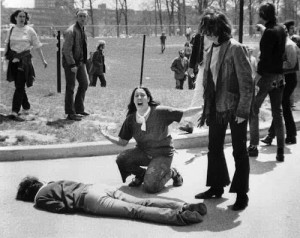
In 1970 the political climate in USA was extremely tense. Nixon, Vietnam, Cambodia, demonstrations against the war , Business Week Magazine wrote: “This is a dangerous situation…it threatens the whole social structure of the nation…”
White students in integrated southern schools insisted on using Dixie as a school-fight song, while black students protested, as they saw it as an anthem for white supremacy. Dixie was even banned in some states in the south.
Mickey Newbury decided to sing it as a statement against censorship. The arrangers advised him strongly against it, but Newbury told them to get the riot squad in.
Joan Baez, Odetta, Barbara Streisand, Mama Cass and Kris Kristofferson were in the audience.
“…the great and the good of Hollywood who had gathered on Thanksgiving weekend 1970 to see and hear this modes fellow from The Lone Star state make his West Coast Debut and were stunned into silence as they witnessed Mickey Newbury give the performance of his life.
It seemed as if the song was not just coming from inside him but as if he was outside himself and inside the song. The sound pushed out in waves. Calming, resolute, cleansing. The atmosphere in the club seemed to be frozen in slow motion, moving with the illusion of stillness. The entire audience rapt in the moment, as if trapped in amber, attention fixed upon the solitary figure on stage illuminated by a soft curtain of light, with just his guitar for accompaniment.
And that illusion was broken only by a tear that rolled down the cheek of a great gospel singer sitting in the audience. ” (liner notes: An American Trilogy 4 disc set)
This is fine version two years later, from the British Tv-show The Old Grey Whistle Test:
…Musically, however, it sounds overly serious and antiquated, almost quaint– more an artifact from the period than a durable piece of music.
And yet, “An American Trilogy” reveals Newbury’s complex approach to songwriting and album sequencing: Every word or line or stanza or song complements the others and shades their meanings, contributing crucially to the whole.
“Originally I intended to do just Dixie. It had the connotation of being strictly a Southern song that was associated with racism…I thought it was unfair so…in the middle of the show I started to do Dixie” – Mickey Newbury
Everybody held their breath…
“I was sitting next to Odetta, and I have to admit I turned a little green. What happened the next seven or eight minutes was magic.” – Susan (Mick’s wife)
The way Newbury presented Dixie, was not as a battle anthem, but as the slow, intense tune that we know today. He brought out its beauty and significance by slowing it down. He in fact had gotten the idea after hearing Barbara Streisand slowing down the song Happy Days Are Here Again and thereby infusing the song with the meaning and impact that was “hidden” in the song.
Here is another fine rendition, probably from the 80s:
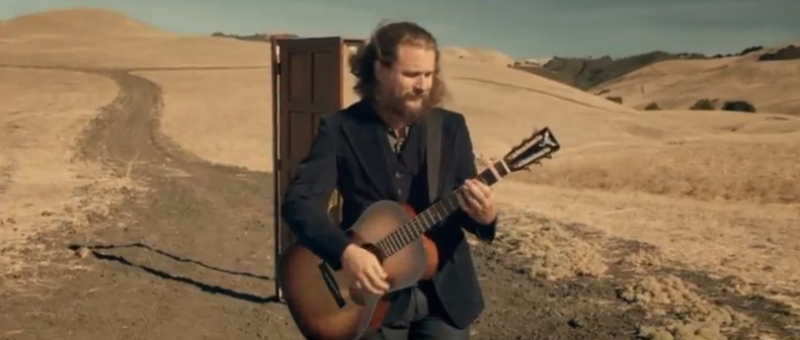
I love Jim James’ new album, Regions Of Light And Sound of God. I think it is playful, full of humour and good melodies. I like the fact that I can see why these songs are on his solo album instead of on a new release by My Morning Jacket.