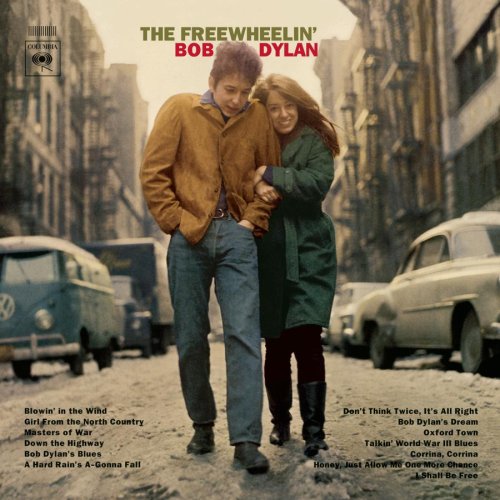
Freewheelin’ in it’s released form is essentially a “best of” from one of the most creative years in Dylan’s life. The lag between sessions resulted in an album whose sound metamorphosed at least twice.
~Clinton Heylin (BD – The Recording Sessions)
Dylan nailed 3 master versions for “The Freewheelin’ Bob Dylan” @ this important recording session.
I married Isis on the fifth day of May
But I could not hold on to her very long
So I cut off my hair and I rode straight away
For the wild unknown country where I could not go wrong
~Bob Dylan (Isis)
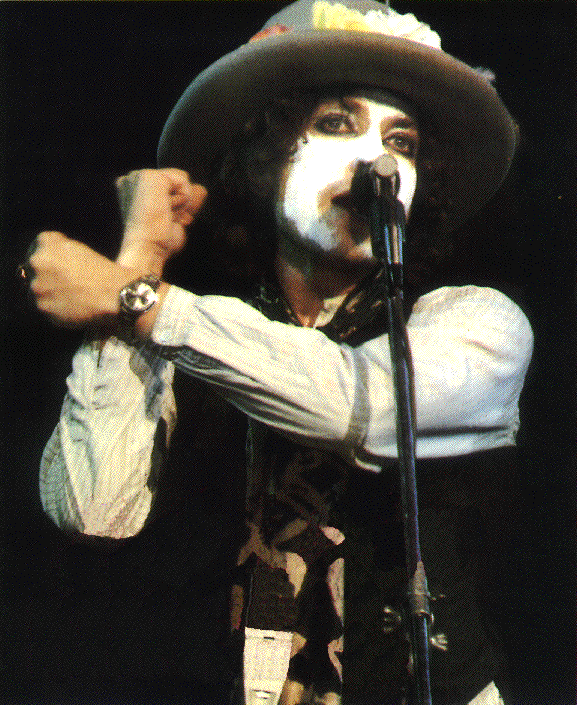
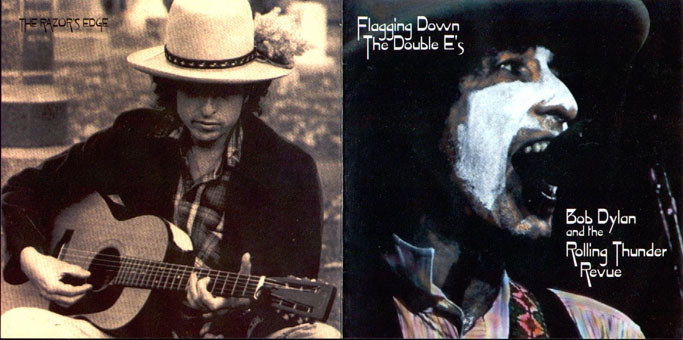
Dylan gives one of the finest shows of his career, as well as the longest of the 1975 concerts. A 23-song set (the opening Rolling Thunder show had just 16 Dylan songs) includes a six-song Dylan/Baez set and a three-song solo spot.
~Clinton Heylin (Bob Dylan: A Life in Stolen Moments Day by Day 1941-1995)
Forum de Montréal Montreal, Quebec, Canada 4 December 1975
Bob Dylan (vocal, guitar)
Bob Neuwirth (guitar)
Scarlet Rivera (violin)
T-bone J. Henry Burnett (guitar)
Roger McGuinn (guitar)
Steven Soles (guitar)
Mick Ronson (guitar)
David Mansfield (steel guitar, violin, mandolin ,dobro)
Another fine show, which is filmed for Renaldo and Clara, although none of the footage is used. The set includes a rare solo performance of “Mr. Tambourine
Man.”
~Clinton Heylin (Bob Dylan: A Life in Stolen Moments Day by Day 1941-1995)
Maple Leaf Gardens
Toronto, Ontario, Canada
2 December 1975
Bob Dylan (vocal, guitar)
Bob Neuwirth (guitar)
T-bone J. Henry Burnett (guitar)
Roger McGuinn (guitar)
Steven Soles (guitar)
Mick Ronson (guitar)
David Mansfield (steel guitar, violin, mandolin ,dobro)
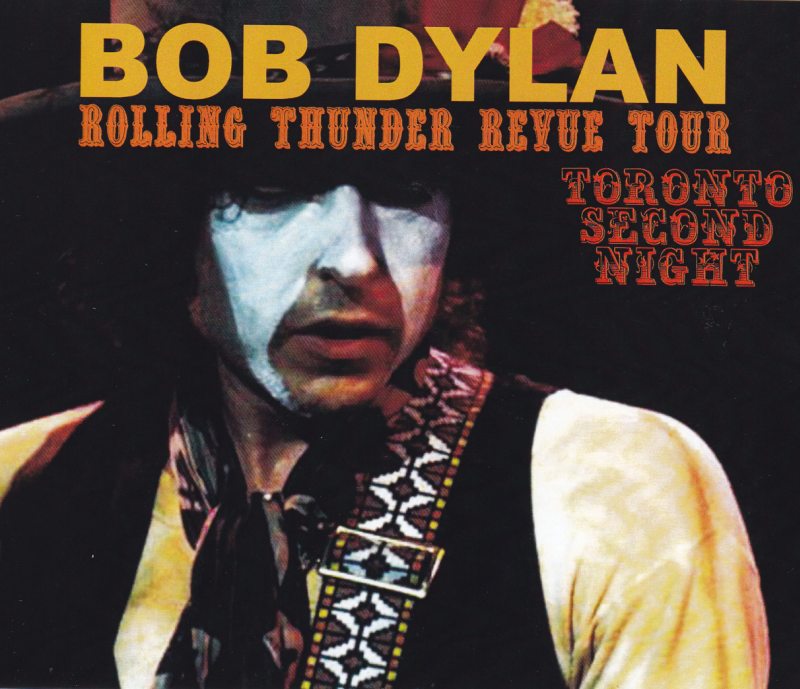
The evening show is at Toronto’s Maple Leaf Gardens. In a terrific 22- song set, Dylan does a three-song solo spot that includes the first 197 5 version of “It’s All Over Now, Baby Blue.” Dylan’s mother, Beatty, joins her son on stage for the encore.
~Clinton Heylin (Bob Dylan: A Life in Stolen Moments Day by Day 1941-1995)
Maple Leaf Gardens
Toronto, Ontario, Canada
1 December 1975
Bob Dylan (vocal, guitar)
Bob Neuwirth (guitar)
T-bone J. Henry Burnett (guitar)
Roger McGuinn (guitar)
Steven Soles (guitar)
Mick Ronson (guitar)
David Mansfield (steel guitar, violin, mandolin ,dobro)
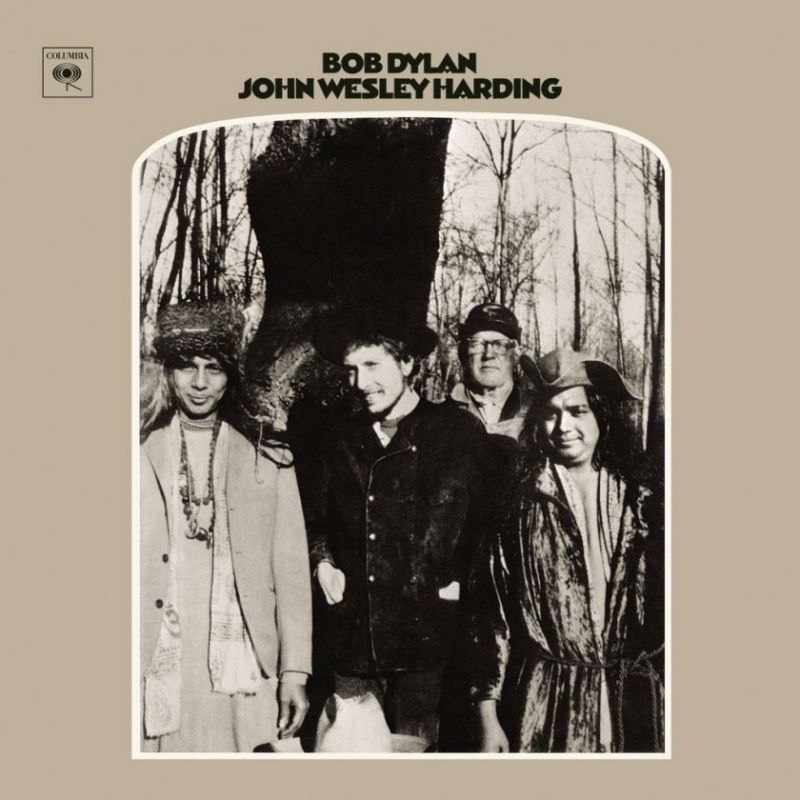
JW: John Wesley Harding – why did you call the album that?
BD: We… I called it that because I had that song John Wesley Harding. It didn’t mean anything to me. I called it that, Jann, ‘cause I had the song John Wesley Harding, which started out to be a long ballad. I was gonna write a ballad on… Like maybe one of those old cowboy… You know, a real long ballad. But in the middle of the second verse, I got
tired. I had a tune, and I didn’t want to waste the tune, it was a nice little melody, so I just wrote a quick third verse, and I recorded that. But it was a silly little song….
~Bob Dylan to Jann Wenner November 29, 1969
This quiet masterpiece, which manages to sound both authoritative and tentative (a mix that gave it a highly contemporary feel), is neither a rock nor a folk album—and certainly isn’t folk-rock. It isn’t categorisable at all.
~Michael Gray (The Bob Dylan Encyclopedia)
47 years ago Bob Dylan entered Columbia Studio A, Nashville Tennessee tempting his third (and final) recording session for “John Wesley Harding”.

 )
)
 )
)