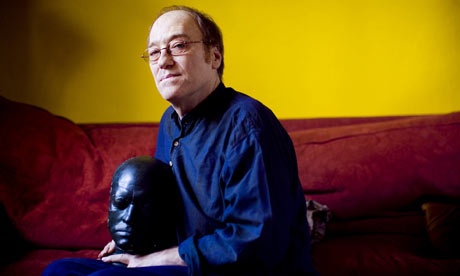
Dylan author and political activist Mike Marqusee died Jan 13 R.I.P.
Mike Marqusee (October 26, 1953 – January 13, 2015) was an American writer, journalist and political activist in London.
Marqusee, who described himself as a “deracinated New York Marxist Jew” had lived in Britain since 1971. He wrote mainly about politics, popular culture, the Indian sub-continent andcricket, and was a regular correspondent for, among others, The Guardian, Red Pepper and The Hindu. After he was diagnosed with multiple myeloma in 2007, he wrote extensively on health issues, and in defence of the National Health Service. His book The Price of Experience: Writings on Living with Cancer was published in 2014.
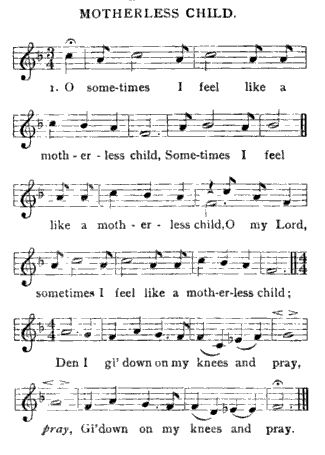
The Negro spiritual, Motherless Child Blues is a Negro Spiritual that turned into “Sometimes I Feel Like a Motherless Child” (or simply “Motherless Child”) .
The song dates back to the era of slavery in the United States when it was common practice to sell children of slaves away from their parents. An early performance of the song dates back as far as the 1870s by the Fisk Jubilee Singers. Like many traditional songs, it has many variations and has been recorded many times.
The song is clearly an expression of pain and despair as it conveys the hopelessness of a child who has been torn from his or her parents. Under one interpretation, the repetitive singing of the word “sometimes” offers a measure of hope, as it suggests that at least “sometimes” I do not feel like a motherless child.
Although the plaintive words can be interpreted literally, they were much more likely metaphoric. The “motherless child” could be a slave separated from and yearning for his African homeland, a slave suffering “a long ways from home”—home being heaven—or most likely both. (- wikipedia)
Ray Price has covered — and kicked up — as much musical turf as any country singer of the postwar era. He’s been lionized as the man who saved hard country when Nashville went pop, and vilified as the man who went pop when hard country was starting to call its own name with pride.
Bass player Tim Drummond died today – Rest in Peace
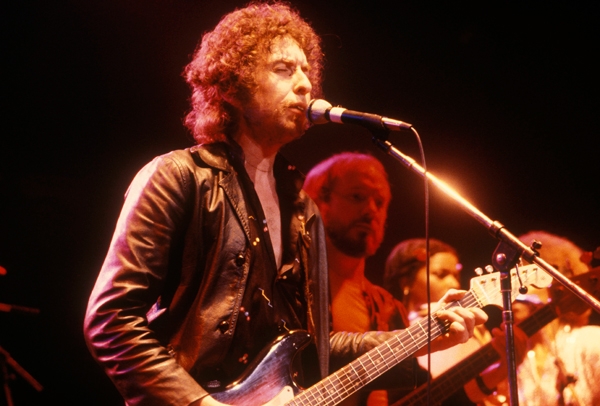
Tim Drummond, born Timothy Lee Drummond, 20 April 1940, Bloomington, Illinois, USA was sadly reported dead today, January 11th. He played with a lot of great artists, Bob Dylan during “the Gospel Years”, Neil Young, Ry Cooder and James Browne among others. Drummond has co-written songs with many of the artists he has worked with, including: “Saved” (Bob Dylan), “Who’s Talking” (J.J. Cale), and “Down In Hollywood” (Ry Cooder). He often plays as part of the session rhythm duo Tim & Jim with drummer Jim Keltner.
Allmusic:
“He joined Brown’s band, touring with great players such as Jimmy Nolen and Maceo Parker in North America, Vietnam, Korea and Africa, but eventually quit. Drummond then moved to Nashville, playing sessions for blues and R&B singers including Joe Simon, Margie Hendricks, Fenton Robinson, and country artists including Ronnie Mislap, Jimmy Buffett, Doug Kershaw and Charlie Daniels. A meeting with Neil Young resulted in Drummond playing on Young’s highly successful Harvest, and touring as part of his Straygators backing group. Drummond moved to California, where he has become an in-demand session player, working with a stellar list of artists including Young, Bob Dylan (Slow Train Coming, Saved, Shot Of Love), Ry Cooder (Bop Till You Drop, The Slide Area, Borderline), J.J. Cale (Naturally, Travel Log, Anyway The Wind Blows), Crosby, Stills And Nash (CSN), Graham Nash (Wild Tales), the Beach Boys (16 Big Ones), John Mayall, Rick Danko, Don Henley (Building The Perfect Beast) and Jewel (Pieces Of You).”
Neil Young – Long May You Run (with Tim Drummond, MTV Unplugged):
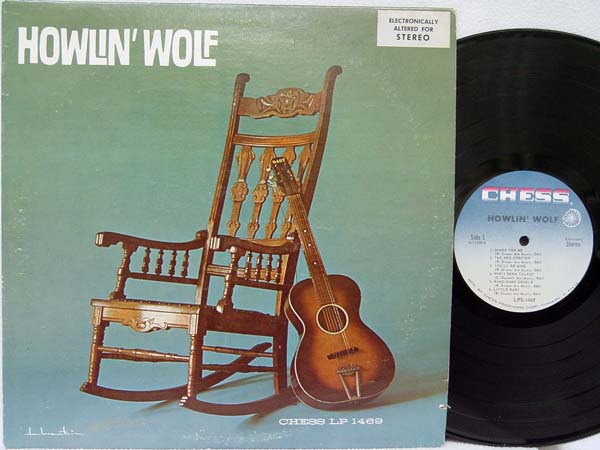
“Howlin’ Wolf’s second album brings together some of the blues great’s best singles from the late ’50s and early ’60s. Also available as a fine two-fer with his debut, Moanin’ in the Moonlight, the so-called Rockin’ Chair Album represents the cream of Wolf’s Chicago blues work. Those tracks afforded classic status are many, including “Spoonful,” “The Red Rooster,” “Wang Dang Doodle,” “Back Door Man,” “Shake for Me,” and “Who’s Been Talking?” Also featuring the fine work of Chess house producer and bassist Willie Dixon and guitarist Hubert Sumlin, Rockin’ Chair qualifies as one of pinnacles of early electric blues, and is an essential album for any quality blues collection.” – Stephen Cook (Allmusic)