All posts by Hallgeir

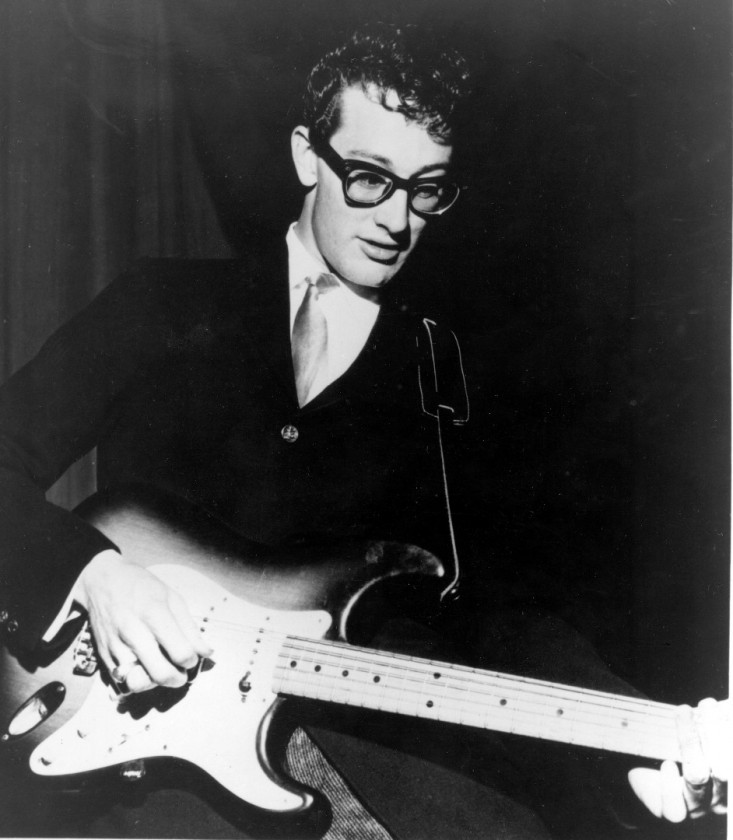
Today: The late Buddy Holly was born in 1936

buddy1

…Holly became the single most influential creative force in early rock & roll
~Bruce Eder (allmusic.com)

From Wikipedia:

Birth name Charles Hardin Holley
Born September 7, 1936
Lubbock, Texas, U.S.
Died February 3, 1959 (aged 22)
Grant Township, Cerro Gordo County, Iowa, U.S.
Genres Rock and roll, rockabilly,Lubbock sound
Occupations Singer-songwriter, musician
Instruments Vocals, guitar, piano, violin
Years active 1955–1959
Labels Decca, Brunswick, Coral
Associated acts The Crickets, The Picks

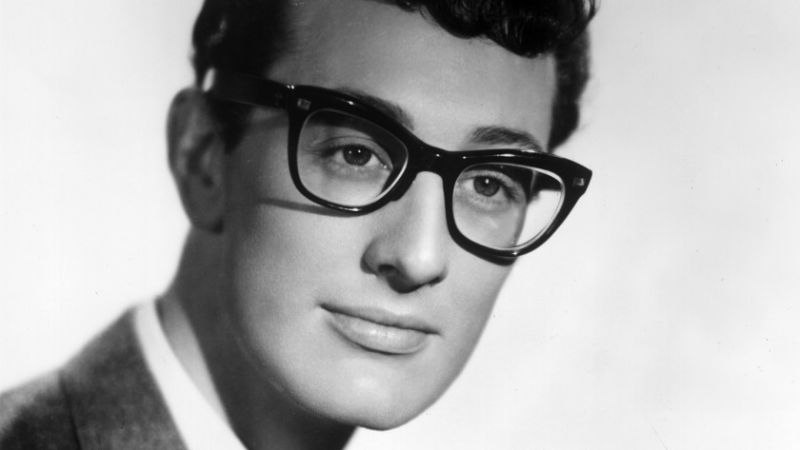
Charles Hardin Holley (September 7, 1936 – February 3, 1959), known professionally as Buddy Holly, was an American singer-songwriter and a pioneer of rock and roll. Although his success lasted only a year and a half before his death in an airplane crash, Holly is described by critic Bruce Eder as “the single most influential creative force in early rock and roll.” His works and innovations inspired and influenced contemporary and later musicians, notably The Beatles, Elvis Costello, The Rolling Stones, Don McLean, Bob Dylan, and Eric Clapton, and exerted a profound influence on popular music. Holly was among the first group of inductees to the Rock and Roll Hall of Fame in 1986. In 2004, Rolling Stone ranked Holly #13 among “The 100 Greatest Artists of All Time”.
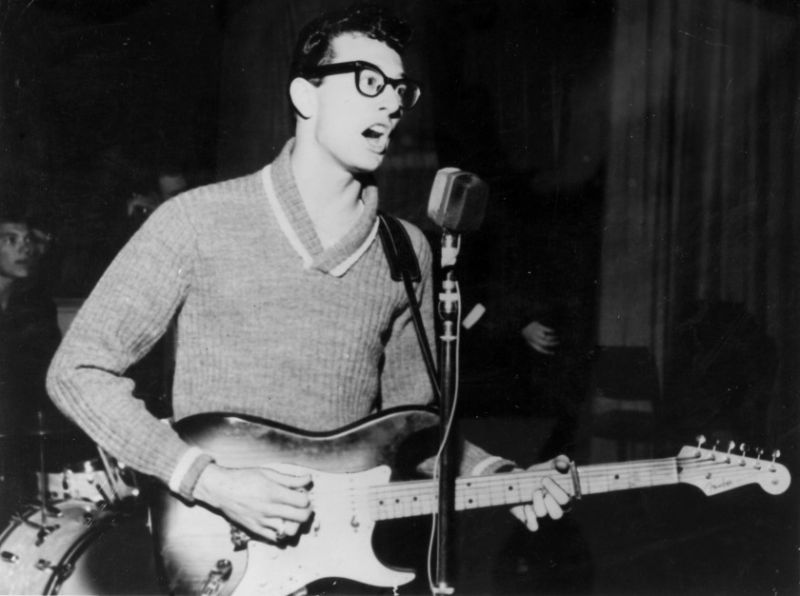
Music. Personalities. pic: circa 1957. American singer, songwriter and pioneer of rock Buddy Holly (1936-1959) who with his group "The Crickets" was one of the most popular entertainers of the 1950's. Buddy Holly tragically died in a plane crash in 1959.

Holly saw Elvis Presley sing in Lubbock in 1955, and began to incorporate a rockabilly style, similar to the Sun Records sound, which had a strong rhythm acoustic and slap bass. On October 15, 1955, Holly, along with Bob Montgomery and Larry Welborn, opened the bill for Presley in Lubbock, catching the eye of a Nashville talent scout. Holly’s transition to rock continued when he opened for Bill Haley & His Comets at a local show organized by Eddie Crandall, the manager for Marty Robbins.

Following this performance, Decca Records signed him to a contract in February 1956, misspelling his name as “Holly”.  He thereafter adopted the misspelled name for his professional career. Holly formed his own band, later to be called The Crickets, consisting of Holly (lead guitar and vocals), Niki Sullivan (guitar), Joe B. Mauldin (bass), and Jerry Allison (drums). They went to Nashville for three recording sessions with producer Owen Bradley. However, Holly chafed under a restrictive atmosphere that allowed him little input. Among the tracks he recorded was an early version of “That’ll Be The Day”, which took its title from a line that John Wayne’s character says repeatedly in the 1956 film The Searchers (GREAT film~Egil). 
buddy3

From allmusic – Bruce Eder:

Buddy Holly is perhaps the most anomalous legend of ’50s rock & roll — he had his share of hits, and he achieved major rock & roll stardom, but his importance transcends any sales figures or even the particulars of any one song (or group of songs) that he wrote or recorded. Holly was unique, his legendary status and his impact on popular music all the more extraordinary for having been achieved in barely 18 months. Among his rivals, Bill Haley was there first and established rock & roll music; Elvis Presley objectified the sexuality implicit in the music, selling hundreds of millions of records in the process, and defined one aspect of the youth and charisma needed for stardom; and Chuck Berry defined the music’s roots in blues along with some of the finer points of its sexuality, and its youthful orientation (and, in the process, intermixed all of these elements). Holly’s influence was just as far-reaching as these others, if far more subtle and more distinctly musical in nature. In a career lasting from the spring of 1957 until the winter of 1958-1959 — less time than Elvis had at the top before the army took him (and less time, in fact, than Elvis spent in the army) — Holly became the single most influential creative force in early rock & roll.
Read more @ allmusic


some Influence:

  • A 17-year-old Bob Dylan attended the January 31, 1959, show, two nights before Holly’s death. Dylan referred to this in his 1998 Grammy acceptance speech for his Time out of Mind being named Album of the Year:
“And I just want to say that when I was sixteen or seventeen years old, I went to see Buddy Holly play at Duluth National Guard Armory and I was three feet away from him…and he LOOKED at me. And I just have some sort of feeling that he was — I don’t know how or why — but I know he was with us all the time we were making this record in some kind of way.”
  • Keith Richards attended one of Holly’s performances, where he heard “Not Fade Away” for the first time. The Rolling Stones had an early hit covering the song.
  • Holly influenced many other singers during and after a career that lasted barely two years. Keith Richards once said Holly had “an influence on everybody.” In an August 24, 1978, Rolling Stone interview, Bruce Springsteen told Dave Marsh, “I play Buddy Holly every night before I go on; that keeps me honest.”
  • The Grateful Dead performed “Not Fade Away” 530 times over the course of their career, making it their seventh most-performed song. The song also appears on eight of their official live recording releases.
  • Don McLean’s popular 1971 ballad “American Pie” is inspired by Holly and the day of the plane crash. The American Pie album is dedicated to Holly.
  • On September 7, 1994 (Holly’s 58th birthday), Weezer released their single, “Buddy Holly”.

Peggy Sue (Arthur Murray Dance Party on December 29, 1957):

Album of the day – The Very Best of Buddy Holly:

Other September 07:

Continue reading Today: The late Buddy Holly was born in 1936
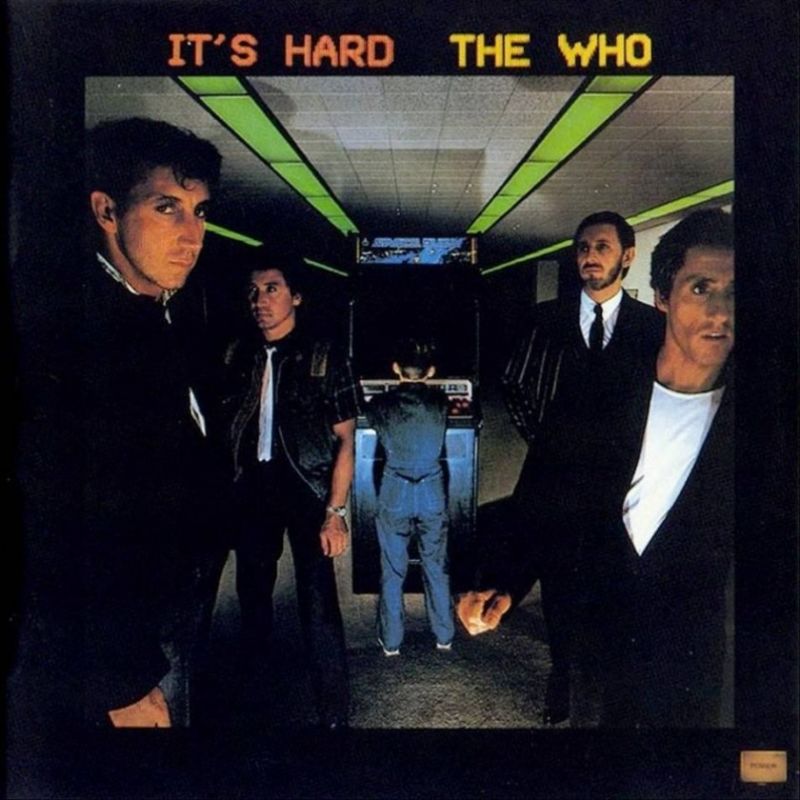
Today: The Who released It’s Hard in 1982

the-who-its-hard-1997

It’s Hard is the tenth studio album by English rock band The Who. It is the last Who album to feature bassist John Entwistle and drummer Kenney Jones, as well as the last to be released on Warner Bros. Records in the US. It was their last album until 2006’s Endless Wire. It was released in 1982 on Polydor in the UK, peaking at #11,] and on Warner Bros. in the US where it peaked at #8 on the Billboard Pop Albums charts. It got mixed reviews on its release, but I find it interesting. It’s a bit different, but I love Townshend’s playfulness and willingness to seek new challenges.

The Rolling Stone Magazine’s Parke Puterbaugh gave the album a rave review and said it was their best album since Who’s Next:

“The key to the album is “I’ve Known No War,” a song that could become an anthem to our generation much the way “Won’t Get Fooled Again” did a decade ago.

The entire album is vibrant with the palpable energy of rekindled bonds and rediscovered group values.

It’s a long road the Who have traveled from the bristling, bare-knuckled fury of their early days to the present. They rank among a handful of vanguard rock musicians who show signs of pushing through the age barrier and creating a viable adult vocabulary for rock, one that faces up to the moral responsibilities of middle age and allows them to use their craft to effectively shape consciousness. It must seem especially ironic to Townshend that this is true of the band that sang “hope I die before I get old” back in 1965, but there you go: always the group that delivers the unexpected. “

Eminence Front (Live, official video):

Athena (Live at Shea Stadium, 1982):

It’s Hard on Spotify:

– Hallgeir

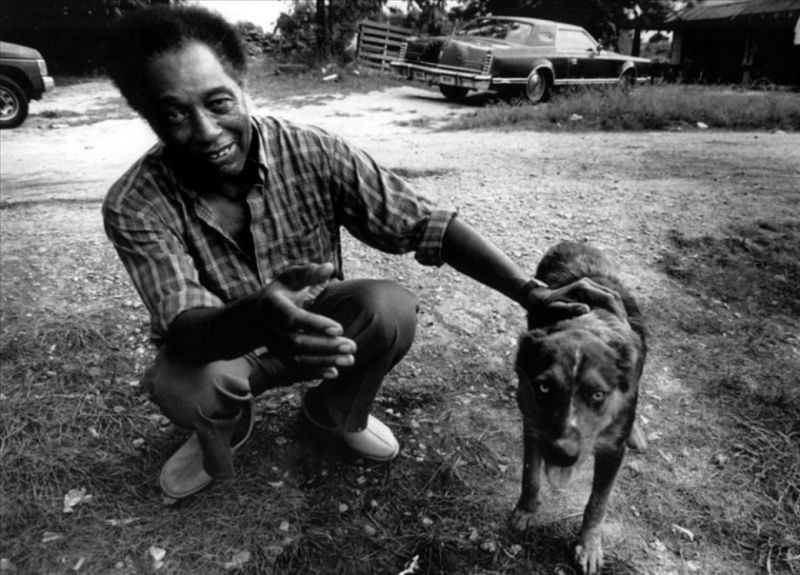
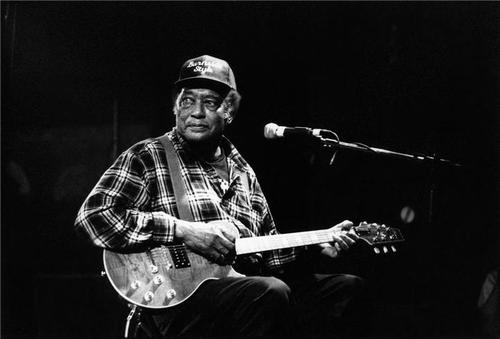
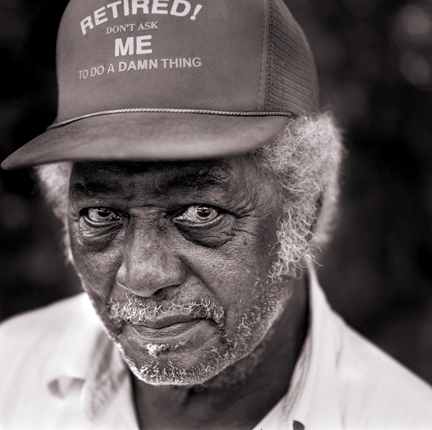
Today: R.L. Burnside passed away September 1 2005

RL_Burnside

“He was a happy-go-lucky nihilist…. he took things exactly as they were. No more, no less.”
– Matthew Johnson, the founder of Mr. Burnside’s record label, Fat Possum.


R. L. Burnside (November 23, 1926 – September 1, 2005), born Robert Lee Burnside, was an American blues singer, songwriter, and guitarist who lived much of his life in and around Holly Springs, Mississippi. He played music for much of his life, but did not receive much attention until the early 1990s.

In the latter half of the 1990s, Burnside repeatedly recorded with Jon Spencer,  garnering crossover appeal and introducing his music to a new fan base within the underground garage rock scene.

One commentator noted that Burnside…. were “present-day exponents of an edgier, electrified version of the raw, uncut Delta blues sound.”

In the 1990s, he appeared in the film Deep Blues and began recording for the Oxford, Mississippi, label Fat Possum Records. Founded byLiving Blues magazine editor Peter Redvers-Lee and Matthew Johnson, the label was dedicated to recording aging North Mississippi bluesmen such as Burnside and Junior Kimbrough.

Burnside remained with Fat Possum from that time until his death.

Burnside’s 1996 album A Ass Pocket of Whiskey (recorded with Jon Spencer) gained critical acclaim, earning praise from Bono and Iggy Pop.

Style:

Burnside had a powerful, expressive voice and played both electric and acoustic guitars (both with a slide and without). His drone-based style was a characteristic of North Mississippi hill country blues rather than Mississippi Delta blues. Like other country blues musicians, he did not always adhere to 12- or 16-bar blues patterns, often adding extra beats according to his preference. He called this “Burnside style” and often commented that his backing musicians needed to be familiar with his style in order to be able to play along with him.

Burnside collaborated in the late 1990s with The Jon Spencer Blues Explosion on the album A Ass Pocket of Whiskey. Consequently, he gained the attention of many within this underground music scene, cited as an influence by Hillstomp and covered on record by The Immortal Lee County Killers.

Burnside’s “Skinny Woman” was also interpolated into the song “Busted” by fellow Fat Possum musicians The Black Keys, who have listed Burnside as an influence on their music.

Shake ’em on down – Live:

Album of the day – Rollin’ & Tumblin’ (Spotify):

Other September-01:

Continue reading Today: R.L. Burnside passed away September 1 2005

The Best of Another Self Portrait: The Isle Of Wight concert

isle1

I have now had a few days listening to the new Bootleg series 10 deluxe box set. It is very interesting, and it is actually rather good. I am one of those few that kind of liked the original album, so I expected to like Another Self Portrait. I was not expecting that I would like it as much as I do.

That said, there are two things that stand out however. The first is the demo version of When I Paint My Masterpiece, it knocked me out. It is breathtakingly beautiful.

But the best of the release is the full Isle of Wight performance with The Band, and I really did not expect that!

I’ve read about the Isle of Wight concert, what an important event it was, how good it was. Dylan’s first concert in three years! More than a concert, a culturally significant event and a great show.

Rolling Stone Magazine wrote in 1969:
“During Dylan’s performance, a lovely 19-year-old girl, who said her name was Vivian and that she came from “nowhere,” appeared naked with a similarly naked young man, in the midst of a sea of foam pumped into a recreation area, and before 200 persons, made love. There was no attempt to stop them – but there was plenty of encouragement. “Beautiful,” bellowed several who saw it: “Freaky, baby!””

Well, they got my attention!

isle2

…and they wrote about the concert:

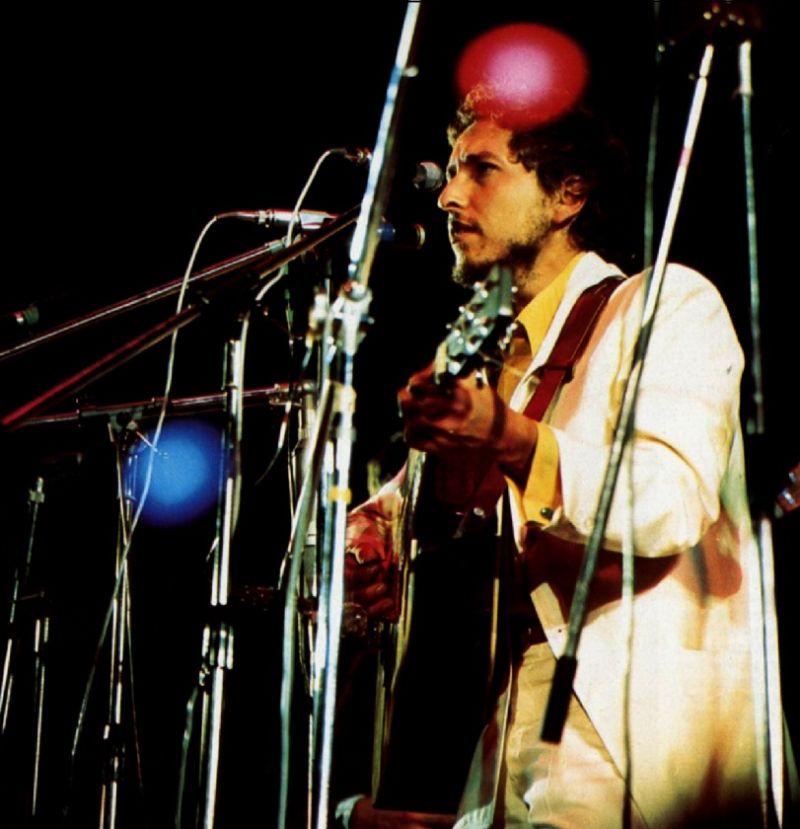
“On came Bob Dylan, one of the very few artists who could afford not to wear skin-tight, flared, sexy trousers. Boy Dylan in a loose white suit (Buddy Holly probably owned a suit like that), white shoes, white tie and yellow shirt, behind a sparkling stainless steel chin-height barricade of microphones.

The stomping and the cheering and the crying and the crush toward the front-stage area was still strong as Dylan began his first song, “She Belongs to Me.” “Great to be here, great to be here,” he said as he finished the song. “It sure is.” There was a slightly more down-home resilience to “I Threw It All Away” and “Maggie’s Farm” than on the recordings, possibly due to the Band’s mellow, sinewy backings. “Highway 61” positively rocked.

Then the Band departed for a time, allowing Dylan to play acoustically: “Will Ye Go, Lassie Go,” a hardy perennial on the British folk scene; “It Ain’t Me Babe”; “To Ramona”; “Mr. Tambourine Man.” In “Like a Rolling Stone,” Dylan hit upon a new device of adding the world “girl” at judicious places – “You mustn’t let other people get your kicks for you, girl!” the sang, goosing the song along all the better, with the Band, who had re-joined him now, adding their resonant voices to the chorus. “I Pity The Poor Immigrant” took on sea chantey tones with Garth Hudson’s accordion accompaniment. Song after song rolled on, “I’ll Be Your Baby Tonight,” “I Dreamed I Saw St. Augustine,” “Lay Lady Lay,” “One Too Many Mornings.”

And then Dylan announced: “We’re going to do one more for you.” Just the slightest sardonic grin. “This was a big hit over here by Manfred Mann, a great group, a great group.” A whoop of anticipation, and sure enough, it was “Mighty Quinn,” mighty funky.

Bob smiled broadly and waved his goodbye as the audience fell into their chant: “More, more, more more, more . . . ” So he did an encore of two more songs, the first of them a new Dylan song, a slow, gentle ballad called “Who’s Gonna Throw That Next Throw,” then followed it with a prancing “Rainy Day Women No. 12 and No. 35.”

And that was it. He had sung for one solid hour, from 11 PM to midnight. “Thank you, thank you, great!” he told the audience, still smiling, as he left for the last time.”

They describe the second coming don’t they?
Continue reading The Best of Another Self Portrait: The Isle Of Wight concert

Van Morrison: One Irish Rover Happy 68th Birthday

van4

One Irish Rover was broadcast in 1991 on BBC 2 Arena TV special and on A&E cable television program. It is a series of live songs with commentary by Morrison about music and poetry,  it has some truly amazing performances. It includes the footage of Morrison and Dylan in Greece, Georgie Fame at Ronnie Scott’s, John Lee Hooker, The Chieftains and Danish Radio Big Band.

Part 1:

This  profile of Van Morrison is both wayward and eccentric, but in a good way, an interesting way.

In One Irish Rover, Van is relaxed and playful. He is surrounded by people that he seem comfortable with, in Greece,  Morrison duets with Bob Dylan; sitting on a dock in the Louisiana bayou he do some tremendous blues with John Lee Hooker; we also see him in London playing at the legendary Ronnie Scott’s jazz club, with the Danish Radio Big Band at the Barbican Center in London  and in Belfast, playing with the Chieftains.

It is a true joy, and it ends with a tender Don’t look back with John Lee Hooker that is just …incredibly good!

Part 2:

Track list:

w/ Bob Dylan (Athen 1989-06-29)
1. Crazy Love

w/ John Lee Hooker:
2. Baby Please Don’t Go
3. Wednesday Evening Blues

At Ronnie Scotts Club (London 1989-05-24)
4. Help Me
5. It’s All In The Game/You Know What They’re Writing About
6. Did You Get Healed

w/ the Danish Radio Big Band (Barbican Center, London 1990-02-19)
7. Vanlose Stairway
8. I’d Like To Write another Song
9. Haunts Of ancient Peace
10. Whenever God Shines His Light
11. I Will Be There

w/ Bob Dylan (Athen 1989-06-29)
12. Foreing Windows
13. One Irish Rover

w/ The Chieftains (Belfast 1987-10-29)
14. Raglan Road

At Ronnie Scotts Club:
15. Summertime In England
16. Moondance

w/ John Lee Hooker:
17. Don’t Look Back

Credits
18. Celtic Swing

Part 3:

Part 4:

– Hallgeir