All posts by Hallgeir

Billy Bragg goes twang with his new song No One Knows Nothing Anymore

Billy Bragg-3

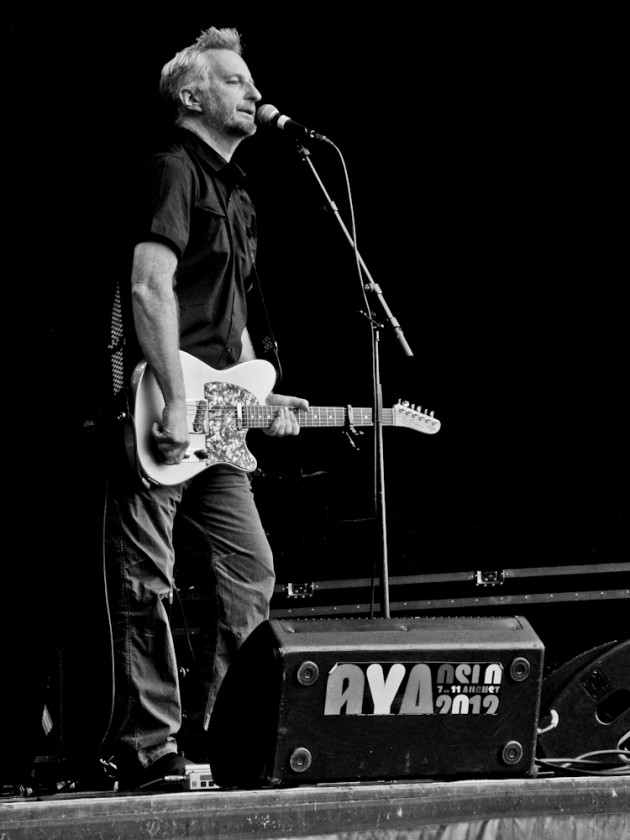
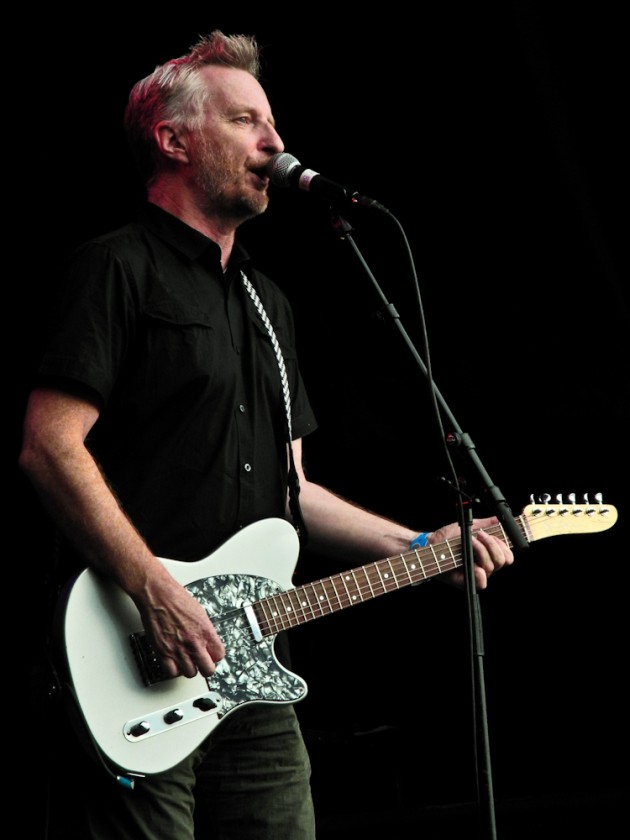
We saw Billy Bragg do a very fine solo set in Oslo last summer, he hasn’t mellowed too much. He is still the workingman’s troubadour. While that is certainly true, he has always had the melodies, he is a great tunesmith and a folksinger in the truest sense.

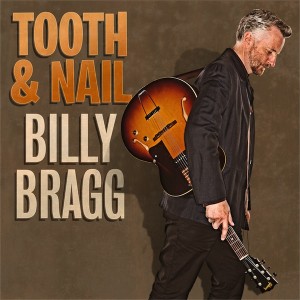
Now he’s back with a song that is going on repeat in our household, the incredibly catchy No On Knows Nothing Anymore.  The great new country tinged track is from Bill Bragg’s upcoming release Tooth and Nail produced by Joe Henry.

No One Knows Nothing Anymore:

Billy Bragg-2

Crossing my fingers and hoping that the whole album has the same countryfied feeling, it really suits Mr. Bragg.

Billy Bragg Tooth and Nail

Here’s a promo for the record  and yes! it sounds quite country and it sounds fantastic! (out 18 March):

Billy Bragg-1

– Hallgeir (who also took the pictures)

Bob Dylan – Tin Angel Revisited

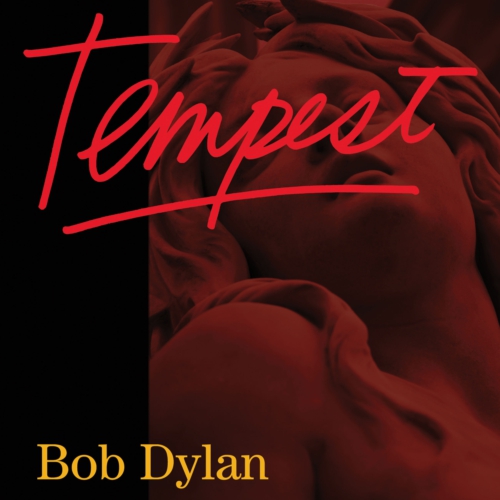
COLUMBIA RECORDS BOB DYLAN ALBUM

Just a few thoughts on the song Tin Angel.

For me, after listening to it for two days, the most obvious masterpiece on Bob Dylan’s new album is the murder ballad, Tin Angel. It’s a story-song, the kind Dylan has done so magnificently many times before. Cross the Green Mountain, Tweeter and the Monkey Man and  Brownsville Girl springs to mind. They are extremely cinematic songs and they tell a story over many verses.  Another song that pops up in my head is the wonderful story of Spanish Jack by Willy DeVille, not very like in sound but in tone.

The music on Tin Angel is repetitive, but not in a bad way, it’s an hypnotic rhythm and a bass that sucks the wind straight out of you. It transcends ordinary music and serves as a enhancement of the fascinating story that is told over the 28 verses.

I could try to analyze the song, but I don’t think we should. It is straightforward ballad of three doomed lovers, told in a dark, dark song, and it sounds like Bob Dylan is having a hell of a time when he tells it.

After I got a comment on the original post about the song Gypsy Davy I just had to do a revision (see the bottom of the post)!

..and why is it called Tin Angel, I have an idea, but I could be off the mark. Joni Mitchell has accused Dylan of being unoriginal, and I think he is poking fun at her  by naming the song Tin Angel. The same title as a song recorded by Mitchell but written by somebody else.

Here’s the spotify link:

It is a bit difficult to see who says what in the story, I have put who I think delivers the lines after each line of dialogue in the song.

The “playas”:

The Boss
The Wife
Henry Lee
Servant

The story starts at home at the mansion:

It was late last night when the boss came home
To a deserted mansion and a desolate throne
Servant said: “Boss, the lady’s gone
She left this morning just ‘fore dawn.” (Servant)

“You got something to tell me, tell it to me, man
Come to the point as straight as you can” (The Boss)
“Old Henry Lee, chief of the clan
Came riding through the woods and took her by the hand” (Servant)

The boss he lay back flat on his bed
He cursed the heat and he clutched his head
He pondered the future of his fate
To wait another day would be far too late

“Go fetch me my coat and my tie
And the cheapest labour that money can buy
Saddle me up my buckskin mare
If you see me go by, put up a prayer” (The Boss)
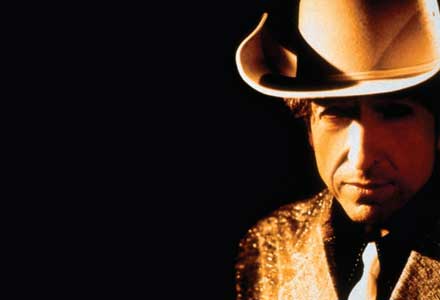
The Boss is determined to “set things straight” and rides off to get his wife and to kill Henry Lee. Henry Lee is a name that we know from an old song on the Harry Smith collection (the first on the first cd). Covered by Bob Dylan earlier (as Love, Henry), also covered by Nick Cave on the album Murder Ballads. An album where Tin Angel would fit very naturally.

The next 6 verses tells us about his journey and how he sneaks up on the unknowing lovers. Dylan really sets a terrifying scene for what is about to happen. The Boss really gets into a killing mood, “he renounces his faith, he denies his lord”:

Well, they rode all night, and they rode all day
Eastward, long down the broad highway
His spirit was tired and his vision was bent
His men deserted him and onward he went

He came to a place where the light was dull
His forehead pounding in his skull
Heavy heart was racked with pain
Insomnia raging in his brain

Well, he threw down his helmet and his cross-handled sword
He renounced his faith, he denied his lord
Crawled on his belly, put his ear to the wall
One way or another put an end to it all

He leaned down, cut the electric wire
Stared into the flames and he snorted the fire
Peered through the darkness, caught a glimpse of the two
It was hard to tell for certain who was who

He lowered himself down on a golden chain
His nerves were quaking in every vein
His knuckles were bloody, he sucked in the air
He ran his fingers through his greasy hair

They looked at each other and their glasses clinked
One single unit, inseparably linked
“Got a strange premonition there’s a man close by” (Henry Lee)
“Don’t worry about him, he wouldn’t harm a fly” (The Wife)


As we hear, the wife is not very worried or affraid of her husband.

A small snippet seems to be taken from The Fire-King by Sir Walter Scott:  “He has thrown by his helmet, and cross-handled sword, Renouncing his knighthood, denying his Lord”. I’m sure there are a lot of other small “thefts” as well.

Love and theft, baby, love and theft.
Continue reading Bob Dylan – Tin Angel Revisited

Today: Happy birthday Eric Andersen

eric-andersenjpg

Eric Andersen (born February 14, 1943, Pittsburgh, Pennsylvania) is an American singer-songwriter.

Eric Andersen has maintained a career as a folk-based singer/songwriter since the 1960s. In contrast to such peers as Tom Paxton and Phil Ochs, Andersen’s writing has had a romantic/philosophical/poetic bent for the most part, rather than a socially conscious one, though one of his best-known songs, “Thirsty Boots,” has as its background the Freedom Rides of the early ’60s. (The song has been recorded by Judy Collins and others.) (allmusic.com/William Ruhlmann)

Eric Andersen on “The Johnny Cash Show” Jan. 6, 1971, singing Born Again:

Continue reading Today: Happy birthday Eric Andersen

The Best Songs: An American Trilogy – Mickey Newbury

mickey newbury

“Mickey Newbury is a poet” – Johnny Cash

Mickey Newbury’s most famous song, his biggest hit, is An American Trilogy. A song that pairs a southern song written by a northerner with a slave spiritual imported from the Caribbean. Actually it combines three songs that was not supposed to work together,  it interlace “Dixie”, “Battle Hymn of the Republic”, and “All My Trials”. It is quite ironic that the song Mickey Newbury is best-known for is the only one he didn’t write, the medley that was adopted by Elvis as a centrepiece of his Vegas-era shows.

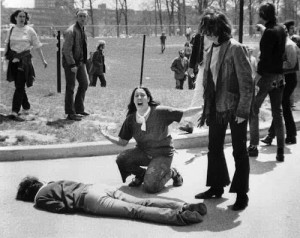
In 1970 the political climate in USA was extremely tense. Nixon, Vietnam, Cambodia, demonstrations against the war , Business Week Magazine wrote: “This is a dangerous situation…it threatens the whole social structure of the nation…”

Student-Strike-of-1970-USA

White students in integrated southern schools insisted on using Dixie as a school-fight song, while black students protested, as they saw it as an anthem for white supremacy. Dixie was even banned in some states in the south.

Mickey Newbury decided to sing it as a statement against censorship. The arrangers advised him strongly against it, but Newbury told them to get the riot squad in.

Joan Baez, Odetta, Barbara Streisand, Mama Cass and Kris Kristofferson were in the audience.

“…the great and the good of Hollywood who had gathered on Thanksgiving weekend 1970 to see and hear this modes fellow from The Lone Star state make his West Coast Debut and were stunned into silence as they witnessed Mickey Newbury give the performance of his life.

It seemed as if the song was not just coming from inside him but as if he was outside himself and inside the song. The sound pushed out in waves. Calming, resolute, cleansing. The atmosphere in the club seemed to be frozen in slow motion, moving with the illusion of stillness. The entire audience rapt in the moment, as if trapped in amber, attention fixed upon the solitary figure on stage illuminated by a soft curtain of light, with just his guitar for accompaniment.

And that illusion was broken only by a tear that rolled down the cheek of a great gospel singer sitting in the audience. ” (liner notes: An American Trilogy 4 disc set)

This is fine version two years later, from the British Tv-show The Old Grey Whistle Test:

Pitchfork:

…Musically, however, it sounds overly serious and antiquated, almost quaint– more an artifact from the period than a durable piece of music.

And yet, “An American Trilogy” reveals Newbury’s complex approach to songwriting and album sequencing: Every word or line or stanza or song complements the others and shades their meanings, contributing crucially to the whole.

“Originally I intended to do just Dixie. It had the connotation of being strictly a Southern song that was associated with racism…I thought it was unfair so…in the middle of the show I started to do Dixie” – Mickey Newbury

Everybody held their breath…

“I was sitting next to Odetta, and I have to admit I turned a little green. What happened the next seven or eight minutes was magic.” – Susan (Mick’s wife)

odetta 2

The way Newbury presented Dixie, was not as a battle anthem, but as the slow, intense tune that we know today. He brought out its beauty and significance by slowing it down. He in fact had gotten the idea after hearing Barbara Streisand slowing down the song Happy Days Are Here Again and thereby infusing the song with the meaning and impact that was “hidden” in the song.

Here is another fine rendition, probably from the 80s:

Continue reading The Best Songs: An American Trilogy – Mickey Newbury