Category Archives: Music Calendar

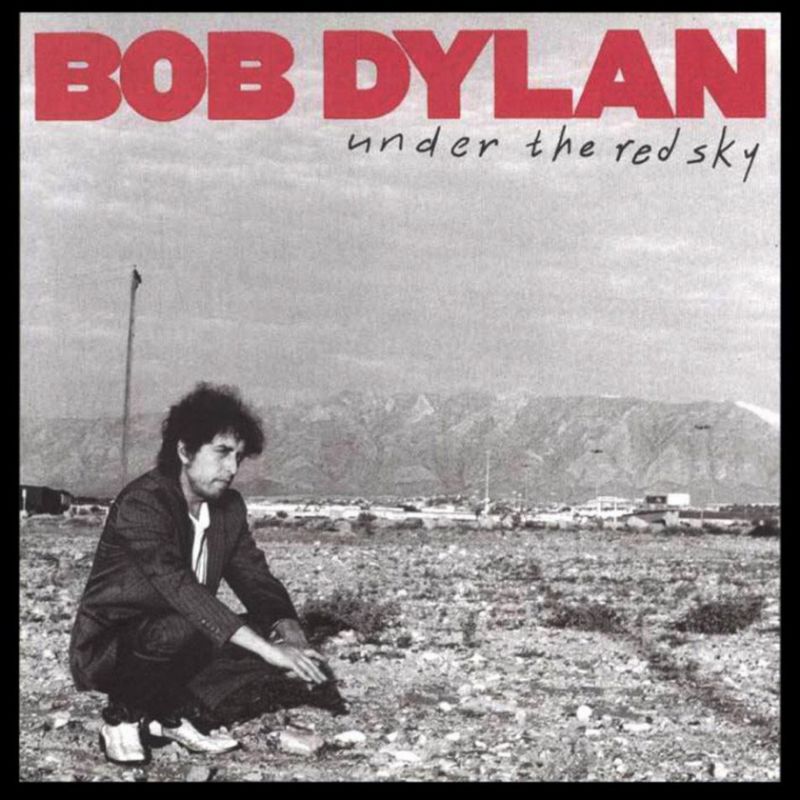
Today: Bob Dylan released “Under The Red Sky” in 1990, 23 years ago

bob dylan under the red sky

“It’s just another record,” [Dylan says of Red Sky] “You can only make the records as good as
you can and hope they sell.”
~Bob Dylan (to Edna Gundersen, Aug 1990)

I made this record, Under the Red Sky, with Don Was, but at the same time I was also doing the Wilburys record. I don’t know how it happened that I got into both albums at the same time.
~Bob Dylan (to Jonathan Lethem, Aug 2006)

Anyway, Leadbelly did most of those kind of songs. He’d been out of prison for some time when he decided to do children’s songs and people said oh, why did Leadbelly change? Some people liked the old ones, some people liked the new ones. Some people liked both songs. But he didn’t change, he was the same man! Anyway, this is a song called …, It’s a new song I wrote a while back. I’m gonna try and do it as good as I can. there’s somebody important here tonight who wants to hear it, so we’ll give it our best …
– preface to ‘Caribbean Wind’, Warfield Theatre, San Francisco, November 12, 1980

Born In Time:

From wikipedia:

Released September 10, 1990
Recorded Early 1990
Genre Rock
Length 35:21
Label Columbia
Producer “Jack Frost” (Bob Dylan), Don Was, and David Was

Under the Red Sky is the twenty-seventh studio album by American singer-songwriter Bob Dylan, released in September 1990 by Columbia Records.

The album was largely greeted as a strange and disappointing follow-up to 1989’s critically acclaimed Oh Mercy. Most of the criticism was directed at the slick sound of pop producer Don Was, as well as a handful of tracks that seem rooted in children’s nursery rhymes. It is a rarity in Dylan’s catalog for its inclusion of celebrity cameos, by Slash, Elton John, George Harrison, David Crosby, Stevie Ray Vaughan and Bruce Hornsby.
Reception:

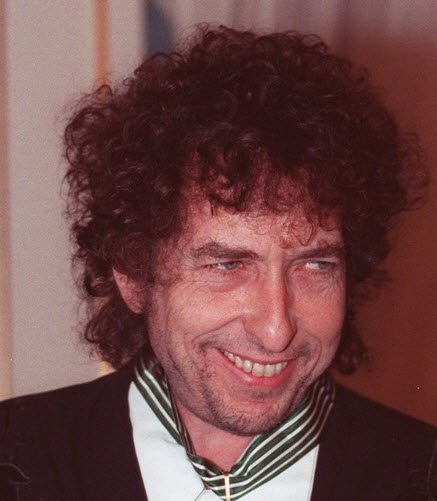
Dylan has echoed most critics’ complaints, telling Rolling Stone in a 2006 interview that the album’s shortcomings resulted from hurried and unfocused recording sessions, due in part to his activity with the Traveling Wilburys at the time. He also claimed that there were too many people working on the album, and that he was very disillusioned with the recording industry during this period of his career.

  • Dylan critic Patrick Humphries, author of The Complete Guide to the Music of Bob Dylan, was particularly harsh in his assessment of Under the Red Sky, stating the album “was everything Oh Mercy wasn’t—sloppily written songs, lazily performed and unimaginatively produced.
  • The album did have some critical support, particularly from Robert Christgau of The Village Voice, who wrote “To my astonishment, I think Under the Red Sky is Dylan’s best album in 15 years, a record that may even signal a ridiculously belated if not totally meaningless return to form…It’s fabulistic, biblical…the tempos are postpunk like it oughta be, with [Kenny] Aronoff’s sprints and shuffles grooving ahead like ’60s folk-rock never did.”
  • Paul Nelson, writing for Musician, called the album “a deliberately throwaway masterpiece.”
More opinions:

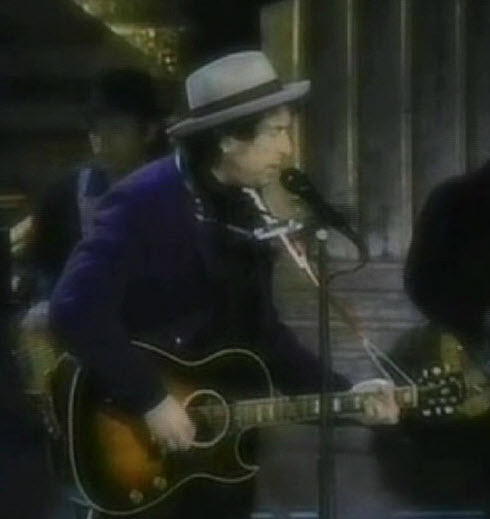
  • Clinton Heylin (from “Still On The Road…”):
    under the red sky seems to oppress an awful lot of Dylan fans. Some particularly infantile criticism has been directed at its self conscious use of nursery rhyme-like constructions, largely from people entirely ignorant of nursery rhymes’ centuries-old role in the folk tradition. Dylan certainly received little credit for daring to make a gut-bustin’ R&B record less than a year after leaving the swamplands of Lanoisville. Whatever its failings, the album conveys a real unity of purpose. What it lacked was one song that raised things to a higher plane, preferably at the expense of an album-opener that went, ‘Wiggle wiggle wiggle, like a bowl of soup.’
  • Robert Christgau:
    This Was Bros. pseudothrowaway improves on the hushed emotion, weary wisdom, and new-age “maturity” of the Daniel Lanois-produced Oh Mercy even if the lyrics are sloppier–the anomaly is what Lanois calls Oh Mercy’s “focused” writing. Aiming frankly for the evocative, the fabulistic, the biblical, Dylan exploits narrative metaphor as an adaptive mechanism that allows him to inhabit a “mature” pessimism he knows isn’t the meaning of life. Where his seminal folk-rock records were cut with Nashville cats on drums–Kenny Buttrey when he was lucky, nonentities when he wasn’t–here Kenny Aronoff’s tempos are postpunk like it oughta be, springs and shuffles grooving ever forward. The fables are strengthened by the workout, and as a realist I also treasure their literal moments. I credit his outrage without forgetting his royalty statements. I believe he’s gritted his teeth through the bad patches of a long-term sexual relationship even if he still measures the long term in months. And when he thanks his honey for that cup of tea, I melt. A-
  • Michael Gray (Bob Dylan Encyclopedia):
    The first Dylan album after Oh Mercy shows Dylan characteristically retreating from that album’s mainstream production values and safe terrain, and refusing to offer a
    follow-up. Nevertheless his penchant for recently modish producers has him turn this time to DAVID & DON WAS of Was Not Was, who offer a rougher and less unified sound. It’s a pity Dylan pads out the album with some sub-standard rockism(‘Wiggle Wiggle’ and ‘Unbelievable’) and the ill-fitting, foggy pop of ‘Born in Time’, because the core of the album is an adventure into the poetic
    possibilities of nursery rhyme that is alert, fresh and imaginative, and an achievement that has gone largely unrecognised.
  • Paul Williams (from “Bob Dylan: Performance Artist 1986-1990 And Beyond”):It’s a magnificent album, really, and I love every performance on it. Oh, there have been times over the years when I’ve had my doubts about “10,000 Men” or “2×2,” but as with a good concert, each performance in sequence opens doors in listener and singer and musicians and, because the whole is greater than the sum of the parts, the parts are elevated in dignity and expressive power just by their connectedness to that whole. So I find myself getting into the groove of “10,000 Men,” the easy flow of the language, the surprising shouts and whispers of the vocal, the irrepressible Under the Red Sky humor that chugs along throughout (and catches my attention at different moments every time I listen).
  • Stephen Thomas Erlewine (allmusic.com):
    Dylan followed Oh Mercy, his most critically acclaimed album in years, with Under the Red Sky, a record that seemed like a conscious recoil from that album’s depth and atmosphere. By signing Don Was, the king of mature retro-rock, as producer, he guaranteed that the record would be lean and direct, which is perhaps exactly what this collection of simplistic songs deserves. Still, this record feels a little ephemeral, a collection of songs that Dylan didn’t really care that much about. In a way, that makes it a little easier to warm to than its predecessor, since it has a looseness that suits him well, especially with songs this deliberately lightweight. As such, Under the Red Sky is certainly lightweight, but rather appealing in its own lack of substance, since Dylan has never made a record so breezy, apart from (maybe) Down in the Groove. That doesn’t make it a great, or even good, record, but it does have its own charms that will be worth searching out for Dylanphiles.

Track listing:

All songs written by Bob Dylan.

  1. “Wiggle Wiggle” – 2:09
  2. “Under the Red Sky” – 4:09
  3. “Unbelievable” – 4:06
  4. “Born in Time” – 3:39
  5. “T.V. Talkin’ Song” – 3:02
  6. “10,000 Men” – 4:21
  7. “2 × 2” – 3:36
  8. “God Knows” – 3:02
  9. “Handy Dandy” – 4:03
  10. “Cat’s in the Well” – 3:21

My fav songs from the album:

  1. Born In Time
  2. God Knows
  3. Under The Red Sky

Personnel

  • Bob Dylan – acoustic and electric guitar, piano, accordion, harp, vocals, production
Additional musicians
  • Kenny Aronoff – drums
  • Sweet Pea Atkinson – backing vocals
  • Rayse Biggs – trumpet
  • Sir Harry Bowens – backing vocals
  • David Crosby – backing vocals
  • Paulinho Da Costa – percussion
  • Robben Ford – guitar
  • George Harrison – slide guitar
  • Bruce Hornsby – piano
  • Randy “The Emperor” Jackson – bass guitar
  • Elton John – piano
  • Al Kooper – organ, keyboards
  • David Lindley – bouzouki, guitar, slide guitar
  • David McMurray – saxophone
  • Donald Ray Mitchell – backing vocals
  • Jamie Muhoberac – organ
  • Slash – guitar
  • Jimmie Vaughan – guitar
  • Stevie Ray Vaughan – guitar
  • Waddy Wachtel – guitar
  • David Was – backing vocals, production
  • Don Was – bass guitar, production
Technical personnel
  • Dan Bosworth – assistant engineering
  • Marsha Burns – production coordination
  • Ed Cherney – engineering, mixing
  • Steve Deutsch – assistant engineering
  • Judy Kirshner – assistant engineering
  • Jim Mitchell – assistant engineering
  • Brett Swain – assistant engineering

It’s Unbelievable:

Album of the day:

Check out:

Other September 10:

Continue reading Today: Bob Dylan released “Under The Red Sky” in 1990, 23 years ago
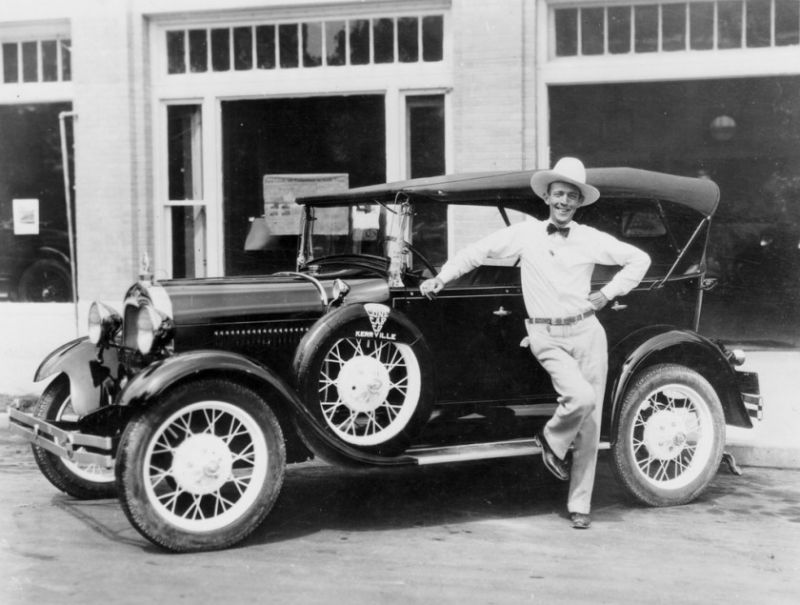
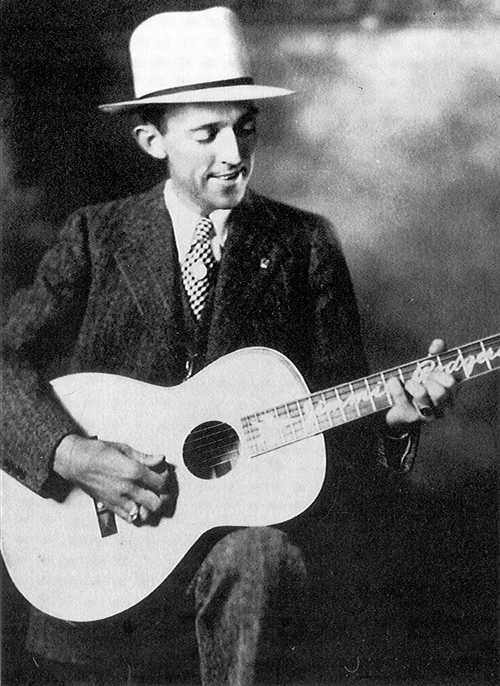
Today: The late Jimmie Rodgers was born in 1897 116 years ago

JR1

“Jimmie Rodgers’ name stands foremost in the country music field as the man who started it all.”
– brass plaque at the Country Music Hall of Fame

“The most inspiring type of entertainer for me has always been somebody like Jimmie Rodgers, somebody who could do it alone and was totally original. He was combining elements of blues and hillbilly sounds before anyone else had thought of it. He recorded at the same time as Blind Willie McTell but he wasn’t just another white boy singing black. That was his great genius and he was there first… he sang in a plaintive voice and style and he’s outlasted them all.”
~Bob Dylan

“He was a performer of force without precedent with a sound as lonesome and mystical as it was dynamic. He gives hope to the vanquished and humility to the mighty.”
~Bob Dylan

“He is the voice of wilderness in our heads.”
~Bob Dylan

James Charles “Jimmie” Rodgers (September 8, 1897 – May 26, 1933) was an American country singer in the early 20th century known most widely for his rhythmic yodeling. Among the first country music superstars and pioneers, Rodgers was also known as “The Singing Brakeman”, “The Blue Yodeler”, and “The Father of Country Music”.

JR2

From allmusic.com – David Vinopal:

His brass plaque in the Country Music Hall of Fame reads, “Jimmie Rodgers’ name stands foremost in the country music field as the man who started it all.” This is a fair assessment. The “Singing Brakeman” and the “Mississippi Blue Yodeler,” whose six-year career was cut short by tuberculosis, became the first nationally known star of country music and the direct influence of many later performers, from Hank Snow, Ernest Tubb, and Hank Williams to Lefty Frizzell and Merle Haggard. Rodgers sang about rounders and gamblers, bounders and ramblers — and he knew what he sang about. … read more @ allmusic.com

My favorite Jimmie Rodgers song, Gambling Bar Room Blues:

 Legacy:

  • When the Country Music Hall of Fame was established in 1961, Rodgers was one of the first three (the others were Fred Rose and Hank Williams) to be inducted.
  • Rodgers was elected to the Songwriters Hall of Fame in 1970 and, as an early influence, to the Rock & Roll Hall of Fame in 1986.
  • “Blue Yodel No. 9” was selected as one of The Rock and Roll Hall of Fame’s 500 Songs that Shaped Rock and Roll.
  • Rodgers was ranked No. 33 on CMT’s 40 Greatest Men of Country Music in 2003.
  • Both Gene Autry and future Louisiana governor Jimmie Davis (author of “You Are My Sunshine”) began their careers as Jimmie Rodgers copyists
  • Merle Haggard, Hank Snow, and Lefty Frizzell later did tribute albums.
  • In 1997 Bob Dylan put together a tribute compilation of major artists covering Rodgers’ songs, “The Songs of Jimmie Rodgers, A Tribute”. The artists included Bono, Alison Krauss & Union Station, Jerry Garcia, Dickey Betts, Dwight Yoakam, Aaron Neville, John Mellencamp, Willie Nelson and others. Dylan had earlier once remarked, “The songs were different than the norm. They had more of an individual nature and an elevated conscience… I was drawn to their power.”
  • Rodgers was one of the biggest stars of American music between 1927 and 1933, arguably doing more to popularize blues than any other performer of his time. 
  • Rodgers influenced many later blues artists, among them Muddy Waters, Big Bill Broonzy, and Chester Arthur Burnett, better known as Howlin’ Wolf. Jimmie Rodgers was Wolf’s childhood idol. Wolf tried to emulate Rodgers’s yodel, but found that his efforts sounded more like a growl or a howl. “I couldn’t do no yodelin’,” Barry Gifford quoted him as saying in Rolling Stone, “so I turned to howlin’. And it’s done me just fine.”
  • Rodgers’ influence can also be heard in artists including Tommy Johnson, the Mississippi Sheiks, and Mississippi John Hurt, whose “Let the Mermaids Flirt With Me” is based on Rodgers’ hit “Waiting On A Train”.
  • In “Cleaning Windows,” Van Morrison sings about listening to Rodgers.
  • In May 2010, a second marker, on the Mississippi Country Music Trail, was erected near Rodgers’ gravesite, marking his role as The Father of Country Music

Here is a lovely presentation of the legend, Jimmie Rodgers 2011 Folk Alliance International Lifetime Achievement Award Recipient:

Blue Yodel No 1 (T For Texas):

Waiting for a Train:

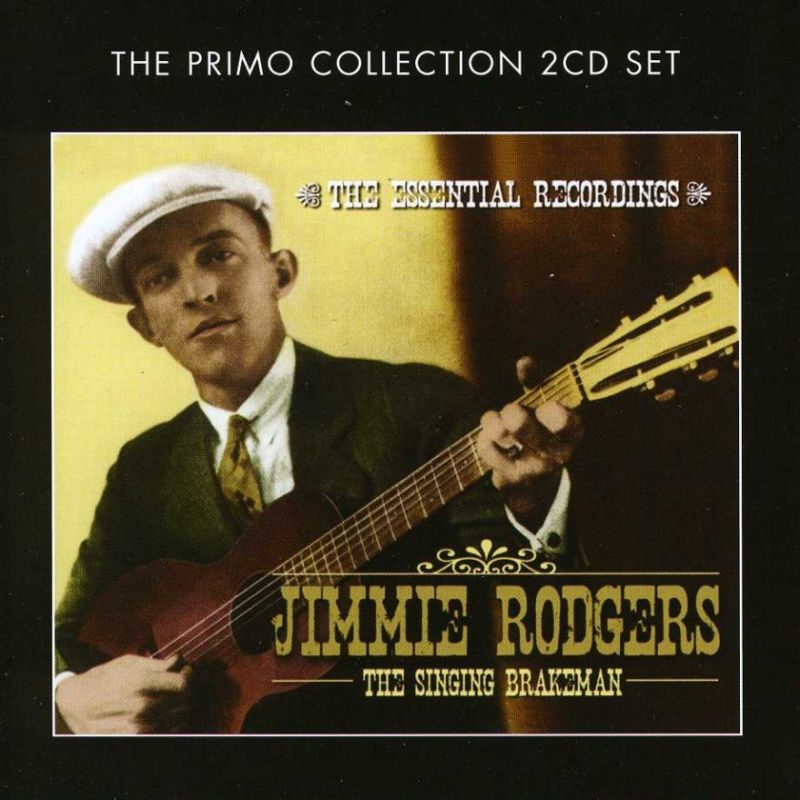
Album of the day: The Singing Brakeman – The Essential Recordings :
jr5_cover

Other September 8:

Continue reading Today: The late Jimmie Rodgers was born in 1897 116 years ago

Today: Buddy Miller is 61

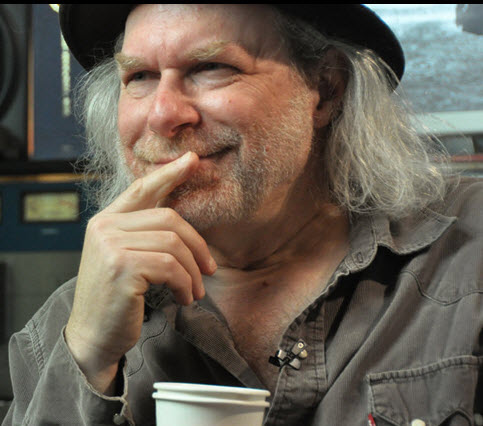
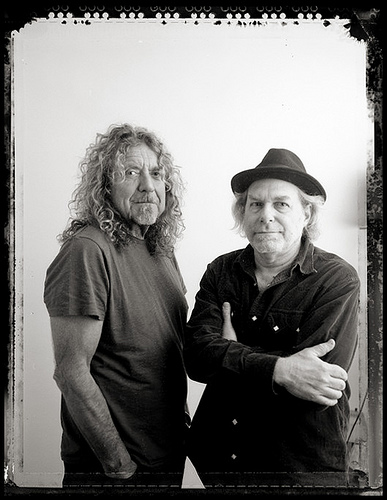
Buddy Miller

A showman’s life is a smokey bar and
The fevered chase of a tiny star
It’s a hotel room and a lonely wife
From what I’ve seen of a showman’s life

Nobody told me about this part
They told me all about the pretty girls and the wine and
The money and the good times
No mention of all the wear and tear on an old honkey-tonker’s heart
Well, I might have known it
But nobody told me about this part
~”A Showman’s life” (one of his best songs)

“A good song can take a steel guitar, no matter where it comes from, I think about songs this way: I’d love to sing that song, whatever band is playing it. Great songs transcend.”
~Buddy Miller

“When you hear Buddy or watch him play, there’s a magnetic quality that draws you to his music.
~Jim Lauderdale

A Showman’s Life:

From Wikipedia:

Born September 6, 1952 (age 61)
Fairborn, Ohio
Genres Country, Americana
Occupations Musician, Singer-songwriter,producer
Instruments Vocals, Guitar
Years active 1983–present
Labels HighTone
New West
Associated acts Julie Miller, Sweet Harmony Traveling Revue, Buddy Miller Band, Patty Griffin, Shawn Colvin, Gillian Welch, David Rawlings, Emmylou Harris, Band of Joy, Steve Earle
Website www.buddyandjulie.com

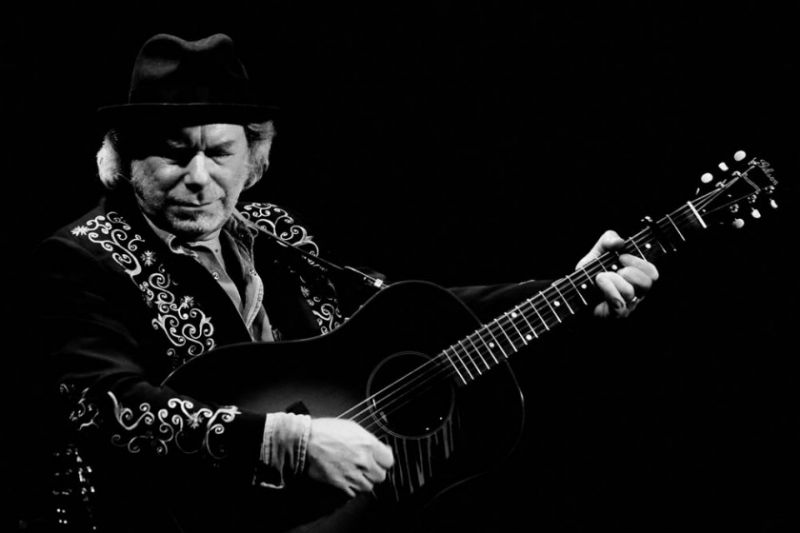
Buddy Miller (born September 6, 1952 in Fairborn, Ohio) is a country singer, songwriter, musician, recording artist and producer, currently living in Nashville, Tennessee. Miller is married to and has recorded with singer-songwriter Julie Miller.

Miller formed the Buddy Miller Band, which included singer-songwriter Shawn Colvin on vocals and guitar.

In addition to releasing several solo albums over the years, Miller has toured as lead guitarist and backing vocalist for Emmylou Harris’s Spyboy band, Steve Earle on his El Corazon tour, Shawn Colvin, and Linda Ronstadt. He co-produced and performed on Jimmie Dale Gilmore’s 2000 album Endless Night. He has also appeared on several albums by songwriter and singer Lucinda Williams.

In 2004, Miller toured with Emmylou Harris, Patty Griffin, Gillian Welch, and David Rawlings as the Sweet Harmony Traveling Revue.

Photo by Jonathan Kofahl

Buddy Miller has also produced albums for a number of artists. During 2006 Solomon Burke came over to Miller’s house at Nashville to record his country album ‘Nashville’ on which Emmylou Harris, Patty Griffin, Gillian Welch and Dolly Parton appear as duet partners.

He has a signature acoustic guitar made by the Fender company, and frequently uses vintage Wandre electric guitars.

—-

From allmusic.com – Johnny Lofthus:
Soulful Americana songwriter, singer, and producer Buddy Miller began his career in the early ’60s as an upright bassist in high-school bluegrass combos. Later, he traveled the back roads of America as an acoustic guitarist, eventually landing in New York City, where his Buddy Miller Band included a young Shawn Colvin on vocals and guitar. He also forged an enduring relationship with country-rock iconoclast Jim Lauderdale. Miller eventually landed in Nashville, where he did session guitar and vocal work on albums by Lauderdale, Victoria Williams, and Heather Myles, among others. He self-produced his criminally overlooked solo debut, Your Love and Other Lies (Hightone, 1995), and followed it with 1997’s equally superb Poison Love.By this point Miller was the lead guitarist in Emmylou Harris’ band, and Harris returned the favor with backing vocals throughout Poison Love. ….
.. read more @ allmuic.com


Worry Too Much:

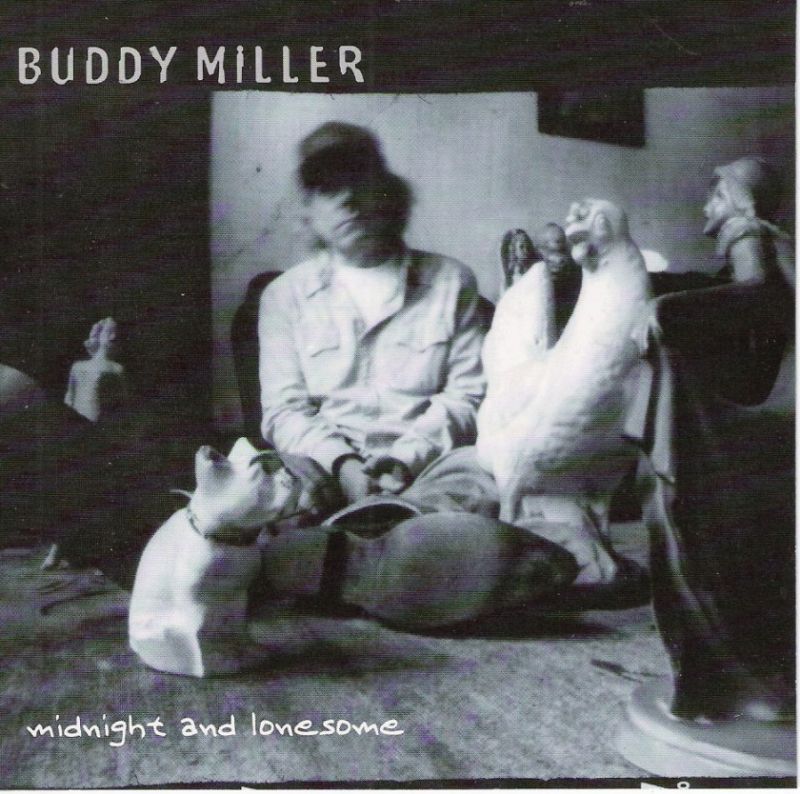
Album of the day – Midnight and Lonesome (2002):

buddy miller midnight and lonesome

Other September-06:

Continue reading Today: Buddy Miller is 61

Today: Ryan Adams released “Heartbreaker” in 2000 – 13 years ago

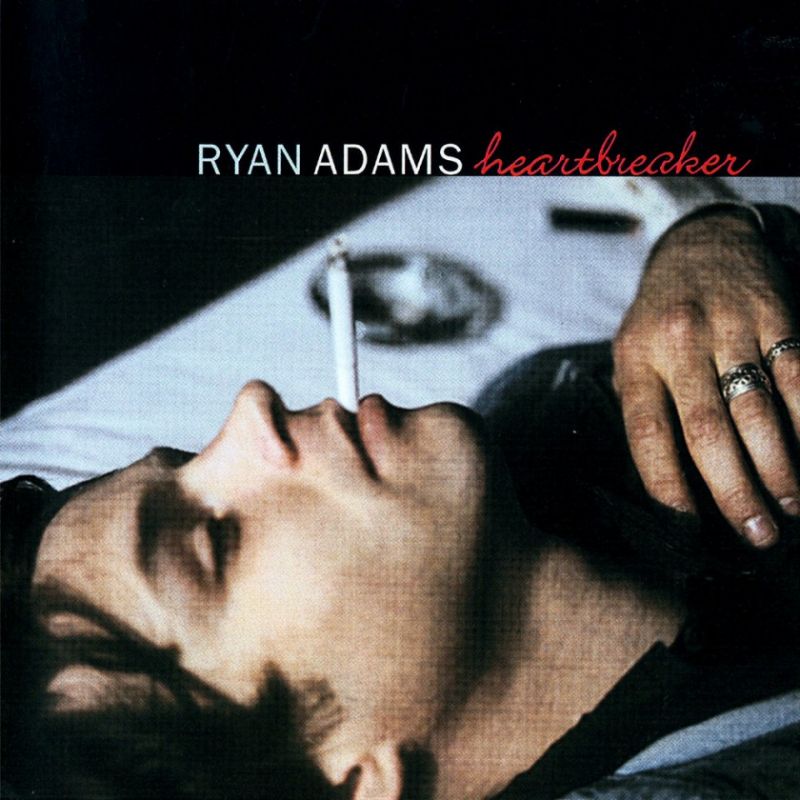
ryan adams heartbreaker

“On Heartbreaker, I had to sing those songs. I drank the way I did those songs. I ate the way I did those songs. I communicated the way I did those songs”
~Ryan Adams – Spin Dec 2003

“I don’t know if Heartbreaker was influential as a record so much as the idea of it. There weren’t a lot of people out there doing that kind of thing. That’s all. But it was a terrible price to pay because I’ve never lived it down. I don’t regard that record as great art. I’m not even sure I put the right songs on the record. There are a lot of tracks that didn’t make it which with hindsight should have been on there.”
~Ryan Adams – Uncut Jan 2004

Come Pick Me Up @ KCRW:

Come pick me up
Take me out
Fuck me up
Steal my records
Screw all my friends
They’re all full of shit
With a smile on your face
And then do it again
I wish you would

From Wikipedia:

Released September 5, 2000
Recorded Woodland Studios, Nashville,Tennessee
Genre Alternative country, country
Length 51:57
Label Bloodshot
Producer Ethan Johns

Heartbreaker is the debut studio album by alternative country musician Ryan Adams, released September 5, 2000 on Bloodshot Records. The album was recorded over fourteen days at Woodland Studios in Nashville, Tennessee. It was nominated for the 2001 Shortlist Music Prize. The album is said to be inspired by Adams’ break-up with music-industry publicist Amy Lombardi.

According to Adams, the album’s title originates from a poster of Mariah Carey: “My manager called and said, ‘You have 15 seconds to name this record,’ “My eyes focused on this poster of Mariah wearing a T-shirt that said HEARTBREAKER. I just shouted, ‘Heartbreaker!'”

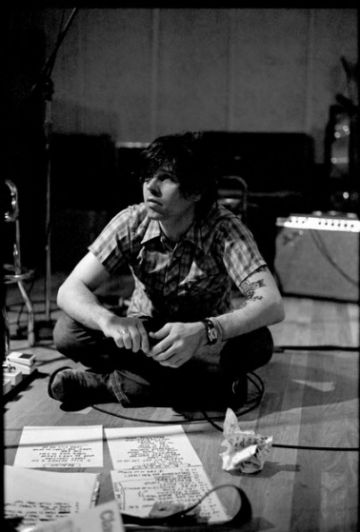
ryan adams

Critical reception:

The album was considered to be a fresh start for Ryan Adams after the demise of his previous band Whiskeytown.

  • Allmusic’s Mark Derning wrote that the album “is loose, open, and heartfelt in a way Whiskeytown’s admittedly fine albums never were, and makes as strong a case for Adams’ gifts as anything his band ever released”, concluding that “the strength of the material and the performances suggest Adams is finally gaining some much-needed maturity, and his music is all the better for it.” 
  • A.V. Club’s Keith Phipps wrote: “Adams has recorded an intimate, largely quiet record that indisputably establishes his identity as an independent singer-songwriter”. 
  • Pitchfork Media’s Steven Byrd called it “an album of astonishing musical proficiency, complete honesty and severe beauty.”
  • Rolling Stone’s Anthony Decurtis was less enthusiastic, stating that “Adams’ songs too often fail to rise above their plain-spoken details to take on the symbolic power he yearns for”.


From pitchfork’s review (Steven Byrd):

…. Heartbreaker is the soundtrack to the last ten minutes of any relationship you’ve ever watched crumble before your eyes. It’s music for the ruined romantic in all of us. Usually, that little romantic simply sits quietly, tearfully watching everything disappear without so much as a single complaint. But on Heartbreaker, Ryan Adams has not only convinced that voice to speak, he’s taught it to sing. The result is an album of astonishing musical proficiency, complete honesty and severe beauty.
Read more over @ pitchfork 

Track listing:

1. “(Argument with David Rawlings Concerning Morrissey)” (An argument regarding the Morrissey track “Suedehead”.)
2. “To Be Young (Is to Be Sad, Is to Be High)” Ryan Adams and David Rawlings
3. “My Winding Wheel”
4. “AMY”
5. “Oh My Sweet Carolina”
6. “Bartering Lines” Ryan Adams and Van Alston
7. “Call Me On Your Way Back Home”
8. “Damn, Sam (I Love a Woman That Rains)”
9. “Come Pick Me Up” Ryan Adams and Van Alston
10. “To Be the One”
11. “Why Do They Leave?”
12. “Shakedown on 9th Street”
13. “Don’t Ask for the Water”
14. “In My Time of Need”
15. “Sweet Lil Gal (23rd/1st)”

Musicians

  • Ryan Adams – vocals, acoustic guitar, electric guitar, harmonica, piano, banjo
  • Ethan Johns – drums, bass, glockenspiel, B-3, Chamberlain, vibes
  • David Rawlings – backing vocals, acoustic guitar, electric guitar, banjo, tambourine
  • Gillian Welch – backing vocals, acoustic guitar, electric bass, banjo, “voice of Lucy”
  • Pat Sansone – piano (5, 9, 11), Chamberlain and organ (6), backing vocals (2)
  • Emmylou Harris – backing vocals (5)
  • Kim Richey – backing vocals (9)
  • Allison Pierce – backing vocals (11)

Uncut Magazine (UK) listed Heartbreaker as no.9 on their “Top 150 Albums of the Decade List”

Oh My Sweet Carolina:

I went down to Houston
And I stopped in San Antone
I passed up the station for the bus
I was trying to find me something
But I wasn’t sure just what
Man I ended up with pockets full of dust
So I went on to Cleveland and I ended up insane
I bought a borrowed suit and learned to dance
I was spending money like the way it likes to rain
Man I ended up with pockets full of cane

Album of the day – Heartbreaker (2000):

Other September-05:

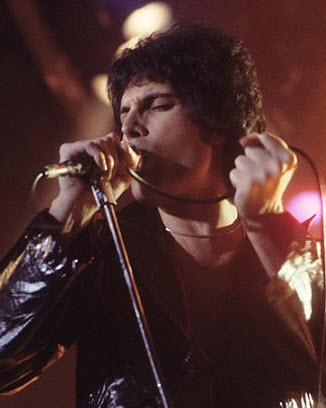
  • Freddie Mercury (born Farrokh Bulsara (5 September 1946 – 24 November 1991) was a British musician, singer and songwriter, best known as the lead vocalist and lyricist of the rock band Queen. As a performer, he was known for his flamboyant stage persona and powerful vocals over a four-octave range. As a songwriter, Mercury composed many hits for Queen, including “Bohemian Rhapsody”, “Killer Queen”, “Somebody to Love”, “Don’t Stop Me Now”, “Crazy Little Thing Called Love” and “We Are the Champions”. In addition to his work with Queen, he led a solo career, and also occasionally served as a producer and guest musician (piano or vocals) for other artists. He died of bronchopneumonia brought on by AIDS on 24 November 1991, only one day after publicly acknowledging he had the disease.
  • Loudon Snowden Wainwright III (born September 5, 1946) is a Grammy Award-winning American songwriter, folk singer, humorist, and actor. He is the father of musicians Rufus Wainwright, Martha Wainwright and Lucy Wainwright Roche, brother of Sloan Wainwright, and the former husband of the late folk singer Kate McGarrigle.

  • Joshua Daniel White (February 11, 1914 – September 5, 1969), better known as Josh White, was an American singer, guitarist, songwriter, actor, and civil rights activist. He also recorded under the names “Pinewood Tom” and “Tippy Barton” in the 1930s.

-Egil

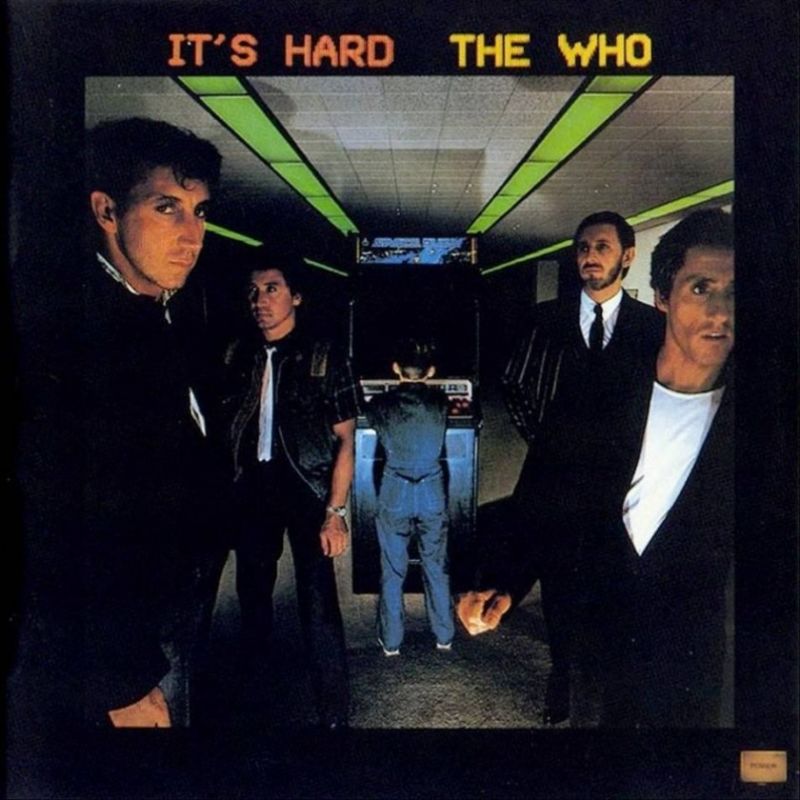
Today: The Who released It’s Hard in 1982

the-who-its-hard-1997

It’s Hard is the tenth studio album by English rock band The Who. It is the last Who album to feature bassist John Entwistle and drummer Kenney Jones, as well as the last to be released on Warner Bros. Records in the US. It was their last album until 2006’s Endless Wire. It was released in 1982 on Polydor in the UK, peaking at #11,] and on Warner Bros. in the US where it peaked at #8 on the Billboard Pop Albums charts. It got mixed reviews on its release, but I find it interesting. It’s a bit different, but I love Townshend’s playfulness and willingness to seek new challenges.

The Rolling Stone Magazine’s Parke Puterbaugh gave the album a rave review and said it was their best album since Who’s Next:

“The key to the album is “I’ve Known No War,” a song that could become an anthem to our generation much the way “Won’t Get Fooled Again” did a decade ago.

The entire album is vibrant with the palpable energy of rekindled bonds and rediscovered group values.

It’s a long road the Who have traveled from the bristling, bare-knuckled fury of their early days to the present. They rank among a handful of vanguard rock musicians who show signs of pushing through the age barrier and creating a viable adult vocabulary for rock, one that faces up to the moral responsibilities of middle age and allows them to use their craft to effectively shape consciousness. It must seem especially ironic to Townshend that this is true of the band that sang “hope I die before I get old” back in 1965, but there you go: always the group that delivers the unexpected. “

Eminence Front (Live, official video):

Athena (Live at Shea Stadium, 1982):

It’s Hard on Spotify:

– Hallgeir