Category Archives: Music Calendar

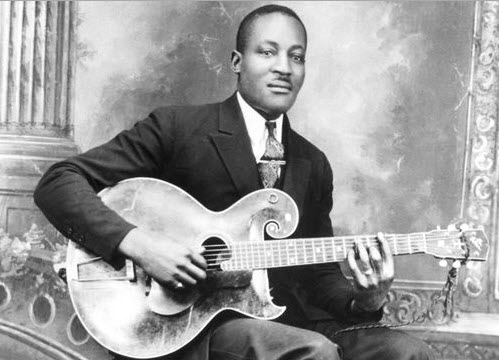
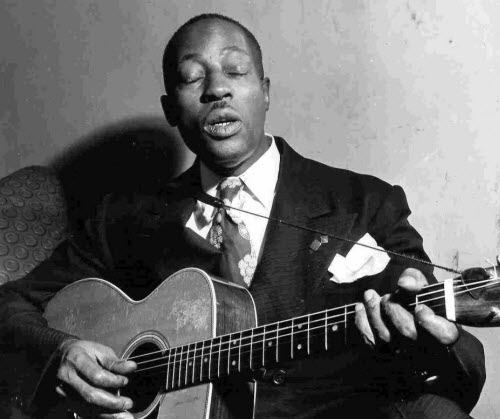
Today: The late Big Bill Broonzy was born in 1893 – 120 years ago

big bill broonzy

I guess all songs is folk songs. I never heard no horse sing ’em.
~Big Bill Broonzy

Blues is a natural fact, is something that a fellow lives. If you don’t live it you don’t have it. Young people have forgotten to cry the blues. Now they talk and get lawyers and things.
~Big Bill Broonzy

“Worried Man Blues,” “Hey, Hey” and “How You Want It Done.” From the DVD “A Musical Journey”:

Wikipedia:

Birth name Lee Conley Bradley
Also known as Big Bill Broonzy, Big Bill Broomsley
Born June 26, 1893
Lake Dick, Arkansas, U.S.
Died August 14, 1958 (aged 65)
Chicago, Illinois, U.S.
Genres Folk music, country blues, Chicago blues, spirituals, protest songs
Occupations Musician, songwriter, sharecropper, preacher
Instruments Vocals, guitar, fiddle
Years active 1927–1958
Labels Paramount, A.R.C., Bluebird, Vocalion, Folkways
Associated acts Papa Charlie Jackson, Woody Guthrie, Pete Seeger

Big Bill Broonzy (June 26, 1893 – August 15, 1958) was a prolific American blues singer, songwriter and guitarist. His career began in the 1920s when he played country blues to mostly African-American audiences. Through the ‘30s and ‘40s he successfully navigated a transition in style to a more urban blues sound popular with working class African-American audiences. In the 1950s a return to his traditional folk-blues roots made him one of the leading figures of the emerging American folk music revival and an international star. His long and varied career marks him as one of the key figures in the development of blues music in the 20th century.

Broonzy copyrighted more than 300 songs during his lifetime, including both adaptations of traditional folk songs and original blues songs. As a blues composer, he was unique in that his compositions reflected the many vantage points of his rural-to-urban experiences.
big bill broonzy

When Did You Leave Heaven:
(no.2 on Keith Richards “top 10 reggae and roots songs” – Rollingstone magazine)

Styles & Influences:

Broonzy’s own influences included the folk music, spirituals, work songs, ragtime music, hokum and country blues he heard growing up, and the styles of his contemporaries, including Jimmie Rodgers, Blind Blake, Son House, and Blind Lemon Jefferson. Broonzy combined all these influences into his own style of the blues that foreshadowed the post-war Chicago blues sound, later refined and popularized by artists such as Muddy Waters and Willie Dixon.

  • In 1980, he was inducted into the first class of the Blues Hall of Fame along with 20 other of the world’s greatest blues legends.
  • In 2007, he was inducted into the first class of the Gennett Records Walk of Fame along with 11 other musical greats including Louis Armstrong, Jelly Roll Morton, Gene Autry, Lawrence Welk and others.
  • Broonzy as an acoustic guitar player, inspired Muddy Waters, Memphis Slim, Ray Davies, John Renbourn, Rory Gallagher, Ben Taylor, and Steve Howe
  • In Q Magazine (September 2007) it is reported that Ronnie Wood of The Rolling Stones claims that Bill Broonzy’s track, “Guitar Shuffle”, is his favorite guitar music. Wood said, “It was one of the first tracks I learnt to play, but even to this day I can’t play it exactly right.”
  • Eric Clapton has cited Bill Broonzy as a major inspiration: Broonzy “became like a role model for me, in terms of how to play the acoustic guitar.”
  • During the benediction at the 2009 inauguration ceremony of President Barack Obama, the civil rights leader Rev. Dr. Joseph Lowery paraphrased Broonzy’s song “Black, Brown and White Blues”.
big bill broonzy


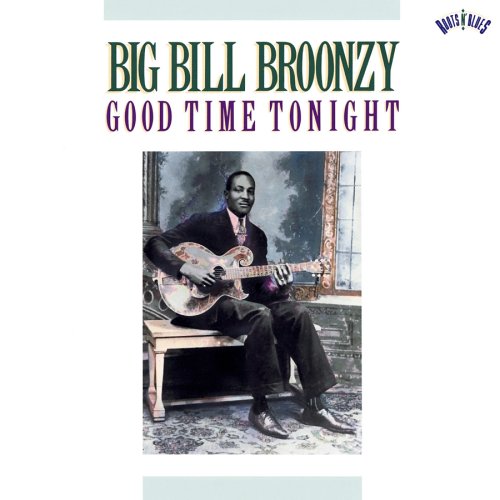
Album of the day:

big bill broonzy good time tonight

Other June 26:

Continue reading Today: The late Big Bill Broonzy was born in 1893 – 120 years ago
Today: Ray Davies is 69 – Happy Birthday

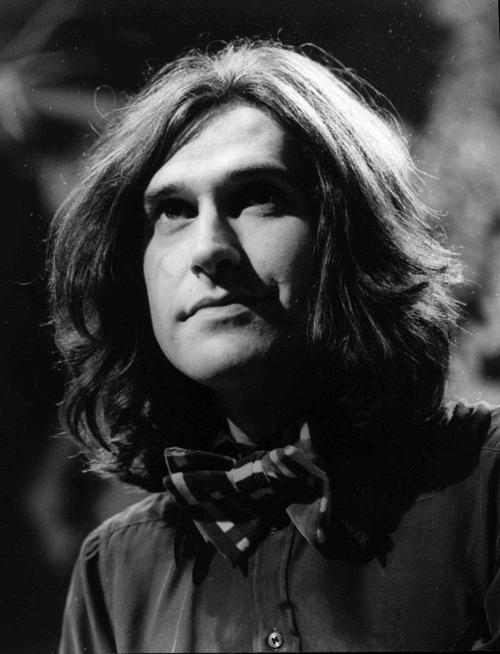
Raydavies

“No one can penetrate me. They only see what’s in their own fancy, always.”
– Ray Davies

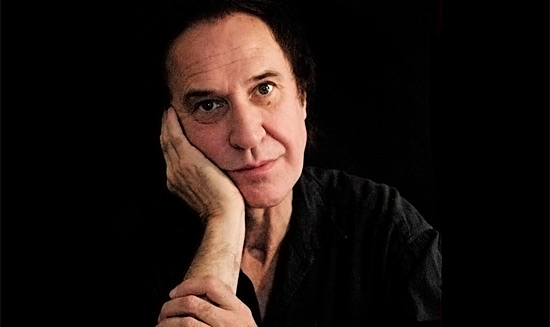
Raymond Douglas “Ray” Davies, CBE  was born 21 June 1944. He is  best known as lead singer and songwriter for The Kinks, which he led with his younger brother, Dave. He has also acted, directed and produced shows for theatre and television.

Ray Davies is one of my favorite british songwriters, he really is up there with lennon/mccartney and jagger/richards. He is that good!

Ray+Davies

Ray Davies’ influence on british music is large and important. It really bacame vissible during the britpop period, but I can hear his way of talking about the english way of live in today’s pop and rap/hip-hop also. They might not know why they do it the way the do, but we do, it is the way Ray Davies thaught them through his songs .

While almost every other songwriter working in a rock band at the time was talking about altered states or sticking it to squares, Ray Davies developed a vocabulary of traditional English life, and even mocked Carnaby Street fashion on “Dedicated Follower of Fashion”. The Kinks were culture without the “counter” prefix, a rock band that anomalously acknowledged the dignity in the middle-aged woman who went out and bought a hat like the one Princess Marina wore, the one that adopted the mannerisms of music hall without pastiche or irony, the one that sang about tea and gooseberry tarts and favoring neighborhood life over new patterns of development.

– Pitchfork (Joe Tangari)

20 Century Man (Storytellers, vh1):

Awards

  • On 17 March 2004, Davies received the CBE from Queen Elizabeth II for “Services to Music.”
  • On 22 June 2004, Davies won the Mojo Songwriter Award, which recognises “an artist whose career has been defined by his ability to pen classic material on a consistent basis.”
  • Davies was also a judge for the third annual Independent Music Awards. His contributions helped assist upcoming independent artists’ careers.
  • Davies and the Kinks were the third British band (along with The Who) to be inducted into the Rock and Roll Hall of Fame in 1990, at which Davies was called “almost indisputably rock’s most literate, witty and insightful songwriter.” They were inducted into the UK Music Hall of Fame in 2005.
  • On 3 October 2006, Davies was awarded the BMI Icon Award for his “enduring influence on generations of music makers” at the 2006 annual BMI London Awards.
  • On 15 February 2009, The Mobius Best Off-West End Production in the UK for the musical Come Dancing.
  • On 7 September 2010, Davies was awarded the Outstanding Achievement Award at the GQ Men of the Year Awards.
  • On 26 October 2010, Davies was presented with the Lifetime Achievement Award at his AVO Session concert in Basel; the concert was televised internationally.

My fav Kinks song – Waterloo Sunset (live):

Here’s a great documentary about Ray Davies, The World From My Window (2003): 


Album of the day:

Other June-21:

Continue reading Today: Ray Davies is 69 – Happy Birthday

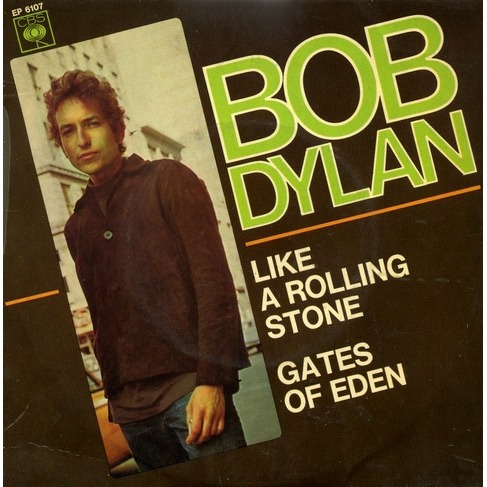
Today: Bob Dylan recorded “Like A Rolling stone” in 1965 – 48 years ago

Bob Dylan - like-a-rolling-stone

….would be Like A Rolling Stone because I wrote that after I’d quit. I’d literally quit singing and playing, and I found myself writing this song, this story, this long piece of vomit about twenty pages long, and out of it I took Like A Rolling Stone and made it as a single. And I’d never written anything like that before and it suddenly came to me that that was what I should do, you know. I mean, nobody had ever done that before.
~Bob Dylan (to Martin Bronstein – Feb 1966)

.. The sound is so rich the song never plays the same way twice
~Greil Marcus

The first time I heard Bob Dylan, I was in the car with my mother listening to WMCA, and on came that snare shot that sounded like somebody had kicked open the door to your mind
~Bruce Springsteen (Jan 1988)

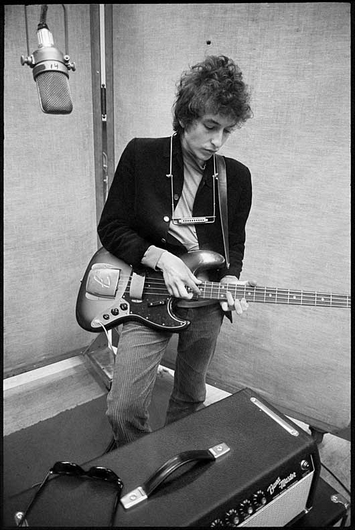
bob-dylan-1965-bass

First time I really listened to “Like A Rolling Stone”, I felt I entered a parallel universe.. a place of intense beauty.. a place filled with this wonderful blues-fueled rock music… and a spellbinding ..organ! I had never heard anything like it.. anything this good..

That was the day I understood that there is bad music, good music, great music & then there is Bob Dylan. He plays in another league. His musical universe is still as beautiful now as it was first time I flew into it.. “Like A Rolling Stone” still sounds as fresh as it did the first time I listened ~25 years ago.

..HOW does it feeeeeel?

Let’s not start with the original version (as most of you reading this probably have heard hundreds of times), but instead a frightening version.. a slow & demanding versions… an “ugly” version (some people might say).. a dangerous version.. but most importantly a BRILLIANT version:

…We get to hear a rarity on the tour… Bob introduces The Band. Then he kicks into the highlight of disc one… a paifully slow Like A Rolling Stone in which Bob spits words at the crowd with venom, and drags them into eternity.
~bobsboots.com

@ Royal Albert Hall – London, England – 26 May 1966:

Everything is changed now from before. Last spring I guess I was going to quit singing. I was very drained and the way things were going it was a very draggy situation – I mean, when you do Everybody Loves You For Your Black Eye and meanwhile the back of your head is caving in. Anyway, I was playing a lot of songs I didn’t want to play. I was singing words I didn’t really want to sing. I don’t mean words like “God” and “mother” and “president” and “suicide” and “meat cleaver”. I mean simple little words like “if” and “hope” and “you”. But Like A Rolling Stone changed it all; I didn’t care any more after that about writing books or poems or whatever. I mean it was something that I myself could dig. It’s very tiring having other people tell you how much they dig you if you yourself don’t dig you. It’s also very deadly entertainment-wise. Contrary to what some scary people think, I don’t play with a band now for any kind of propaganda-type or commercial-type reasons. It’s just that my songs are pictures and the band makes the sound of the pictures.
~Bob Dylan (to Nat Hentoff – March 1966)

To be without a home

Continue reading Today: Bob Dylan recorded “Like A Rolling stone” in 1965 – 48 years ago

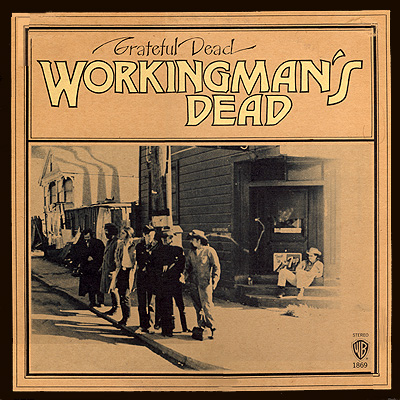
Today – The Grateful Dead released “Workingman’s Dead” in 1970 – 43 years ago

Grateful dead - workingman's dead

Workingman’s Dead, in part inspired by the rustic soul of the Band, ranks as the Dead’s studio masterpiece, followed closely by American Beauty. The focus is on the songs, rather than the jams, and these would provide the focal point of an era, spanning 1969–74, when the Dead played some of the most remarkable concerts in American history, virtually every one available in some incarnation thanks to the band’s dedicated tapers.
~rollingstone.com

Uncle John’s Band:

Wikipedia:

Released June 14, 1970
Recorded February 1970
Genre Country rock, rock
Length 35:33
Label Warner Bros.
Producer Bob Matthews
Betty Cantor
Grateful Dead

Workingman’s Dead is the fifth album by the rock band the Grateful Dead. It was recorded in February 1970 and originally released on June 14, 1970.

In 2003, the album was ranked number 262 on Rolling Stone magazine’s list of the 500 greatest albums of all time.

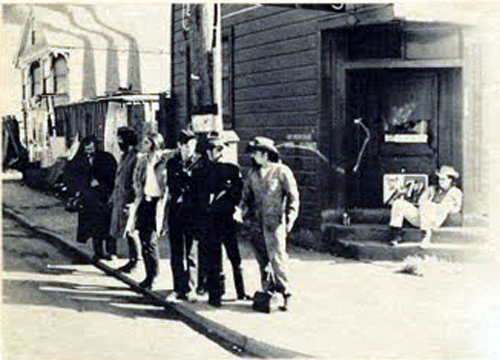
GratefulDead-1970-WorkingmansDead

Of course they don’t sing as pretty as CSNY–prettiness would trivialize these songs. The sparse harmonies and hard-won melodies go with lyrics that make all the American connections claimed by San Francisco’s counterculture; there’s a naturally stoned bemusement in their good times, hard times, high times, and lost times that joins the fatalism of the physical frontier with the wonder of the psychedelic one. And the changeable rhythms hold out the promise of Uncle John’s Band, who might just save us if we’ll only call the tune. Inspirational Verse: “Think this through with me.” A
~Robert Christgau (robertchristgau.com)

Garcia has commented that much of the sound of the album comes both from his pairing with Hunter as well as the band’s friendship with Crosby, Stills and Nash. “Hearing those guys sing and how nice they sounded together, we thought, ‘We can try that. Let’s work on it a little’” commented Garcia.

Workingmans_Dead


Track Listing:

All songs written by Jerry Garcia and Robert Hunter except where noted.

Side one

  1. “Uncle John’s Band” 4:42
  2. “High Time” 5:12
  3. “Dire Wolf” 3:11
  4. “New Speedway Boogie” 4:01

Side two

  1. “Cumberland Blues” (Garcia, Hunter, and Phil Lesh) 3:14
  2. “Black Peter” 5:41
  3. “Easy Wind” (Hunter) 4:57
  4. “Casey Jones” 4:24

Musicians:

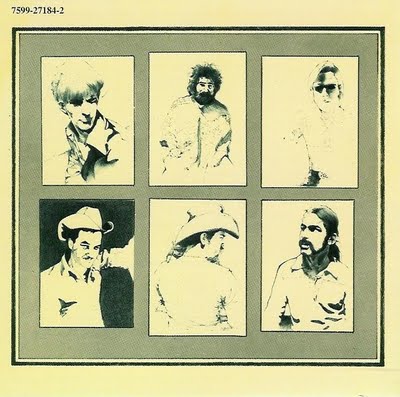
  • Jerry Garcia – lead guitar, pedal steel guitar, vocals
  • Bob Weir – guitar, vocals
  • Pigpen (Ron McKernan) – keyboards, harmonica, vocals
  • Phil Lesh – bass, vocals
  • Bill Kreutzmann – drums
  • Mickey Hart – drums
  • Tom Constanten – keyboards on reissue live bonus tracks “Dire Wolf”, “Black Peter”, “Easy Wind”, “Cumberland Blues”, “Mason’s Children”

Additional musicians

  • David Nelson – acoustic guitar on “Cumberland Blues”

Album @ spotify:

 Other June 14:

Continue reading Today – The Grateful Dead released “Workingman’s Dead” in 1970 – 43 years ago

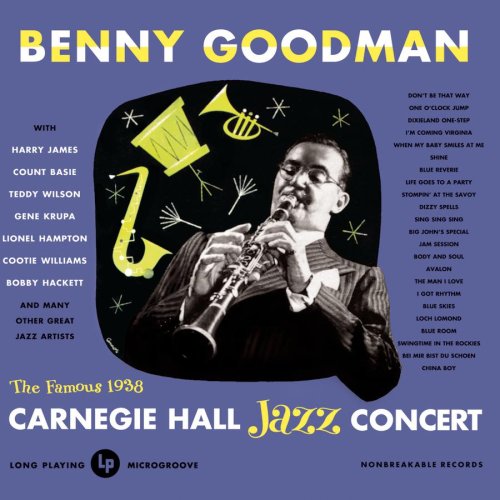
Today: The late Benny Goodman passed away in 1986 – 27 years ago

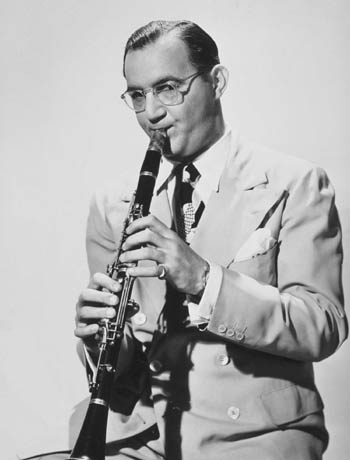
Benny Goodman was the first celebrated bandleader of the Swing Era, dubbed “The King of Swing,” his popular emergence marking the beginning of the era. He was an accomplished clarinetist whose distinctive playing gave an identity both to his big band and to the smaller units he led simultaneously. The most popular figure of the first few years of the Swing Era, he continued to perform until his death 50 years later.
~William Ruhlmann (allmusic.com)

Moonglow:

From Wikipedia:

Benjamin David “Benny” Goodman (May 30, 1909 – June 13, 1986) was an American jazz and swing musician, clarinetist and bandleader; widely known as the “King of Swing”.

In the mid-1930s, Benny Goodman led one of the most popular musical groups in America. His January 16, 1938 concert at Carnegie Hall in New York City is described by critic Bruce Eder as “the single most important jazz or popular music concert in history: jazz’s ‘coming out’ party to the world of ‘respectable’ music.”

Goodman’s bands launched the careers of many major names in jazz, and during an era of segregation, he also led one of the first well-known racially-integrated jazz groups. Goodman continued to perform to nearly the end of his life, including exploring his interest in classical music.

Benny_Goodman

cut from “Hollywood Hotel” film (1937) – Sing Sing Sing:

Album of the day @ JV:

Other June-13:

Continue reading Today: The late Benny Goodman passed away in 1986 – 27 years ago