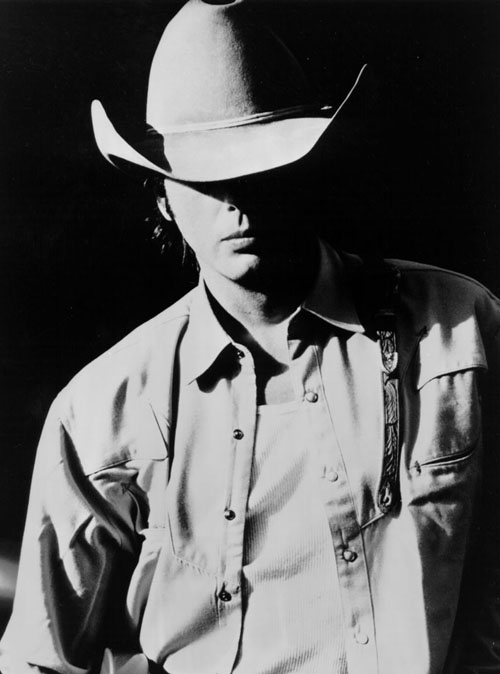
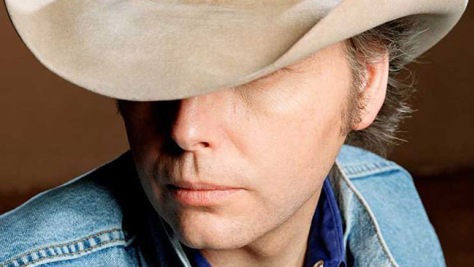
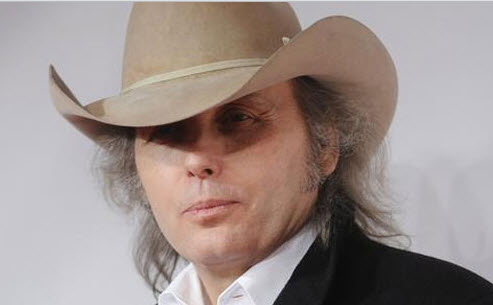
I’ve liked Dwight Yoakam since the late eighties. There was a music magazine here in Norway, Beat, that really championed those new country artists and I was smitten. His first two records really got worn out at my student home in Bergen.
Today I am going to list his 10 best videos (you know he came up at the same time as MTV and he’s always had great music videos). This is my own list and it is not discussed with Egil (the other half of JV) before putting it out here.
1. Guitars, Cadillacs:
2. Streets of Bakersfield (with Buck Owens):
Dwight Yoakam to the magazine Country Guitar in 1994:
‘Bakersfield’ really is not exclusively limited to the town itself but encompasses the larger California country sound of the Forties, Fifties and on into the Sixties, and even the Seventies, with the music of Emmylou Harris, Gram Parsons, the Burrito Brothers and the Eagles — they are all an extension of the ‘Bakersfield Sound’ and a byproduct of it. I’ve got a poster of Buck Owens performing at the Fillmore West in 1968 in Haight Asbury! What went on there led to there being a musical incarnation called country rock. I don’t know if there would have been a John Fogerty and Creedence Clearwater Revival had there not been the California country music that’s come to be known as the ‘Bakersfield Sound’.
The primary purpose in [performing] is to receive that pure inspiration that I derived from it when I was a kid the first time I saw one of those guitar slingers on television cock his leg and throw that guitar down and start doing a song and became completely infatuated with that and the moment that I was able to transport myself to another place, another plane of existence, by doing it alone in a room, you know, and realizing the enormous satisfaction from doing that … I don’t ever want to risk losing that as the primary catalyst for what I do musically.~
~Dwight Yoakam
From Wikipedia:
Birth name
Dwight David Yoakam
Born
October 23, 1956 (age 56)
Pikeville, Kentucky,United States
Dwight David Yoakam (born October 23, 1956) is an American singer-songwriter, actor and film director, most famous for his pioneering country music. Popular since the early 1980s, he has recorded more than twenty-one albums and compilations, charted more than thirty singles on the Billboard Hot Country Songs charts, and sold more than 25 million records.
Guitars, Cadillacs:
From allmusic.com – Stephen Thomas Erlewine:
With his stripped-down approach to traditional honky tonk and Bakersfield country, Dwight Yoakamhelped return country music to its roots in the late ’80s. Like his idols Buck Owens, Merle Haggard, andHank Williams, Yoakam never played by Nashville’s rules; consequently, he never dominated the charts like his contemporary Randy Travis. Then again, Travis never played around with the sound and style of country music like Yoakam. On each of his records, he twists around the form enough to make it seem like he doesn’t respect all of country’s traditions. Appropriately, his core audience was composed mainly of roots rock and rock & roll fans, not the mainstream country audience. Nevertheless, he was frequently able to chart in the country Top Ten, and he remained one of the most respected and adventurous recording country artists well into the ’90s. …read more over @ allmusic.com
a medley performed @ The Grand Ole Opry:
Album of the day – Guitars, Cadillacs, etc etc (1986):
From allmusic.com – Thom Jurek:
Dwight Yoakam’s Guitars, Cadillacs, Etc., Etc. began as an EP issued on the California Oak label. When Reprise signed him, they added four more tracks to the mix to round it out as an album. Yoakam, a Kentuckian, brought country music back into its own medium by reviving the classic Bakersfield sound with the help of his producer and lead guitarist, former Detroiter Pete Anderson. As a result, the “new traditionalist” movement was born, but Yoakam was always a cut or three above the rest, as this album displays in spades. Guitars, Cadillacs, Etc., Etc. kicks off with a smoking cover of Johnny Horton’s “Honky Tonk Man,” a song now so closely associated with Yoakam, the original has all but been forgotten. But this is only the beginning. Yoakam’s own songs such as “Bury Me,” a duet with Maria McKee, and “South of Cincinnati” reference both the pastoral and dark sides of his native state. “South of Cincinnati” is a paean to those who left Kentucky for Ohio in search of jobs, and “Bury Me” celebrates the land itself. In addition, the title track, with Anderson’s Don Rich-influenced guitar style, walks the Buck Owens line until the line extends to Yoakam. With fiddles and backing vocals, Yoakam’s street poetry is both poignant and profound, built into a barroom anthem. In addition to this there is the gorgeous “Miner’s Prayer,” an acoustic number powered by dobro (courtesy of David Mansfield), flat-picked guitar, and Yoakam’s singing of his grandfather and generations like him who lived and died in the mines of Kentucky. Here Bill Monroe meets Ralph Stanley meets Bob Dylan. .. read more @ allmusic.com
OLD post … You’re being redirected to a newer version……
“The message isn’t in the words, …. I don’t do anything with a sort of message.
I’m just transferring my thoughts into music. Nobody can give you a message like that.”
~Bob Dylan (to Ray Coleman, May 1965)
To me, that song [When The Ship Comes In] says a whole lot. Patti LaBelle should do that. You know? You know, there again, that comes from hanging out at a lot of poetry gatherings. Those kind of images are very romantic. They’re very gothic and romantic at the same time. And they have a sweetness to it, also. So It’s a combination of a lot of different elements at the time. That’s not a contrived line. That’s not sitting down and writing a song. Those kind of songs, they just come out. They’re in you so they’ve got to come out.
~Bob Dylan (to Paul Zollo, April 1991)
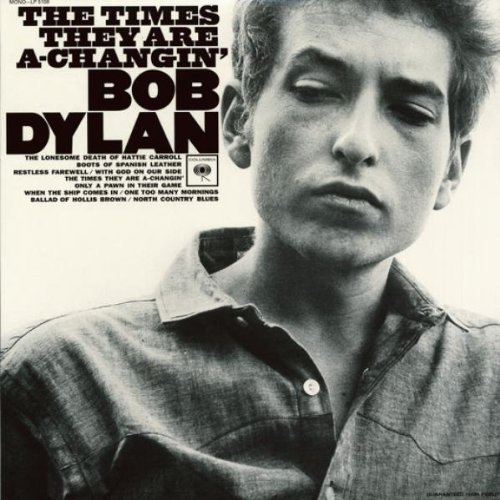
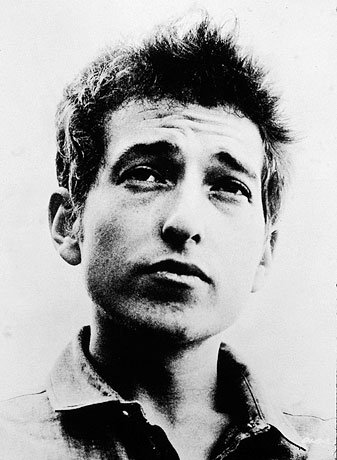
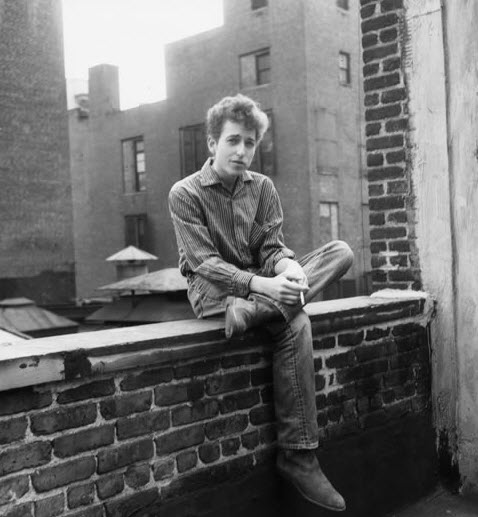
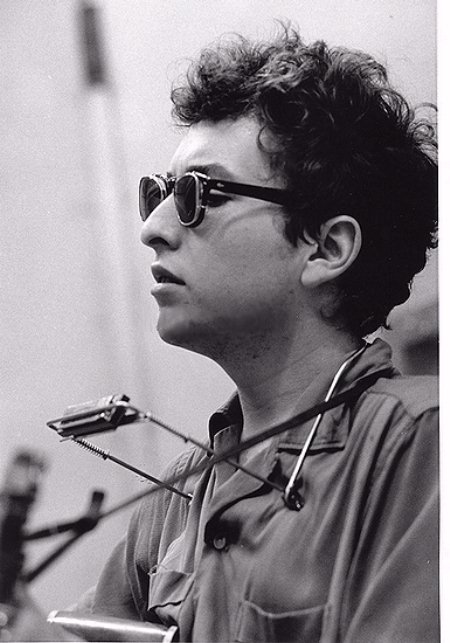
49 years ago Dylan did his 4th recording session for “The Time They are A-Changin'”
Some background info from Wikipedia:
The Times They Are a-Changin’ is the third studio album by American singer-songwriter Bob Dylan, released in January 1964 by Columbia Records.
Produced by Tom Wilson, it is the singer-songwriter’s first collection to feature only original compositions. The album consists mostly of stark, sparsely-arranged story songs concerning issues such as racism, poverty, and social change. The title track is one of Dylan’s most famous; many felt that it captured the spirit of social and political upheaval that characterized the 1960s.
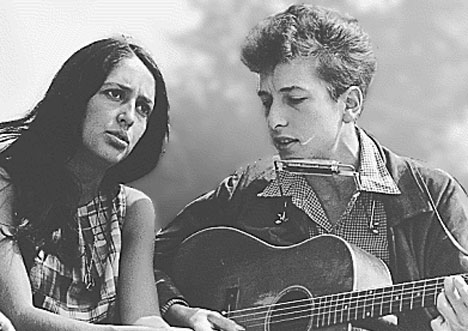
Sessions did not resume for more than two months. During the interim, Dylan toured briefly with Joan Baez, performing a number of key concerts that raised his profile in the media. When Dylan returned to Studio A on October 23, he had six more original compositions ready for recording. Master takes for “The Lonesome Death of Hattie Carroll” and “When the Ship Comes In” were both culled from the October 23 session. A master take for “Percy’s Song” was also recorded, but it was ultimately set aside and was not officially released until Biograph in 1985.
Albums involved:
ALBUM
Release date
CODE
The Times They Are A-Changin’
1964-01-13
TTTAA
Biograph
1985-11-07
BIO
Love @ Theft bonus disc
2001-09-11
LTB
Studio A Columbia Recording Studio New York City, New York October 23, 1963, 10-1 pm
Produced by Tom Wilson. Engineers: Knuerr and Dauria.
Songs:
The Lonesome Death Of Hattie Carroll
The Lonesome Death Of Hattie Carroll
When The Ship Comes In
When The Ship Comes In
The Times They Are A-Changin’
Percy’s Song – BIO “….the exquisitely performed ‘protest’ number ‘Percy’s Song’…” ~Michael Gray (The Bob Dylan Encyclopedia) – “Percy’s song” makes one think Dylan could have had a career as a courtroom lawyer….. “Percy’s song” is long – too long, I think, for the simple story it tells; the appeal here is the melody and Dylan’s evident affection for this tune and for the repeating lines, “turn. turn, turn again… turn, turn to the rain and the wind.” He weaves a spell with these lines, passing along the spell they wove on him…. ~Paul Williams (Performing artist 60-73)
–
The Lonesome Death Of Hattie Carroll
The Lonesome Death Of Hattie Carroll – TTTAA “The Lonesome Death of Hattie Carroll” is an extremely moving song that has stood the test of time better than any of Dylan’s other early topical songs of this sort… Dylan sings it from the heart; he really cares about the woman who died – her dignity and the value of her life come through in the song, it is a memorial to her and a tribute to people like her as much as an attack on her killer and people like him and the system that coddles them. ~Paul Williams (Performin Artist 60-73)
– “Although a song such as his magnificent ‘Lonesome Death of Hattie Carroll’ makes an ordinary worker into a kind of heroine, Dylan makes this happen as a device, not an end in itself: a device for strengthening an essentially political and social polemic.
~Michael Gray (The Bob Dylan Encyclopedia)
–
When The Ship Comes In
When The Ship Comes In – TTTAA “Even as words on the page, though, the song has a charm very much its own—like a glimpse into a world both real and unreal: morally mature (if severe) yet child-like in conception. The internal rhyming is so effective, driving the vision along in the rhythm of the oncoming ship as it meets, again and again, relentlessly, the swell of the sea: ‘And the song, will, lift, as the main, sail, shifts / And the boat, drifts . . .’ and this internal rhyming collaborates perfectly with the alliterative effects (as well, of course, as with the tune): ‘Then the sands will roll out a carpet of gold / For your weary toes to be a-touchin’. . .’ The child-like allegory comes over as a quite unexceptionable moral cleanliness—a convincing wisdom. …” ~Michael Gray (The Bob Dylan Encyclopedia)
–
The Times They Are A-Changin’ – L&TB (note: either this take or take 16 was released on L&TB)
…and what a great track it is, AND what a bad (meanin’ good) video!
From Paste Magazine:
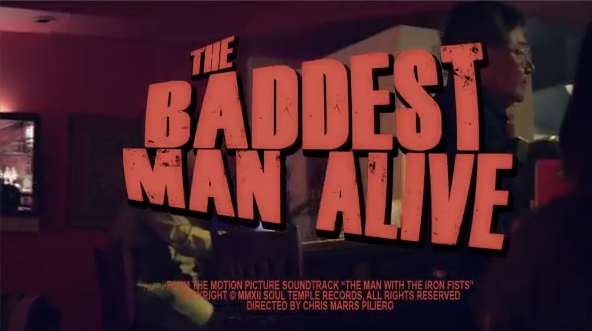
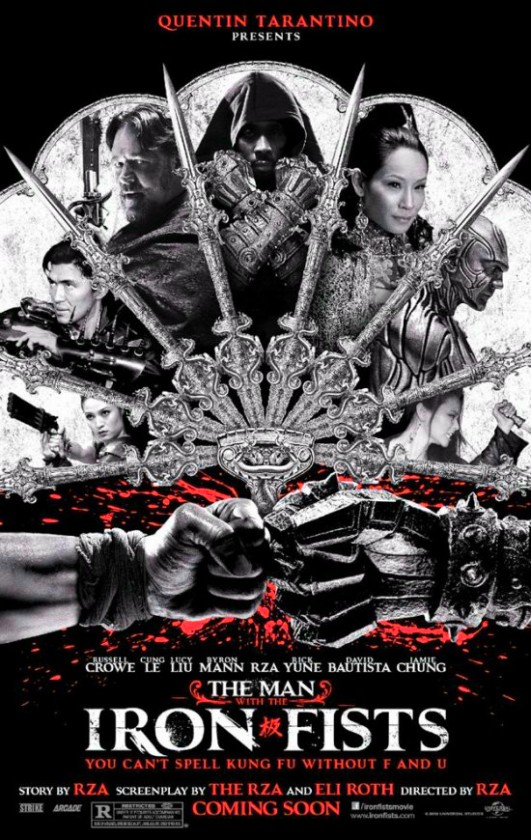
The rockers and RZA teamed up to record a sultry track that combines the best of both rock and rap worlds. The video for “The Baddest Man Alive” pays homage to the kung-fu film that it accompanies. Audiences see The Black Keys and RZA sitting at a table in a restaurant when, all of a sudden, they all begin to battle each other. Throughout the fight sequence there are small clips from The Man With The Iron Fists on different surfaces. The bloody aspects that audiences can expect to see from the feature (it was produced by Quentin Tarantino, after all) make their way into the video, including RZA ripping someone’s arm off. (Read more at Paste)
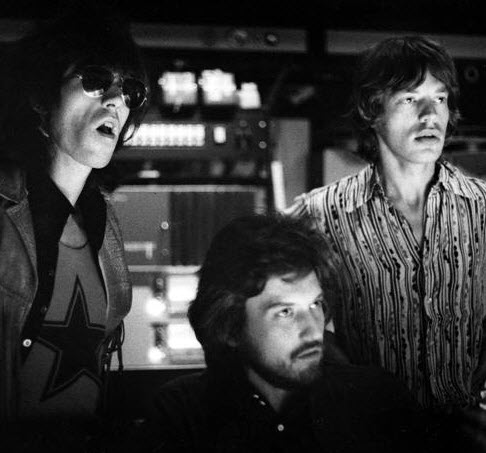
Jimmy Miller produced “The Rolling Stones” 4 best albums:
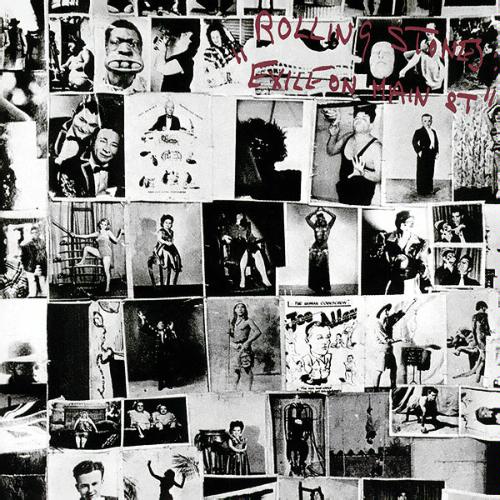
Exile on Main St. (1972)
Sticky Fingers (1971)
Let It Bleed (1969)
Beggars Banquet (1968)
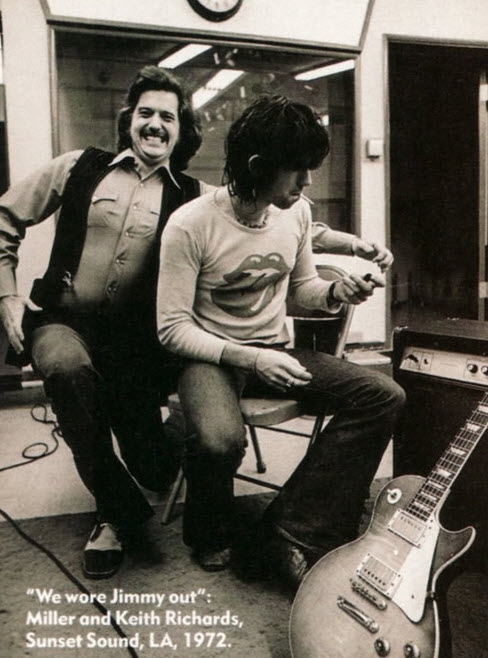
He really connected with the band & Keith Richards in particular.
“It was really a gas to work with him. Jimmy Miller could turn the whole band on and make a nondescript number into something.”
~Keith Richards
Miller was a huge Stones fan before he started working with the band..
‘The night Jagger phoned I just knew he was gonna ask me to produce them. I glided over to his house on a cloud.’
~Jimmy Miller
From Wikipedia:
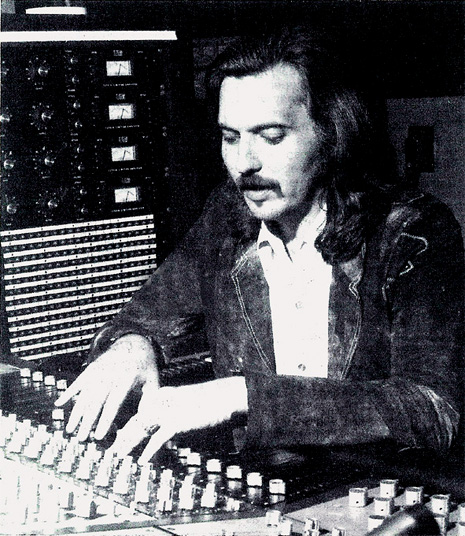
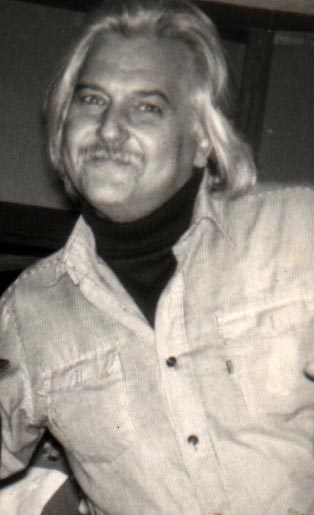
James “Jimmy” Miller (23 March 1942 – 22 October 1994) was a Brooklyn, New York-born record producer and musician who produced dozens of albums between the mid-1960s and early 1990s, including landmark recordings for Blind Faith, Traffic, the Plasmatics, Motorhead, The World Bank and Primal Scream. He was perhaps best known for his lengthy association with the Rolling Stones, for whom he produced a string of singles and albums that all rank among the most critically and financially successful works of the band’s career: Beggars Banquet (1968), Let It Bleed (1969), Sticky Fingers (1971), Exile on Main St. (1972) and Goats Head Soup (1973).
Prior to working with the Rolling Stones, Miller rose to fame by producing successful releases for The Spencer Davis Group including their breakthrough hit “Gimme Some Lovin'” and the follow-up smash “I’m A Man,” which Miller co-wrote with the band’s singer-keyboardist, Steve Winwood. In addition to his production work for yet another Winwood band, Traffic, Miller also contributed the lyrics to the Traffic song “Medicated Goo.” Miller produced the only album by the Clapton/Winwood supergroup Blind Faith.
The Spencer Davis Group – Gimme Some Lovin’:
Traffic – Dear Mr. Fantasy:
Blind Faith – Can’t Find My Way Home:
Following his work with Blind Faith, Miller co-produced (with Delaney Bramlett) the hit Delaney & Bonnie album On Tour with Eric Clapton, recorded live at Croydon, United Kingdom, on 7 December 1969. He went on to produce Delaney & Bonnie keyboardist Bobby Whitlock, Kracker, the Plasmatics, Motörhead and the UK band Nirvana.
A drummer himself, Miller was known for the distinctive drum sound that characterized his productions, especially his work with the Rolling Stones, on whose recordings he occasionally played percussion parts such as the famous opening cowbell on “Honky Tonk Women” and the full drum kit on “You Can’t Always Get What You Want,” “Happy,” “Tumbling Dice” and “Shine a Light.”
The Rolling Stones – Beggars Banquet (1968) [full album]:
The Rolling Stones – Let It Bleed (1969, Remastered) Full Album:
The Rolling Stones – Sticky Fingers (1971) (Full Album):
The Rolling Stones – Let It Loose (1972) (No Full album on youtube):
The Rolling Stones – Exile On Main Street – Shine a Light (1972):
Miller went on to work with Primal Scream on their breakthrough album Screamadelica and William Topley’s band The Blessing (Miller appears on their DVD Sugar Train during the song “Soul Love”). In the 1980s, Miller produced some acts including Johnny Thunders, Matrix and Jo Jo Laine (wife of Denny Lane, on “Moody Blues & Wings”). In 1990 he Co-Produced (along with Phil Greene) “What’s in A Name” for Florida band Walk the Chalk.
Among Miller’s last productions were three tracks on the 1992 Wedding Present project, Hit Parade 2. Jimmy also produced four tracks on The World Banks “In Debt Interview” which featured artists such as Billy Preston and Bobby Keys, a rare musical sideline from author Hunter S. Thompson. Jimmy traveled to Woody Creek, Colorado in 1994 to meet with Hunter S. Thompson for a memorable weekend in May shortly before he passed on. He died in October 1994.
Album of the day – Exile on Main St. (1972):
From allmusic.com – Stephen Thomas Erlewine:
Greeted with decidedly mixed reviews upon its original release, Exile on Main St. has become generally regarded as the Rolling Stones’ finest album. Part of the reason why the record was initially greeted with hesitant reviews is that it takes a while to assimilate. A sprawling, weary double album encompassing rock & roll, blues, soul, and country, Exile doesn’t try anything new on the surface, but the substance is new. Taking the bleakness that underpinned Let It Bleed and Sticky Fingers to an extreme, Exile is a weary record, and not just lyrically. Jagger’s vocals are buried in the mix, and the music is a series of dark, dense jams, with Keith Richards and Mick Taylor spinning off incredible riffs and solos. And the songs continue the breakthroughs of their three previous albums. No longer does their country sound forced or kitschy — it’s lived-in and complex, just like the group’s forays into soul and gospel. While the songs, including the masterpieces “Rocks Off,” “Tumbling Dice,” “Torn and Frayed,” “Happy,” “Let It Loose,” and “Shine a Light,” are all terrific, they blend together, with only certain lyrics and guitar lines emerging from the murk. It’s the kind of record that’s gripping on the very first listen, but each subsequent listen reveals something new. Few other albums, let alone double albums, have been so rich and masterful as Exile on Main St., and it stands not only as one of the Stones’ best records, but sets a remarkably high standard for all of hard rock. …read more over @ allmusic.com