..The real prize of the collection, however, is the film included on the DVD, titled The True History of the Traveling Wilburys. Watching it makes listening to the albums a totally new experience..
~Michael Franco (popmatters.com)
..a bonus DVD featuring an amazing 24-minute documentary showing unseen footage of the Wilburys and their five video clips, filmed largely on George Harrison’s home video recorder.
~amazon.com
Eunice Kathleen Waymon aka. Nina Simone was the sixth of eight children, she grew up in poverty in Tryon, North Carolina. Her family wished for her was that she should be the world’s finest classical pianist. She did not get into the schools she wanted and always blamed racism.
Born the sixth child of a preacher’s family in North Carolina, Simone aspired to be a concert pianist. Her musical path changed direction after she was denied a scholarship to the prestigious Curtis Institute of Music in Philadelphia, despite a well-received audition. Simone was later told by someone working at Curtis that she was rejected because she was black. When she began playing in a small club in Philadelphia to fund her continuing musical education and become a classical pianist she was required to sing as well. She was approached for a recording by Bethlehem Records, and her rendering of “I Loves You, Porgy” was a hit in the United States in 1958. Over the length of her career Simone recorded more than 40 albums, mostly between 1958—when she made her debut with Little Girl Blue—and 1974.
– Wikipedia
Simone has dug deep into the american song tradition and it comes as no surprise that she has done several of Bob Dylan’s songs. She is an incredible interpreter of Dylan.
The first song is a contender for best Bob Dylan cover ever done (yes, I am aware of Hendrix’ Watchtower).
The Ballad of Hollis Brown(live,Mickery Theatre, The Netherlands in 1965, see coments…):
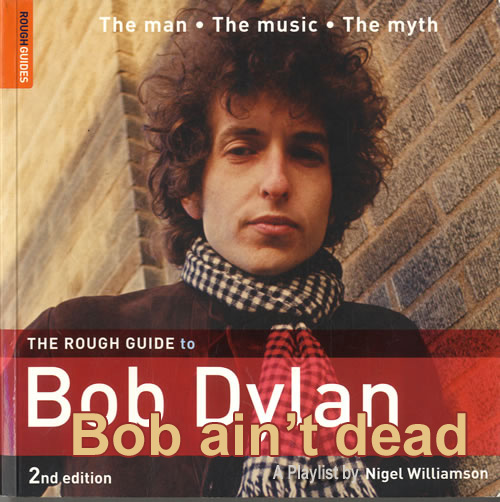
“You thought it was all over after Blood On The Tracks? Well it’s not dark yet. In fact, it’s not even getting there. Here are ten songs you need, from Street Legal onwards.”
– Nigel Williamson
Nigel Williamson is a British journalist and author. Educated at University College London, Williamson worked as a reporter on Tribune (1982–84) and was then briefly its literary editor (1984) before becoming editor (1984–87) as successor to Chris Mullin.
He writes on pop and world music for a variety of publications, including the magazines Uncut and Songlines. He has also written books, among them, The Rough Guide to Bob Dylan. He made 4 Bob Dylan playlists for The Rough Guide Book of playlists.
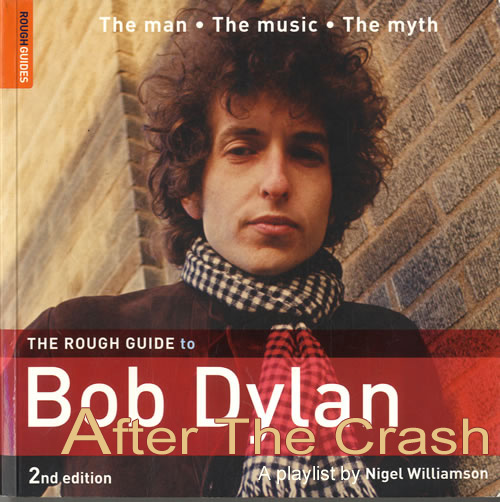
“After the motorcycle crash in the autumn of 1966, Dylan retreated to Woodstock. When he re-emerged with John Wesley Harding, he sounded very different. His output over the next eight years was decidedly patchy. Yet it contained some fine songs, even before the release of 1975’s Blood On The Tracks, one of his absolute masterpieces.”
– Nigel Williamson (The Rough Guide Book of Playlists)
Nigel Williamson is a British journalist and author. Educated at University College London, Williamson worked as a reporter on Tribune (1982–84) and was then briefly its literary editor (1984) before becoming editor (1984–87) as successor to Chris Mullin.
He writes on pop and world music for a variety of publications, including the magazines Uncut and Songlines. He has also written books, among them, The Rough Guide to Bob Dylan.
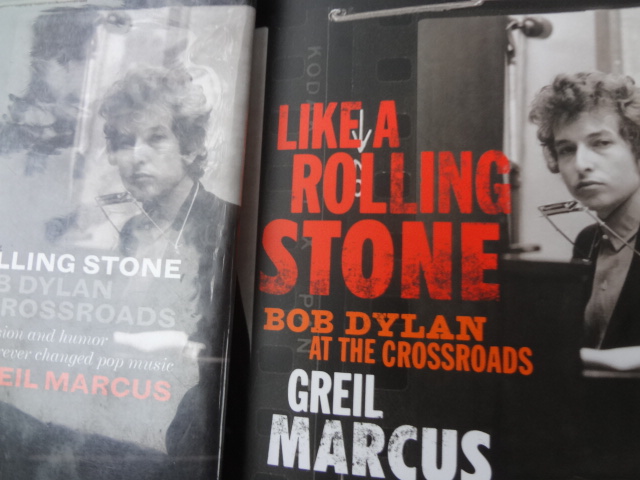
“Dylan leads the group into the song with a strong, strummed theme on his electric rhythm guitar. Paul Griffin has a loose, free bounce on the piano; Kooper immediately has a high, clear tone. Dylan stops it: “Hey, man, you know, I can’t, I mean, I’m just me, you know. I can’t, really, man, I’m just playing the song. I know — I don’t want to scream it, that’s all I know — ” He takes up the theme again; Bloomfield and Gregg come in. The feeling is right all around; a rich ensemble is coming together.”
– Greil Marcus (Like a Rolling Stone – Bob Dylan at the crossroads)
I love Greil Marcus’s book on Bob Dylan’s song, Like a Rolling Stone, and therefore I’ve collected som clips on and about the book, including a very interesting YouTube-clip with Marcus talking about the book and the song.
Greil Marcus saw Bob Dylan for the first time in a New Jersey field in 1963. He didn’t know the name of the scruffy singer who had a bit part in a Joan Baez concert, but he knew his performance was unique. So began a dedicated and enduring relationship between America’s finest critic of popular music— “simply peerless,” in Nick Hornby’s words, “not only as a rock writer but as a cultural historian”— and Bob Dylan.