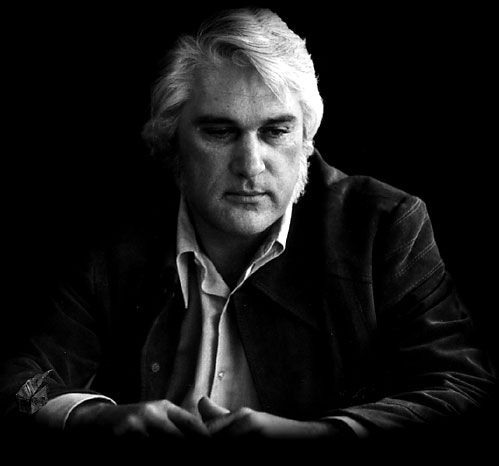
“I think a guy who’s had just the right amount of booze can sing the blues a hell of a lot better than a guy who is stone sober.”
~Charlie Rich
“Charlie Rich had the intuitive instinct to feel, see and hear pain, disappointment, happiness and joy and somehow transmute it into music. I don’t know anyone who has ever written or sung in a way that depicted more of the humanity of man, with greater melodic beauty, than Charlie Rich.”
~Sam Phillips
“Charlie Rich was the best. His talent and style knew no boundaries. After years of being the victim of stereotypical critics who could neither understand nor label him, Charlie’s beautiful, haunting voice, surrounded by his piano, was discovered by the world. I’m just glad I was around for the ride.”
~Billy Sherrill (Record Producer)
The ice age is coming, the sun is zooming in
Engines stop running and the wheat is growing thin A nuclear error, but I have no fear
London is drowning-and I live by the river
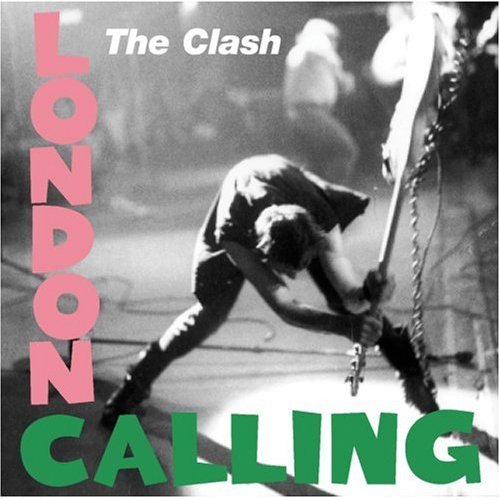
I walked home from the local grocery store Ringdal exactly 35 years ago today with a plastic bag containing this double album by The Clash. It was priced as a single LP but had two vinyl records tucked inside. It was a frosty day, and when I was half way home I had to take off the plastic wrapping. To this day I can remember the smell, that wonderful smell of new vinyl on a frosty day.
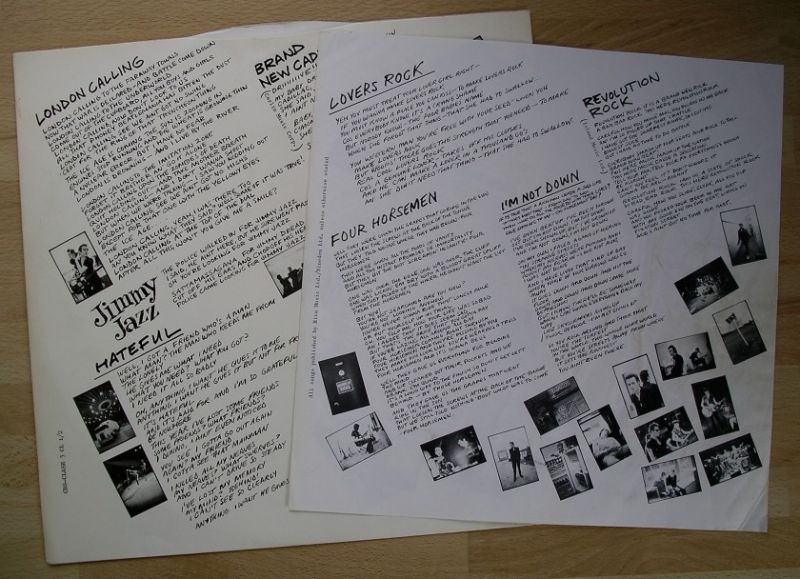
The inner sleeves had “hand written” lyrics and it has to be the lyrics I’ve read most often. As a 13 year old boy from norway this was much more important in learning the english language than any class at school. Both historically and personally The Clash, London Calling was massively crucial.
Released
14 December 1979
Recorded
August–September and November 1979, Wessex Sound Studios, London
Length
65:07
Label
CBS, Epic, Legacy
Producer
Guy Stevens and Mick Jones
London Calling is the third studio album by the English rock band The Clash. It was released in the United Kingdom on 14 December 1979 through CBS Records, and in the United States in January 1980 through Epic Records. The album represented a change in The Clash’s musical style, featuring elements of ska, funk, pop, soul, jazz, rockabilly, and reggae more prominently than in their previous two albums.
London Calling is widely regarded as one of the greatest albums of all time. In 1987, it was ranked number 14 on Rolling Stone magazine’s “100 Best Albums of the Last Twenty Years”. Rolling Stone also ranked London Calling at number one on its 1989 list of the 100 best albums of the 80’s (it was released in December 1979 in the UK, but in January 1980 in the US, thus qualifying as an 80’s album for the US published magazine). In 1993, NME ranked the album at number six on its list of The Greatest Albums of the ’70s. Vibe magazine included the double album on its list of the 100 Essential Albums of the 20th Century. Q magazine ranked London Calling at number four on its 1999 list of the 100 Greatest British Albums, and, in 2002, included the album in its list of the 100 Best Punk Albums. (wikipedia – read more)
London Calling (Official video):
From allmusic.com:
…London Calling is a remarkable leap forward, incorporating the punk aesthetic into rock & roll mythology and roots music. Before, the Clash had experimented with reggae, but that was no preparation for the dizzying array of styles on London Calling. There’s punk and reggae, but there’s also rockabilly, ska, New Orleans R&B, pop, lounge jazz, and hard rock; and while the record isn’t tied together by a specific theme, its eclecticism and anthemic punk function as a rallying call. While many of the songs — particularly “London Calling,” “Spanish Bombs,” and “The Guns of Brixton” — are explicitly political, by acknowledging no boundaries the music itself is political and revolutionary. But it is also invigorating, rocking harder and with more purpose than most albums… (read more)
Except maybe for Ricky Skaggs, this folksy eccentric sings fewer embarrassing songs than anyone in country music. Unlike Skaggs, he plays at innocence rather than striving for it, which is why there always seems to be something comic bubbling under the eager warmth of his voice. And as you soon learn from lyrics like “Black Sheep” and “Swingin’,” he’s unlike Skaggs in another way as well: he’s not a moralistic tight-ass
~Robert Christgau (about JA’s “Greatest Hits”)
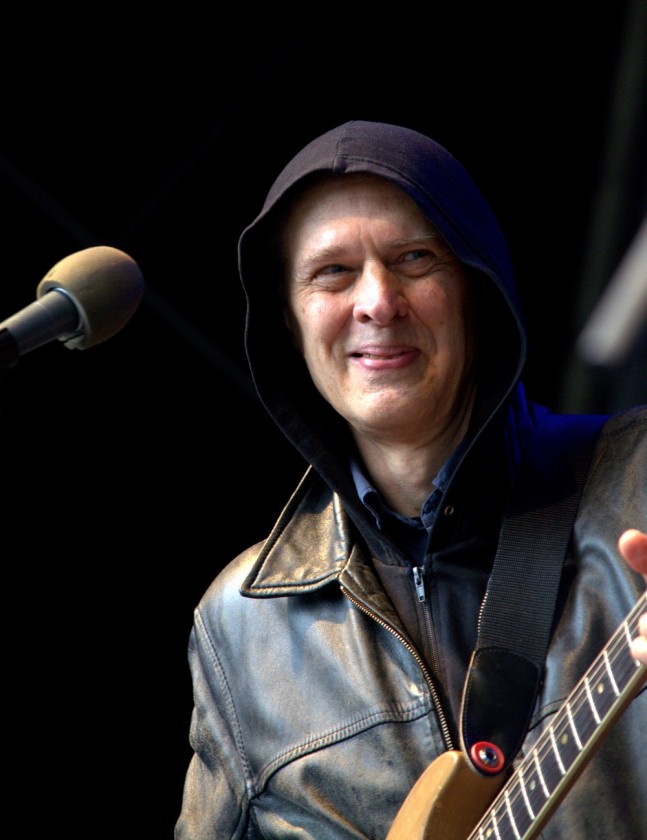
Tom Verlaine (born Thomas Miller, December 13, 1949):
Singer, songwriter and guitarist, best known as the frontman for the New York rock band Television.
Tom Verlaine
Birth name
Thomas Miller
Born
13 December 1949 (age 65)
Morristown, New Jersey, United States
Television played their seminal album Marquee Moon last summer at Bergenfest, it was a lot of fun. It was great seeing them and they were still a great band. They seemed to enjoy themselves immensely on stage. Verlaine is regarded by many as one of the most talented performers of the early post punk era. His poetic lyrics, coupled with his accomplished and original guitar playing, are highly influential and widely praised in the music media. He and Television bandmate Richard Lloyd are known as one of rock’s most acclaimed and inventive guitar duos. His work with guitarist Jimmy Rip in Television since 2007 is also incredibly good.
Tom Verlaine is a legend!
He is also part of the Million Dollar Bashers, a supergroup also featuring Sonic Youth musicians Lee Ranaldo and Steve Shelley, Wilco guitarist Nels Cline, Bob Dylan bassist Tony Garnier, guitarist Smokey Hormel and keyboardist John Medeski. Their work appears on the original soundtrack to I’m Not There, a biographical film “freely” reflecting the life of Bob Dylan.