Category Archives: Soul

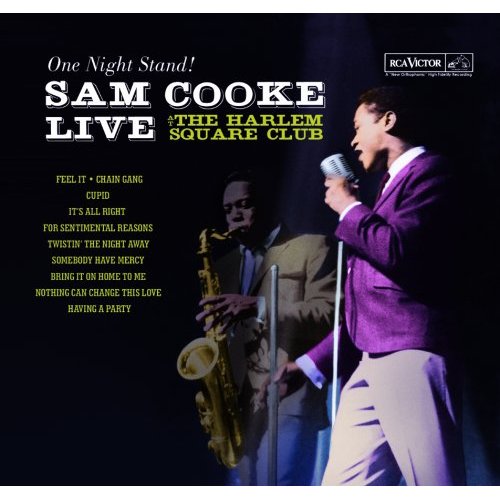
30 Best live albums countdown: 23 – One night stand Live at the Harlem Square Club 1963 by Sam Cooke

Sam Cooke Harlem 1

Sam Cooke was one the first to blend gospel music and secular music, the early foundation of soul music. He was the opposite of Elvis: He was a black performer who appealed to a white audience, who wrote his own songs and who controlled his own business.

On Jan. 12, 1963, Sam Cooke was not playing to the white  audiences who knew him only from his earlier records. He was headlining a few concerts at Miami’s Harlem Square Club, he performed for black audiences who appreciated his roots and expected a grittier, more soulful Sam Cooke, which isexcactly what they got! It is indeed  a rougher, rawer and more immediate side of Sam Cooke on display. Sam Cooke’s smooth voice sets the tone but it’s his abillities as an entertainer in world class form that take it to the top.

Sam Cooke Recording at RCA Studios

Cooke was  energized by a recent tour of Europe with former labelmate Little Richard, when he took the stage at the Harlem Square Club in Miami.  He gave us an electrifying set of sweaty, sanctified, manic and masterful soul music. The show was taped for an album which sat on the shelf for twenty years until it was released in 1985.

It is a fantastic recording and maybe it shows us what direction Mr. Cooke could have gone. But instead he got an eighteen month period which would see his baby son die, see the recording of some of his finest music, and then his all too early death.

One night stand! Live At The Harlem Square Club is one of the finest live releases I know of, worthy of standing next to James Brown’s landmark Apollo Theater date (recorded just a month earlier) and also worthy of the 23rd place on my list of the 30 best live albums.
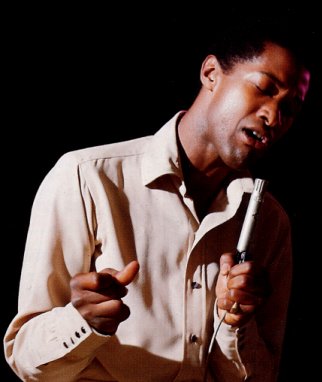
samcookepic

It is one of the great moments in the history of soul music, heck, any kind of music! 

Rolling Stone Magazine  ranked it at 443 on their 500 Greatest Albums of All Time:

Cooke was elegance personified, but he works this Florida club until it’s hotter than hell, while sounding like he never breaks a sweat. He croons “For Sentimental Reasons” like a superlover, and when the crowd sings along with him, it’s magic.

Peter Guralnick (in his book Dream Boogie:  The Triumph of Sam Cooke):

There was nothing soft, measured or polite about the Sam Cooke you saw at the Harlem Square Club; there was none of the self-effacing, mannerable, ‘fair-haired little colored boy’ that the white man was always looking for. This was Sam Cooke undisguised, charmingly self-assured, “he had his crowd,” said [guitarist] Clif White approvingly – he was as proud as he has been raised to be, not about to take any scraps from the white man’s table.

For me the difference from his studio work and this live album is clearest on Chain Gang. Listen to the two songs from the two minute mark, strike that, listen to the whole song. Both versions are great but the live version is raw, fantastic distillation of Soul! The way he switches from smooth, velvety voice into a gritty rasp, it is amazing, what an “instrument” he had.

Chain Gang:

All the songs are darker, more raw, more sexual. Cooke is twisting the audience around his finger and he sounds like a man who has  earthly desires to attend to. It is raw soul, and I never thought I should say that about Sam Cooke!
Continue reading 30 Best live albums countdown: 23 – One night stand Live at the Harlem Square Club 1963 by Sam Cooke
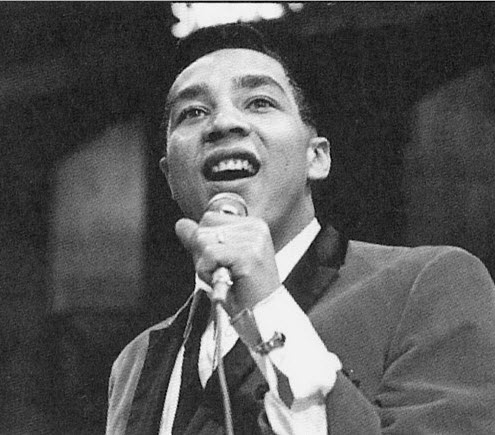
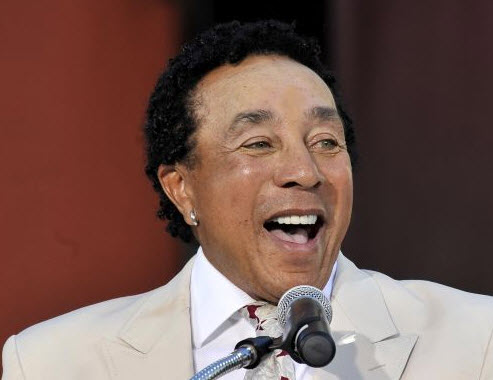
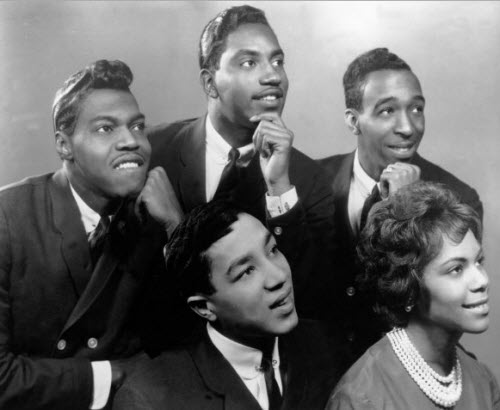
Today: Smokey Robinson is 73

smokey robinson

I don’t ever balk at being considered a Motown person, because Motown is the greatest musical event that ever happened in the history of music.
~Smokey Robinson

Berry Gordy founded Motown Records, but one could argue that Smokey Robinson was the man who first pushed America’s most iconic soul music label toward greatness.
~Mark Deming (allmusic.com)

The Tracks Of My Tears Live (1965)

Wikipedia:

Birth name William Robinson, Jr.
Born February 19, 1940 (age 73)
Origin Detroit, Michigan, United States
Genres R&B, soul, pop, adult contemporary
Occupations Singer, songwriter, record producer, record executive
Instruments Vocals, piano
Years active 1955–present
Labels Motown, Universal, SBK, Liquid 8, Robso
Associated acts The Miracles, The Temptations, Mary Wells, Marvin Gaye
Website Official website

William “Smokey” Robinson, Jr. (born February 19, 1940) is an American R&B singer-songwriter, record producer, and former record executive. Robinson was the founder and front man of the popular Motown vocal group The Miracles, for which he also served as the group’s chief songwriter and producer. Robinson led the group from its 1955 origins as The Five Chimes until 1972 when he announced a retirement from the stage to focus on his role as Motown’s vice president.

I Second That Emotion:

However, Robinson returned to the music industry as a solo artist the following year, later having solo hits such as “Baby That’s Backatcha”, “A Quiet Storm”, “The Agony and the Ecstasy”, “Cruisin'”, “Being With You” and “Just to See Her”. Following the sale of Motown Records in 1988, Robinson left Motown in 1990. He was inducted into the Rock and Roll Hall of Fame in 1987.

smokey robinson2

 Awards and accolades

  • In 1987, Robinson was inducted to the Rock & Roll Hall of Fame
  • Two years later, in 1989, he was inducted to the Songwriter’s Hall of Fame
  • In 1993, Robinson was awarded a medal at the National Medal of Arts
  • Two years before, he won the Heritage Award at the Soul Train Music Awards
  • At its 138th Commencement Convocation in May 2006, Howard University conferred on Robinson the degree of Doctor of Music, honoris causa
  • In December 2006 Robinson was one of five Kennedy Center honorees, along with Dolly Parton, Zubin Mehta, Steven Spielberg and Andrew Lloyd Webber
  • On May 9, 2009, Smokey Robinson received an honorary doctorate degree and gave a commencement speech at Berklee College of Music’s commencement ceremony

On March 20, 2009, The Miracles were finally honored as a group with a star on the Hollywood Walk of Fame. Smokey was present with original Miracles members Bobby Rogers, Pete Moore, (Bobby’s cousin) Claudette Rogers, and Gloria White, accepting for her husband, the late Ronnie White, whose daughter Pamela and granddaughter Maya were there representing him as well. Smokey’s replacement, 1970s Miracles lead singer, Billy Griffin was also honored. Controversially, original Miracle Marv Tarplin was not honored, against the wishes of his fellow Miracles, and the group’s fans, who felt that he should have also been there to share the honor. However, later ,Tarplin did receive his star. He was also finally inducted with the rest of the original Miracles, Bobby Bogers, Pete Moore, Ronnie White,and Claudette Robinson, into the Rock and Roll Hall of Fame on April 20th, 2012, some 26 years after Robinson’s controversial solo induction in 1987.

the Miracles

 Album of the day:

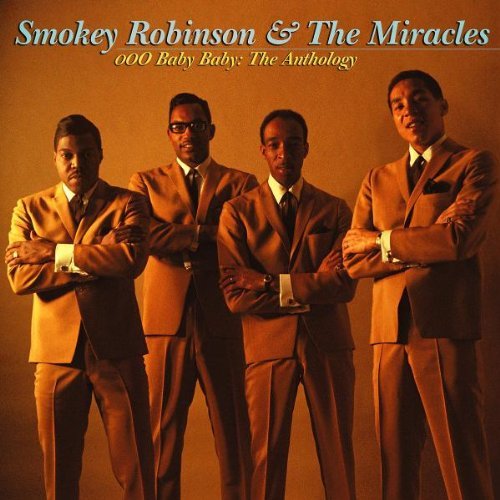
Ooo Baby Baby: The Anthology (2002)

the miracles ooo baby anthology

Other Feb 19:

Continue reading Today: Smokey Robinson is 73

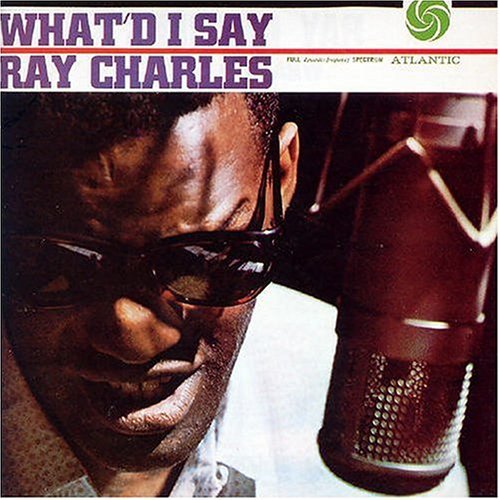
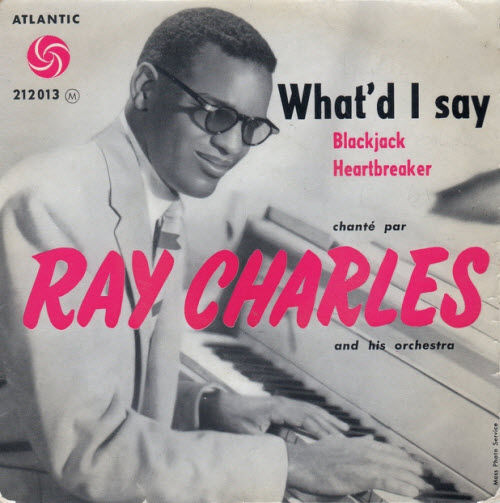
Today: Ray Charles recorded “What’d I Say” in 1959 – 54 years ago

Ray_Charles_-_What'd_I_Say

I’m not one to interpret my own songs, but if you can’t figure out ‘What I Say’, then something’s wrong. Either that, or you’re not accustomed to the sweet sounds of love.
—Ray Charles

The feel comes from gospel but the resulting witty, elegant essay on rhythm and sex and why they’re inseparable is purely pagan.
~Dave Marsh (The Heart of Rock & Soul)

wikipedia:

Released July 1959
Format 7-inch single
Recorded February 18, 1959
Genre Soul, blues, gospel, rock and roll
Length 6:30
Label Atlantic
Writer(s) Ray Charles
Producer Jerry Wexler

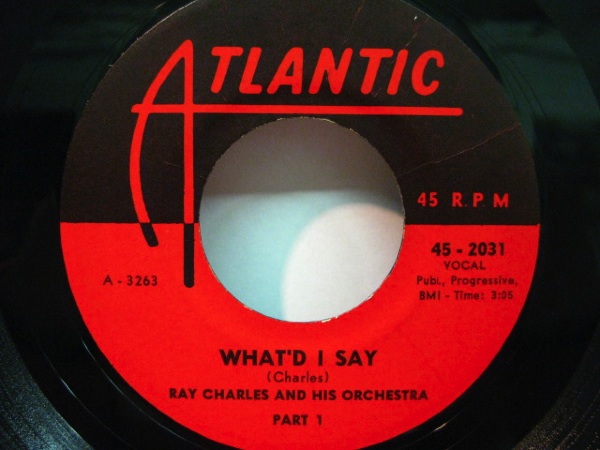
What’d I Say” (or “What I Say“) is a song by American rhythm and blues (R&B) musician Ray Charles, released in 1959 as a single divided into two parts. It was improvised one evening late in 1958 when Charles, his orchestra, and backup singers had played their entire set list at a show and still had time left; the response from many audiences was so enthusiastic that Charles announced to his producer that he was going to record it.

 ray charles what'd I say

 After his run of R&B hits, this song finally broke Charles into mainstream pop music and itself sparked a new sub-genre of R&B titled soul, finally putting together all the elements that Charles had been creating since he recorded “I Got a Woman” in 1954. The gospel influences combined with the sexual innuendo in the song made it not only widely popular but very controversial to both white and black audiences. It earned Ray Charles his first gold record and has been one of the most influential songs in R&B and rock and roll history. For the rest of his career, Charles closed every concert with the song. It was added to the National Recording Registry in 2002 and ranked at number 10 in Rolling Stone‘s “The 500 Greatest Songs of All Time”.

ray charles what'd i say

“Ray would call and say that he had a few songs but he wouldn’t usually comment on them beforehand. He called me up before he brought “What’d I Say” in and said, “I think you might like this one pretty well.” That constituted a rave from him and it was very easy to record. It was hardly a song: it was an extended rhythm lick with a few jingle-like verses: “See that girl with the red dress on, She can do the Birdland all night long”, not exactly Shakespearian innovation. He had strung a few lines together but the essence of that record was the boiling rhythm track and the exchanges between himself and the Raelets.”
– Jerry Wexler (Co-owner of Atlantic Records & legendary producer)

Live – 1960:

Album of the day:

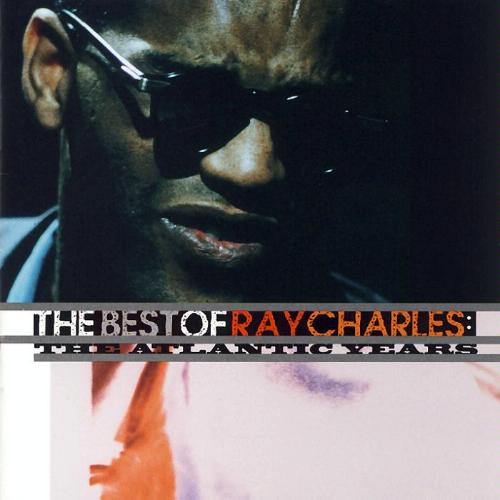
The Best of Ray Charles – Atlantic Years (1994)

Ray_Charles_-_The_Best_of_Ray_Charles_-_The_Atlantic_Years

Other February 18

Continue reading Today: Ray Charles recorded “What’d I Say” in 1959 – 54 years ago

Afghan Whigs top 10 cover songs

2 oya afghanw_for_web_1

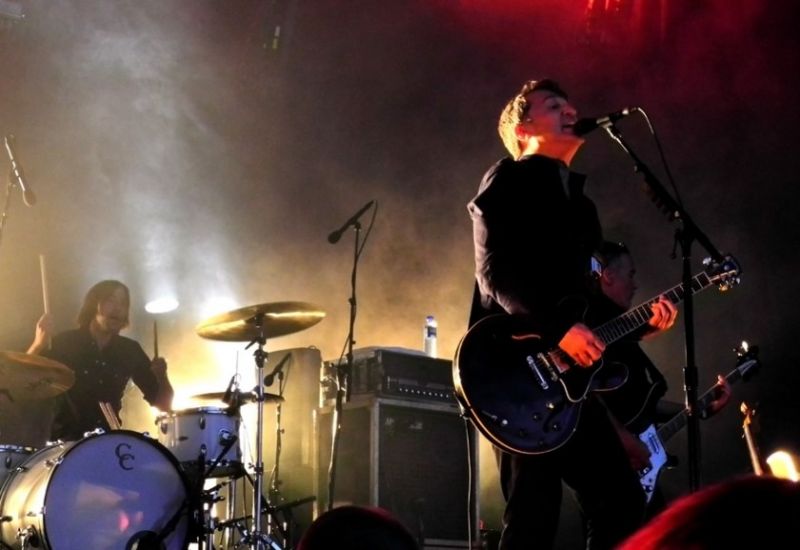
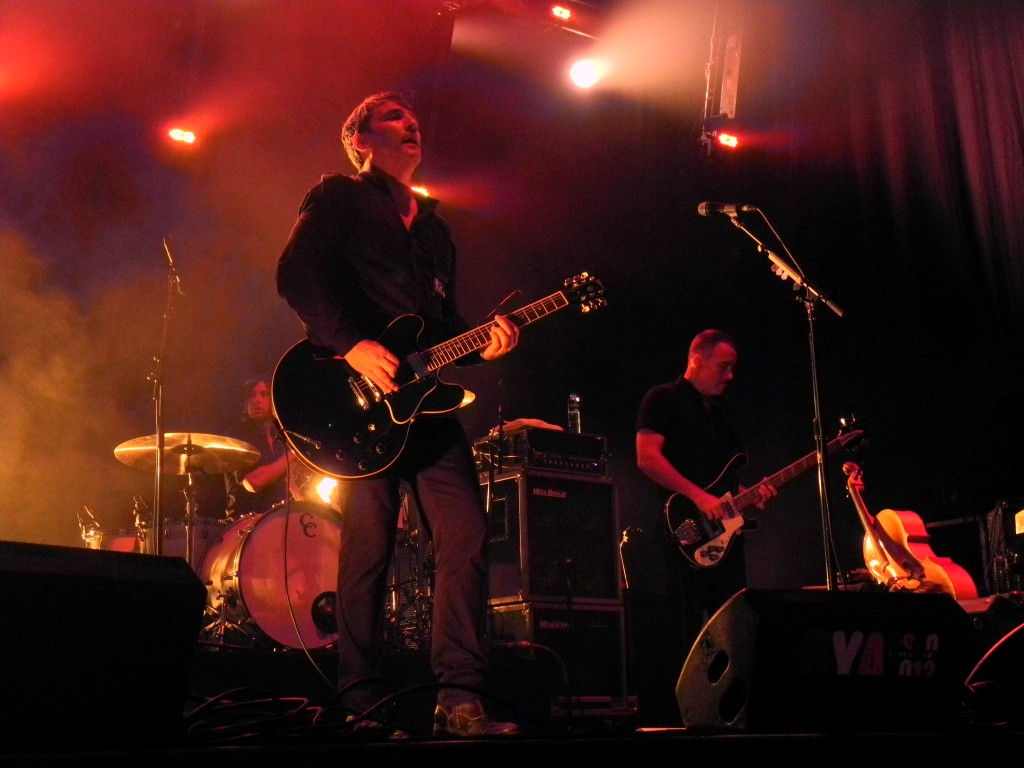
We saw Afghan Whigs at last years Oyafestival and of the 80 concerts I saw in 2012 I rated them on third place. What struck me was not only the great live versions of their own songs, but their very clever choices of cover songs.

afghan whigs 2012

And it was funky as hell!

I started to dig around the interweb and found a lot of very good cover versions done by Afghan Whigs, these are my ten favourites:

1.  See and don’t see – Afghan Whigs:

“Man, these words are kind of desperate and lonely, and they’re surrounded by this funky song. I might have to strip this one down someday.” – Greg Dulli

Originally by Marie Queenie Lyons:

2. Lovecrimes – Afghan Whigs (Frank Ocean cover):

“LoveCrimes came to me immediately. I had played around with that one maybe a week after I heard it. When I was looking to have something to play with the guys—we jam covers all the time…we had it down in half an hour. So that one was very, very natural.” – Greg Dulli (to AV Club)

3. True love travels on a gravel road (audio only) – Afghan Whigs (Nick Lowe):

4. Superstition (and Going to Town) – Afghan Whigs (Stevie Wonder):

5. Beast of Burden – Afghan Whigs (Rolling Stones):

Continue reading Afghan Whigs top 10 cover songs

New documentary: Muscle Shoals

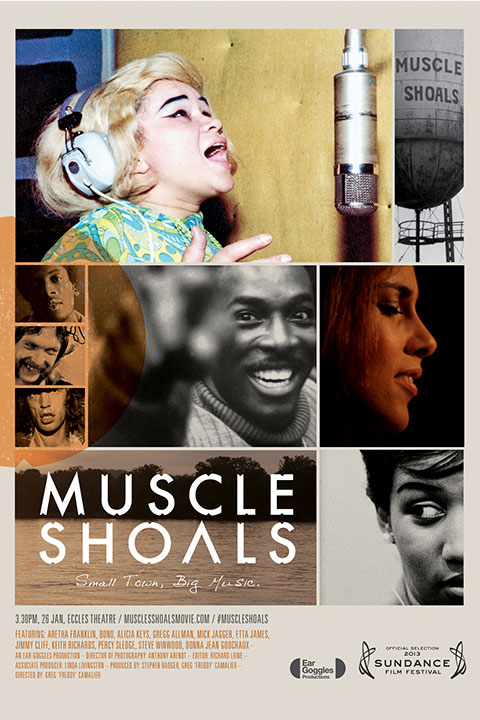
SundanceMuscleShoals_480x720

“You’re in rock’n roll heaven, man”
– Keith Richards

We can hardly wait, this is really the stuff of legends. The new documentary, “Muscle Shoals” will soon be released, it was shown on The Sundance festival 26th of January. The film was inspired by a magical visit to the town of the same name in Alabama. Camalier a self-taught filmmaker expresses his passion using his instinct, sensibility, and great appreciation of the art form. His original approach to this music documentary is clear in the mystical and evocative way he tells the story of Muscle Shoals.

From Rolling Stone Magazine:

Filled with interviews with a wide array of artists and never-before-seen footage, Muscle Shoals tells the story of this Northern Alabama town and the many hits that came out of its legendary recording spaces: Rick Hall’s FAME Studios and Muscle Shoals Sound Studio, which was started by FAME’s former rhythm section, the Swampers. “Being there does inspire you to do it slightly differently,” says Mick Jagger in the trailer. “It was really funky; you know, that was the whole idea of it.”

The Muscle Shoals Sound Studio was formed in Muscle Shoals, Alabama, in 1969 when musicians Barry Beckett (keyboards), Roger Hawkins (drums), Jimmy Johnson (guitar) and David Hood (bass) (called The Swampers) left FAME Studios to create their own studio. The Muscle Shoals Sound Rhythm Section, as they became known, was the first rhythm section to own its own studio and, eventually, its own publishing and production companies.

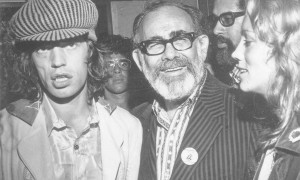
MickJagger_and_JerryWexler

The distinctive accompaniment and arrangements have been heard on a tremendous amount legendary recordings, including those from Wilson Pickett, Aretha Franklin, and the Staple Singers among others. Many artists have recorded hit songs and complete albums at the studio. (read more on Wikipedia)

A short clip of director  Greg Camalier  explaining why he made the movie:

Back in 2008, he was driving from the East Coast to New Mexico with a friend when Camalier saw a road sign for Muscle Shoals. Camalier was a music fan who had heard bits of information about the place for years, but didn’t know much about it. They decided to spend the night in Muscle Shoals, and he and his friend talked about why they had never seen a film about that small yet crucial slice of music history.

FAME (Florence Alabama Music Enterprises) Studios are located at 603 East Avalon in Muscle Shoals, Alabama. They have been an integral part of American popular music from the late 1950s to the present. Artists who recorded there included Wilson Pickett, Aretha Franklin, Otis Redding, Joe Tex, Duane Allman, The Hour Glass, Clarence Carter, Candi Staton, Mac Davis, Paul Anka, Tom Jones, Etta James, Andy Williams, The Osmonds, Shenandoah, and many others. The studio was added to the Alabama Register of Landmarks and Heritage on December 15, 1997. (read more, Wikipedia)

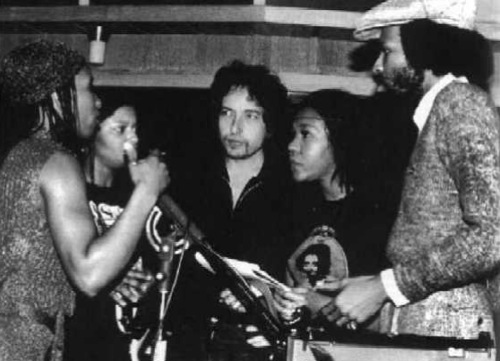
From the recording of Saved

From www.muscleshoalsmovie.com:
Located on the banks of the Tennessee River, Muscle Shoals, Alabama is the unlikely breeding ground for some of the most creative and defiant music in American history.
Continue reading New documentary: Muscle Shoals