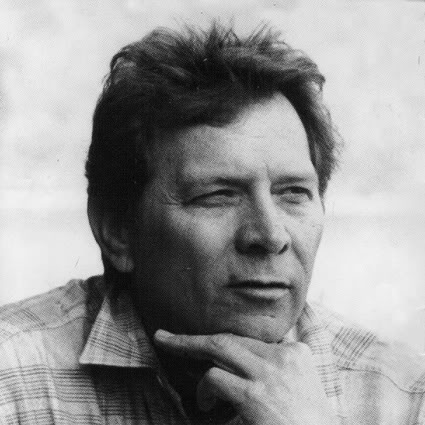
Today: Dan Penn is 71

At the dark end of the street
That’s where we always meet
Hiding in shadows where we don’t belong
Livin in darkness to hide a wrong
You and me
At the dark end of the street
You and me

Dan Penn was an important player in the development of the “Southern Soul scene” in Memphis in the early 60’s.

Here he performs one of the greatest soul songs ever, which he wrote together with Chips Moman in 1966:

Dark End of The Street:

I also need to include the best version of this fantastic song – James Carr:

From Wikipedia:

Dan Penn (born Wallace Daniel Pennington, 16 November 1941) is an American singer, musician, songwriter, and record producer who co-wrote many soul hits of the 1960s including “Dark End Of The Street” and “Do Right Woman, Do Right Man” with Chips Moman as well as “Out Of Left Field” and “Cry Like a Baby” with Spooner Oldham. Penn also produced many hits including “The Letter” by The Box Tops. Though considered to be one of the great white soul singers of his generation, Penn has released relatively few records featuring his own vocals and musicianship preferring the relative anonymity of songwriting and producing.
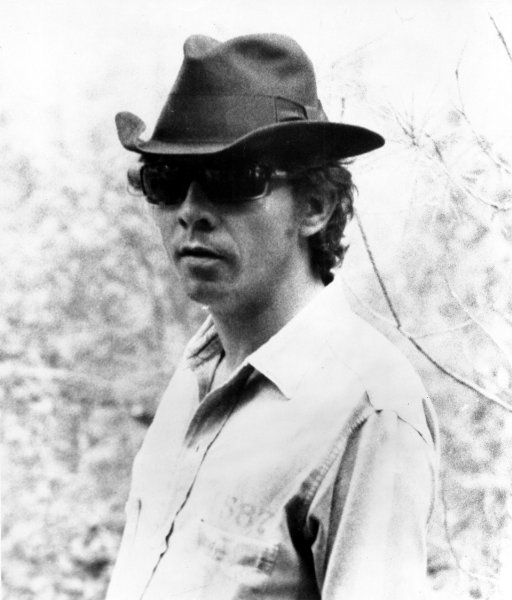
I’m Your Puppet (Penn/Spooner Oldham):

Steve Kurutz (allmusic.com):
Songwriter/producer Dan Penn has been a quiet force behind Southern soul music for over thirty years. Always moving just out of view of the limelight, Penn has produced and written hits for the Box Tops, Solomon Burke, Aretha Franklin and Ronnie Milsap, among others.
Originally from Vernon, Alabama, Penn began his career as a performer, leading several white R&B bands around the Muscle Shoals area. Achieving early success by selling a hit song to Conway Twitty (“Is a Bluebird Blue?”), the songwriter eventually moved to Memphis, joining producer Chips Moman at his American Studios. Together the two, along with Penn’s writing partner, organist Spooner Oldham, wrote and/or produced several hits for the Box Tops, such as “The Letter” and “Cry Like a Baby,” throughout the late ’60s.
…read more over @ allmusic.com

Album of the day:

Do Right Man (1994):
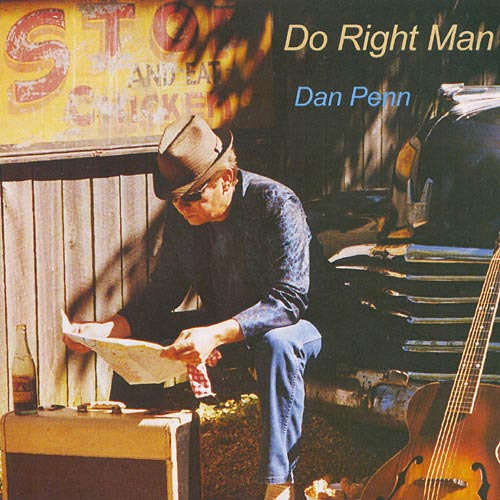

From allmusic.com (Chris Nickson):
If James Brown is Soul Brother Number One, you can make a very credible case for Dan Penn being number two. The Alabama native has had a hand in writing a fair number of classic soul songs, and here he commits his versions of them to tape for the first time, recording, of course, in Muscle Shoals, with their fabulous house band, and a horn section including former Memphis Horn member Wayne Jackson. It’s a tall order Penn sets himself, offering himself up for comparison with greats like James Carr, Aretha Franklin, and James and Bobby Purify, who have sung his songs — and that’s just the start of the list. However, he comes out very well, beginning with a quiet take on”The Dark End of the Street,” coming across like a note to a secret lover, rather than a cry of pain.
…read more – allmusic.com 

Other November 16:

Continue reading Today: Dan Penn is 71

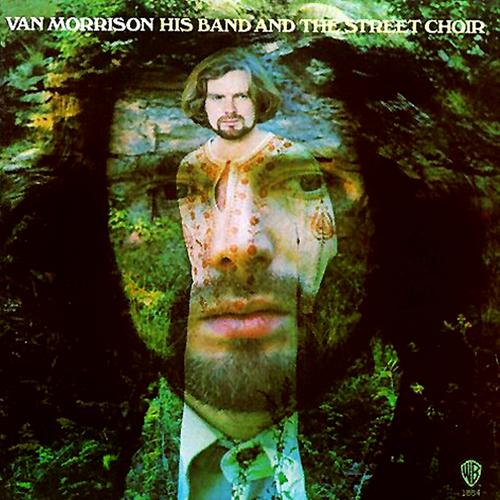
Today: Van Morrison released “His Band and the Street Choir” in 1970 – 42 years ago

 Morrison is still a brooder–“Why did you leave America?” he asks over and over on the final cut, and though I’m not exactly sure what he’s talking about, that sounds like a good all-purpose question/accusation to me–but not an obsessive one, and this is another half-step away from the acoustic late-night misery of Astral Weeks. As befits hits, “Domino” and especially “Blue Money” are more celebratory if no more joyous than anything on Moondance, showing off his loose, allusive white r&b at its most immediate. And while half of side two is comparatively humdrum, I play it anyway. A
~Robert Christgau (Consumer guide)

Street Choir – Van Morrison Live at Montreux 1974:

From Wikipedia:

Released 15 November 1970
Recorded March–July 1970, at the A&R Recording Studios, New York City
Genre Folk rock, R&B, blues
Length 41:40
Label Warner Bros.
Producer Van Morrison

His Band and the Street Choir (also referred to as Street Choir) is the fourth solo album by Northern Irish singer-songwriter Van Morrison. It was released on 15 November 1970 by Warner Bros. Records. Originally titled Virgo’s FoolStreet Choir was renamed by Warner Bros. without Morrison’s consent. Recording began in early 1970 with a demo session in a small church in Woodstock, New York. Morrison booked the A&R Studios on 46th Street in New York City in the second quarter of 1970 to produce two sessions of songs that were released on His Band and the Street Choir.

Domino (Midnight Special TV-show, 1977):

Reviewers praised the music of both sessions for its free, relaxed sound, but the lyrics were considered to be simple compared with those of his previous work. Morrison had intended to record the album a cappella with only vocal backing by a vocal group he called the Street Choir, but the songs released on the album that included the choir also featured a backing band. Morrison was dissatisfied with additional vocalists to the original quintet that made up the choir, and these changes and others have led him to regard Street Choir poorly in later years.

“His Band and the Street Choir is a free album. It was recorded with minimal over-dubbing and was obviously intended to show the other side of Moondance. And if it has a flaw it is that, like Moondance, it is too much what it set out to be. A few more numbers with a gravity of ‘Street Choir’ would have made this album as close to perfect as anyone could have stood.”
~John Landau

His Band and the Street Choir was as well received as Morrison’s previous album, MoondanceStreet Choir peaked at number 32 on the Billboard 200 and number 18 on the UK Album Chart. It owes its success mainly to the US Top Ten single “Domino”, which was released before the album and surpassed Morrison’s 1967 hit, “Brown Eyed Girl”. As of 2010, “Domino” remains the most successful single of Morrison’s solo career. Two other singles were released from the album, “Blue Money” and “Call Me Up in Dreamland”; although less successful, they still managed to reach the Billboard Hot 100.

I’ve been working (From Van Morrison in Ireland, 1979 in Dublin and Belfast):

Tracks:

All songs written by Van Morrison.

Side one

  1. “Domino”  – 3:06
  2. “Crazy Face”  – 2:56
  3. “Give Me a Kiss (Just One Sweet Kiss)”  – 2:30
  4. “I’ve Been Working”  – 3:25
  5. “Call Me Up in Dreamland”  – 3:52
  6. “I’ll Be Your Lover, Too”  – 3:57

Side two

  1. “Blue Money”  – 3:40
  2. “Virgo Clowns”  – 4:10
  3. “Gypsy Queen”  – 3:16
  4. “Sweet Jannie”  – 2:11
  5. “If I Ever Needed Someone”  – 3:45
  6. “Street Choir”  – 4:43

Jason Ankeny (allmusic.com):
After the brilliant one-two punch of Astral Weeks and Moondance, His Band and the Street Choir bringsVan Morrison back down to earth, both literally and figuratively. While neither as innovative nor as edgy as its predecessors, His Band and the Street Choir also lacks their overt mysticism; at heart, the album is simply Morrison’s valentine to the R&B that inspired him, resulting in the muscular and joyous tribute “Domino” as well as the bouncy “Blue Money” and “Call Me Up in Dreamland.”

Album of the day:

Other November 15:

Continue reading Today: Van Morrison released “His Band and the Street Choir” in 1970 – 42 years ago

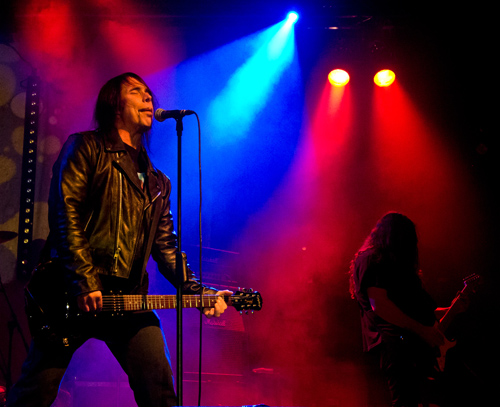
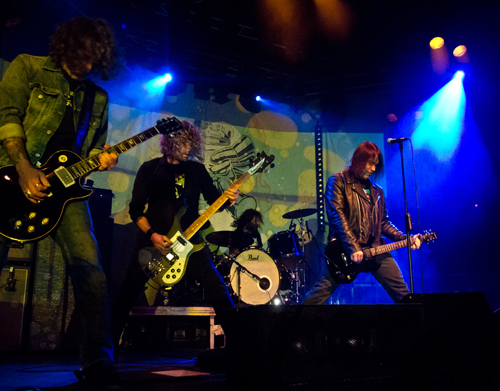
Monster Magnet live in Haugesund, Norway 2012

Photo special

‘It’s A Satanic Drug Thing – You Wouldn’t Understand’ – warning on the album, Spine of God

Monster Magnet is an American stoner rock band. Hailing from Red Bank, New Jersey, the group was founded by Dave Wyndorf (vocals and guitar), John McBain (guitar) and Tim Cronin (vocals and drums). The band first went by the names “Dog of Mystery”, “Airport 75”, “Triple Bad Acid” and “King Fuzz” before finally settling on “Monster Magnet”, taken from the name of a 1960s toy made by Wham-O, which Wyndorf liked when he was a child. (Wikipedia)

Monster Magnet had managed to become one of the most successful and influential bands associated with the so-called underground “stoner rock” scene. And yet, their influences span much further than that scene’s foundations in ’70s hard rock and metal, delving into space rock, psychedelia, and beyond. (Allmusic.com (by Eduardo Rivadavia))

Continue reading Monster Magnet live in Haugesund, Norway 2012

Today: Bob Dylan recorded “Forever Young” in 1973 – 39 years ago

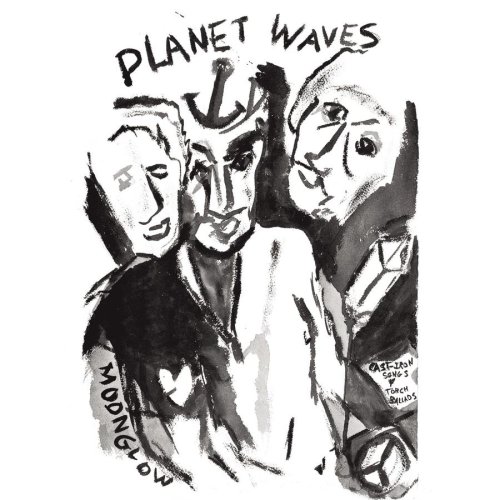
  • Bob Dylan recorded master versions of “Dirge” (probably) & “Forever Young” on November 14 – 1973
  • Bob Dylan recorded master versions of “Mixed-Up Confusion”, “Don’t Think Twice, It’s All Right” & “Kingsport Town” on November 14 –  1962

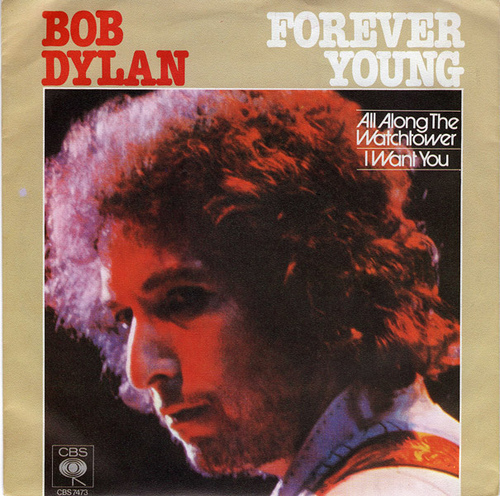
German single cover

May your hands always be busy
May your feet always be swift
May you have a strong foundation
When the winds of changes shift
May your heart always be joyful
And may your song always be sung
May you stay forever young
Forever young, forever young
May you stay forever young.

“So, I don’t know. I think so. It’s all in the heart, whatever keeps you that way. Keeps you forever young. Forever young doesn’t necessarily mean that you don’t grow old, but you just have some contact with what put you where you are. You know, keep some type of contact. Anyway…”
~Bob Dylan (to Marc Rowland in Sept. 1978)

“This song should be sung every morning by every child in every school in every country”
~Allen Ginsberg

From Wikipedia:

…….Though there was enough material to fill an album, Dylan decided to hold one more session. On the 14th, The Band was called back to record two songs. The first was another arrangement of “Forever Young,” this time with Helm on mandolin and Danko on fiddle. This new version of “Forever Young” would create the second of two master takes for the song, and both of them would be included on the album.

The second song recorded on the 14th was “Dirge” (or “Dirge For Martha” as it was marked on the tape box). “Bob went out and played the piano while we were mixing [the album]. All of a sudden, he came in and said, ‘I’d like to try ‘Dirge’ on the piano.’…We put up a tape and he said to Robbie, ‘Maybe you could play guitar on this.’ They did it once, Bob playing piano and singing, and Robbie playing acoustic guitar. The second time was the take.”

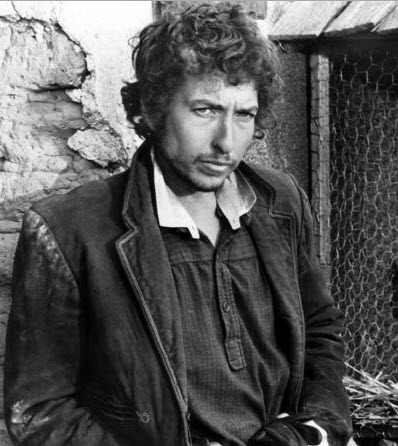
from Pat Garrett & Billy The Kid

Village Recorder
Santa Monica, California
14 November 1973
6th and last Planet Waves session  

Engineer: Rob Fraboni

Songs:

  1. Forever Young
  2. Forever Young
  3. Forever Young
  4. Forever Young
  5. Forever Young
  6. Dirge

I hate myself for lovin’ you and the weakness that it showed
You were just a painted face on a trip down Suicide Road
The stage was set, the lights went out all around the old hotel
I hate myself for lovin’ you and I’m glad the curtain fell

Personnel:

  • 1-5 Bob Dylan (guitar, harmonica, vocal).
  • 1-3 Robbie Robertson (guitar), Rick Danko (bass), Richard Manuel (drums), Garth Hudson (organ), Levon Helm (mandolin).
  • 4, 5 Robbie Robertson (mandolin), Rick Danko (fiddle), Richard Manuel (piano), Garth Hudson (organ), Levon Helm (drums).
  • 6 Bob Dylan (vocal, piano), Robbie Robertson (guitar).

Today: Bruce Springsteen meets Bob Dylan for the first time in 1975 – 37 years ago


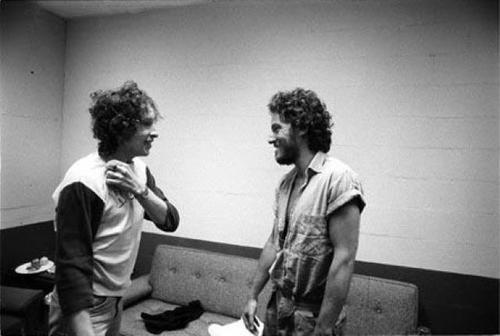
Photo by Ken Regan

Bob Dylan and Bruce Springsteen meet for the first time backstage during the Rolling Thunder Revue tour in New Haven, CT.

——

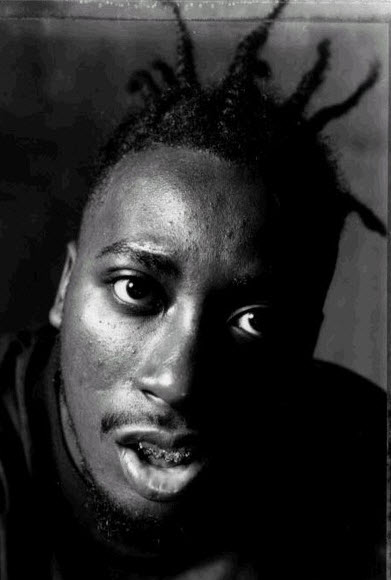
Russell Tyrone Jones (November 15, 1968 – November 13, 2004) was an American rapper and occasional producer, who went by the stage name Ol’ Dirty BastardODB, Ason Unique, Osirus, Rainman, and Big Baby Jesus. He was one of the founding members of the Wu-Tang Clan, a rap group primarily from Staten Island, New York that first rose to mainstream prominence with their 1993 debut album Enter the Wu-Tang (36 Chambers).

After establishing the Wu-Tang Clan, Ol’ Dirty Bastard went on to pursue a successful solo career. However, his professional success was hampered by frequent legal troubles, including incarceration. He died in late 2004 of a drug overdose, two days before his 36th birthday. Prior to his death, Ol’ Dirty Bastard managed to record his third solo album, which has been repeatedly delayed and as of 2012 has not been released.

C.R.E.A.M. (Wu Tang Clan)

Album of The Day:

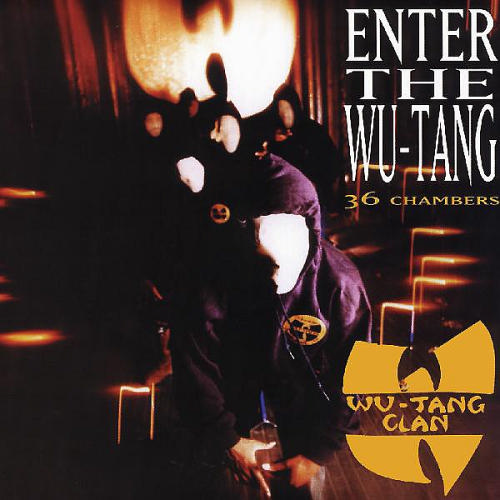
Enter the Wu-Tang (36 Chambers) (1993)

Steve Huey (allmusic.com):
Along with Dr. Dre’s The Chronic, the Wu-Tang Clan’s debut, Enter the Wu-Tang (36 Chambers), was one of the most influential rap albums of the ’90s. Its spare yet atmospheric production — courtesy of RZA — mapped out the sonic blueprint that countless other hardcore rappers would follow for years to come. It laid the groundwork for the rebirth of New York hip-hop in the hardcore age, paving the way for everybody from Biggie and Jay-Z to Nas and Mobb Deep. Moreover, it introduced a colorful cast of hugely talented MCs, some of whom ranked among the best and most unique individual rappers of the decade. Some were outsized, theatrical personalities, others were cerebral storytellers and lyrical technicians, but each had his own distinctive style, which made for an album of tremendous variety and consistency. Every track on Enter the Wu-Tang is packed with fresh, inventive rhymes, which are filled with martial arts metaphors, pop culture references (everything from Voltron to Lucky Charms cereal commercials to Barbra Streisand’s “The Way We Were”), bizarre threats of violence, and a truly twisted sense of humor. ... read more @ allmusic.com

Other November 13:

Continue reading Today: Bruce Springsteen meets Bob Dylan for the first time in 1975 – 37 years ago