Tag Archives: Great Album

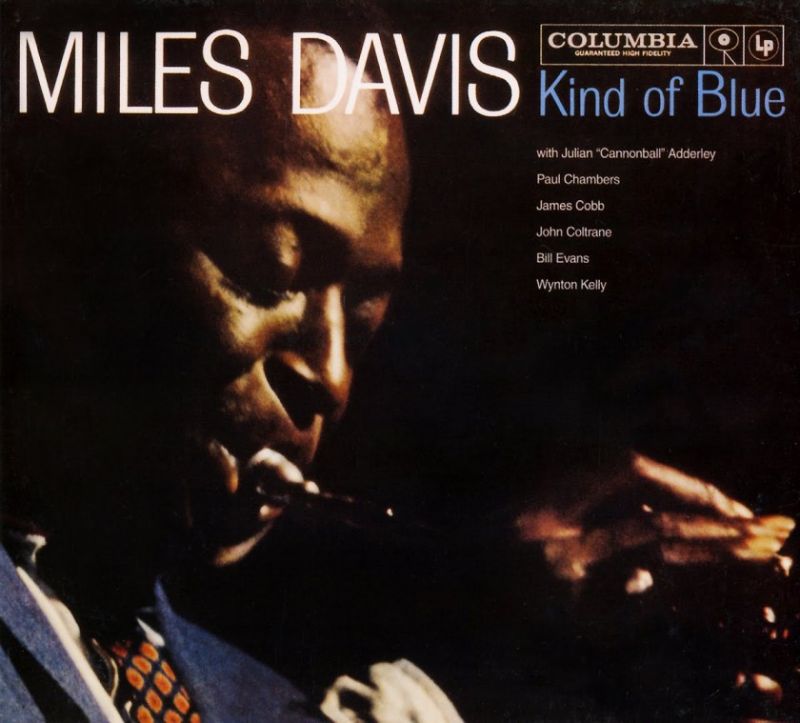
Today: Miles Davis released Kind of Blue in 1959 – 54 years ago

kind-of-blue

“It must have been made in heaven.”
– Jimmy Cobb

Kind of Blue is a studio album by American jazz musician Miles Davis, released August 17, 1959, on Columbia Records in the United States. Recording sessions for the album took place at Columbia’s 30th Street Studio in New York City on March 2 and April 22, 1959. The sessions featured Davis’s ensemble sextet, which consisted of pianist Bill Evans (Wynton Kelly on one track), drummer Jimmy Cobb, bassist Paul Chambers, and saxophonists John Coltrane and Julian “Cannonball” Adderley.

Though precise figures have been disputed, Kind of Blue has been described by many music writers not only as Davis’s best-selling album, but as the best-selling jazz record of all time. On October 7, 2008, it was certified quadruple platinum in sales by the Recording Industry Association of America (RIAA). It has been regarded by many critics as the greatest jazz album of all time and Davis’s masterpiece.
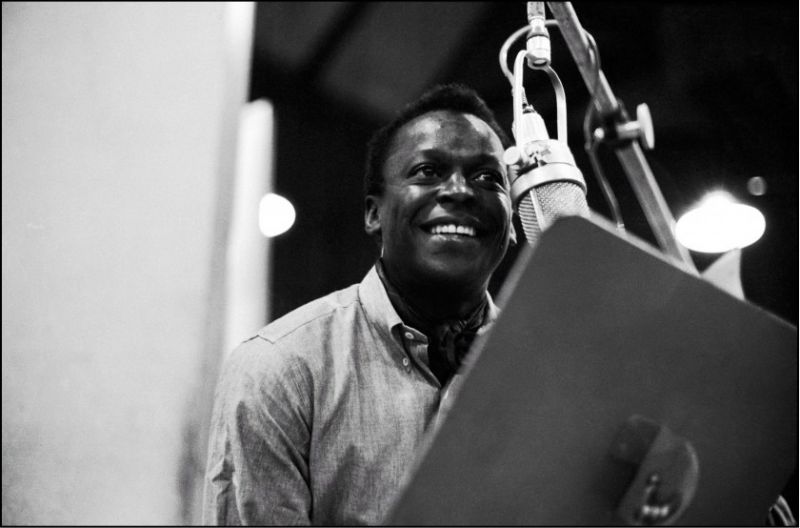
milesdavis2

The album’s influence on music, including jazz, rock, and classical music, has led music writers to acknowledge it as one of the most influential albums ever made. In 2002, it was one of fifty recordings chosen that year by the Library of Congress to be added to the National Recording Registry. In 2003, the album was ranked number 12 on Rolling Stone magazine’s list of the 500 greatest albums of all time.

A Quartet In The Studio

Kind of Blue was recorded in two sessions at Columbia Records’ 30th Street Studio in New York City. On March 2, the tracks “So What”, “Freddie Freeloader”, and “Blue in Green” were recorded for side one of the original LP, and on April 22 the tracks “All Blues”, and “Flamenco Sketches” were recorded, making up side two. Production was handled by Teo Macero, who had produced Davis’s previous two LPs, and Irving Townsend.
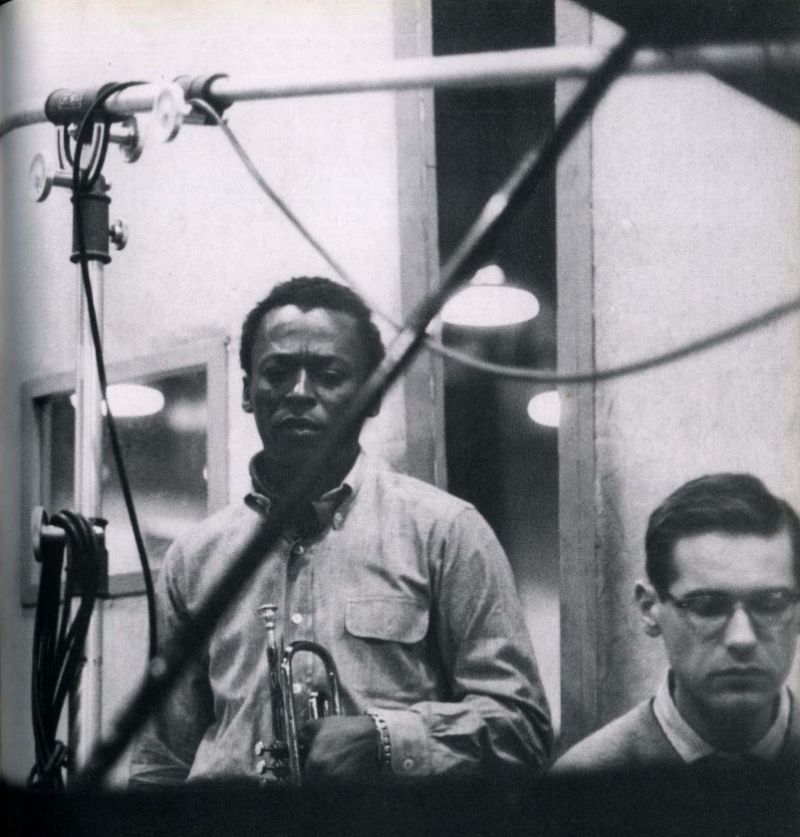
miles davis4

TV performance from 1959, incredible archival footage where Miles Davis and his Quintette play So What from Kind of Blue:

Kind of Blue isn’t merely an artistic highlight for Miles Davis, it’s an album that towers above its peers, a record generally considered as the definitive jazz album, a universally acknowledged standard of excellence. Why does Kind of Blue posses such a mystique? Perhaps because this music never flaunts its genius… It’s the pinnacle of modal jazz — tonality and solos build from the overall key, not chord changes, giving the music a subtly shifting quality… It may be a stretch to say that if you don’t like Kind of Blue, you don’t like jazz — but it’s hard to imagine it as anything other than a cornerstone of any jazz collection.
—Stephen T. Erlewine (allmusic)

Track listing:
All songs written and composed by Miles Davis except where noted 

1. “So What”
2. “Freddie Freeloader”
3. “Blue in Green” (Miles Davis and Bill Evans)
4. “All Blues”
5. “Flamenco Sketches” (Miles Davis and Bill Evans)

Musicians


Miles Davis – Kind of Blue 50th Anniversary:


1959 – The Year that changed Jazz.
A very good documentary from BBC.   Four absolutely canonical LPs were recorded that year: Kind of Blue by Miles DavisTime Out by Dave Brubeck; Mingus Ah Um by Charles Mingus; and The Shape of Jazz to Come by Ornette Coleman. Good interviews and great music:

Album of the day:

Other August-17:

Continue reading Today: Miles Davis released Kind of Blue in 1959 – 54 years ago
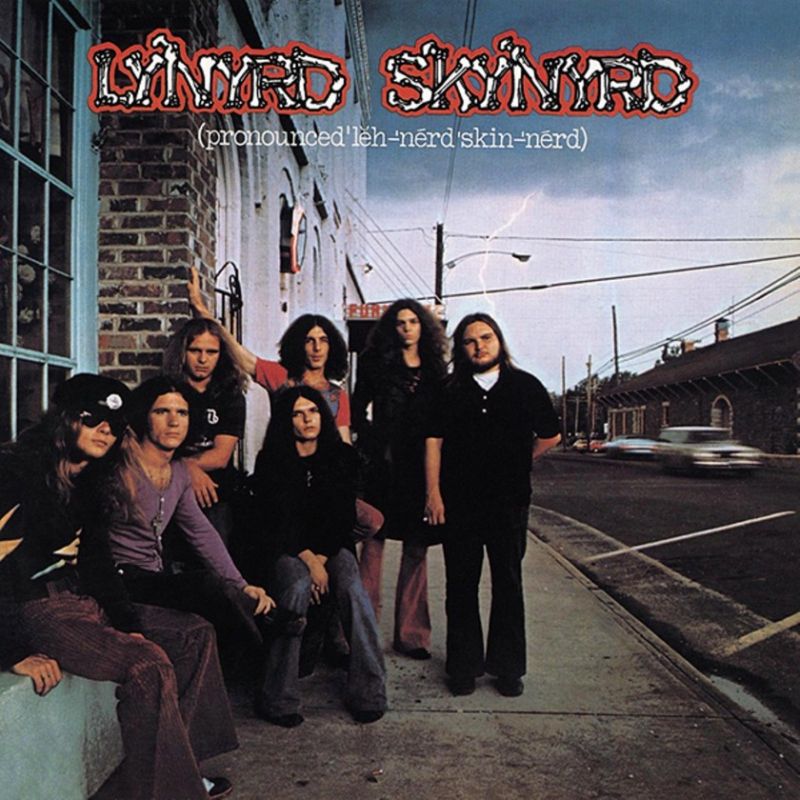
Today: Lynyrd Skynyrd released Pronounced ‘Lĕh-‘nérd ‘Skin-‘nérd 40 years ago

lynyrd_skynyrd_pronounced_leh_nerd_skin_nerd_remastered_2001_retail_cd-front

(Pronounced ‘lĕh-‘nérd ‘skin-‘nérd) is the debut album from Lynyrd Skynyrd, released in 1973. The album features several of the band’s most well-known songs, including “Gimme Three Steps”, “Simple Man”, “Tuesday’s Gone” and “Free Bird”, the latter of which launched the band to national stardom.

Bassist Leon Wilkeson left the band during the album’s early recording sessions only playing on two tracks. Strawberry Alarm Clock guitarist Ed King was asked to fill in for Wilkeson on bass during the remaining sessions, as Wilkeson already wrote many of the bass parts. This left Skynyrd with only six official members at the time of the album’s release. Not long after, King remained with the band, and was made a member, so that they could replicate the triple-guitar lead during live performances. Wilkeson returned to the band when it was time to take the photo for the album cover and embark on the tour for the album. It was certified gold on December 18, 1974, platinum and 2x platinum on July 21 1987 by the RIAA.

Rolling Stone Magazine named it the 39 best debut album of all time:

From the git-go, these shaggy folks from deepest Jacksonville, Florida played hard, lived harder and shot from the hip, all three guitars blazing in music that blew past the Mason-Dixon line to become America’s next top boogie-rock. Discovered and produced by from essential mid-Sixties Dylan sideman Al Kooper, Skynyrd offered taut rockers including “Poison Whiskey” and the perpetual lighter (well, now iPhone) waving anthem “Freebird.” Perhaps the ultimate Southern rock band and this record aged shockingly well; just ask the Drive-By Truckers.

Here’s Lynyrd Skynyrd in their prime, a full set from BBC’s Old Grey Whistle Test:

“Skynyrd was nothing but rockers, and they were Southern rockers to the bone. This didn’t just mean that they were rednecks, but that they brought it all together — the blues, country, garage rock, Southern poetry” – Stephen Thomas Erlewine (allmusic)

Let’s include another great set. Here’s  Lynyrd Skynyrd at 1976 Knebworth Fair Festival, England:

And the Album from Spotify:


What a great album, what a great band!

– Hallgeir

Sources: Allmusic, Wikipedia, Rolling Stone Magazine

Today: A Hard Days Night by The Beatles was released in 1964

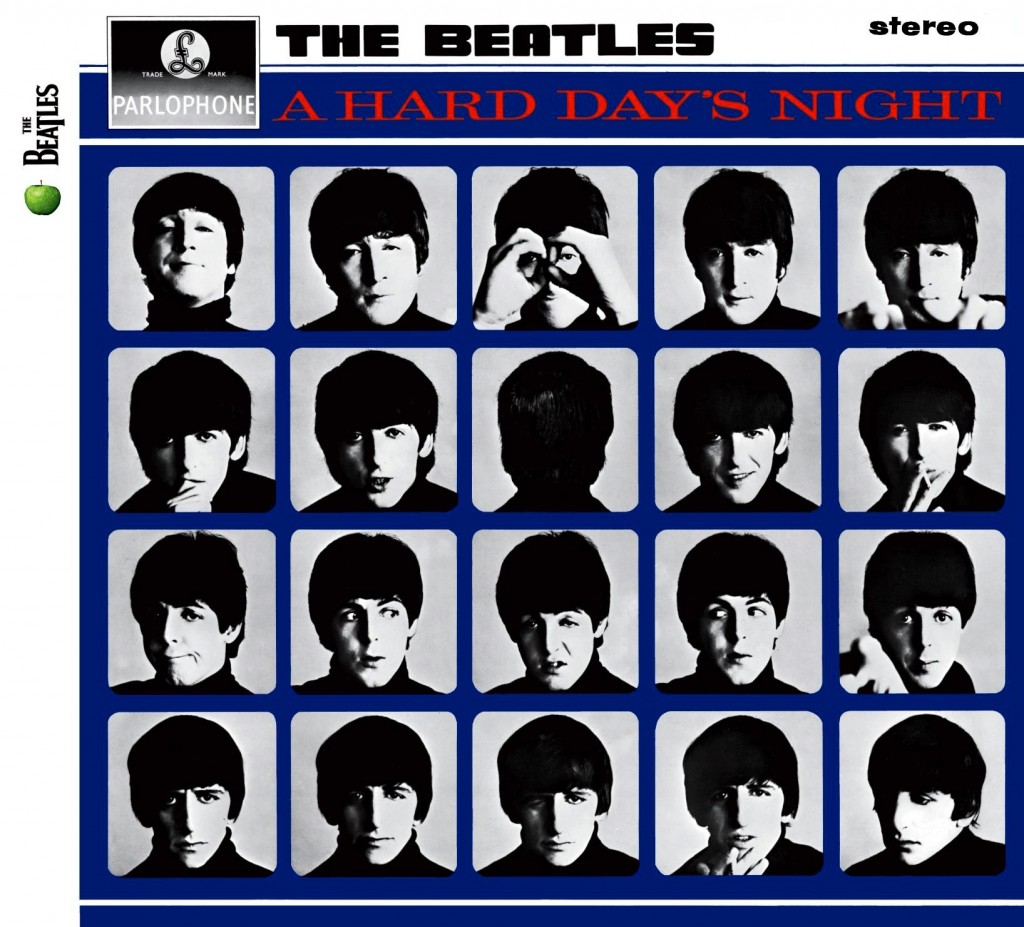
A_Hard_Day's_Nigth

“We were different. We were older. We knew each other on all kinds of levels that we didn’t when we were teenagers. The early stuff – the Hard Day’s Night period, I call it – was the sexual equivalent of the beginning hysteria of a relationship. And the Sgt Pepper-Abbey Road period was the mature part of the relationship.”
– John Lennon (1980)

A Hard Day’s Night is the third album by The Beatles; it was released on July 10, 1964. The album is a soundtrack to the A Hard Day’s Night film, starring the Beatles. The American version of the album was released two weeks earlier, on 26 June 1964 by United Artists Records, with a different track listing. This is the first Beatles album to be recorded entirely on four-track tape, allowing for good stereo mixes.

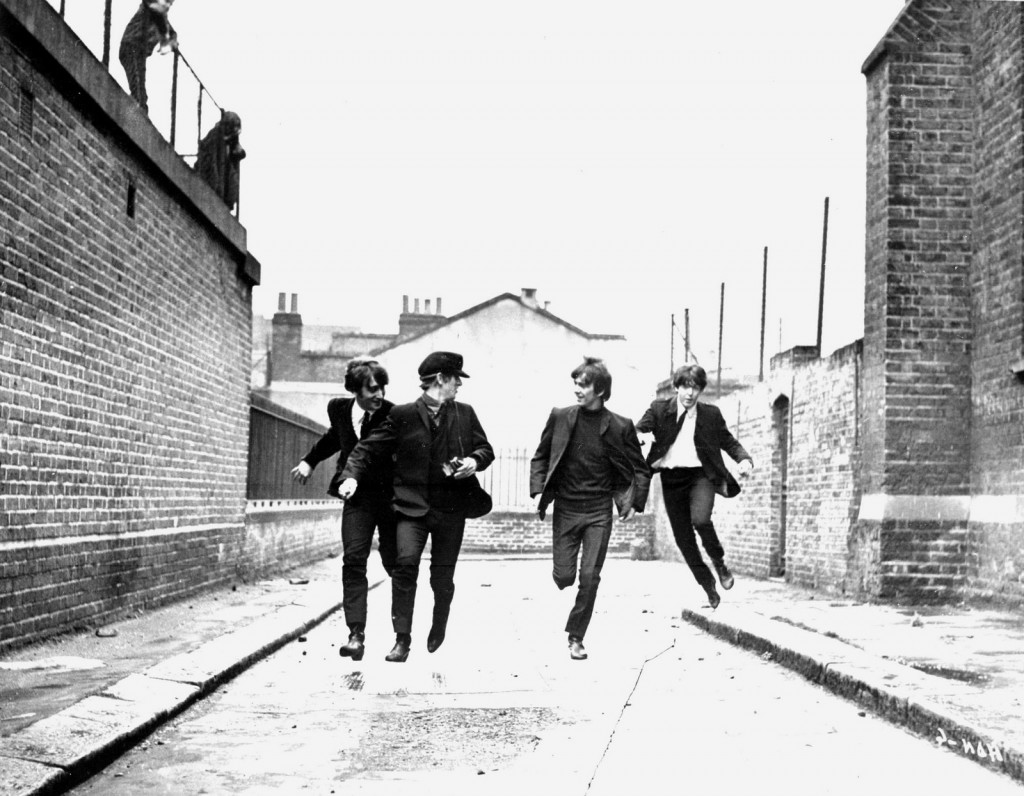
HDN

In 2000, Q placed A Hard Day’s Night at number 5 in its list of the 100 Greatest British Albums Ever. In 2003, the album was ranked number 388 on Rolling Stone magazine’s list of the 500 Greatest Albums of All Time.

The soundtrack songs were recorded in late February, and the non-soundtrack songs were recorded in June. The title song itself was recorded on April 16.

“…but A Hard Day’s Night is perhaps the band’s most straightforward album: You notice the catchiness first, and you can wonder how they got it later.

The best example of this is the title track– the clang of that opening chord to put everyone on notice, two burning minutes thick with percussion (including a hammering cowbell!) thanks to the new four-track machines George Martin was using, and then the song spiraling out with a guitar figure as abstractedly lovely as anything the group had recorded.”

– Tom Ewing, Pitchfork

A Hard Day’s Night (Paris, 1965):

japan_a_hard_days_night_lp-580x572

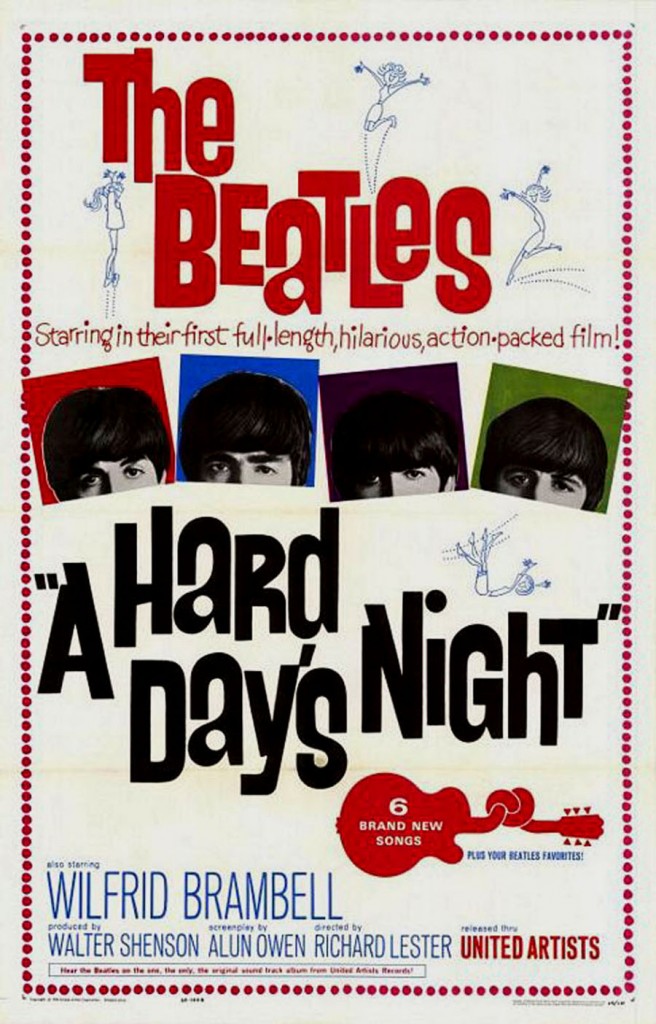
I saw the movie before I bought the album, and the pictures roll before my eyes as I listen to the album. The film is a masterpiece and so is the album.
a-hard-days-night movie

“Considering the quality of the original material on With the Beatles, it shouldn’t have been a surprise that Lennon & McCartney decided to devote their third album to all-original material. Nevertheless, that decision still impresses, not only because the album is so strong, but because it was written and recorded at a time when the Beatles were constantly touring, giving regular BBC concerts, appearing on television and releasing non-LP singles and EPs, as well as filming their first motion picture. In that context, the achievement of A Hard Day’s Night is all the more astounding.”
– Allmusic (Stephen Thomas Erlewine)

It was my first Beatles album, and even if it has lost it’s top spot on my Beatles list, I love it dearly. It always makes me happy when i put it on.

John Lennon was the main contributor to the album. He wrote A Hard Day’s Night,  I Should Have Known Better, Tell Me Why, Any Time At All, I’ll Cry Instead, When I Get Home and You Can’t Do That.

He also wrote the majority of If I Fell and I’ll Be Back, and wrote I’m Happy Just To Dance With You with McCartney.

I Should Have Known Better (my favorite song on the album):

That doesn’t mean that Paul McCartney was  left off the record. He wrote the  ballads Things We Said Today plus And I Love Her , and lets not forget the lovely single Can’t Buy Me Love.

Can’t Buy Me Love:

As always the lines blur on some of the songs, but there are a lot of indications that this was the way the songs were composed, or rather, who wrote the songs.

“When we knew we were writing for something like an album John would write a few in his spare moments, like this batch here. He’d bring them in, we’d check ’em. I’d write a couple and we’d throw ’em at each other, and then there would be a couple that were more co-written. But you just had a certain amount of time.”
– Paul McCartney

A Hard Day’s Night is classic album that is a true testament to their collaborative writing powers, and, man, they had become a tight band!

– Hallgeir

Sources: Wikipedia, Allmusic, Pitchfork, John Lennon Interview with David Sheff in 1980, Many Years From Now by Barry Miles (book)

30 Best live albums countdown: 19 – Live at Carnegie Hall by Bill Withers

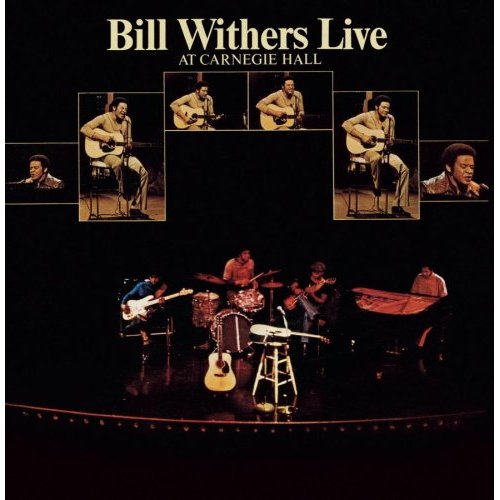
bill withers-live carnegie hall

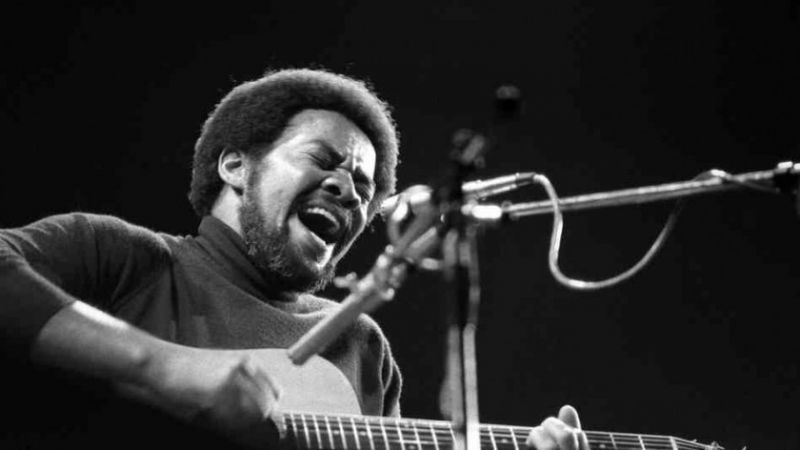
Bill Withers is not underrated by people who know about him and who recognizes his music, but he is unknown and criminally overlooked by the general public. He is in fact one of the greatest singer/songwriters in music history. He is soulful, but his music is not constrained to the soul genre. He writes good songs and he is a marvelous performer.

bill withers live

Bill Withers became a part of the L.A. music scene in the late 60s after a period in the Navy. While he was assembling airplane toilets for Boeing he was signed to the Sussex music label (in 1970) and had instant success with his first album, Just As I Am, and the acoustic ballad, Ain’t No Sunshine. Bill Withers had more in common with the singer/songwriters than with the rising disco/soul, even though there’s a strong groove in his songs, sometimes even a funky rhythm. His second release, 1972’s Still Bill, became a career high point, it contained songs like Use Me and Lean On Me, big hits both of them. The album cemented his position in music history.

In 1972 he also recorded the fantastic live album, Live at Carnegie Hall (released 1973). Nowhere is his narrative prowess and powerful vocal style more clear. This is number 19 on my list of the best live albums of all time.

The opener is a slow version of Use Me that Bill Withers turns into a seductive almost nine minute jam.

Use Me (Soul Train, 197?), not nearly as good as the Carnegie Hall version, but very good anyway:

The album also has the definitive version of Ain’t no Sunshine, a faster more jazzy interpretation than usual.

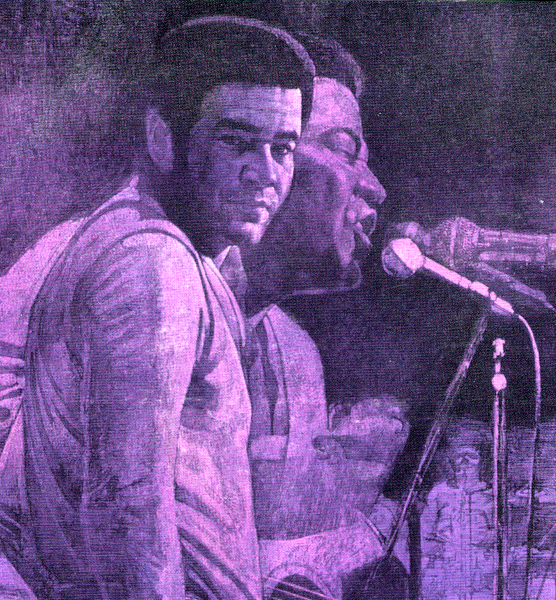
bill_withers_barron_storey_72 copy

There are many great songs on the album, but the real masterpiece is Grandma’s Hands and especially Bill Wither’s long intro, he is reminiscing about his grandmother playing tambourine in the church. We hear him describe the dancing and preaching at the church, his grandmother banging on the tambourine in joy, it’s an incredible story. He then launches into a heartfelt version of the song which, again, bests the original by miles. After hearing this version and his strong introduction, you will experience the song in new and deeper way.

Grandma’s Hands (audio with slide show):

“Grandma them had one a them churches where they sung “If you wanna help me Jesus, it’s alright. If you wanna help me Jesus, it’s alright”. And at the funeral they used to have to tie the caskets down! Yeah. Yeah.” – Bill Withers from the introduction

Allmusic (Steven McDonald):
A wonderful live album that capitalizes on Withers’ trademark melancholy soul sound while expanding the music to fit the room granted by a live show. Lovely versions of “Grandma’s Hands” and “Lean on Me” are balanced by heartfelt downbeat numbers like “Better Off Dead” and “I Can’t Write Left-Handed,” the latter being an anti-war song with a chilling message. The set finishes off with the lengthy “Harlem/Cold Baloney,” with lots of audience-pleased call-and-response going on. One of the best live releases from the ’70s.
Continue reading 30 Best live albums countdown: 19 – Live at Carnegie Hall by Bill Withers

Today – Steve Earle released Transcendental Blues in 2000 – 13 years ago

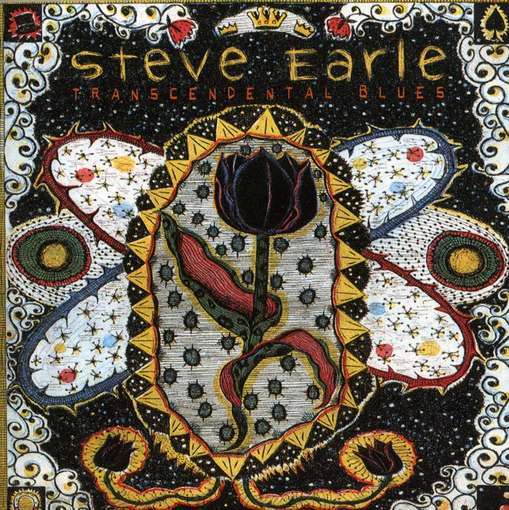
transcendental blues cover

“Everybody wants to be somebody’s something
Ain’t nobody wants to be blue”

Transcendental realism: “…is a concept stemming from the philosophy of Immanuel Kant that implies individuals have a perfect understanding of the limitations of their own minds.” (-wikipedia)

Blues: “…refers to the “blue devils”, meaning melancholy and sadness…a depressed mood.” (-wikipedia)

Transcendental Blues:  A philosophy that implies individuals have a perfect understanding of their own sadness and the limitations of their own minds (- me)

“transcendence is about being still enough long enough to know when it’s time to move on.” (- Steve Earle, liner notes)

Transcendental Blues (the song, live ACL):

“…what truly makes this one of Earle’s best records is that he refuses to be pulled down by musical decisions. It’s as if he never faced a problem of whether or not to add this or that instrument, or to veer off in this or that direction. He simply had the idea and went with it.”Ryan Kearny, Pitchfork

Galway Girl – Steve Earle (live 2000):

This is one of Earle’s albums that I play the most (together with El Corazon), it is varied and all the songs are good (some are great).  It sometimes reminds me of Johnny Cash, sometimes of the Beatles at their melancholy best.  He references Harrison’s “Indian-style” music on the first (and second) track, and old-time droning blues on this and other tracks. He dips into celtic/irish folk music and he even touches heartland rock and bluegrass. As I said it’s an eclectic mix.

Steve Earle has a keen ear for melody, and the lyrics are as always good.

Everyone’s in love with youSteve Earle & The Dukes (live, Leno 2000):

And last, but not least, the fantastic song, Over Yonder (Jonathan’s song):

Transcendental Blues (Spotify):

– Hallgeir

Sources: Allmusic, Pitchfork, Liner notes, Wikipedia