All posts by Egil

Today: The late Hank Snow was born in 1914 – 99 years ago

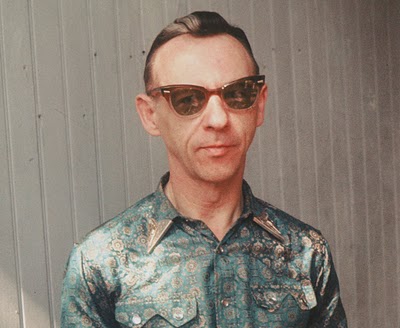
hank snow

I’ve had about 140 albums released, and I’ve done everything I wanted to do.
~Hank Snow

I’d always listened to Hank Snow.
~Bob Dylan (to Sam Shepard – Aug 1986)

Canada’s greatest contribution to country music, Hank Snow was famous for his “traveling” songs. It’s no wonder. At age 12 he ran away from his Nova Scotia home and joined the Merchant Marines, working as a cabin boy and laborer for four years.
~David Vinopal (allmusic.com)

I’m Movin’ On:

Wikipedia:

Birth name Clarence Eugene Snow
Also known as Hank, The Yodeling Ranger
Hank Snow, The Singing Ranger
Born May 9, 1914
Brooklyn, Nova Scotia, Canada
Origin Halifax, Nova Scotia, Canada
Died December 20, 1999 (aged 85)
Madison, Tennessee, United States
Genres Country
Occupations Musician, songwriter
Instruments Vocals, guitar
Years active 1936–1999
Labels RCA Victor

Clarence Eugene “Hank” Snow (May 9, 1914 – December 20, 1999) was a celebrated Canadian-American country music artist. In a career that spanned nearly 50 years, he recorded 140 albums and charted more than 85 singles on the Billboard country charts from 1950 until 1980. This total includes the number one hits “I’m Moving On”, “The Golden Rocket”, “I Don’t Hurt Anymore”, “Let Me Go, Lover!”, “I’ve Been Everywhere”, and “Hello Love” as well as other top 10 hits.
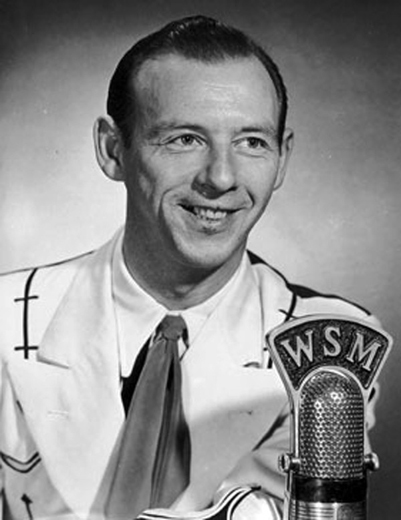
Hank+Snow

A Fool Such As I:

Snow was an accomplished songwriter whose clear, baritone voice expressed a wide range of emotions including the joys of freedom and travel as well as the anguish of tortured love. His music was rooted in his beginnings in small town Nova Scotia where, as a frail, 80-pound youngster, he endured extreme poverty, beatings and psychological abuse as well as physically punishing labour during the economically depressed 1920s and 30s. Through it all, his musically talented mother provided the emotional support he needed to pursue his dream of becoming a famous entertainer like his idol, the country star, Jimmie Rodgers.

As a performer of traditional country music, Snow won numerous awards and is a member of the Country Music Hall of Fame, the Canadian Country Music Hall of Fame and the Music Hall of Fame. The Hank Snow Museum in Liverpool, Nova Scotia celebrates his life and work in a province where his fans still see him as an inspirational figure who triumphed over personal adversity to become one of the most influential artists in all of country music.
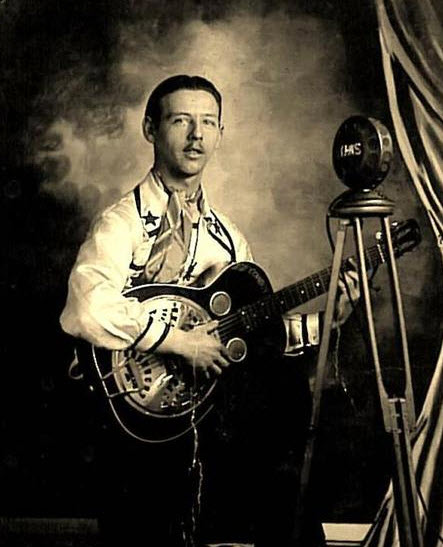
hank snow

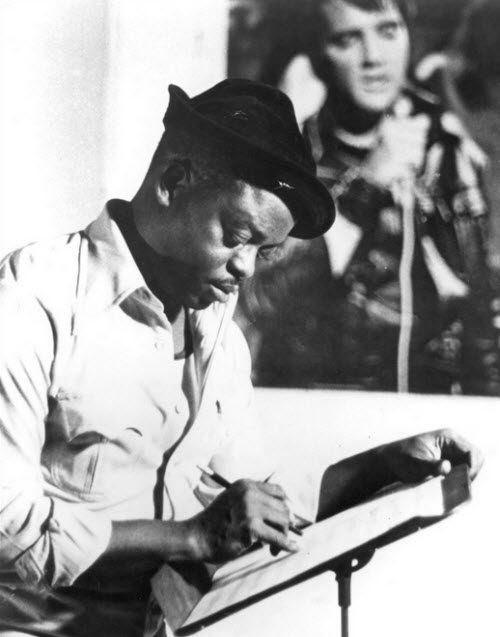
A regular at the Grand Ole Opry, in 1954 Snow persuaded the directors to allow a young Elvis Presley to appear on stage. Snow used Presley as his opening act and introduced him to Colonel Tom Parker. In August 1955, Snow and Parker formed the management team, Hank Snow Attractions. This partnership signed a management contract with Presley but before long, Snow was out and Parker had full control over the rock singer’s career.
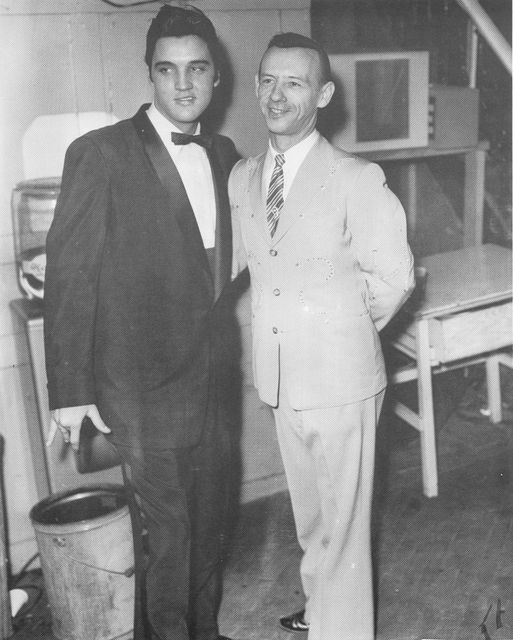
Hank Snow & Elvis Presley

Playlist of the day

Other May-09:

Continue reading Today: The late Hank Snow was born in 1914 – 99 years ago
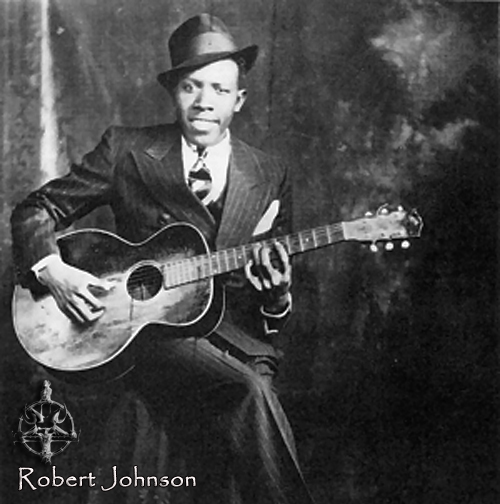
Today: The late Robert Johnson was born in 1911 – 102 years ago

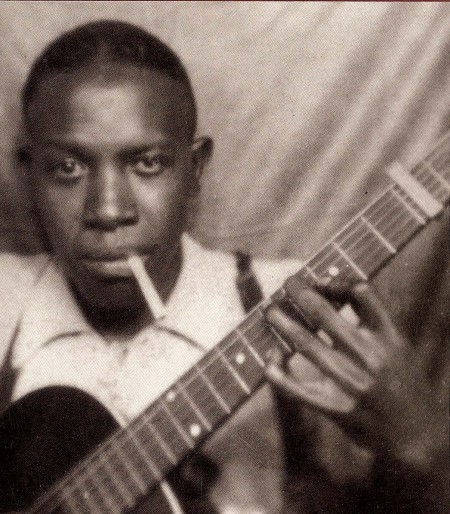
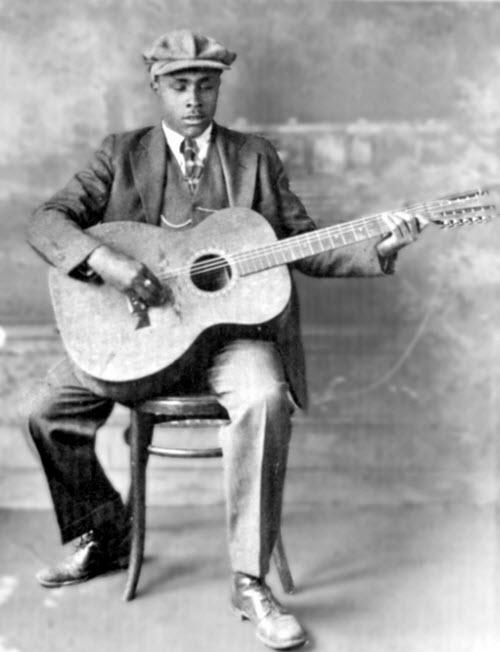
“Just look at the picture of him with the acoustic guitar: His fingers are in the weirdest position. If you’re a guitar player looking at that, you know this is a guy who’s not even thinking; he’s just there. … The soul of his creative originality plays a huge part in music making for everyone who’s ever written a song and really known what they’re doing.”
~Neil Young

“You think you’re getting a handle on playing the blues, and then you hear Robert Johnson — some of the rhythms he’s doing and playing and singing at the same time, you think, ‘This guy must have three brains!’ ”
~Keith Richards

Favorite album? I think the Robert Johnson album. I listen to that quite a bit still.
~Bob Dylan (Rockline interview – June 1985)

Cross Road Blues:

From Wikipedia:
Birth name Robert Leroy Johnson
Born May 8, 1911
Hazlehurst, Mississippi
Died August 16, 1938 (aged 27)
Greenwood, Mississippi
Genres Delta blues, Country blues
Occupations Musician, songwriter
Instruments Guitar, vocals, harmonica
Years active 1929–38

Robert Leroy Johnson (May 8, 1911 – August 16, 1938) was an American blues singer and musician. His landmark recordings from 1936–37 display a combination of singing, guitar skills, and songwriting talent that have influenced later generations of musicians. Johnson’s shadowy, poorly documented life and death at age 27 have given rise to much legend, including a Faustian myth. As an itinerant performer who played mostly on street corners, in juke joints, and at Saturday night dances, Johnson enjoyed little commercial success or public recognition in his lifetime.

Johnson’s records sold poorly during his lifetime. It was only after the reissue of his recordings in 1961 on the LP King of the Delta Blues Singers that his work reached a wider audience. Johnson is now recognized as a master of the blues, particularly of the Mississippi Delta blues style. He is credited by many rock musicians as an important influence; Eric Clapton has called Johnson “the most important blues singer that ever lived.” Johnson was inducted into the Rock and Roll Hall of Fame as an “Early Influence” in their first induction ceremony in 1986. In 2003, David Fricke ranked Johnson fifth in Rolling Stone’s list of the 100 Greatest Guitarists of All Time.

Me and the Devil Blues:

…Johnson’s major influence has been on genres of music that weren’t recognized as such until long after his death: rock and roll and rock. The Rock and Roll Hall of Fame included four of his songs in a set of 500 they deemed to have shaped the genre:

Johnson recorded these songs a decade and a half before the recognized advent of rock and roll, dying a year or two later. The Museum inducted him as an “Early Influence” in their first induction ceremony in 1986, almost a half century after his death. Marc Meyers of the Wall Street Journal wrote that, “His ‘Stop Breakin’ Down Blues’ from 1937 is so far ahead of its time that the song could easily have been a rock demo cut in 1954.

Playlist of the day:

Other May-08:

Continue reading Today: The late Robert Johnson was born in 1911 – 102 years ago

Today: The Rolling Stones released Paint It, Black in 1966 [US] – 47 years ago

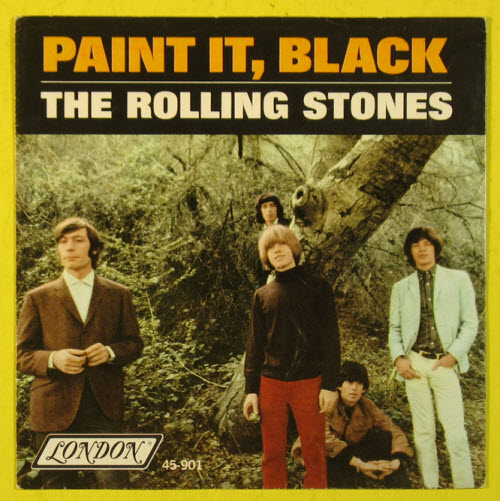
rolling stones paint it black

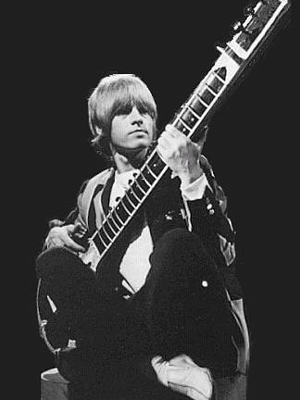
Brian Jones plucked the haunting sitar melody at the 1966 L.A. session for this classic. Bill Wyman added klezmer-flavored organ; studio legend Jack Nitzsche played the gypsy-style piano. “Brian had pretty much given up on the guitar by then,” said Richards. “If there was [another] instrument around, he had to be able to get something out of it. It gave the Stones on record a lot of different textures.”
~rollingstone.com

The principal riff of “Paint It Black” (almost all classic Rolling Stones songs are highlighted by a killer riff) was played on a sitar by Brian Jones and qualifies as perhaps the most effective use of the Indian instrument in a rock song. The exotic twang was a perfect match for the dark, mysterious Eastern-Indian melody, which sounded a little like a soundtrack to an Indian movie hijacked into hyperdrive.
~Richie Unterberger (allmusic.com)

Original version:

Wikipedia:

from the album Aftermath
B-side “Stupid Girl” (US)
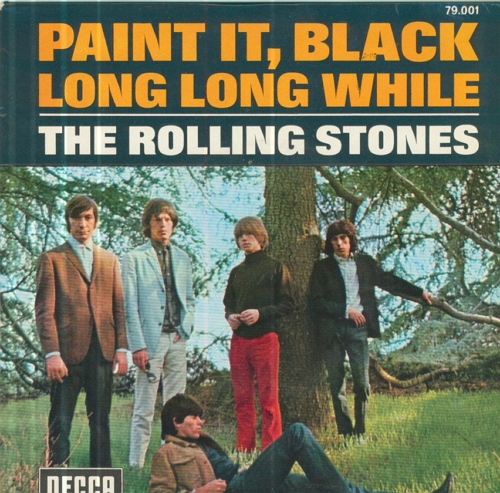
“Long Long While” (UK)
Released 7 May 1966 (US)
13 May 1966 (UK)
Format 7″
Recorded 6–9 March 1966
Genre Psychedelic rock, raga rock
Length 3:45 (mono single mix)
3:22 (stereo album mix)
Label London 45-LON.901 (US)
Decca F.12395 (UK)
Writer(s) Jagger/Richards
Producer Andrew Loog Oldham

Paint It, Black” is a song released by The Rolling Stones on 13 May 1966 (7 May 1966 – US) as the first single from the US version of their fourth album Aftermath. It was originally titled “Paint It Black” without a comma. Keith Richards has stated that the comma was added by the record label, Decca.

  • At a book signing in Nashville in 2001, Bill Wyman explained that the comma was simply a typographical error that stuck.
  • The song was written by Mick Jagger and Keith Richards. Mick Jagger wrote the lyrics and Keith Richards wrote the music.
  • Bill Wyman claims in his books that the song was a group effort although it was credited to Jagger/Richards.
  • The single reached number one in both the United States and the United Kingdom charts in 1966.
  • In 2004 it was ranked number 176 on Rolling Stone magazine’s list of the 500 Greatest Songs of All Time. In the US and UK, it was the first number one single to feature a sitar.

brian_jones_rolling_stone sitar

Live version:

Musicians:

  • Mick Jagger – lead vocals
  • Brian Jones – sitar, percussion
  • Keith Richards – electric guitar, acoustic guitar, backing vocals
  • Bill Wyman – bass pedals, bass guitar, Hammond B3
  • Charlie Watts – drums
  • Jack Nitzsche – piano

rolling stones paint it black uk


Today’s Playlist:

Other May-07

Continue reading Today: The Rolling Stones released Paint It, Black in 1966 [US] – 47 years ago

Today: Otis Blackwell passed away in 2002 – 11 years ago

otis blackwell

I like this town, it’s really great. They’ve put me in The Nashville Songwriters Hall of Fame. This town is about music. It’s about the kind of music I like.
~Otis Blackwell

I used to go down every year for the remembrance of Elvis’ birthday. Memphis State College invited me to sit in the auditorium and speak to the people for one of those Elvis days.
~Otis Blackwell

Blackwell’s songwriting style is as identifiable as that of Willie Dixon or Jerry Leiber & Mike Stoller. He helped formulate the musical vocabulary of rock & roll when the genre was barely breathing on its own.
~Bill Dahl (allmusic.com)

All Shook Up – Elvis Presley:

Great Balls Of Fire – Jerry Lee Lewis:

Wikipedia:

Also known as John Davenport
Born February 16, 1931
Origin Brooklyn, New York, United States
Died May 6, 2002 (aged 71)
Nashville, Tennessee, U.S.
Genres East Coast blues, rock and roll,R&B
Occupations Singer, pianist, songwriter
Instruments Piano
Years active 1950s–2002
Labels RCA, Groove, Atlantic

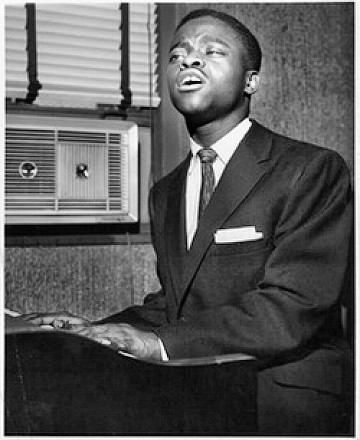
Otis Blackwell (February 16, 1931 – May 6, 2002) was an American songwriter, singer, and pianist, whose work significantly influenced rock and roll. His compositions include Little Willie John’s “Fever”, Jerry Lee Lewis’ “Great Balls of Fire” and “Breathless”, Elvis Presley’s “Don’t Be Cruel”, “All Shook Up” and “Return to Sender” (with Winfield Scott), and Jimmy Jones’ “Handy Man”. He should not be confused with another songwriter and producer Robert “Bumps” Blackwell.

Otis blackwell

Fever – Little Willie John:

Awards:

  • Otis Blackwell was inducted into the Nashville Songwriters Hall of Fame in 1986
  • in 1991 into the National Academy of Popular Music’s Songwriters Hall of Fame
  • Blackwell’s crowning moment came in the late 1980s when the Black Rock Coalition, a prominent organization of black rock musicians, led by Vernon Reid, the lead guitarist of the band, Living Colour, held a tribute for him at the Prospect Park Bandshell in his native Brooklyn. Many prominent musicians and singers took part including Blackwell himself, who performed an assortment of his best songs, including “One Broken Heart for Sale,” “Black Trail,” “Don’t Be Cruel” and “Daddy Rolling Stone.”
  • Blackwell was named one of the 2010 recipients of Ahmet Ertegun Award in the Rock and Roll Hall of Fame. This category encompasses those who primarily work behind the scenes in the music industry.

 Don’t Be Cruel – Elvis Presley:

Spotify Playlist:

Other May-06

Continue reading Today: Otis Blackwell passed away in 2002 – 11 years ago

Today: The late Blind Willie McTell was born in 1898 – 115 years ago

blind willie mctell

And I know no one can sing the blues
Like Blind Willie McTell
~Bob Dylan (“Blind Willie McTell”)

He was a songster of wide repertoire and as fine a 12-string guitarist as ever lived. The dexterity of his playing was extraordinary, and his voice was an unusually smooth tenor. The interplay between voice and guitar also brought into the equation McTell’s intelligence and wit, and it was the fusion of all these elements that led Bob Dylan to write in his 1983 tribute song that ‘no-one can sing the blues like Blind Willie McTell.’
~Michael Gray (BD Encyclopedia)

Willie Samuel McTell was one of the blues’ greatest guitarists, and also one of the finest singers ever to work in blues.
~Bruce Eder (allmusic.com)

Statesboro Blues:

Wikipedia:

Birth name William Samuel McTier
Also known as Blind Sammie, Georgia Bill, Hot Shot Willie, Blind Willie, Barrelhouse Sammy, Pig & Whistle Red, Blind Doogie, Red Hot Willie Glaze, Red Hot Willie, Eddie McTier
Born May 5, 1898
Thomson, Georgia, U.S.
Origin Statesboro, Georgia, U.S.
Died August 19, 1959 (aged 61)
Milledgeville, Georgia, U.S.
Genres Country blues, Piedmont blues, ragtime, Delta blues, gospel
Occupations Musician, songwriter, songster, accompanist, preacher
Instruments Vocals, guitar, harmonica, accordion, kazoo, violin
Years active 1927–1956

Blind Willie McTell (born William Samuel McTier May 5, 1898 – August 19, 1959), was a Piedmont and ragtime blues singer and guitarist. He played with a fluid, syncopated fingerstyle guitar technique, common among many exponents of Piedmont blues, although, unlike his contemporaries, he came to use twelve-string guitars exclusively. McTell was also an adept slide guitarist, unusual among ragtime bluesmen. His vocal style, a smooth and often laid-back tenor, differed greatly from many of the harsher voice types employed by Delta bluesmen, such as Charley Patton. McTell embodied a variety of musical styles, including blues, ragtime, religious music and hokum.

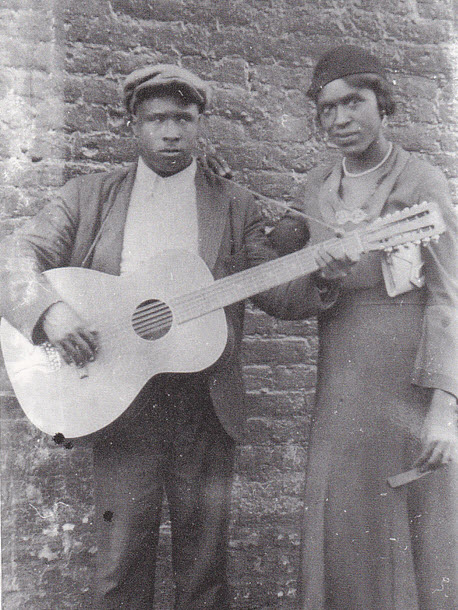
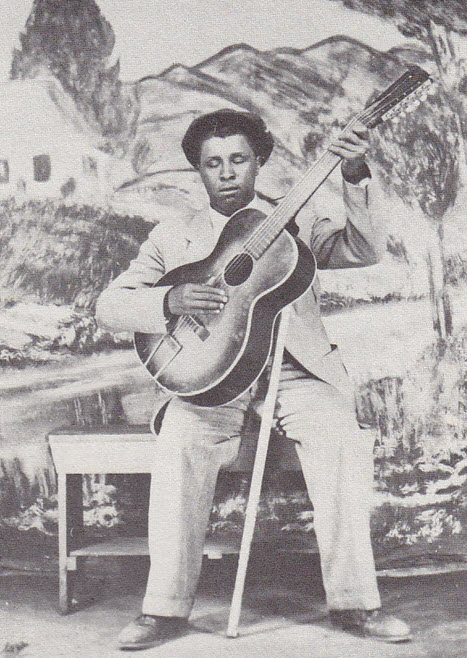
blind willie mctell & Kate McTellBlind Willie and Kate McTell in Atlanta, 1930s

 Travelin’ Blues:

Born blind in the town of Thomson, Georgia, McTell learned how to play guitar in his early teens. He soon became a street performer around several Georgia cities including Atlanta and Augusta, and first recorded in 1927 for Victor Records. Although he never produced a major hit record, McTell’s recording career was prolific, recording for different labels under different names throughout the 1920s and 30s. In 1940, he was recorded by John Lomax for the Library of Congress’s folk song archive. He would remain active throughout the 1940s and 50s, playing on the streets of Atlanta, often with his longtime associate, Curley Weaver. Twice more he recorded professionally. McTell’s last recordings originated during an impromptu session recorded by an Atlanta record store owner in 1956. McTell would die three years later after suffering for years from diabetes and alcoholism. Despite his mainly failed releases, McTell was one of the few archaic blues musicians that would actively play and record during the 1940s and 50s. However, McTell never lived to be “rediscovered” during the imminent American folk music revival, as many other bluesmen would.

McTell’s influence extended over a wide variety of artists, including The Allman Brothers Band, who famously covered McTell’s “Statesboro Blues”, and Bob Dylan, who paid tribute to McTell in his 1983 song “Blind Willie McTell”; the refrain of which is, “And I know no one can sing the blues, like Blind Willie McTell”. Other artists influenced by McTell include Taj Mahal, Alvin Youngblood Hart, Ralph McTell, Chris Smither and The White Stripes.

blind willie mctell 2lBlind Willie McTell, circa 1950

 Pal of Mine:

Bob Dylan has paid tribute to McTell on at least four occasions:

  • Firstly, in his 1965 song “Highway 61 Revisited“, the second verse begins with “Georgia Sam he had a bloody nose”, referring to one of Blind Willie McTell’s many recording names
  • later in his song “Blind Willie McTell“, recorded in 1983 but released in 1991 on The Bootleg Series Volumes 1-3
  • then with covers of McTell’s “Broke Down Engine” and “Delia” on his 1993 album, World Gone Wrong
  • in his song “Po’ Boy“, on 2001’s “Love & Theft”, which contains the lyric, “had to go to Florida dodging them Georgia laws”, which comes from McTell’s “Kill It Kid”

Bob Dylan – Blind Willie McTell – Hollywood Palladium Theater, Los Angeles, California – 12 January 2012:

Check out this great post @ jasobrecht.com:

Playlist of the day:

Other May-05:

Continue reading Today: The late Blind Willie McTell was born in 1898 – 115 years ago