All posts by Egil

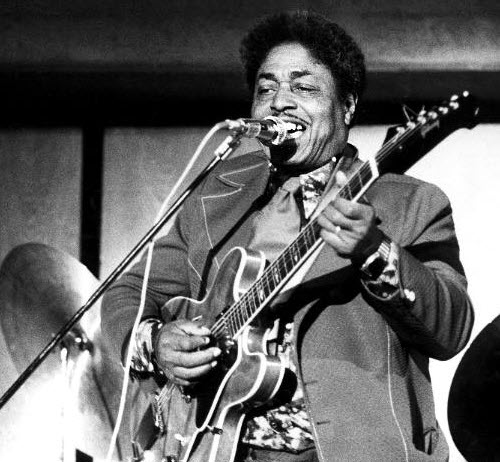
Today: Johnny Shines passed away in 1992 – 11 years ago

johnny shines

That’s what I am, a Delta bluesman. And now I’m considered the king of the Delta blues.
~Johnny Shines (1989 Living Blues Interview)

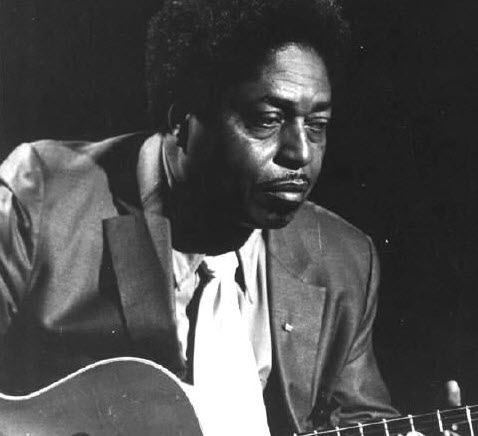
Best known as a traveling companion of Robert Johnson, Johnny Shines’ own contributions to the blues have often been unfairly shortchanged, simply because Johnson’s own legend casts such a long shadow. In his early days, Shines was one of the top slide guitarists in Delta blues, with his own distinctive, energized style; one that may have echoed Johnson’s spirit and influence, but was never a mere imitation.
~Steve Huey (allmusic.com)

Sweet Home Chicago:

Long before becoming a force in Chicago blues, Johnny Shines hoboed with Robert Johnson through Depression-era America. They hopped freights, played on street corners, shared rooms and whiskey, and made it as far north as Canada. Johnson, the Mississippi Delta’s most celebrated blues performer, perished in 1938, and for the next half-century, his spirit haunted the music of Johnny Shines. It echoed in his turnarounds, mournful bottleneck slides, impassioned lyrics, and falsetto moans. At clubs, house parties, and other gatherings, Johnny Shines was just as likely to launch into Johnson’s “Crossroads Blues,” “Terraplane Blues,” and “Sweet Home Chicago” as he was his own “Evil-Hearted Woman Blues,” “A Little Tenderness,” and “Evening Sun.”
~Jas Obrecht (jasobrecht.com)

johnny shines 2

Ramblin (live ~mid 1970’s):

Wikipedia:

Johnny Shines (April 26, 1915 – April 20, 1992) was an American blues singer and guitarist.

Birth name John Ned Shines
Born April 26, 1915
Frayser, Memphis, United States
Died April 20, 1992 (aged 76)
Genres Blues
Instruments guitar
Years active 1932–1992
Labels Chess Records
J.O.B. Records
Vanguard Records
Various

“Shines was that rare being, a blues artist who overcame age and rustiness to make music that stood up beside the work of his youth. When Shines came back to the blues in 1965 he was 50, yet his voice had the leonine power of a dozen years before, when he made records his reputation was based on”.
~Tony Russell

He was born John Ned Shines in Frayser, Memphis, United States. He spent most of his childhood in Memphis, Tennessee playing slide guitar at an early age in local “jukes” and for tips on the streets. He was “inspired by the likes of Charley Patton, Blind Lemon Jefferson, Lonnie Johnson, and the young Howlin’ Wolf”, but he was taught to play the guitar by his mother. Shines moved to Hughes, Arkansas in 1932 and worked on farms for three years putting his musical career on hold. It was a chance meeting with Robert Johnson, his greatest influence, that gave him the inspiration to return to music. In 1935, Shines began traveling with Johnson, touring the south and heading as far north as Ontario where they appeared on a local radio program. The two went their separate ways in 1937, one year before Johnson’s death.
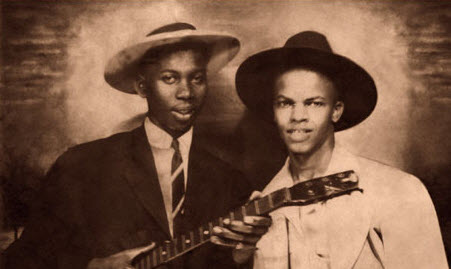
robert johnson johnny shinesRobert Johnson & Johnny Shines

Shines played throughout the southern United States until 1941 when he settled in Chicago. There Shines found work in the construction industry but continued to play in local bars.

Sittin’ on top of the world:

Check out –> Illustrated Johnny Shines discography

Playlist of the day:

Other APR-20:

Continue reading Today: Johnny Shines passed away in 1992 – 11 years ago
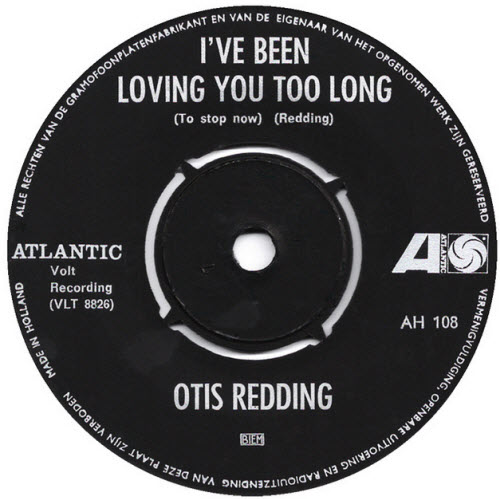
Today: Otis Redding released I’ve Been Loving You Too Long in 1965 – 48 years ago

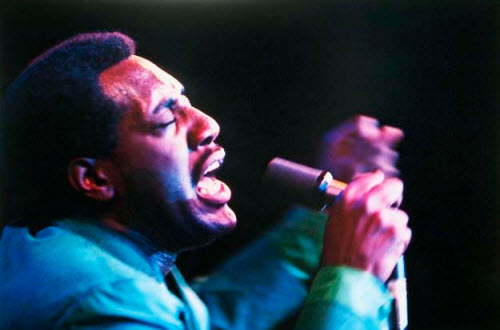
otis redding i've been loving you

Otis Redding’s “I’ve Been Loving You Too Long” is an R&B hit love ballad of the ’60s that has lost none of its soulful power with the passing decades. Redding’s success with the single was second only to that of his ever-popular classic “Sittin’ on the Dock of the Bay.”
~Joslyn Lane (allmusic.com)

I’ve Been Loving You Too Long” became Redding’s first Top 40 single, in June 1965. And when Redding performed a scorching drawn-out version at the Monterey Pop Festival in 1967 — in front of the audience he called “the love crowd” — the single made the transition from hit to legend.
~rollingstone.com

I’ve Been Loving You Too Long (Monterey ’67):

otis redding 1967 montery

Wikipedia:

Released April 19, 1965
Format 7″ single
Recorded Miami: 1965
Genre Soul
Length 2:49 (mono version, April 1965)
3:09 (stereo version, July 1965)
Label Volt/Atco
V-126
Producer Otis Redding
Jerry Butler

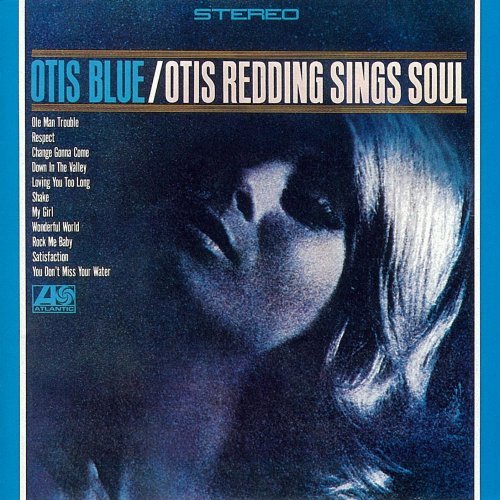
I’ve Been Loving You Too Long” (sometimes issued as “I’ve Been Loving You Too Long (To Stop Now)”) is a song written by Otis Redding and Jerry Butler. It appeared as the A-side of a 1965 hit single by Otis Redding – and subsequently appeared on his thirdalbum, Otis Blue: Otis Redding Sings Soul. Although Redding had been appearing in the U.S. Billboard Pop and R&B charts as early as 1962, this was his first big hit, reaching #21 on the Billboard Hot 100, and was his first Top 5 Billboard R&B chart, peaking at #2. The B-side of the single “Just One More Day,” was also a minor hit, reaching #15 on the R&B and #85 on the Pop chart. The song is ranked #110 on the Rolling Stone magazine’s list of The 500 Greatest Songs of All Time.

otis blue

Album version:

Lyrics:

I’ve Been Loving You Too Long (To Stop Now) by Otis Redding
I’ve been loving you too long to stop now

There were time and you want to be free
My love is growing stronger, as you become a habit to me
Oh I’ve been loving you a little too long
I dont wanna stop now, oh
With you my life,
Has been so wonderful
I can’t stop now

There were times and your love is growing cold
My love is growing stronger as our affair [affair] grows old
I’ve been loving you a little too long, long,
I don’t want to stop now
oh, oh, oh
I’ve been loving you a little bit too long
I don’t wanna stop now
No, no, no

Don’t make me stop now
No baby
I’m down on my knees Please, don’t make me stop now
I love you, I love you,
I love you with all of my heart
And I can’t stop now
Don’t make me stop now
Please, please don’t make me stop now
Good god almighty I love you
I love you, I love you, I love you
I love you, I love you
I love you in so many different ways…
I love you in so many different ways….

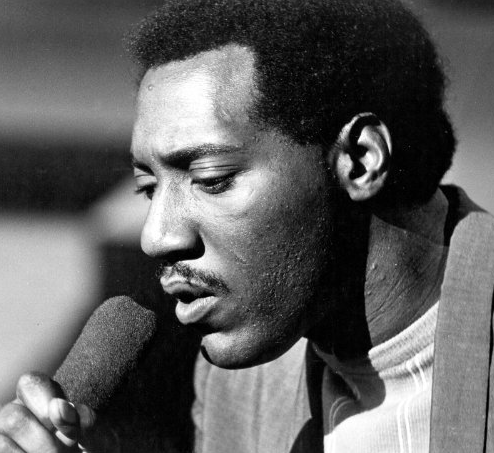
otis redding

Live 1967 – London:

Notable cover versions:

  • The first cover of the song was a recording by The Rolling Stones in 1965 — shortly after Redding’s original version became a hit.
  • The most widely known cover version of the song was by Ike & Tina Turner in 1968. It was the lead track from their 1968 Blue Thumb album entitled Outta Season.
    Live at Altamont Festival 1969:
  • Aretha Franklin recorded a cover for her album Young, Gifted and Black (1972).

Playlist of the day:

Other APR-19:

Continue reading Today: Otis Redding released I’ve Been Loving You Too Long in 1965 – 48 years ago

Today: The Pixies released Doolittle in 1989 – 24 years ago

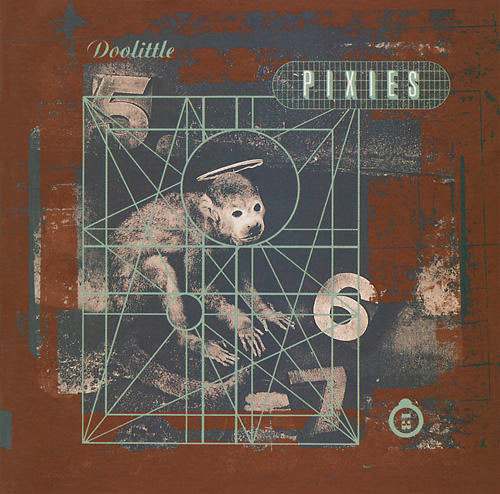
the pixies doolittle-cover

..the songs on Doolittle have the power to make you literally jump out of your skin with excitement.
~NME

Doolittle is a mix of the band’s earlier hardcore storms, Black Francis’ self­described “stream of unconsciousness” rants, and the strange melodicism and surf-metal guitar that defined its creepy magic.
~rollingstone.com

Debaser:

Wikipedia:

Released April 18, 1989
Recorded October 31 – November 23, 1988 atDowntown Recorders in Boston, Massachusetts and Carriage House Studios in Stamford, Connecticut
Genre Alternative rock
Length 38:38
Label 4AD, Elektra (initial U.S. distribution)
Producer Gil Norton

Doolittle is the second studio album from the American alternative rock band Pixies, released in April 1989 on 4AD. The album’s offbeat and dark subject material, featuring references to surrealism, Biblical violence, torture and death, contrasts with the clean production sound achieved by the newly hired producer Gil Norton. Doolittle was the Pixies’ first international release, with Elektra Records acting as the album’s distributor in the United States and PolyGram in Canada.

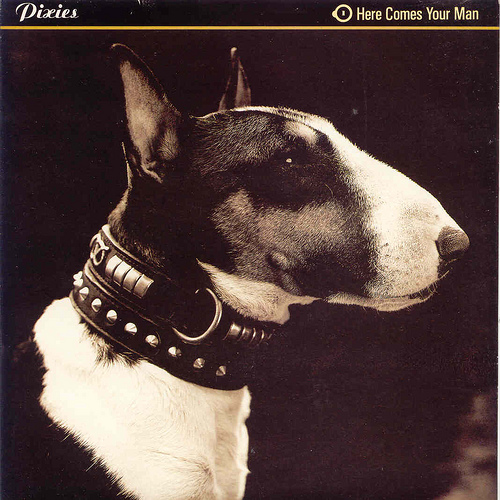
Pixies released two singles from Doolittle, “Here Comes Your Man” and “Monkey Gone to Heaven”, both of which were chart successes on the US chart for Modern Rock Tracks. The album itself reached number eight on the UK Albums Chart, an unexpected success for the band. In retrospect, album tracks such as “Debaser”, “Wave of Mutilation”, “Monkey Gone to Heaven”, “Gouge Away”, and “Hey” are highly acclaimed by critics, while the album, along with debut LP Surfer Rosa, is often seen as the band’s strongest work.

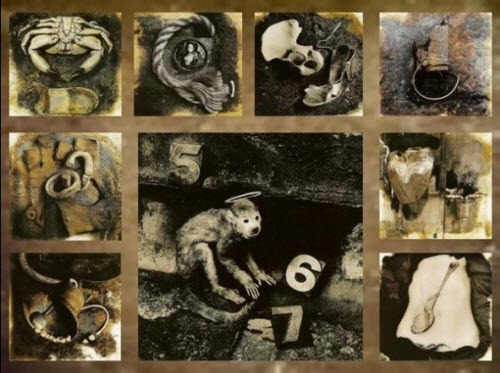
pixies doolittle inlay

Doolittle has continued to sell consistently well in the years since its release, and in 1995 was certified gold by the Recording Industry Association of America. The album has been cited as inspirational by many alternative artists, while numerous music publications have ranked it as one of the most influential albums ever. A 2003 poll of NME writers ranked Doolittle as the second-greatest album of all time, and Rolling Stone placed the album at 226 on its list of “The 500 Greatest Albums of All Time”.

Tame:

Music:

Doolittle features an eclectic mix of musical styles. While tracks such as “Tame” and “Crackity Jones” are fast and aggressive, and incorporate the band’s trademark loud–quiet dynamic, other songs such as “Silver”, “I Bleed”, and “Here Comes Your Man” reveal a quieter, slower and more melodic temperament. With Doolittle, the band began to incorporate further instruments into their sound; for instance, “Monkey Gone to Heaven” features two violins and two cellos. Several tracks on Doolittle are constructed around simple repeating chord progressions.

“Tame” is based on a three chord formula; including Joey Santiago’s playing a “Hendrix chord” over the main bass progression. “I Bleed” is melodically simple, and is formed around a single rhythmical repetition. Some songs are influenced by other genres of music; while “Crackity Jones” has a distinctly Spanish sound, and incorporates G♯ and A triads over a C♯ pedal, the song’s rhythm guitar, played by Francis, starts with an eighth-note downstroke typical of punk rock music.

the pixies

the pixies here-comes-your-man

Here Comes Your Man:

Accolades:

Publication Country Accolade Year Rank
Hot Press Ireland Top 100 Albums
2006 #34
Juice Australia The 50 Best Albums of All Time
1997 #2
NME UK 100 Best Albums
2003 #2
Panorama Norway The 30 Best Albums of the Year 1970–98 1999 #1
Pitchfork Media US Top 100 Albums of the 1980s
2002 #4
Q UK Ultimate Music Collection
2005 *
Rolling Stone US The 500 Greatest Albums of All Time 2005 #226
Spin US 100 Greatest Albums, 1985–2005
2005 #36
Slant Magazine US Best Albums of the 1980s
2012 #34

Tracks:

All tracks were written by Black Francis, except where noted.

  1. “Debaser” – 2:52
  2. “Tame” – 1:55
  3. “Wave of Mutilation” – 2:04
  4. “I Bleed” – 2:34
  5. “Here Comes Your Man” – 3:21
  6. “Dead” – 2:21
  7. “Monkey Gone to Heaven” – 2:56
  8. “Mr. Grieves” – 2:05
  9. “Crackity Jones” – 1:24
  10. “La La Love You” – 2:43
  11. “No. 13 Baby” – 3:51
  12. “There Goes My Gun” – 1:49
  13. “Hey” – 3:31
  14. “Silver” (Francis/Deal) – 2:25
  15. “Gouge Away” – 2:45

Monkey Gone To Heaven:

Personnel:

Pixies
  • Black Francis – vocals, rhythm guitar
  • Kim Deal – bass guitar, vocals, slide guitar on “Silver”
  • Joey Santiago – lead guitar
  • David Lovering – drums, lead vocal on “La La Love You”, bass guitar on “Silver”
Additional musicians
  • Arthur Fiacco – cello on “Monkey Gone to Heaven”
  • Karen Karlsrud – violin on “Monkey Gone to Heaven”
  • Corine Metter – violin on “Monkey Gone to Heaven”
  • Ann Rorich – cello on “Monkey Gone to Heaven”
Production
  • Steve Haigler – mixing engineer
  • Matt Lane – assistant engineer
  • Simon Larbalestier – cover image, album booklet imagery
  • Gil Norton – production, engineering
  • Vaughan Oliver – album booklet imagery
  • Dave Snider – assistant engineer
  • Published by Rice ‘n’ Beans Music BMI

the pixies 2

Playlist of the day:

Other APR-18:

Continue reading Today: The Pixies released Doolittle in 1989 – 24 years ago

Today: Nick Cave & The Bad Seeds released – The Good Son – in 1990

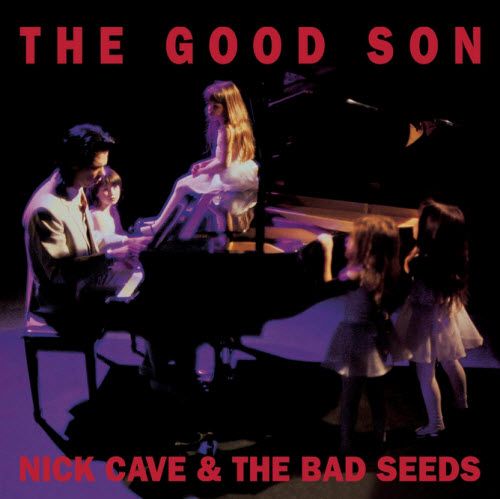
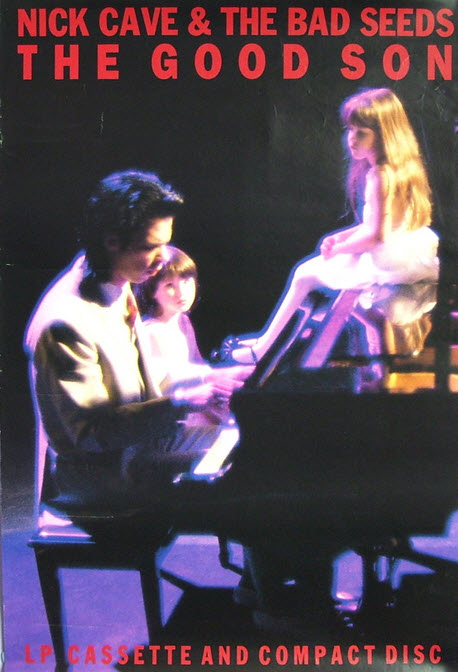
nick cave the good son

“The Good Son” is a haunting collection of vintage Nick Cave songs that tell of loss, sorrow, death and despair. Those subjects may be standard Cave fare, but the amazing string arrangements featured on almost every tune add an epic sweep to the album, imbuing it with a grandeur found in the work of Jacques Brel and his protoge, Scott Walker. ..
~amazon.com reviewer

…the Seeds followed up Tender Prey with the equally brilliant but generally calmer Good Son.
~Ned Raggett (allmusic.com)

Come sail your ships around me
And burn your bridges down
We make a little history, baby
Every time you come around
~Nick Cave (The Ship Song)

The Ship Song (original)

Wikipedia:

Released April 17, 1990
Recorded by Victor Van Vugt at Sao Paulo, October 1989, mixed by Flood,Gareth Jones at Berlin, November-December, 1989
Genre Post-punk, alternative rock
Length 45:12
Label Mute Records
Producer The Bad Seeds

The Good Son is the sixth album by Nick Cave and the Bad Seeds, released in 1990. It was preceded by the release of “The Ship Song/The Train Song” single. “The Weeping Song/Cock’s ‘n’ Asses” was later also released as a single. After an album as dark and intense as Tender Prey, some fans were disappointed to hear a relaxed and loving Nick Cave on this record. The change of mood was due in great deal to Nick Cave falling in love with Brazilian journalist Viviane Carneiro, and an apparently salutary spell in rehab which purged the despair and squalor of the previous two albums. However, today, most fans consider this album as a classic that was unfairly judged at the time. Indeed, “The Weeping Song” and “The Ship Song” are now Bad Seeds standards, and the relatively obscure closing track “Lucy” was resurrected in 1993 as a B-side of “What a Wonderful World”, a collaboration of the Bad Seeds and the Pogues’ Shane MacGowan.

The album was remastered and reissued on March 29, 2010 as a collector’s edition CD/DVD set.

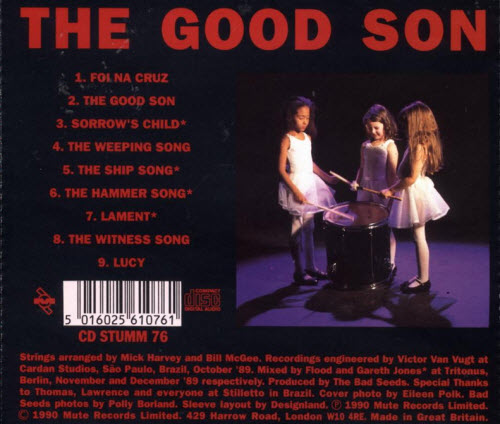
nick cave the good son back


Father, why are all the women weeping?
They are weeping for their men
Then why are all the men there weeping?
They are weeping back at them
~Nick Cave (The Weeping Song)

The Weeping Song:

Track listing:

  1. “Foi Na Cruz” – 5:39 (Singers – Clovis Trindade, Rubinho)
  2. “The Good Son” – 6:01
  3. “Sorrow’s Child” – 4:36
  4. “The Weeping Song” – 4:21 (“Father” Vocal by Blixa Bargeld)
  5. “The Ship Song” – 5:14
  6. “The Hammer Song” – 4:16 (Guitars by Mick Harvey)
  7. “Lament” – 4:51
  8. “The Witness Song” – 5:57
  9. “Lucy” – 4:17 (words: Cave. Music: Cave, Bargeld, Roland Wolf) Piano on reprise section by Roland Wolf

 Comments on the Songs:

  • Foi Na Cruz” is based partly upon the traditional Brazilian Protestant hymn of the same title. The title translates roughly as “It Happened on the cross”.
  • The Good Son” – the opening is based loosely upon the African-American traditional song “Another Man Done Gone”. A recording of this traditional song, by Odetta, later appeared on Original Seeds Vol. 1. The lyrics appear, at least in part, to have been influenced by the Cormac McCarthy novel Child of God, with references to a “malign star” and laying down “queer plans” appearing in both, as well as common themes of dislocation and rejection.
  • The single mix of “The Weeping Song” is a different mix than the one found on the album.
  • The Witness Song” is based loosely upon the traditional American gospel song “Who Will be a Witness?”.
  • Four of the songs on the album were left with their working titles (“The Ship Song”, “The Weeping Song”, “The Hammer Song”, “The Witness Song”).
  • The instrumental b-side “Cocks ‘n’ Asses” was retitled “The B-side Song” for the USA release.

The Good Son:

Personnel:

  • Nick Cave – Vocals, Piano, Hammond, Harmonica
  • Mick Harvey – Bass, Acoustic Guitar, Vibraphone, Percussion, Backing Vocals
  • Blixa Bargeld – Guitar, Backing Vocals
  • Kid Congo Powers – Guitar
  • Thomas Wydler – Drums, Percussion

nick cave the good son 2


Playlist of the day:

Other APR-17

Continue reading Today: Nick Cave & The Bad Seeds released – The Good Son – in 1990

Today: The late Dusty Springfield was born in 1939 – 74 years ago

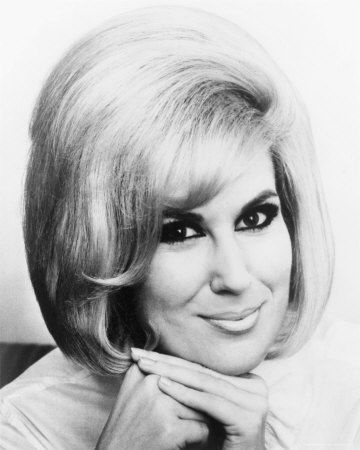
dusty-springfield

I just decided I wanted to become someone else… So I became someone else.
~Dusty Springfield

I’m the most misunderstood, misquoted person I know, honestly.
~Dusty Springfield

Britain’s greatest pop diva, …was also the finest white soul singer of her era, a performer of remarkable emotional resonance whose body of work spans the decades and their attendant musical transformations with a consistency and purity unmatched by any of her contemporaries…
~Jason Ankeny (allmusic.com)

Tribute from youtube:

Son of a preacher man (live):

Wikipedia:

Birth name Mary Isobel Catherine Bernadette O’Brien
Also known as Shan, Gladys Thong
Born 16 April 1939
West Hampstead, London, England
Origin Ealing, London, England
Died 2 March 1999 (aged 59)
Henley-on-Thames, Oxfordshire, England
Genres Pop, soul
Occupations Singer, arranger, musician, TV presenter
Instruments Voice, guitar, piano, percussion
Years active 1958–1995

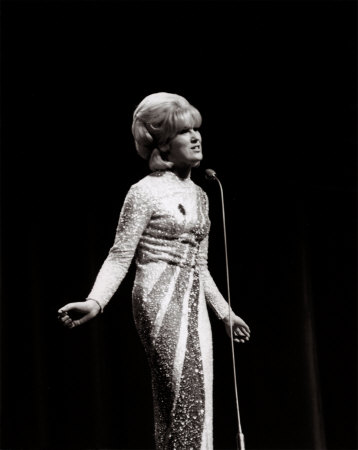
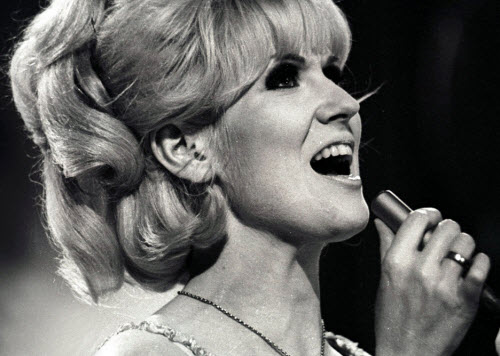
Mary Isobel Catherine Bernadette O’Brien OBE (16 April 1939 – 2 March 1999), known professionally as Dusty Springfield, was an English pop singer and record producer whose career extended from the late 1950s to the 1990s. With her distinctive sensual sound, she was an important blue-eyed soul singer and at her peak was one of the most successful British female performers, with six top 20 singles on the United States Billboard Hot 100 and sixteen on the United Kingdom Singles Chart from 1963 to 1989. She is a member of both the US Rock and Roll and UK Music Halls of Fame. International polls have named Springfield among the best female rock artists of all time. Her image, supported by a peroxide blonde beehive hairstyle, evening gowns, and heavy makeup, made her an icon of the Swinging Sixties.

Dusty_Springfield_in_1966

Born in West London to an Irish Catholic family that enjoyed music, Springfield learned to sing at home. In 1958 she joined her first professional group, The Lana Sisters, and two years later formed a pop-folk vocal trio, The Springfields, with her brother Tom. Her solo career began in 1963 with the upbeat pop hit, “I Only Want to Be with You”. Among the hits that followed were “Wishin’ and Hopin'” (1964), “I Just Don’t Know What to Do with Myself” (1964), “You Don’t Have to Say You Love Me” (1966), and “Son of a Preacher Man” (1968).

As a fan of US pop music, she brought many little-known soul singers to the attention of a wider UK record-buying audience by hosting the first national TV performance of many top-selling Motown artists beginning in 1965. Although never considered a Northern Soul artist in her own right, Springfield’s efforts contributed a great deal to the formation of the genre as a result.

Partly owing to these efforts, a year later she eventually became the best-selling female singer in the world and topped a number of popularity polls, including Melody Maker‘s Best International Vocalist. She was the first UK singer to top the New Musical Express readers’ poll for Female Singer.

dusty springfield


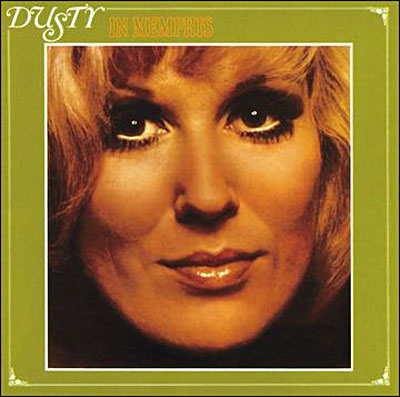
To boost her credibility as a soul artist, Springfield went to Memphis, Tennessee, to record Dusty in Memphis, an album of pop and soul music, with the Atlantic Records main production team. Released in 1969, it has been ranked among the greatest albums of all time by the US magazine Rolling Stone and in polls by VH1 artists, New Musical Express readers, and Channel 4 viewers. The album was also awarded a spot in the Grammy Hall of Fame. After its release, Springfield experienced a career slump for several years. However, in collaboration with Pet Shop Boys, she returned to the Top 10 of the UK and US charts in 1987 with “What Have I Done to Deserve This?” Two years later, she had two other UK hits on her own with “Nothing Has Been Proved” and “In Private.” Subsequently in the mid 1990s, owing to the inclusion of “Son of a Preacher Man” on the Pulp Fiction soundtrack, interest in her early output was revived.

Dusty Memphis


Awards:

  • inductee of both the US Rock and Roll Hall of Fame (1999) and the UK Music Hall of Fame (2006)
  • She has been placed among the top 25 female artists of all time by readers of Mojo magazine (May 1999), editors of Q magazine (January 2002), and a panel of artists on VH1 TV channel (August 2007)
  • In 2008, Dusty appeared at No. 35 on the Rolling Stone‘s “100 Greatest Singers of All Time”
  • In the 1960s she topped a number of popularity polls, including Melody Maker‘s Best International Vocalist for 1966
  • in 1965 she was the first British singer to top the New Musical Express readers’ polls for Female Singer, and topped that poll again in 1966, 1967, and 1969 as well as gaining the most votes in the British Singer category from 1964 to 1966
  • Her album Dusty in Memphis has been listed among the greatest albums of all time by Rolling Stone and in polls by VH1 artists, New Musical Express readers, and the Channel 4 viewers and in 2001, received the Grammy Hall of Fame award
  • In March 1999 Springfield was scheduled to go to Buckingham Palace to receive her award of Officer, Order of the British Empire. Due to the recurrence of the singer’s breast cancer, officials of Queen Elizabeth II gave permission for the medal to be collected earlier, in January, by Wickham and it was presented to Springfield in hospital with a small group of friends and relatives attending

You Don’t Have To Say You Love (live 1967):

Playlist of the day:

Other APR-16:

Continue reading Today: The late Dusty Springfield was born in 1939 – 74 years ago