Category Archives: Jazz

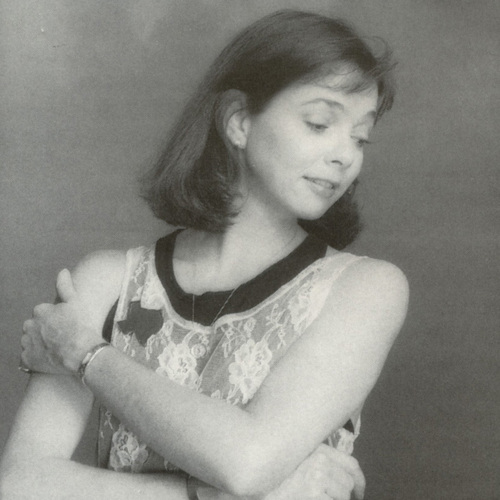
The wonderful Nanci Griffith was born in 1953 – Happy birthday

Nanci Griffith 1

I got to know Nanci Griffith through the seminal music paper Beat (norwegian music magazine), this music magazine has been extremely important in my musical upbringing. They made it ok to say that you loved country music. This was a big step for us rock/punk youth. Anyway, they praised Nanci Griffith very early and we listened and we agreed, this was very special indeed.

Her voice, her way of singing, especially other peoples’ songs, it was and is beautiful. My first entry into her world was John Prine’s The Speed of The Sound of Loneliness, it is still the best song in her catalogue. Hell, it would be the best song in almost anybody’s catalogue!

Speed of the sound of Loneliness (with John Prine who wrote this masterpiece):

Nanci Griffith, (born Nanci Caroline Griffith, July 6, 1953, Seguin, Texas) is an American singer, guitarist, and songwriter based in Austin, Texas.

Allmusic:  Straddling the fine line between folk and country music, Nanci Griffith has become as well-known for her brilliant, confessional songwriting as her beautiful voice. A self-styled “folkabilly” singer, Griffith began as a kindergarten teacher and occasional folksinger. The country scene took her to heart in the mid-’80s, giving her a reputation as a quality songwriter through hit covers of Griffith’s songs by Kathy Mattea and Suzy Bogguss. Finding no luck with commercial country radio however, Griffith recorded several pop-oriented albums and then returned to her folk roots by the mid-’90s.

Another wonderful cover version, Tecumseh Valley (with a wonderful intro):
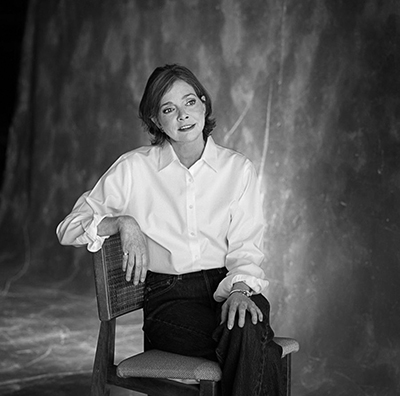


Lets include a fantastic Dylan interpretation, Boots of Spanish leather:

 Happy birthday, Nanci!

Other July-06:
Continue reading The wonderful Nanci Griffith was born in 1953 – Happy birthday
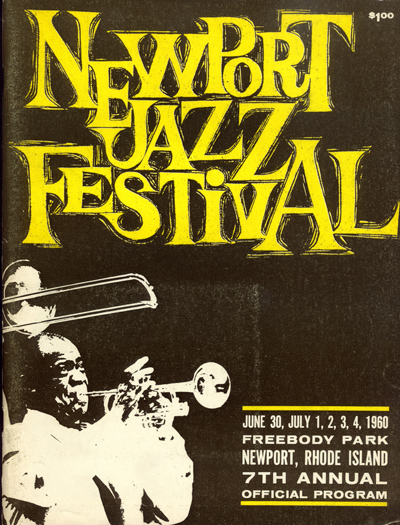
Newport Jazz Festival 1960 (Videos)

Newport 1960

The Newport Jazz Festival is a music festival held every summer in Newport, Rhode Island, USA. It was established in 1954 by socialite Elaine Lorillard, who, together with husband Louis Lorillard, financed the festival for many years. The couple hired jazz impresario George Wein to organize the event to help them bring jazz to the resort town.
Most of the early festivals were broadcast on Voice Of America radio and many performances were recorded and have been issued by various record labels.The Newport Jazz Festival moved to New York City in 1972 and became a two-site festival in 1981 when it returned to Newport and also continued in New York. The festival was known as the JVC Jazz Festival from 1984 to 2008. During the economic downturn of 2009, JVC ceased its support of the festival and was replaced by CareFusion. As of 2012 the festival is sponsored by Natixis Global Asset Management. 
The festival is hosted in Newport at Fort Adams State Park, and is often held in the same month as its sister festival, the Newport Folk Festival.

In 1960 boisterous spectators created a major disturbance, and the National Guard was called to the scene. Word that the disturbances had meant the end of the festival, following the Sunday afternoon blues presentation headlined by Muddy Waters, reached poet Langston Hughes, who was in a meeting on the festival grounds. Hughes wrote an impromptu lyric, “Goodbye Newport Blues”, that he brought to the Muddy Waters band onstage, announcing their likewise impromptu musical performance of the piece himself, before pianist Otis Spann led the band and sang the Hughes poem.The 1960 event was notable also for the presence of a rival jazz festival that took place at the Cliff Walk Manor Hotel, just a few blocks away. This was organized by musicians Charles Mingus and Max Roach in protest against the lower pay that the Newport festival offered jazz innovators in comparison with more mainstream performers; the fact that the innovators were mostly black and the mainstream performers mostly white was also an aggravating factor.

Highlights included:

  • The Dave Brubeck Quartet
  • The Cannonball Adderley Quintet, featuring Nat Adderley
  • Nina Simone
  • The Louis Armstrong All-Stars with Trummy Young and Barney Bigard
  • The Dizzy Gillespie Quintet
  • Ray Charles
  • The Horace Silver Quintet
  • Muddy Waters
  • John Lee Hooker
  • The Bill Evans Trio
  • The Jazz Messengers with Art Blakey

Videos from the festival:

Cannonball Adderley Quintet – Del Sasser:

Muddy Waters – Tiger In Your Tank:

Continue reading Newport Jazz Festival 1960 (Videos)

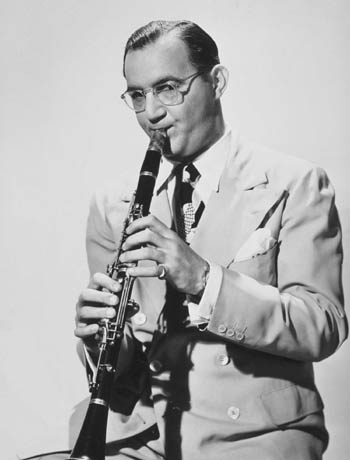
Today: The late Benny Goodman passed away in 1986 – 27 years ago

Benny Goodman was the first celebrated bandleader of the Swing Era, dubbed “The King of Swing,” his popular emergence marking the beginning of the era. He was an accomplished clarinetist whose distinctive playing gave an identity both to his big band and to the smaller units he led simultaneously. The most popular figure of the first few years of the Swing Era, he continued to perform until his death 50 years later.
~William Ruhlmann (allmusic.com)

Moonglow:

From Wikipedia:

Benjamin David “Benny” Goodman (May 30, 1909 – June 13, 1986) was an American jazz and swing musician, clarinetist and bandleader; widely known as the “King of Swing”.

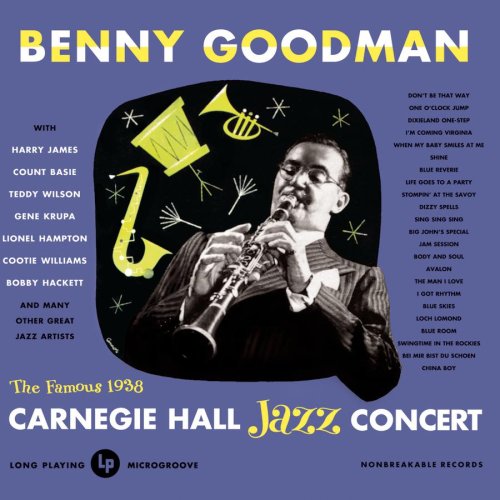
In the mid-1930s, Benny Goodman led one of the most popular musical groups in America. His January 16, 1938 concert at Carnegie Hall in New York City is described by critic Bruce Eder as “the single most important jazz or popular music concert in history: jazz’s ‘coming out’ party to the world of ‘respectable’ music.”

Goodman’s bands launched the careers of many major names in jazz, and during an era of segregation, he also led one of the first well-known racially-integrated jazz groups. Goodman continued to perform to nearly the end of his life, including exploring his interest in classical music.

Benny_Goodman

cut from “Hollywood Hotel” film (1937) – Sing Sing Sing:

Album of the day @ JV:

Other June-13:

Continue reading Today: The late Benny Goodman passed away in 1986 – 27 years ago

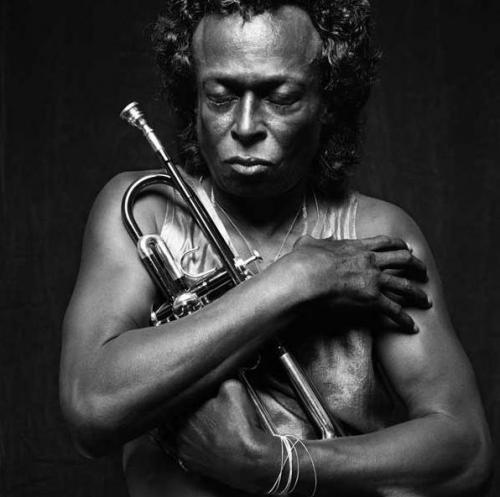
Today: The late Miles Davis was born in 1926 – 87 years ago

miles 3

Don’t play what’s there, play what’s not there.
– Miles Davis

Miles Davis is my definition of cool.
– Bob Dylan

 I discovered Miles Davis through Prince. Prince talked about Miles and they played together, they played each others songs and I got curious. My first meet with Miles Davis was in the eighties, the years that some hard-core Miles fans consider the decline or the lost years. Not for me, I love 80s Miles Davis, and what I heard made me go back in time. What a world that opened up!

I got to see him in concert, once in 1988. To a young and recent fan it was mind-blowing!

Tutu, Stuttgart 1988:

miles 2

From Allmusic:

Throughout a professional career lasting 50 years, Miles Davis played the trumpet in a lyrical, introspective, and melodic style, often employing a stemless Harmon mute to make his sound more personal and intimate. But if his approach to his instrument was constant, his approach to jazz was dazzlingly protean. To examine his career is to examine the history of jazz from the mid-’40s to the early ’90s, since he was in the thick of almost every important innovation and stylistic development in the music during that period, and he often led the way in those changes, both with his own performances and recordings and by choosing sidemen and collaborators who forged new directions. It can even be argued that jazz stopped evolving when Davis wasn’t there to push it forward.
– William Ruhlmann

The best Jazz song in music history, So What:

I have choses On The Corner (1972) as today’s album, my favorite Miles record is Kind of Blue, but I thought it would be nice to focus on one of my other favorites. It is a an album that was loathed when it was released. Miles Davis was accused of selling out (just as he was in the 80s). When listening to the album today it is hard to understand what he was selling out to…

At the time, everyone loathed Miles Davis’s On the Corner – even the people who played on it. But now, some of the coolest names in music are proud to name it as a major influence. – Paul Tingen (The Guardian)

other 26 May:

Continue reading Today: The late Miles Davis was born in 1926 – 87 years ago

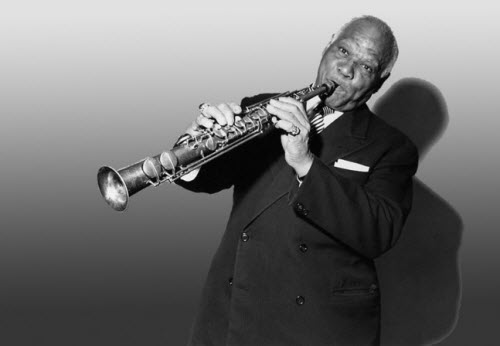
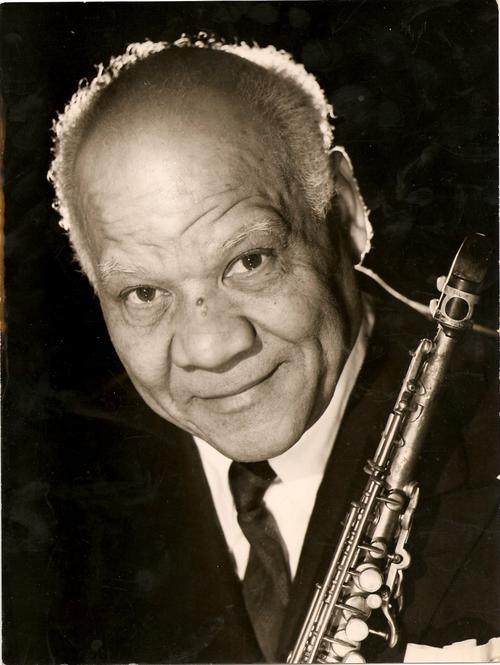
Today: The late Sidney Bechet was born in 1897 – 116 years ago

sidney bechet

But drinking and reefers and all that stuff, most times they just mess up all the feeling you got inside yourself and all the feeling the music’s got inside itself. When a man goes at the music that way, it’s just a sign that there’s a lot inside himself he don’t know how to answer. He’s not knowing which way he needs to go. He’s not going anywhere at all.
~Sidney Bechet (Treat It Gentle: The Autobiography of Sidney Bechet)

Petite Fleur ( the Olympia Concert Paris, December 8, 1954):

A brilliant soprano saxophonist and clarinetist with a wide vibrato that listeners either loved or hated, Bechet’s style did not evolve much through the years but he never lost his enthusiasm or creativity. A master at both individual and collective improvisation within the genre of New Orleans jazz, Bechet was such a dominant player that trumpeters found it very difficult to play with him. Bechet wanted to play lead and it was up to the other horns to stay out of his way.
~Scott Yanow (allmusic.com)

Wikipedia:

Born May 14, 1897
New Orleans, Louisiana, U.S.
Died May 14, 1959 (aged 62)
Garches, France
Genres Jazz
Dixieland
Occupations Clarinetist
Saxophonist
Composer
Instruments Clarinet
Soprano saxophone
Years active 1908–1957
Associated acts Louis Armstrong
Tommy Ladnier

Sidney Bechet (May 14, 1897 – May 14, 1959) was an American jazz saxophonist, clarinetist, and composer.

He was one of the first important soloists in jazz (beating cornetist and trumpeter Louis Armstrong to the recording studio by several months and later playing duets with Armstrong), and was perhaps the first notable jazz saxophonist. Forceful delivery, well-constructed improvisations, and a distinctive, wide vibrato characterized Bechet’s playing.

Bechet’s erratic temperament hampered his career, however, and not until the late 1940s did he earn wide acclaim.

Sidney+Bechet

Blue Horizon:

.. by combining the ‘cry’ of the blues players and the finesse of the Creoles into his ‘own way,’ Sidney Bechet created a style which moved the emotions even as it dazzled the mind.
~Robert Palmer

Playlist of the day:

Other May 14:

Continue reading Today: The late Sidney Bechet was born in 1897 – 116 years ago