Category Archives: Music Calendar

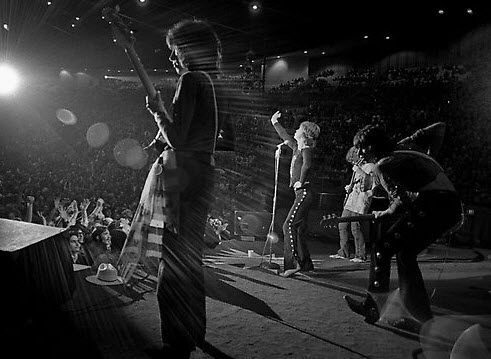
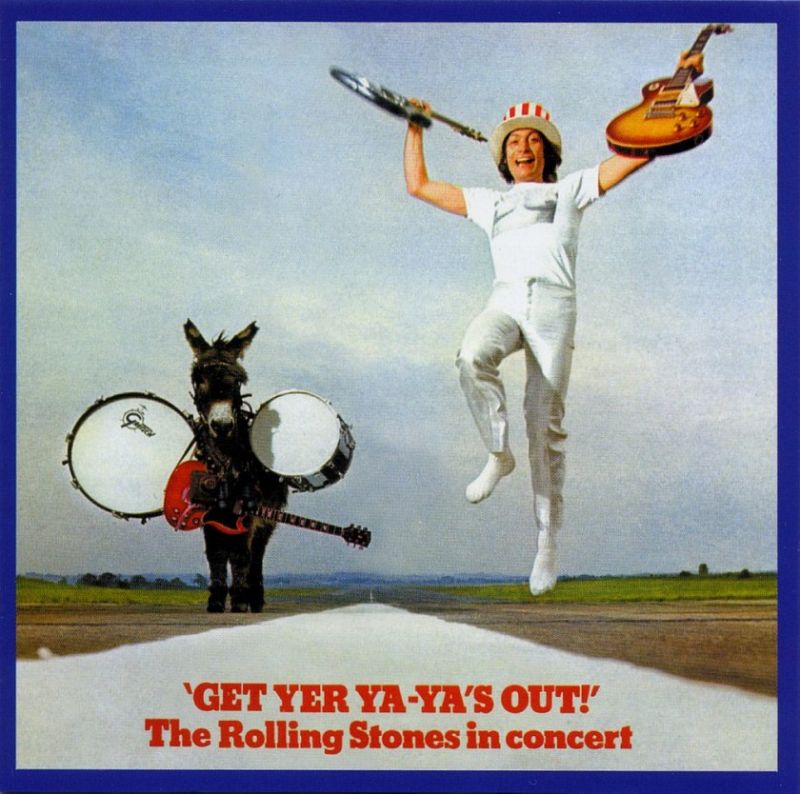
Today: The Rolling Stones released “Get Yer Ya-Ya’s Out! …” in 1970

rolling-stones-get-yer-ya-yas-out

“I have no doubt that it’s the best rock concert ever put on record.”
~Lester Bangs

Yeah, I was at the Garden when this was being recorded, and I had a great time. But despite Mick Taylor’s guitar on “Love in Vain” and the spruced-up “Live With Me,” there’s not a song here that isn’t better somewhere else–including the two Chuck Berry covers and the one-act “Midnight Rambler.”  B
~Robert Christgau

Recorded during their American tour in late 1969, and centered around live versions of material from the Beggars Banquet-Let It Bleed era. Often acclaimed as one of the top live rock albums of all time, its appeal has dimmed a little today…  it’s certainly the Stones’ best official live recording.
~Richie Unterberger (allmusic.com)

Carol – 27 Nov 1969:

From Wikipedia:

Released 4 September 1970
Recorded 26 November 1969, Baltimore,Maryland, United States and 27–28 November 1969, New York City, New York, United States
January–February 1970 (vocal overdubs)
Genre Hard rock, blues-rock
Length 47:36
Language English
Label London (US), Decca (UK)
Producer The Rolling Stones, Glyn Johns

Many, including The Rolling Stones, consider this their first official full-length live release, despite the appearance of the US-only Got Live If You Want It! in 1966 as a contractual obligation product. One reason for releasing a live album was to counter the release of the Live’r Than You’ll Ever Be bootleg recording of an Oakland (9 November 1969) performance on the same tour, a recording which was even reviewed in Rolling Stone magazine.

Classic bootleg concert: The Rolling Stones – “Live’r Than You’ll Ever Be” [Full Album]:

Having not toured since April 1967, The Rolling Stones were eager to hit the road by 1969. With their two most recent albums, Beggars Banquet and Through the Past, Darkly (Big Hits Vol. 2) being highly praised, audiences were anticipating their live return. Their 1969 American Tour’s trek during November into December, with Terry Reid, B.B. King (replaced on some dates by Chuck Berry) and Ike and Tina Turner as supporting acts, played to packed houses. The tour was the first for Mick Taylor with the Stones, having replaced Brian Jones shortly before Jones’ death in July; the performances prominently showcased the guitar interplay of Taylor with Keith Richards.
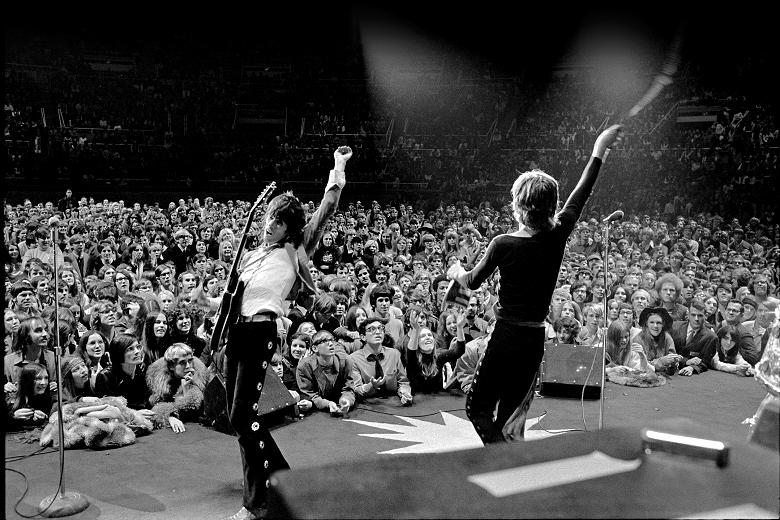
rolling stones live 1969

The performances captured for this release were recorded on 27–28 November 1969 at New York City’s Madison Square Garden, while “Love in Vain” was recorded in Baltimore, Maryland on 26 November 1969. Overdubbing was undertaken during January and February 1970 in London’s Olympic Studios. No instruments were overdubbed, although on bootlegs, examples are known of Richards trying out different guitar parts (e.g. a guitar solo on “Jumpin’ Jack Flash”). The finished product featured new lead vocals on half the tracks, and added backing vocals by Richards on several others.
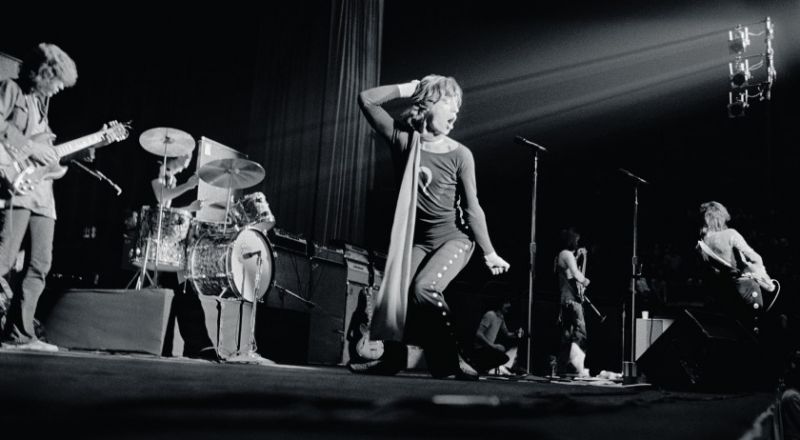
rolling stones live 1969

The title of the album was adapted from the song “Get Yer Yas Yas Out” by Blind Boy Fuller. The phrase used in Fuller’s song was “get your yas yas out the door”.
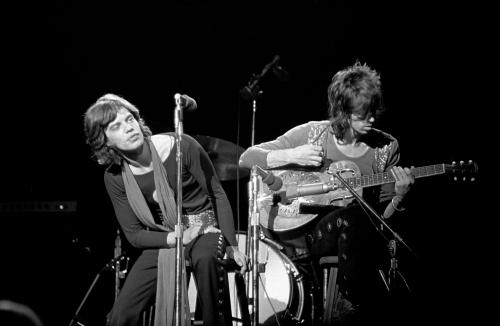
Review of the “40th Anniversary Deluxe Box Set” from Sean Murphy – popmatters.com:

Best live album ever? Who cares. What is beyond dispute is that 1970’s Get Yer Ya-Ya’s Out is certainly the best live album the Rolling Stones ever recorded. And here we are, 40 years after the concerts took place in NYC at Madison Square Garden. World’s Greatest Band + World’s Greatest Stage = Deluxe Box Set! What are we looking at here? The original, remastered album? Check. Six unreleased tracks? Check. Bonus disc of opening acts B.B. King and Ike & Tina Turner? Check. Bonus DVD mixing live songs and offstage antics? Check. Obligatory booklet with critical essays and never-before seen photos? Check. Caveat emptor: for anyone thinking of shelling out $40-to-$60, be warned that the extra Stones material and the DVD are both less than 30 minutes in length. For Stones enthusiasts, this newly unearthed bounty is essential and price should be no object.     ...read more


Track listing:

Side one
1. “Jumpin’ Jack Flash” (November 27, 1969: Madison Square Garden, New York City) 4:02
2. “Carol” (Chuck Berry) – (November 28, 1969: MSG (first show)) 3:47
3. “Stray Cat Blues” (November 28, 1969: MSG (first show)) 3:41
4. “Love in Vain” (Robert Johnson†) – (November 26, 1969: Civic Center, Baltimore) 4:57
5. “Midnight Rambler” (November 28, 1969: MSG (second show)) 9:05

Side two
6. “Sympathy for the Devil” (November 28, 1969: MSGarden (first show)) 6:52
7. “Live with Me” (November 28, 1969: MSG (second show)) 3:03
8. “Little Queenie” (Chuck Berry) – (November 28, 1969: MSG (first show)) 4:33
9. “Honky Tonk Women” (November 27, 1969: MSG) 3:35
10. “Street Fighting Man” (November 28, 1969: MSG (first show)) 4:03

Personnel:

The Rolling Stones
  • Mick Jagger – lead vocals, harmonica
  • Keith Richards – lead, rhythm and Resonator guitar, backing vocals
  • Mick Taylor – lead, rhythm and slide guitar
  • Charlie Watts – drums, percussion
  • Bill Wyman – bass guitar
Additional personnel
  • Ian Stewart – piano
  • J. P. Hawkes – tambourine
  • Recording and mixing engineer – Glyn Johns
  • Recording by Wally Heider Mobile
  • Front cover photograph by David Bailey

Jumpin’ Jack Flash @ Madison Square Garden, NYC – 1969:

Album of the day:

Other September-04:

Continue reading Today: The Rolling Stones released “Get Yer Ya-Ya’s Out! …” in 1970

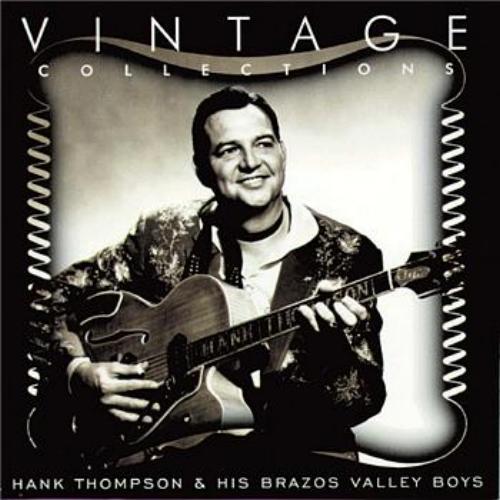
Today: The late Hank Thompson was born in 1925

Hank Thompson was perhaps the most popular Western swing musician of the ’50s and ’60s, keeping the style alive with a top-notch band, tremendous showmanship, and a versatility that allowed him to expand his repertoire into romantic ballads and hardcore honky tonk numbers.
~Steve Huey (allmusic.com)

The glamour of the gay night life has lured you
To the places where the wine and liquor flow
Where you wait to be anybody’s baby
And forget the truest love you’ll ever know
~Hank Thompson – “The Wild Side of Life”

The Wild Side of Life:

From Wikipedia:

Birth name Henry William Thompson
Born September 3, 1925
Waco, Texas, USA
Died November 6, 2007 (aged 82)
Genres country
Western swing
Occupations singer and songwriter
Instruments electric guitar
Years active 1946–2007
Website www.hankthompson.com

Henry William Thompson (September 3, 1925 – November 6, 2007), known professionally as Hank Thompson, was an American country music entertainer whose career spanned seven decades. He sold more than 60 million records worldwide.

Thompson’s musical style, characterized as honky tonk Western swing, was a mixture of fiddles, electric guitar and steel guitar that featured his distinctive, smooth baritone vocals.

His backing band, The Brazos Valley Boys, was voted the top Country Western Band for 14 years in a row by Billboard. The primary difference between his music and that of Bob Wills was that Thompson, who used the swing beat and instrumentation to enhance his vocals, discouraged the intense instrumental soloing from his musicians that Wills encouraged; however, the “Hank Thompson sound” exceeded Bob Wills in Top 40 country hits.

Although not as prominent on the top country charts in later decades, Thompson remained a recording artist and concert draw well into his 80s.

The 1987 novel Crazy Heart by Thomas Cobb was inspired by Thompson’s life, specifically by his practice of picking up a local band to back him when he toured. In 2009 Cobb’s novel was turned into a successful film directed by Scott Cooper and starring Academy Award winner Jeff Bridges.

From cmt.com – Ronnie Pugh:
Few performers in any era of the music have known and appreciated its history as well, and Thompson, elected to the Country Music Hall of Fame in 1989, was a big part of that history. His warm and rich baritone graced hits from the 1940s to the 1970s, as his award-winning Brazos Valley Boys band gave those honky-tonk hits a distinctive flavor of Western swing, much in the pattern followed later by fellow Texan George Strait.


Hey Mr Bartender please don’t be so slow
I’ve got time for one more round and a six pack to go
Tomorrow morning’s Sunday I’m gonna be feeling low
So please please bartender I want a six pack to go

A Six Pack to Go:

hank thompson vintage collection

Album of the day – Vintage Collection (1996):

Other September-03:

Continue reading Today: The late Hank Thompson was born in 1925

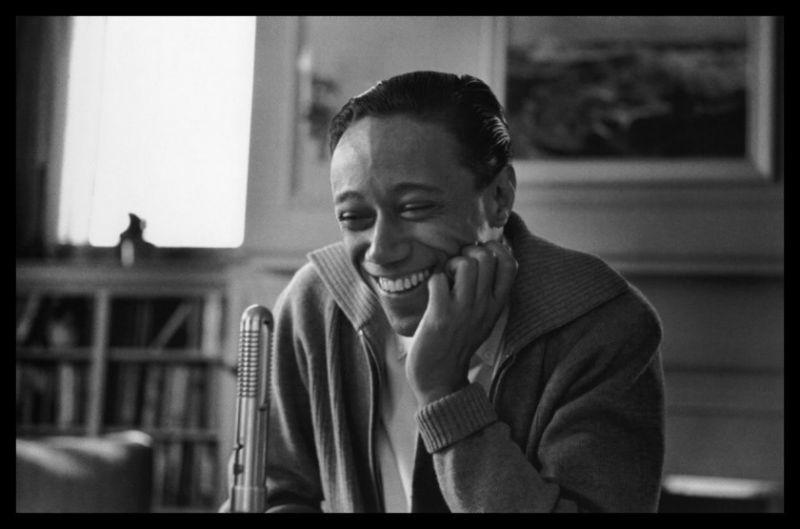
Today: Horace Silver is 85

Horace_Silver

Jazz is not background music. You must concentrate upon it in order to get the most of it. You must absorb most of it. The harmonies within the music can relax, soothe, relax, and uplift the mind when you concentrate upon and absorb it. Jazz music stimulates the minds and uplifts the souls of those who play it was well as of those who listen to immerse themselves in it. As the mind is stimulated and the soul uplifted, this is eventually reflected in the body.
~Horace Silver

“We all have to open our minds, stretch forth, take chances and venture out musically to try and arrive at something new and different.”
~Horace Silver

Song For My Father – Live – Denmark TV 1968:

From Wikipedia:

Birth name Horace Ward Martin Tavares Silva
Born September 2, 1928 (age 85)
Origin Norwalk, Connecticut, U.S.
Genres Post bop
Modal jazz
Mainstream jazz
Soul jazz
Jazz fusion
Hard bop
Occupations Pianist
Composer
Bandleader
Instruments Piano
Associated acts Horace Silver Quintet
Horace Silver Trio
Art Blakey and the Jazz Messengers

Horace Silver (born September 2, 1928), born Horace Ward Martin Tavares Silva in Norwalk, Connecticut, is an American jazz pianist and composer.

Silver is known for his distinctive humorous and funky playing style and for his pioneering compositional contributions to hard bop. He was influenced by a wide range of musical styles, notably gospel music, African music, and Latin American music and sometimes ventured into the soul jazz genre.

From allmusic (Chris Kelsey):

From the perspective of the early 2000s, it is clear that few jazz musicians have had a greater impact on the contemporary mainstream than Horace Silver. The hard bop style that Silver pioneered in the ’50s is now dominant, played not only by holdovers from an earlier generation, but also by fuzzy-cheeked musicians who had yet to be born when the music fell out of critical favor in the ’60s and ’70s. … read more -> allmusic.com

From allaboutjazz.com:

When Horace Silver once wrote out his rules for musical composition (in the liner notes to the 1968 record, Serenade to a Soul Sister), he expounded on the importance of “meaningful simplicity.” The pianist could have just as easily been describing his own life. For more than fifty years, Silver has simply written some of the most enduring tunes in jazz while performing them in a distinctively personal style. It’s all been straight forward enough, while decades of incredible experiences have provided the meaning. .. read more -> allaboutjazz.com

Legacy:

Silver’s music has been a major force in modern jazz. He was one of the first pioneers of the style known as hard bop, influencing such pianists as Bobby Timmons, Les McCann, and Ramsey Lewis. Second, the instrumentation of his quintet (trumpet, tenor sax, piano, double bass, and drums) served as a model for small jazz groups from the mid-1950s until the late 1960s. Further, Silver’s ensembles provided an important training ground for young players, many of whom (such as Donald Byrd, Art Farmer, Blue Mitchell,Woody Shaw, Junior Cook, and Joe Henderson) later led similar groups of their own.

Silver’s talent did not go unnoticed among rock musicians who bore jazz influences, either; Steely Dan sent Silver into the Top 40 in the early 1970s when they crafted their biggest hit single, “Rikki, Don’t Lose That Number,” off the bass riff that opens “Song for My Father.”

As social and cultural upheavals shook the nation during the late 1960s and early 1970s, Silver responded to these changes through music. He commented directly on the new scene through a trio of records called United States of Mind (1970–1972) that featured the spirited vocals of Andy Bey. The composer got deeper into cosmic philosophy as his group, Silver ‘N Strings, recorded Silver ‘N Strings Play The Music of the Spheres (1979).

Señor Blues (Horace Silver, Blue Mitchell & Junior Cook):

Album of the day

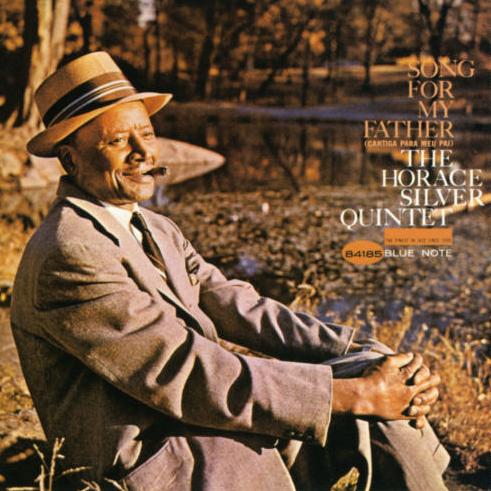
Song For My Father (1964):

Read review @ allaboutjazz.com

Other September-02:

Continue reading Today: Horace Silver is 85

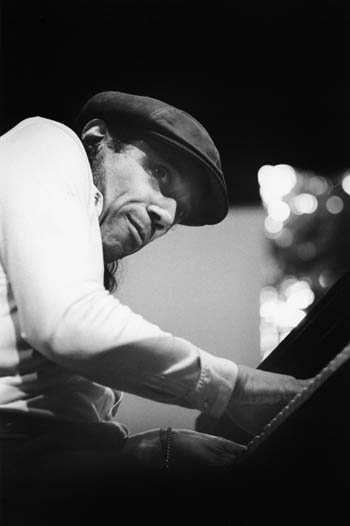
Today: R.L. Burnside passed away September 1 2005

RL_Burnside

“He was a happy-go-lucky nihilist…. he took things exactly as they were. No more, no less.”
– Matthew Johnson, the founder of Mr. Burnside’s record label, Fat Possum.


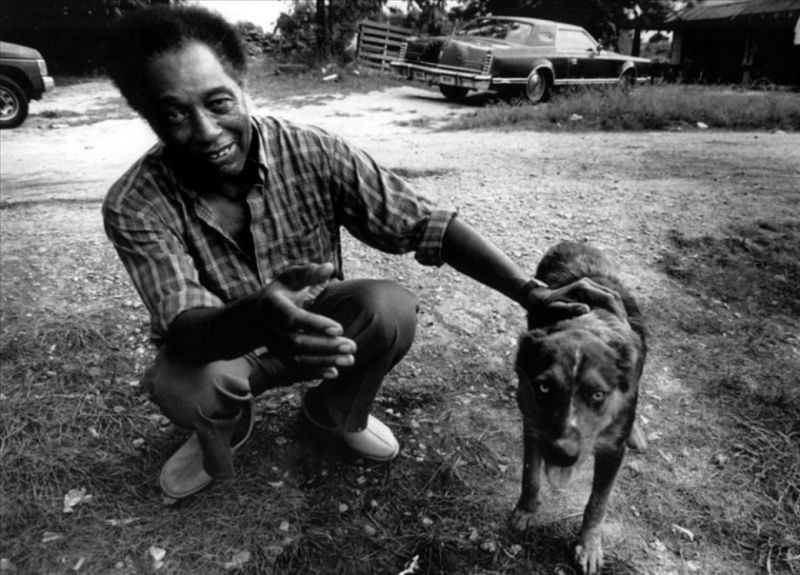
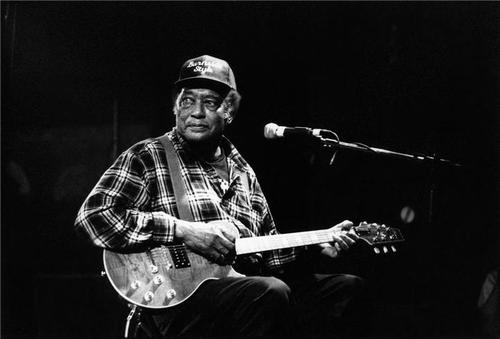
R. L. Burnside (November 23, 1926 – September 1, 2005), born Robert Lee Burnside, was an American blues singer, songwriter, and guitarist who lived much of his life in and around Holly Springs, Mississippi. He played music for much of his life, but did not receive much attention until the early 1990s.

In the latter half of the 1990s, Burnside repeatedly recorded with Jon Spencer,  garnering crossover appeal and introducing his music to a new fan base within the underground garage rock scene.

One commentator noted that Burnside…. were “present-day exponents of an edgier, electrified version of the raw, uncut Delta blues sound.”

In the 1990s, he appeared in the film Deep Blues and began recording for the Oxford, Mississippi, label Fat Possum Records. Founded byLiving Blues magazine editor Peter Redvers-Lee and Matthew Johnson, the label was dedicated to recording aging North Mississippi bluesmen such as Burnside and Junior Kimbrough.

Burnside remained with Fat Possum from that time until his death.

Burnside’s 1996 album A Ass Pocket of Whiskey (recorded with Jon Spencer) gained critical acclaim, earning praise from Bono and Iggy Pop.

Style:

Burnside had a powerful, expressive voice and played both electric and acoustic guitars (both with a slide and without). His drone-based style was a characteristic of North Mississippi hill country blues rather than Mississippi Delta blues. Like other country blues musicians, he did not always adhere to 12- or 16-bar blues patterns, often adding extra beats according to his preference. He called this “Burnside style” and often commented that his backing musicians needed to be familiar with his style in order to be able to play along with him.

Burnside collaborated in the late 1990s with The Jon Spencer Blues Explosion on the album A Ass Pocket of Whiskey. Consequently, he gained the attention of many within this underground music scene, cited as an influence by Hillstomp and covered on record by The Immortal Lee County Killers.

Burnside’s “Skinny Woman” was also interpolated into the song “Busted” by fellow Fat Possum musicians The Black Keys, who have listed Burnside as an influence on their music.

Shake ’em on down – Live:

Album of the day – Rollin’ & Tumblin’ (Spotify):

Other September-01:

Continue reading Today: R.L. Burnside passed away September 1 2005

Today: The late Charlie Parker was born in 1920 – 93 years ago

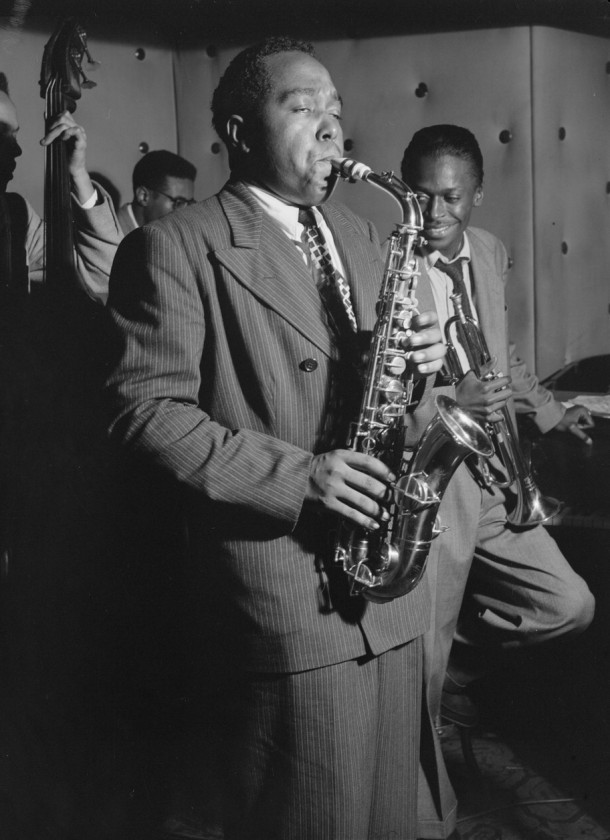
Charlie_Parker,_Tommy_Potter,_Miles_Davis,_Max_Roach

You’ve got to learn your instrument. Then, you practice, practice, practice. And then, when you finally get up there on the bandstand, forget all that and just wail.
~Charlie Parker

I realized by using the high notes of the chords as a melodic line, and by the right harmonic progression, I could play what I heard inside me. That’s when I was born.
~Charlie Parker

All the things you are:

From Wikipedia:

Birth name Charles Parker, Jr.
Also known as Bird, Yardbird,
Zoizeau (in France)
Born August 29, 1920
Kansas City, Kansas, United States
Died March 12, 1955 (aged 34)
New York City, New York, United States
Genres Jazz, bebop
Occupations Saxophonist, Composer
Instruments Alto saxophone, tenor saxophone
Years active 1937–1955
Labels Savoy, Dial, Verve
Associated acts Miles Davis, Max Roach

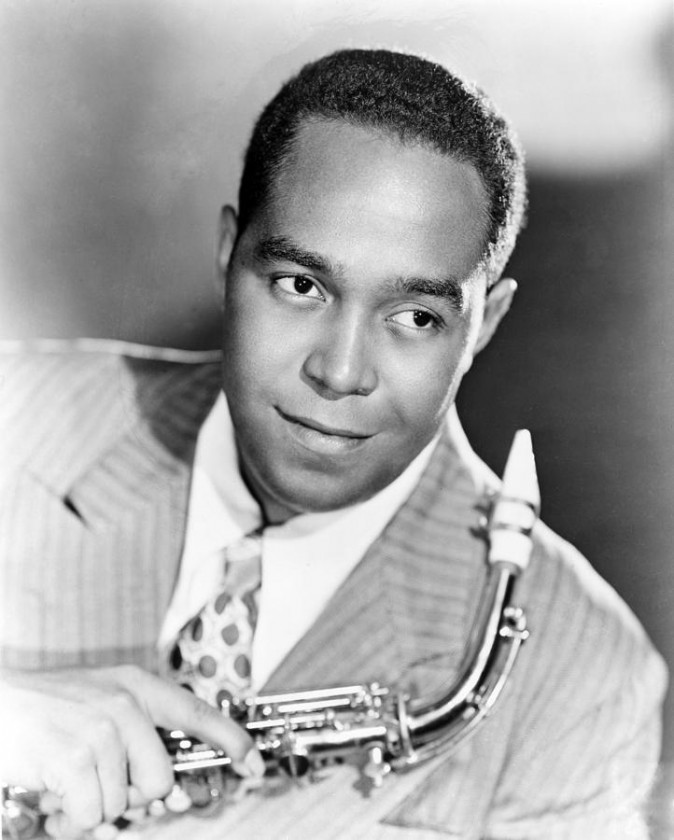
Charles Parker, Jr. (August 29, 1920 – March 12, 1955), also known as Yardbird and Bird,was an American jazz saxophonist and composer.

Parker acquired the nickname “Yardbird” early in his careerand the shortened form, “Bird”, which continued to be used for the rest of his life, inspired the titles of a number of Parker compositions, such as “Yardbird Suite”, “Ornithology”, “Bird Gets the Worm”, and “Bird of Paradise.”

Parker was a highly influential jazz soloist and a leading figure in the development of bebop, a form of jazz characterized by fast tempos, virtuosic technique, and improvisation. Parker introduced revolutionary harmonic ideas, including rapid passing chords, new variants of altered chords, and chord substitutions. His tone ranged from clean and penetrating to sweet and somber. Many Parker recordings demonstrate virtuosic technique and complex melodic lines, sometimes combining jazz with other musical genres, including blues, Latin, and classical.

Parker was an icon for the hipster subculture and later the Beat Generation, personifying the jazz musician as an uncompromising artist and intellectual, rather than an entertainer.

charlie-parker-yardbird

Music is your own experience, your own thoughts, your wisdom. If you don’t live it, it won’t come out of your horn. They teach you there’s a boundary line to music. But, man, there’s no boundary line to art.
~Charlie Parker

From allmusic.com – Scott Yanow:

One of a handful of musicians who can be said to have permanently changed jazz, Charlie Parker was arguably the greatest saxophonist of all time. He could play remarkably fast lines that, if slowed down to half speed, would reveal that every note made sense. “Bird,” along with his contemporaries Dizzy Gillespie and Bud Powell, is considered a founder of bebop; in reality he was an intuitive player who simply was expressing himself. Rather than basing his improvisations closely on the melody as was done in swing, he was a master of chordal improvising, creating new melodies that were based on the structure of a song. In fact, Bird wrote several future standards (such as “Anthropology,” “Ornithology,” “Scrapple from the Apple,” and “Ko Ko,” along with such blues numbers as “Now’s the Time” and “Parker’s Mood”) that “borrowed” and modernized the chord structures of older tunes. Parker’s remarkable technique, fairly original sound, and ability to come up with harmonically advanced phrases that could be both logical and whimsical were highly influential. By 1950, it was impossible to play “modern jazz” with credibility without closely studying Charlie Parker. Read more -> allmusic.com

I’ve Got Rhythm:

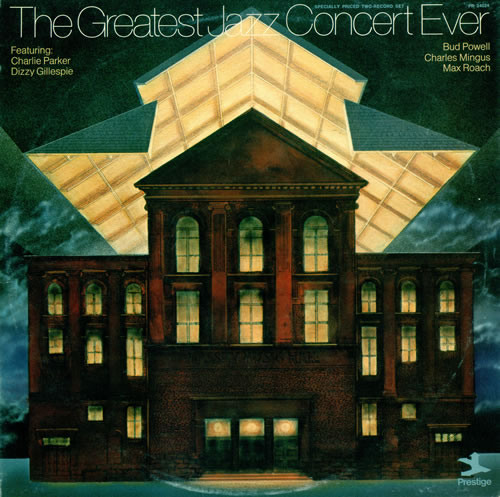
Album of the day – The Greatest Jazz Concert Ever (1953):

Various-Jazz+-+The+Greatest+Jazz+Concert+Ever

Other August-29:

Continue reading Today: The late Charlie Parker was born in 1920 – 93 years ago