A duet is a musical composition for two performers in which the performers have equal importance to the piece. It is often used to describe a composition involving two singers. It differs from a harmony, as the performers take turns performing a solo section rather than performing simultaneously.
Bob Dylan has done a lot of duets, we have collected some of our favourites and will present them in batches of three. This first post has three of his most beautiful duets with some strong female artists.
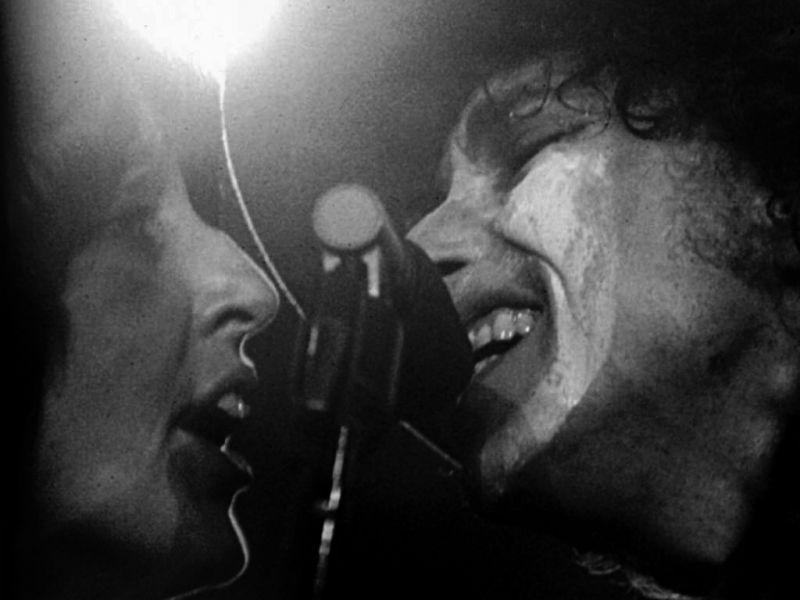
Bob Dylan and Joan Baez – Never Let me Go from the movie, Renaldo and Clara.
Hey! Mr. Tambourine Man, play a song for me
I’m not sleepy and there is no place I’m going to
Hey! Mr. Tambourine Man, play a song for me
In the jingle jangle morning I’ll come followin’ you
Empire
Liverpool, England
27 June 1996
Bob Dylan (vocal, harmonica & guitar)
Bucky Baxter (pedal steel guitar & electric slide guitar)
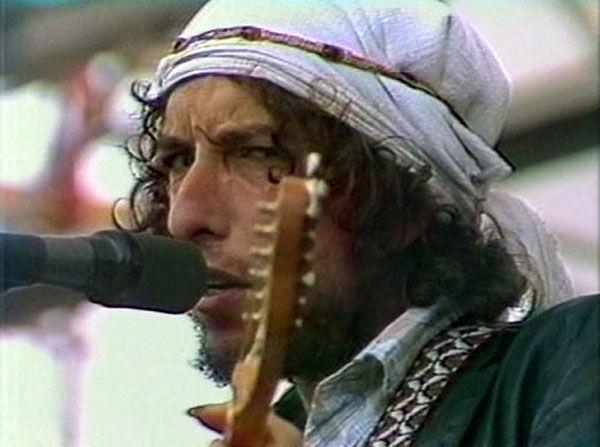
In pouring rain, Dylan plays the open air Hughes Stadium at Colorado State University in Fort Collins. He has elected to film this show to replace the aborted TV special from Clearwater. In the longest set of the tour, there are several highlights, not all appearing in the TV special. … Included in the TV special, although in a most peculiar order, are second encore “A Hard Rain’s a-Gonna Fall,” the entire Dylan/Baez set (“Blowin’ in the Wind,” “Railroad Boy,” “Deportees,” and “I Pity the Poor Immigrant”); three songs from the first set (“Maggie’s Farm,” “One Too Many Mornings,” and “Mozambique”); and three from the last set (two tremendously powerful readings of songs from Blood on the Tracks, “Idiot Wind” and “Shelter from the Storm” and a faded “Knockin’ on Heaven’s Door”). Despite the storm clouds raging, the crowd appears to be very enthusiastic, even singing “Happy Birthday” for Dylan before the second encore.
~Clinton Heylin (Bob Dylan: A Life in Stolen Moments Day by Day 1941-1995)
Hughes Stadium
Colorado State University
Fort Collins, Colorado
23 May 1976
Bob Dylan (guitar & vocal)
Scarlet Rivera (violin)
T-bone J. Henry Burnett (guitar & piano)
Steven Soles (guitar)
Mick Ronson (guitar)
Bobby Neuwirth (guitar & vocal)
Roger McGuinn (guitar & vocal)
David Mansfield (steel guitar, mandolin, violin & dobro)
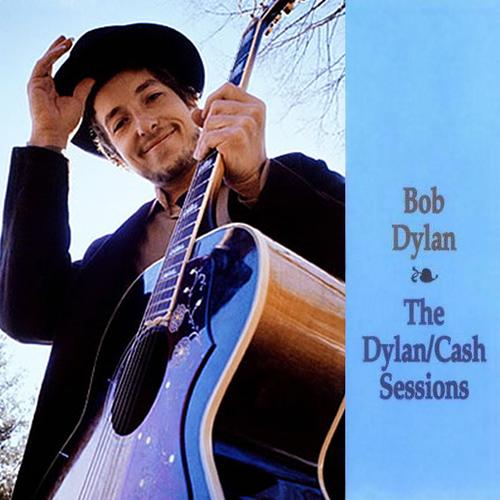
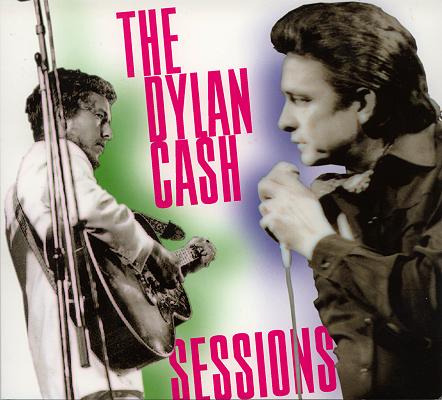
My favourite bootleg from 1969: The Dylan / Cash sessions
[Bob Dylan]…the greatest writer of our times
– Johnny Cash (introducing “Wanted Man” on the album “At San Quentin”)
“I was deeply into folk music in the early 1960s, both the authentic songs from various periods and areas of American life and the new ‘folk revival’ songs of the time, so I took note of Bob Dylan as soon as the Bob Dylan album came out in early ’62 and listened almost constantly to The Freewheelin’ Bob Dylan in ’63. I had a portable record player I’d take along on the road, and I’d put on Freewheelin’ backstage, then go out and do my show, then listen again as soon as I came off.”
– Johnny Cash (Cash, autobiography)
..Johnny was and is the North Star; you could guide your ship by him – the greatest of the greats then and now. I first met him in ‘62 or ‘63 and saw him a lot in those years. Not so much recently, but in some kind of way he was with me more than people I see every day.
– Bob Dylan (Statement on Johnny Cash – Sept 2003)
“Of course, I knew of him before he ever heard of me, In ’55 or ’56. ‘I Walk the Line’ played all summer on the radio, and it was different than anything else you had ever heard. The record sounded like a voice from the middle of the Earth. It was so powerful and moving.”
– Bob Dylan
They recorded together at the CBS studios, Nashville, TN February 17-18, 1969, and it resulted in my favourite Bob Dylan (and Johnny Cash bootleg from 1969), The Dylan / Cash Sessions. It was released in 1994 and re-released in 2004.
2004 re-release
The background story goes something like this:
Johnny Cash wrote the young Bob Dylan a letter, and they began writing back and forth. They met at the 1964 Newport Folk Festival and Cash gave Bob Dylan his guitar (This is a Country Music Tradition and is seen as a gesture of great respect and admiration).
When Bob Dylan was in Nashville recording his ninth studio album, Nashville Skyline, Johnny Cash was recording in the next door studio. Cash joined Dylan at the end of the sessions. On February 17 and 18, 1969, Johnny Cash and Bob Dylan laid down 15 tracks (that we know of). Only one, Girl From the North Country, was included on Nashville Skyline.
This is a bootleg of historic significance and a great recording. It is a document of two giants recording together, and even if it’s a bit loose and “hit and miss”, it is a joy to listen to. It’s a must have.
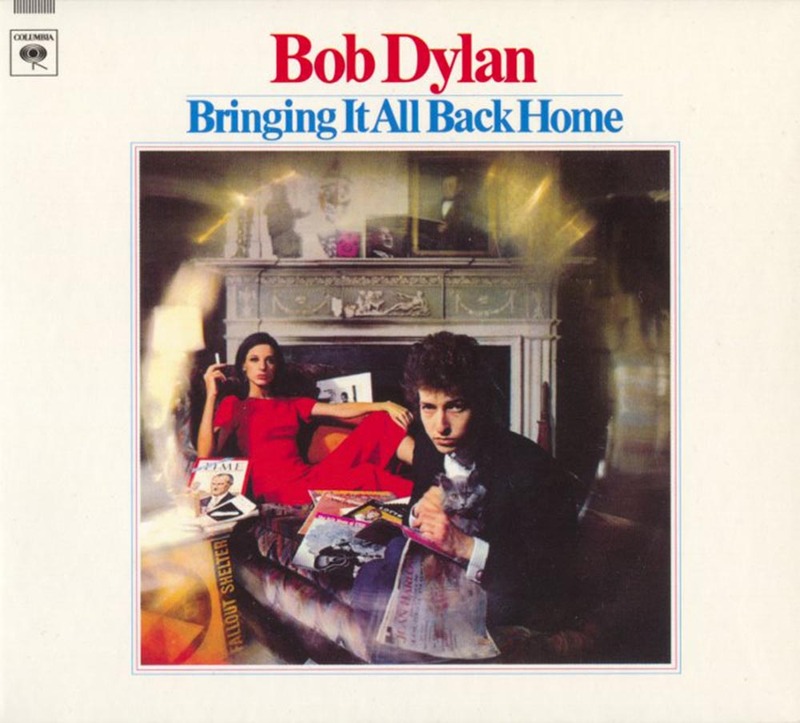
“Maggie’s Farm” is a song written by Bob Dylan, recorded on January 15, 1965, and released on the album Bringing It All Back Home on March 22 of that year. Like many other Dylan songs of the 1965–66 period, “Maggie’s Farm” is based in electric blues. It was released as a single in the United Kingdom on June 4, 1965, and peaked at #22 on the chart.
The biographical context of the song provides only one of many lenses through which to interpret the text. While some may see “Maggie’s Farm” as a repudiation of the protest-song tradition associated with folk music, it can also (ironically) be seen as itself a deeply political protest song.We are told, for example, that the “National Guard” stands around the farm door, and that Maggie’s mother talks of “Man and God and Law.” The “farm” that Dylan sings of can in this case easily represent racism, state oppression and capitalist exploitation.

 )
)