There’s a scream inside everyone of us at every moment. And every one of us has had the experience of listening to a record and feeling that scream take over. Release. Abandon. Let it all out. Rock and Roll for me is about Eros, not Logos, which is paradoxical since my job is putting the experience in words.
~Paul Williams (Author’s note)
One of our favorite authors here at JV is Paul Williams, and…. he did write about other stuff than Bob Dylan.
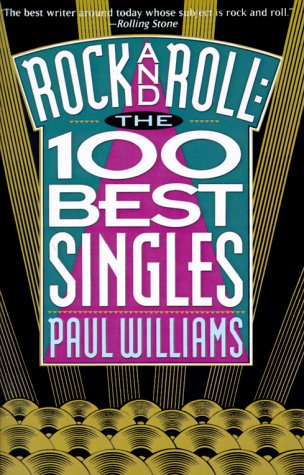
We all love lists, so I’ll try out a new series of posts honoring one of his lesser known books:
..the list is chronological, starting back before the beginning and going through the 50’s and the 60’s and the 70’s and the 80’s, and ending for the sake of convenience in 1991. So #1 is not supposed to be ‘better’ than #100. It just got in the line first.
My criteria are simple: the song has to have been released as a seven-inch 45 rpm single in the United States or Great Britain (Robert Johnson’s 78 rpm ten-inch is the exception that proved the rule), and it has be “rock and roll” according to my subjective evaluation…
~Paul Williams (Author’s note)
“A decisive moment in the history of Western civilisation” – Kenneth Tynan, The Times
“Sgt Pepper is one of the most important steps in our career. It had to be just right. We tried, and I think succeeded in achieving what we set out to do.” – John Lennon
The opening track:
We were fed up with being the Beatles. We really hated that fucking four little mop-top boys approach. We were not boys, we were men. It was all gone, all that boy shit, all that screaming, we didn’t want any more, plus, we’d now got turned on to pot and thought of ourselves as artists rather than just performers. There was now more to it; not only had John and I been writing, George had been writing, we’d been in films, John had written books, so it was natural that we should become artists.
– Paul McCartney
I love Sgt. Pepper and it will always be in my top 5 Beatles album, sometimes at number 5 sometimes at the top spot. It’s a great Beatles album, and it’s one of the best album in Rock history. It is laid out as a concept album, but the idea held for two songs, the coda, and the album’s sleeve design.
The Beatles songs now did not sound practiced or rehearsed, and the reason for this is that they weren’t. They were studio snippets put together in sections and pieces. I think that’s the reason that the outtakes from the Sgt. Pepper sessions are so uninspiring, so unfinished. There are several bootlegs with alternative versions, and for Beatles-nerds they are of course something to seek out. That said, I think the best Sgt.Pepper outtakes are presented on Anthology 2, and, yes, they are put together in the same way as the original album, each song constructed from different takes and sound bites.
I’m guessing it would be a difficult record to play live.
I believe that this album represent a shift in popular music, we look at pop/rock music before and after Sgt. Pepper. Almost everything on the album was new. And it still sounds new and fresh.
Happy birthday, Sgt. Pepper!
The Making of Sgt. Pepper documentary made for the 25 year anniversary :
Sgt. Pepper’s Lonely Hearts Club Band (often shortened to Sgt. Pepper) is the eighth studio album by The Beatles, released on 1 June 1967 on the Parlophone label and produced by George Martin. The album is widely regarded as one of the greatest of all time, and has since been recognised as one of the most important albums in the history of popular music, including songs such as “Lucy in the Sky with Diamonds” and “A Day in the Life”. Recorded over a 129-day period beginning in December 1966, Sgt. Pepper saw the band developing the production techniques of their previous album, Revolver. Martin’s innovative and lavish production included the orchestra usage and hired musicians ordered by the band. Genres such as music hall, rock and roll, pop rock, and traditional Indian music are covered. The album cover art, by English pop artist Peter Blake, depicts the band posing in front of a collage of their favourite celebrities, and has been widely acclaimed and imitated. (Wikipedia)
“The album was always going to have Sgt Pepper at the beginning; and if you listen to the first two tracks, you can hear it was going to be a show album. It was Sgt Pepper and his Lonely Hearts Club Band with all these other acts, and it was going to run like a rock opera.” – Ringo Starr, Anthology
Fun fact: Jimi Hendrix performed the title track at the Roundhouse, London, three days after the album was released. In the audience that night were Paul McCartney and George Harrison. Hendrix also performed the song at the Isle Of Wight Festival in 1970.
Legacy
In 1987 Rolling Stone named Sgt. Pepper the best album of the last twenty years (1967–1987).
In 1997 Sgt. Pepper was named the number one greatest album of all time in a “Music of the Millennium” poll conducted by HMV, Channel 4, The Guardian and Classic FM.
In 1998 Q magazine readers placed it at number seven
in 2003 the TV network VH1 placed it at number 10.
In 2003, the album was ranked number 1 on Rolling Stone magazine’s list of the 500 greatest albums of all time.
In 2006, the album was chosen by Time magazine as one of the 100 best albums of all time.
In 2002, Q magazine placed it at number 13 in its list of the 100 Greatest British Albums Ever.
The album was named as one of Classic Rock magazine’s “50 Albums That Built Prog Rock”.
In 2003, it was one of 50 recordings chosen by the Library of Congress to be added to the National Recording Registry.
The best song from the album: “A Day In Life”:
A Day in the Life – that was something. I dug it. It was a good piece of work between Paul and me. I had the ‘I read the news today’ bit, and it turned Paul on. Now and then we really turn each other on with a bit of song, and he just said ‘yeah’ – bang bang, like that. It just sort of happened beautifully, and we arranged it and rehearsed it, which we don’t often do, the afternoon before. So we all knew what we were playing, we all got into it. It was a real groove, the whole scene on that one. Paul sang half of it and I sang half. I needed a middle-eight for it, but Paul already had one there.
– John Lennon
“As we got up to Sgt Pepper, George Martin had really become an integral part of it all. We were putting in strings, brass, pianos, etc, and George was the only one who could write it all down. He was also brilliant. One of them would mention: ‘Oh, I’d like the violin to go “de de diddle”,’ or whatever, and George would catch it and put it down. He became part of the band. “ – Ringo (Anthology)
Well, I usually… I usually try to put in songs which are different in their own context, either structurally or melodically or uh lyrically, that uh, don’t… so it’s not all the same type of material, I try to fill in a larger picture. I don’t know what the total effect of it is. Umm… How do I go about selecting the material? Well, there’s material that I WANT to play, there’s material that I feel I HAVE to play, and, uh, I try to get the material that I feel I have to play into the frame of mind where I want to play the material that I have to play. The rest of it is just stuff I want to play.
~Bob Dylan (Melbourne – 21 Feb 1986)
True Confession Tour:
Start date
February 5, 1986
End date
August 6, 1986
Legs
3
Shows
15 in Oceania
4 in Asia
41 in North America
60 in Total
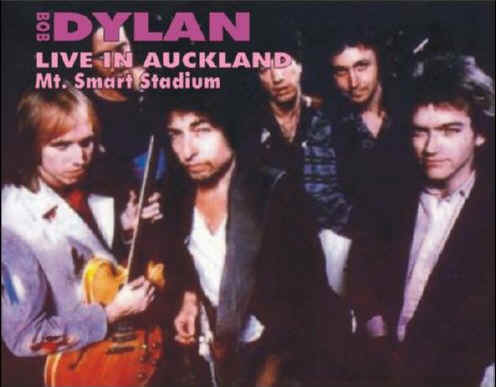
The tour started with two concerts in New Zealand and thirteen concerts in Australia before four concerts in Japan. Both Dylan and Petty took a break after this tour before returning to the road in June to perform a forty-one date tour of the United States and Canada. During the tour the pair performed two concerts at the RFK Stadium in Washington, DC, three concerts at the legendary Madison Square Garden in New York City and two concerts at The Spectrum in Philadelphia. The tour came to a close on August 6 in Paso Robles, California. The pair would tour together the following year on the Temples in Flames Tour.
~Wikipedia
Intro.
Rehearsals (w/Tom Petty & The Heartbreakers) took place in December 1985.
Before they flew over to New Zealand.. Dylan gave a couple of interviews.. Here is one:
January 1986
George Negus interview for “60 Minutes”, Malibu, California:
Oh no, no, I can’t do that, because my songs speak for that. I usually say everything I have to say through the songs. I mean it would be pointless for me to go out and say how I feel about this and how I feel about that. I could never articulate this well.
~Bob Dylan (to George Negus – Jan 1986)
I think that feeling is a lot more important than technique. It’s all very well doing a triple paradiddle – but who’s going to know you’ve done it? If you play technically you sound like everybody else. It’s being original that counts. – John Bonham
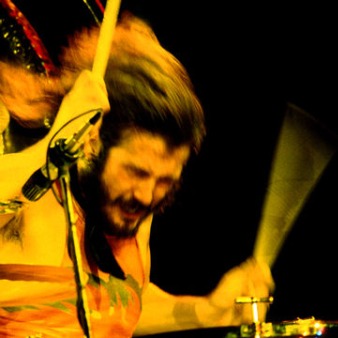
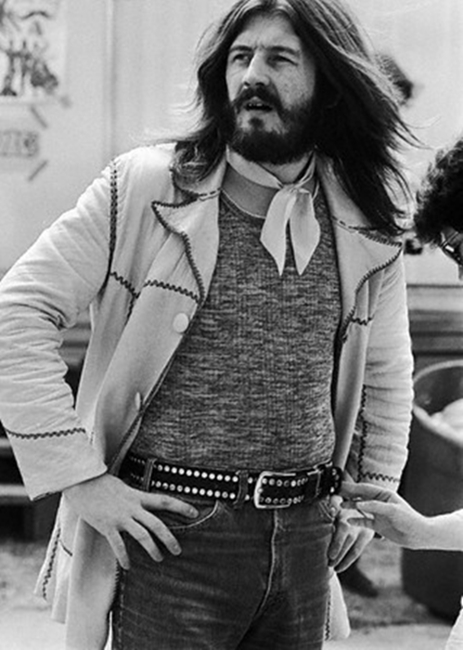
John Henry Bonham (31 May 1948 – 25 September 1980) was an English musician and songwriter, best known as the drummer of Led Zeppelin. Bonham was esteemed for his speed, power, fast right foot, distinctive sound, and “feel” for the groove.
Led Zeppelin – Full concert Live at the Royal Albert Hall in 1970:
“Bonzo had very broad listening tastes. When we weren’t listening to James Brown or Otis Redding, he might be listening to Joni Mitchell or Crosby Stills Nash & Young. Bonzo was a great lover of songs.”– John Paul Jones
He is widely considered to be one of the greatest drummers in the history of rock music by many drummers, other musicians, and commentators in the industry. Over 30 years after his death, Bonham continues to garner awards and praise, including a Rolling Stone readers’ pick in 2011 placing him in first place of the magazine’s “best drummers of all time”.
Led Zeppelin – Kashmir – Earl’s Court 1975:
Awards and accolades
While Bonham is widely considered to be one of the greatest and most influential rock drummers by other musicians and commentators in the industry, he continues to receive the greatest acclaim from fans, and several opinion polls and critic lists continue to list him in first place before any other drummer in rock history.
In 2007, Stylus magazine rated Bonham number 1 on its list of the 50 greatest rock drummers,
as did the online music magazine Gigwise.com in 2008,
Rolling Stone reader’s poll where he “led the list by a significant margin” in 2011.
Bonham was ranked at no. 1 on Classic Rock’s 2005 list of “50 Greatest Drummers in Rock”,
Modern Drummer magazine describes him as “the greatest rock ‘n’ roll drummer in history.”
In September 2008, Bonham topped the Blabbermouth.net’s list of “Rockers fans want brought back to life”, ahead of Elvis Presley and Freddie Mercury.
Rhythm magazine voted him the greatest drummer ever, topping their reader’s poll to determine the “50 greatest drummers of all time” for its October 2009 issue.
At the end of the BBC Two series I’m in a Rock ‘n’ Roll Band! on 5 June 2010, John Bonham was named the best drummer of all time.
John Bonham has been described by Allmusic as one of the most important, well-known and influential drummers in rock. Adam Budofsky, managing editor of Modern Drummer magazine, writes “If the king of rock ‘n’ roll was Elvis Presley, then the king of rock drumming was certainly John Bonham.”
Moby Dick – great video w/focus on Bonham (the whole 30 minutes with a long drum solo) 24 May 1975:
Led Zeppelin is not available @ Spotify, so let’s roll another video..
Whole lotta love:
“Bob’s bad stuff is better than other musicians’ best”
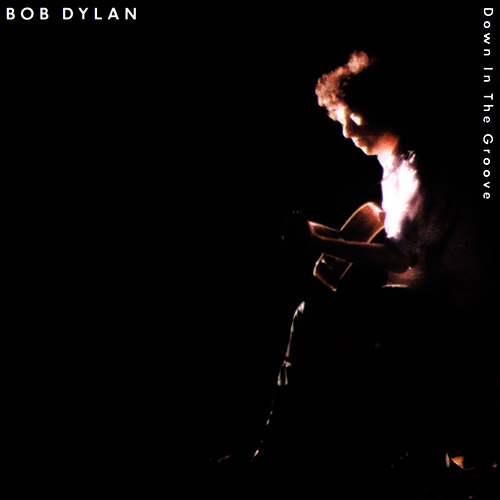
Down in the Groove is singer-songwriter Bob Dylan‘s 25th studio album, released by Columbia Records 30 May 1988. Egil here at Johannasvisions rate it as maybe Dylan’s lowest point. Me? I’m not so sure anymore…
It got pretty terrible reviews upon it’s release. Many reviewers compared it to his previous album, Knocked Out Loaded, and not in a favourable way.
Wikipedia:
“A highly collaborative effort, it was Dylan’s second consecutive album to receive almost unanimous negative reviews. Released during a period when his recording career was experiencing a slump, sales were disappointing, reaching only #61 in the US and #32 in the UK.”
How is it in hindsight? Was it unfairly slated? I think it’s better than reported and as usual Dylan’s standards were expected to be higher than anybody else’s. We cannot expect a masterpiece every time. Can we?
The album was delayed for more than six months and the track listing changed at least three times. The tracks that made the final album come from many different recording sessions spread out over a long time (six years?).
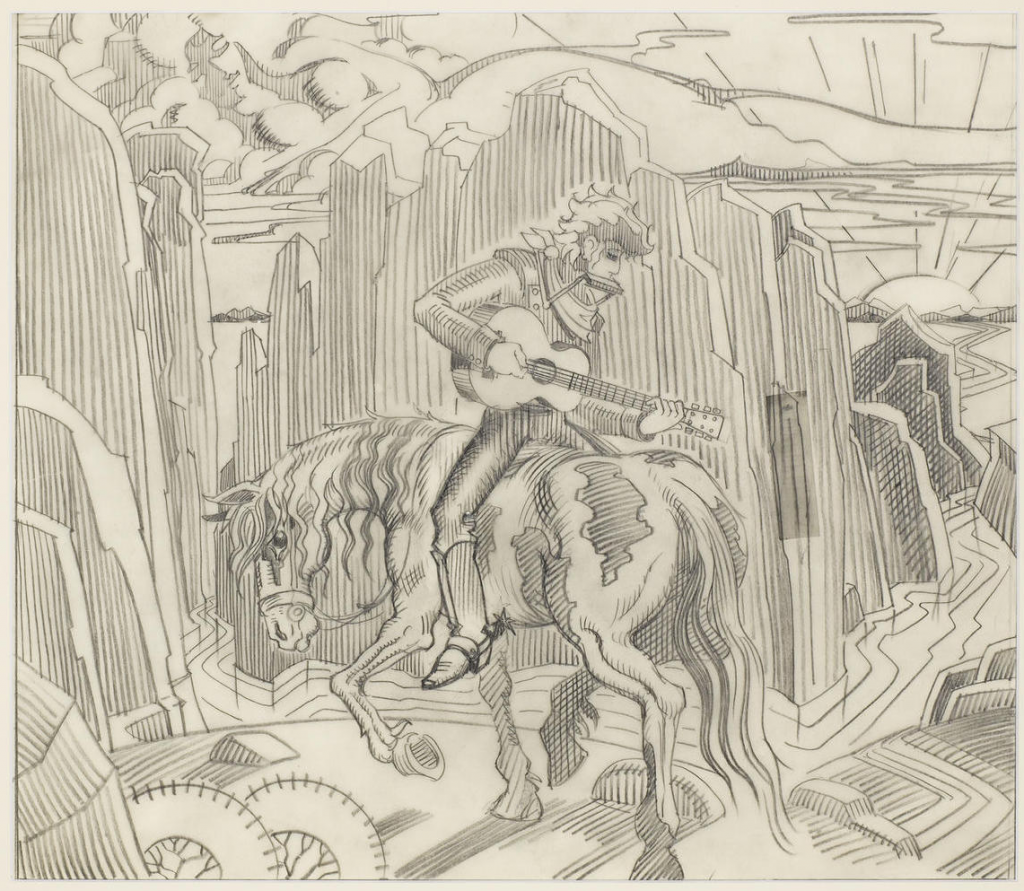
Rick Griffin was asked by Dylan’s management to come up with a cover design for what was to be the ‘Down In The Groove’ album. Rick produced many designs and, apparently, became somewhat exasperated as his ideas were rejected and changed. This seems to have reflected the overall situation surrounding the album at the time (bonhams)
I’ve always thought of it as a strangely confusing album, but it gets less confusing with each listen session. It has some very good cover songs. Let’s Stick together opens the record in an energetic way, I would love to hear it live!
The comes the song I think is not very good at all, the cover When did you leave heaven. Very eighties drum sound, strange production, it just sounds a bit off, I don’t think the song suits Dylan, and it ends kind of funny.
Sally Sue Brown, the third track is another rockn’roll/soul standard that gets a good run through. I prefer Arthur Alexanders classic, but it is not bad at all.
The last three songs on the album are also cover songs (Ninety Miles an Hour (Down a dead end street), Shenandoah and Rank Strangers To Me, and they are all quite good actually.
I like Rank Strangers To Me best (the closing track). Dylan sings beautifully.
Let’s also include a fine live version from Wembley 1997: