Gene Clark (1944-1991) was one of the founding members of the legendary The Byrds, and this is what he is known for among the majority. This is too bad…In 1974 he made a solo album “No Other”. It was released on David Geffen’s Asylum Records. Apparently, after spending more than 100 000 $ to record the album (with an all-star cast of musicians, singers, and Thomas Jeffereson Kaye at the helm producing), the album was named “uncommercial” , it was considered the “Heavens Gate” of records.
When it finally came out it was not appreciated by his contemporaries and sold very poorly. Before 1976 it was out of distribution.
Today, most critics will agree that this is a so-called “Lost Masterpiece” or “Burried Treasure”. They are certainly right about that.
I had heard and read about the album for nearly 20 years, before I finally bought it after having heard it in passing in a local record store.
“I remember playing shows [with Tom Petty & the Heartbreakers in the ‘80s] and looking out
[thinking] I didn’t have that many fans coming to see me,” he says. “They were coming to see
Tom Petty & the Heartbreakers.”
~Bob Dylan (to Robert Hilburn, December 1997)
“Well I won’t back down
No I won’t back down
You can stand me up at the gates of hell
But I won’t back down”
~Tom Petty (I won’t back down)
I Won’t Back Down:
From Wikipedia:
Birth name
Thomas Earl Petty
Also known as
Charlie T. Wilbury, Jr
Muddy Wilbury
Born
October 20, 1950 (age 62)
Origin
Gainesville, Florida, U.S.
Genres
Rock and roll, roots rock, heartland rock, southern rock, blues rock, psychedelic rock, country
Shelter, Backstreet, MCA, Warner Bros.,American, Reprise
Associated acts
Epics, Mudcrutch, Tom Petty and the Heartbreakers, Traveling Wilburys, Stevie Nicks,Bob Dylan, Jeff Lynne, Grateful Dead, Roy Orbison, Bonnie Raitt, Dwight Twilley
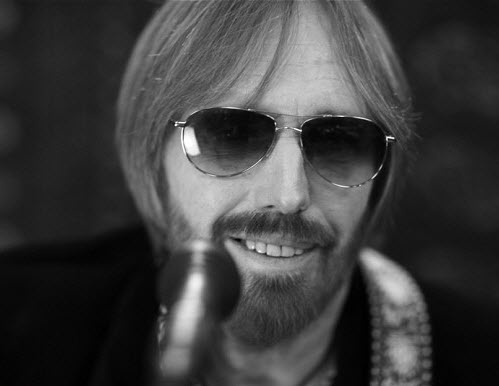
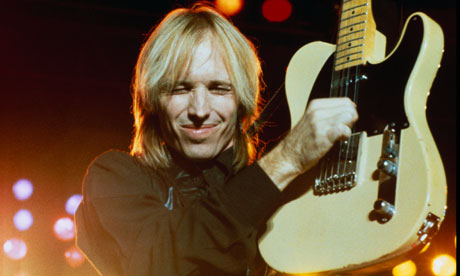
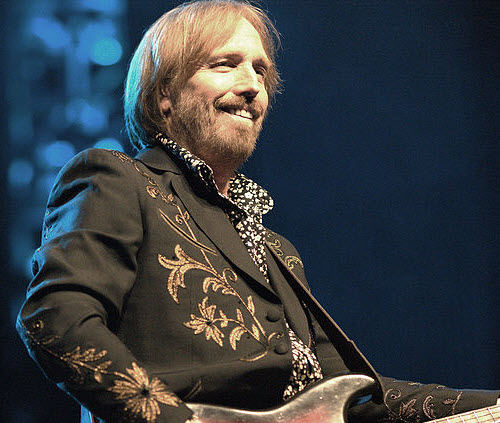
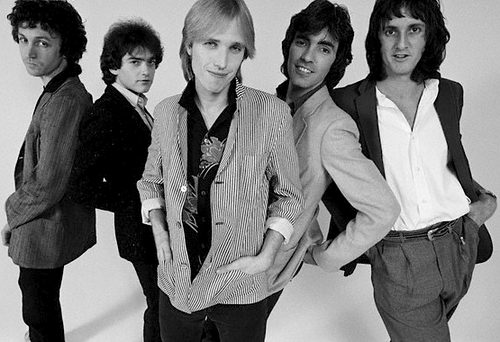
Thomas Earl “Tom” Petty (born October 20, 1950) is an American singer-songwriter and multi-instrumentalist. He is the frontman of Tom Petty and the Heartbreakers and was a founding member of the late 1980s supergroup Traveling Wilburys and Mudcrutch. He has also performed under the pseudonyms of Charlie T. Wilbury, Jr. and Muddy Wilbury.
He has recorded a number of hit singles with the Heartbreakers and as a solo artist, many of which remain heavily played on adult contemporary and classic rock radio. His music, and notably his hits, have become popular among younger generations as he continues to host sold-out shows.Throughout his career, Petty and his collaborators have sold 60 million albums.In 2002, he was inducted into the Rock and Roll Hall of Fame.
From allmusic.com – Stephen Thomas Erlewine:
Upon the release of their first album in the late ’70s, Tom Petty & the Heartbreakers were shoehorned into the punk/new wave movement by some observers who picked up on the tough, vibrant energy of the group’s blend of Byrds riffs and Stonesy swagger. In a way, the categorization made sense. Compared to the heavy metal and art rock that dominated mid-’70s guitar rock, the Heartbreakers’ bracing return to roots was nearly as unexpected as the crashing chords of the Clash. As time progressed, it became clear that the band didn’t break from tradition like their punk contemporaries. Instead, they celebrated it, culling the best parts of the British Invasion, American garage rock, and Dylanesque singer/songwriters to create a distinctively American hybrid that recalled the past without being indebted to it.
The Heartbreakers were a tight, muscular, and versatile backing band that provided the proper support for Petty’s songs, which cataloged a series of middle-class losers and dreamers. While his slurred, nasal voice may have recalled Dylan and Roger McGuinn, Petty’s songwriting was lean and direct, recalling the simple, unadorned style of Neil Young. Throughout his career, Petty & the Heartbreakers never departed from their signature rootsy sound … ..read more over @ allmusic.com
Refugee (Live at @ Farm Aid 1985):
Great version of Dylan’s “License To Kill”:
Awards and accolades
In 1994, You Got Lucky, a Tom Petty tribute album featuring such bands as Everclear and Silkworm was released.
In April 1996, Petty received the UCLA’s George Gershwin and Ira Gershwin Award for Lifetime Musical Achievement.
The next month, Petty won the American Society of Composers, Authors and Publishers’ Golden Note Award.
In 1999 Tom Petty & the Heartbreakers received a star on the Hollywood Walk of Fame for their contribution to the recording industry.
In 2002, Tom Petty and the Heartbreakers were inducted into the Rock and Roll Hall of Fame.
On December 6, 2005, Petty received the Billboard Century Award for his lifetime achievements.
The same year, Conversations with Tom Petty, an oral history/biography composed of interviews conducted in 2004 and 2005 with Petty by music journalistPaul Zollo was published (ISBN 1-84449-815-8).
On September 21, 2006, Tom Petty and the Heartbreakers received the keys to the city of Gainesville, Florida, where he and his bandmates either lived or grew up.
From July 2006 until 2007 the Rock and Roll Hall of Fame in Cleveland, Ohio featured an exhibit of Tom Petty items. Much of the content was donated by Petty himself during a visit to his home by some of the Hall’s curatorial staff.
Peter Bogdanovich’s documentary film on Petty’s career entitled Runnin’ Down A Dream (film) premiered at the New York Film Festival on October 14, 2007.
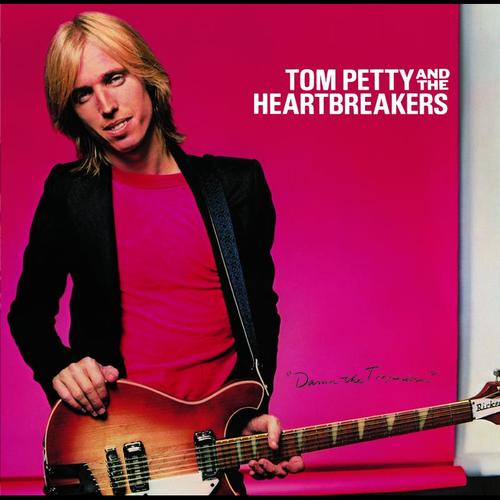
Album of the day – “Damn The Torpedos” (1979)
From allmusic (Stephen Thomas Erlewine):
Not long after You’re Gonna Get It, Tom Petty & the Heartbreakers’ label, Shelter, was sold to MCA Records. Petty struggled to free himself from the major label, eventually sending himself into bankruptcy. He settled with MCA and set to work on his third album, digging out some old Mudcrutch numbers and quickly writing new songs. Amazingly, through all the frustration and anguish, Petty & the Heartbreakers delivered their breakthrough and arguably their masterpiece with Damn the Torpedoes. Musically, it follows through on the promise of their first two albums, offering a tough, streamlined fusion of the Stones and Byrds that, thanks to Jimmy Iovine’s clean production, sounded utterly modern yet timeless. It helped that the Heartbreakers had turned into a tighter, muscular outfit, reminiscent of, well, the Stones in their prime — all of the parts combine into a powerful, distinctive sound capable of all sorts of subtle variations. Their musical suppleness helps bring out the soul in Petty’s impressive set of songs. He had written a few classics before — “American Girl,” “Listen to Her Heart” — but here his songwriting truly blossoms. Most of the songs have a deep melancholy undercurrent — the tough “Here Comes My Girl” and “Even the Losers” have tender hearts; the infectious “Don’t Do Me Like That” masks a painful relationship; “Refugee” is a scornful, blistering rocker; “Louisiana Rain” is a tear-jerking ballad. Yet there are purpose and passion behind the performances that makes Damn the Torpedoes an invigorating listen all the same. Few mainstream rock albums of the late ’70s and early ’80s were quite as strong as this, and it still stands as one of the great records of the album rock era. …read more over @ allmusic
OLD post … You’re being redirected to a newer version……
“Roll over, Beethoven, and tell Tchaikovsky the news.”
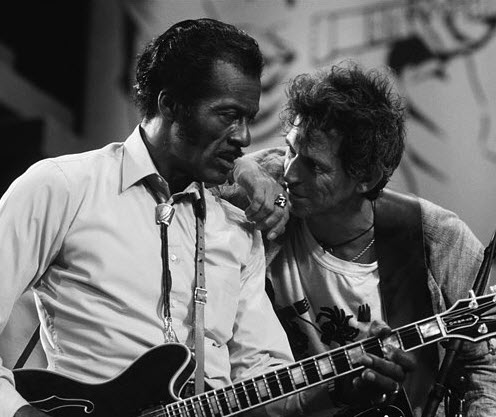
Keith Richards Inducts Chuck Berry into the Rock and Roll Hall of Fame (1986):
“Chuck was my man. He was the one who made me say ‘I want to play guitar, Jesus Christ!’…Suddenly I knew what I wanted to do.”
~Keith Richards (1992)
“..if you tried to give rock and roll another name, you might call it ‘Chuck Berry’.”
~John Lennon
“Well, now, Chuck Berry was a rock & roll songwriter. So I never tried to write rock &
roll songs, ‘cause I figured he had just done it.”
~Bob Dylan (to Kurt Loder October 1987)
From Wikipedia:
Birth name
Charles Edward Anderson Berry
Born
October 18, 1926 (age 86)
St. Louis, Missouri, U.S.
Genres
Rock and roll, blues,rhythm and blues
Occupations
Musician, songwriter
Instruments
Guitar, vocals
Years active
1955–present
Labels
Chess, Mercury, Atco
Website
www.chuckberry.com
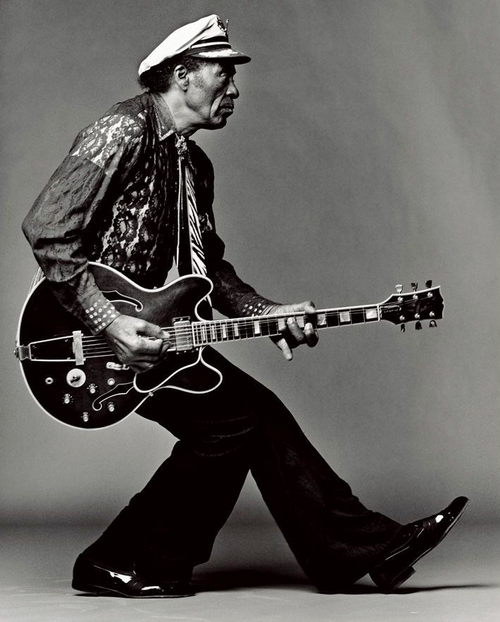
Charles Edward Anderson “Chuck” Berry (born October 18, 1926) is an American guitarist, singer and songwriter, and one of the pioneers of rock and roll music. With songs such as “Maybellene” (1955), “Roll Over Beethoven” (1956), “Rock and Roll Music” (1957) and “Johnny B. Goode” (1958), Chuck Berry refined and developed rhythm and blues into the major elements that made rock and roll distinctive, with lyrics focusing on teen life and consumerism and utilizing guitar solos and showmanship that would be a major influence on subsequent rock music.
From allmusic – Cub Koda:
Of all the early breakthrough rock & roll artists, none is more important to the development of the music than Chuck Berry. He is its greatest songwriter, the main shaper of its instrumental voice, one of its greatest guitarists, and one of its greatest performers. Quite simply, without him there would be no Beatles, Rolling Stones, Beach Boys, Bob Dylan, nor a myriad others. There would be no standard “Chuck Berry guitar intro,” the instrument’s clarion call to get the joint rockin’ in any setting. The clippety-clop rhythms of rockabilly would not have been mainstreamed into the now standard 4/4 rock & roll beat. There would be no obsessive wordplay by modern-day tunesmiths; in fact, the whole history (and artistic level) of rock & roll songwriting would have been much poorer without him.
“he wrote all of the great songs and came up with all the rock & roll beats.”
~Brian Wilson
Those who do not claim him as a seminal influence or profess a liking for his music and showmanship show their ignorance of rock’s development as well as his place as the music’s first great creator. Elvis may have fueled rock & roll’s imagery, but Chuck Berry was its heartbeat and original mindset. ….read more over @ allmusic.com
Johnny B Goode:
While no individual can be said to have invented rock and roll, Chuck Berry comes the closest of any single figure to being the one who put all the essential pieces together. It was his particular genius to graft country & western guitar licks onto a rhythm & blues chassis in his very first single, “Maybellene.”
-Rock and Roll Hall of Fame
Legacy:
Grammy Lifetime Achievement Award in 1984
Berry was among the first musicians to be inducted into the Rock and Roll Hall of Fame on its opening in 1986, with the comment that he “laid the groundwork for not only a rock and roll sound but a rock and roll stance.”
The Kennedy Center Honors in 2000
being named seventh on Time magazine’s 2009 list of the 10 best electric guitar players of all-time
On May 14, 2002, Chuck Berry was honored as one of the first BMI Icons at the 50th annual BMI Pop Awards. He was presented the award along with BMI affiliates Bo Diddley and Little Richard.
Berry is included in several Rolling Stone “Greatest of All Time” lists. In September 2003, the magazine named him number 6 in their list of the “100 Greatest Guitarists of All Time”.
This was followed in November of the same year by his compilation album The Great Twenty-Eight being ranked 21st in the Rolling Stone’s 500 Greatest Albums of All Time.
The following year, in March 2004, Berry was ranked fifth out of “The Immortals – The 100 Greatest Artists of All Time”.
In December 2004, six of his songs were included in the “Rolling Stone’s 500 Greatest Songs of All Time”, namely “Johnny B. Goode” (#7), “Maybellene” (#18), “Roll Over Beethoven” (#97), “Rock and Roll Music” (#128), “Sweet Little Sixteen” (#272) and “Brown Eyed Handsome Man” (#374).
In June 2008, his song “Johnny B. Goode” ranked first place in the “100 Greatest Guitar Songs of All Time”.
Berry’s recording of “Johnny B. Goode” was included on the Voyager Golden Record, attached to the Voyager spacecraft as representing rock and roll, one of four American songs included among many cultural achievements of humanity.
Berry was honored alongside Leonard Cohen as the recipients of the first annual Pen Awards for songwriting excellence at the JFK Presidential Library, Boston, Mass. on February 26, 2012
Today, at the age of 86, Berry continues to play live.
Album of the day – The Ultimate Chuck Berry (2007)
“I volunteered for the Army on my birthday They draft the white trash , ´round here anyway I done two tours of duty in Vietnam And I came home with a brand new plan…”
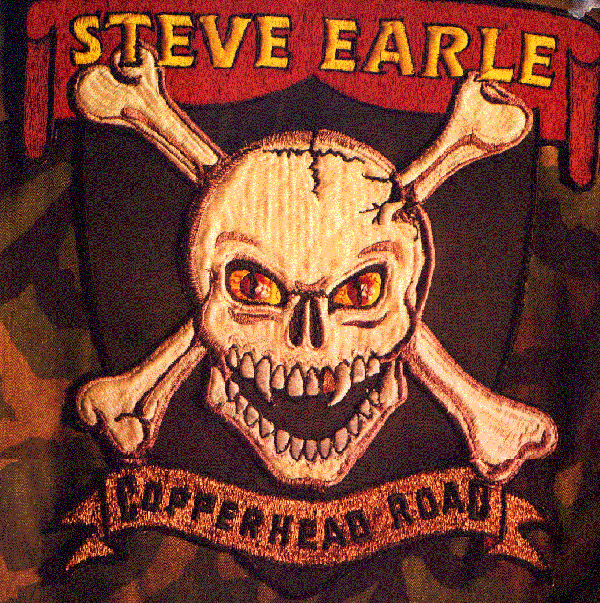
“”This record is definitely going to keep me off the Grand Ole Opry. I think we’ve made a real rock ‘n roll album. People that only know me from Guitar Town might be freaked out a bit, although anyone who also followed Exit O and the live thing won’t be taken aback at all. Sonically, the rhythm section’s a lot tougher.” – Steve Earle (to Spectator)
Copperhead Road is an American alternative country/country rock album released in 1988 by Steve Earle. Often referred to as Earle’s first “rock record”, Earle himself calls it the world’s first blend ofheavy metal and bluegrass, while in their January 26, 1989 review of the album Rolling Stone suggested the style be known as “power twang”. (read more at Wikipedia)
Released
October 17, 1988
April 29, 2008 (Deluxe)
Genre
Heartland rock, Alt-Country, Country rock, Americana
Length
43:36
Label
Uni Records (USA/Canada)
MCA
Producer
Steve Earle, Tony Brown
Official video for the song Copperhead Road
The songs on the album are a mix of personal/love songs and political/story-songs. The title track is about a road used for drug/alcohol traffic through generations, the song “Snake Oil” compares then president Ronald Reagan to a traveling con man. The title track and “Johnny Come Lately” ( with The Pogues) both describe the experiences of returning veterans.
Steve Earle and Pogues recording Johnny Come Lately:
Baby, please don’t go
Baby, please don’t go
Baby, please don’t go
Down to New Orleans
You know I love you so
Baby, please don’t go
From Wikipedia
Birth name
Joseph Lee Williams
Born
October 16, 1903
Crawford, Mississippi, United States
Died
December 17, 1982 (aged 79)
Macon, Mississippi, United States
Genres
Delta blues
Occupations
Musician, songwriter
Instruments
Vocals, guitar
Labels
Bluebird, Delmark, Okeh, Prestige, Vocalion Records
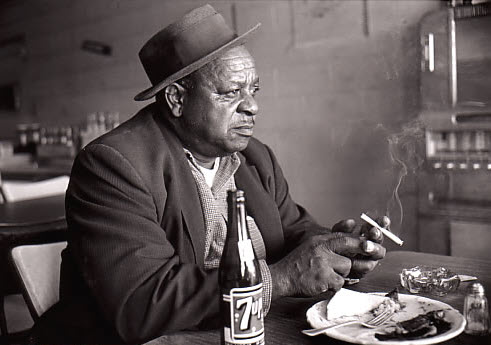
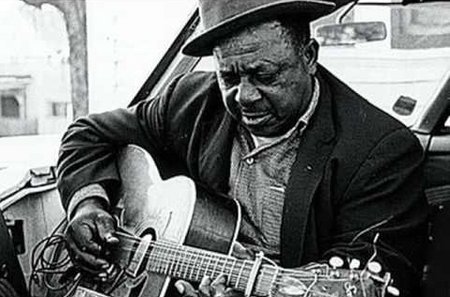
Joseph Lee Williams (October 16, 1903 – December 17, 1982),billed throughout his career as Big Joe Williams, was an American Delta blues guitarist, singer and songwriter, notable for the distinctive sound of his nine-string guitar. Performing over four decades, he recorded such songs as “Baby Please Don’t Go”, “Crawlin’ King Snake” and “Peach Orchard Mama” for a variety of record labels, including Bluebird, Delmark, Okeh, Prestige and Vocalion.Williams was inducted into the Blues Hall of Fame on October 4, 1992.
Blues historian Barry Lee Pearson (Sounds Good to Me: The Bluesman’s Story, Virginia Piedmont Blues) attempted to document the gritty intensity of the Williams persona in this description:
“When I saw him playing at Mike Bloomfield’s “blues night” at the Fickle Pickle, Williams was playing an electric nine-string guitar through a small ramshackle amp with a pie plate nailed to it and a beer can dangling against that. When he played, everything rattled but Big Joe himself. The total effect of this incredible apparatus produced the most buzzing, sizzling, African-sounding music I have ever heard”.
From allmusic.com – Barry Lee Pearson
Big Joe Williams may have been the most cantankerous human being who ever walked the earth with guitar in hand. At the same time, he was an incredible blues musician: a gifted songwriter, a powerhouse vocalist, and an exceptionally idiosyncratic guitarist. Despite his deserved reputation as a fighter (documented in Michael Bloomfield‘s bizarre booklet Me and Big Joe), artists who knew him well treated him as a respected elder statesman. Even so, they may not have chosen to play with him, because — as with other older Delta artists — if you played with him you played by his rules.
….read more over @ allmusic.com
–
Here are 2 great videos from youtube with BJW playing live:
Album of the day – The Very Best Of Big Joe Williams