“It in no way denies the horrible things that happened in the South during the civil rights struggle, … The KKK and church bombings – all of those things did happen, but at the same time there were people like my father making Aretha Franklin records, these southern white boys who made their living playing on some of the best soul records ever made.”
~Patterson Hood
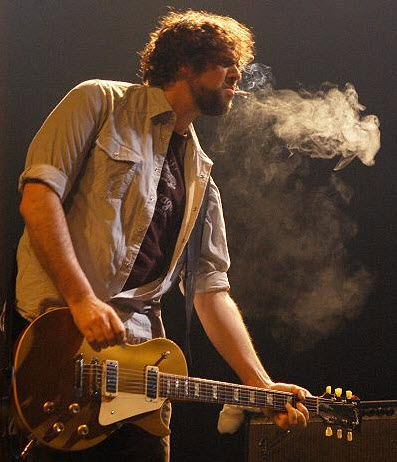
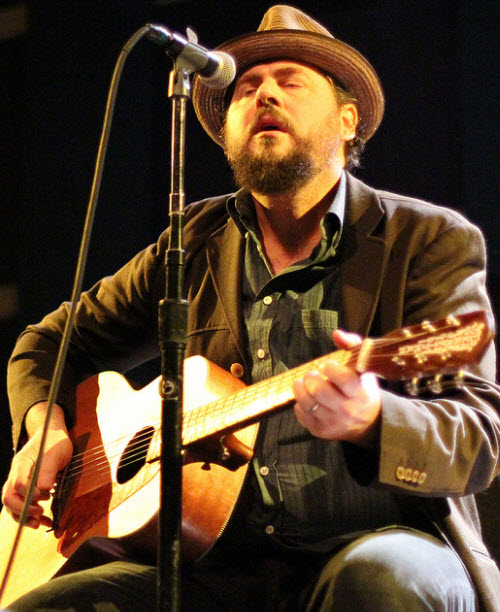
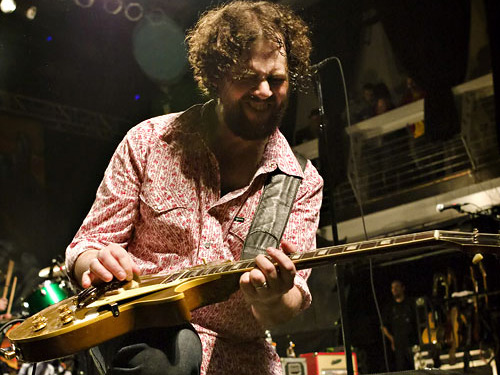
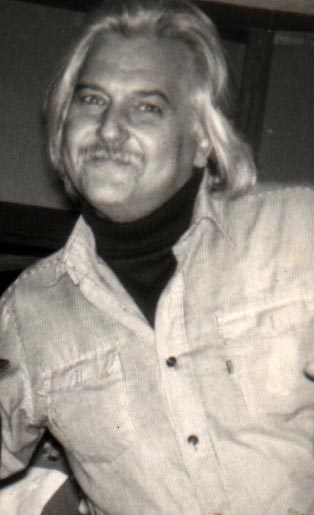
American musician and singer/songwriter, plays Guitar, Banjo, Mandolin, Piano and works as producer and mixing engineer, born March 24, 1964. He is best known as leader of the Drive-By Truckers.
His father is David Hood, longtime bassist of the Muscle Shoals Rhythm Section.
One of last years best songs from no.3 album on JV’s “The 25 best albums of 2012” is “Come back little Star”.
“Come Back Little Star” (Live at WFUV):
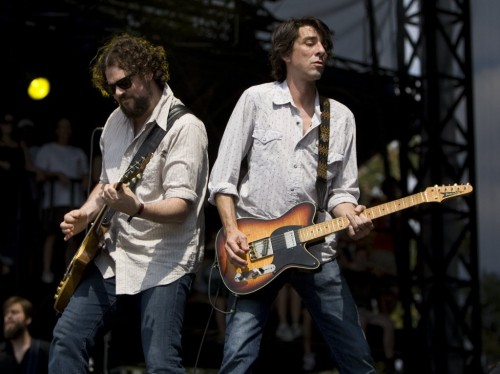
Mike Cooley & Patterson Hood formed the Drive-By Truckers in 1996, following a mutual relocation to Athens, GA. Drawing equal influence from country and rock & roll, the Drive-By Truckers released their first album, Gangstabilly, in 1998. However, it was with their ambitious double-disc set, 2001’s Southern Rock Opera, that garnered the Truckers their first dose of nationwide critical acclaim. Southern Rock Opera’s success as an independent release helped earn the a band a contract with Lost Highway Records, which soon reissued the album on a wider scale. After the label had a falling out with the DBTs over their somber follow-up, Decoration Day, the group bought the album back from Lost Highway and, instead, partnered with the independent label New West Records. Decoration Day was then released to rave reviews in 2003. Mark Deming (allmusic.com)
One of the best songs from DBT’s brilliant “Southern Rock Opera”:
Another song from his great solo album from 2012: “Heat Lightning Rumbles in the Distance ”
Leaving Time:
Album of the day:
Heat Lightning Rumbles in the Distance (2012)
….While Patterson Hood’s first two solo albums were full of fine music, they often seemed to have been created as a venue for songs that just didn’t suit the DBTs. Heat Lightning Rumbles in the Distance, on the other hand, stands on its own as a catalog of troubled hearts and souls, and it’s a brave, compelling collection from an artist who continues to evolve in remarkable and unexpected ways. Mark Deming – allmusic.com
Jimmy Miller produced “The Rolling Stones” 4 best albums:
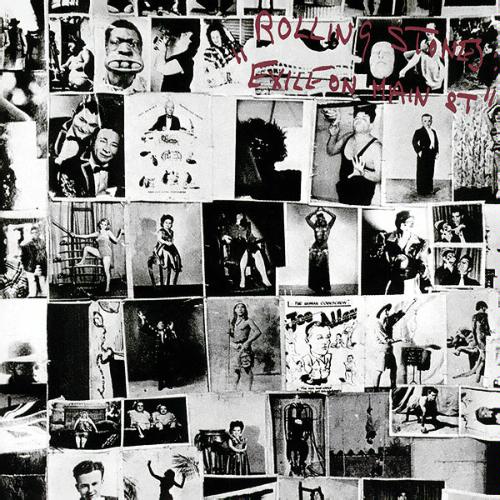
Exile on Main St. (1972)
Sticky Fingers (1971)
Let It Bleed (1969)
Beggars Banquet (1968)
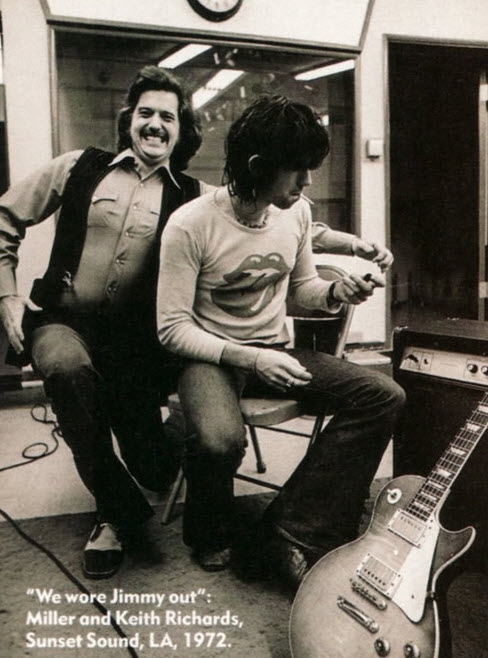
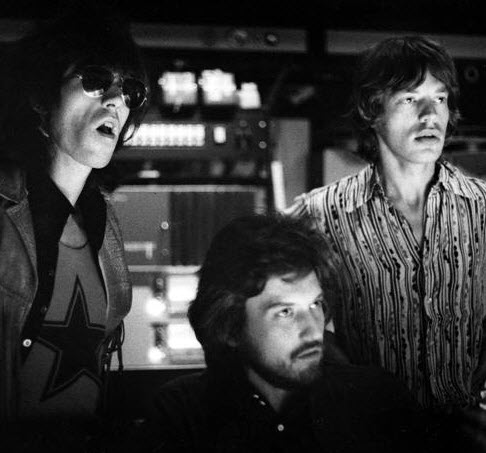
He really connected with the band & Keith Richards in particular.
“It was really a gas to work with him. Jimmy Miller could turn the whole band on and make a nondescript number into something.”
~Keith Richards
Miller was a huge Stones fan before he started working with the band..
‘The night Jagger phoned I just knew he was gonna ask me to produce them. I glided over to his house on a cloud.’
~Jimmy Miller
Wikipedia:
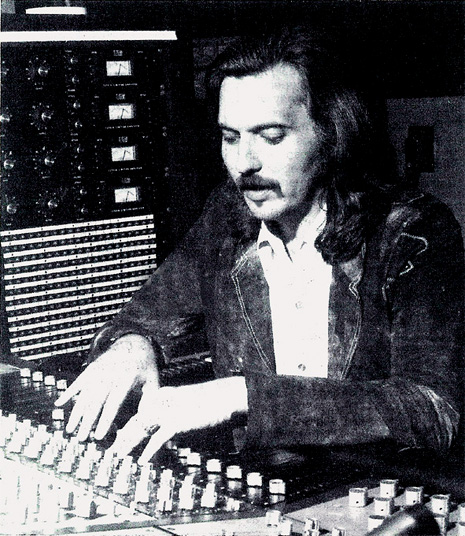
James “Jimmy” Miller (23 March 1942 – 22 October 1994) was a Brooklyn, New York-born record producer and musician who produced dozens of albums between the mid-1960s and early 1990s, including landmark recordings for Blind Faith, Traffic, the Plasmatics, Motorhead, The World Bank and Primal Scream. He was perhaps best known for his lengthy association with the Rolling Stones, for whom he produced a string of singles and albums that all rank among the most critically and financially successful works of the band’s career: Beggars Banquet (1968), Let It Bleed (1969), Sticky Fingers (1971), Exile on Main St. (1972) and Goats Head Soup (1973).
Prior to working with the Rolling Stones, Miller rose to fame by producing successful releases for The Spencer Davis Group including their breakthrough hit “Gimme Some Lovin'” and the follow-up smash “I’m A Man,” which Miller co-wrote with the band’s singer-keyboardist, Steve Winwood. In addition to his production work for yet another Winwood band, Traffic, Miller also contributed the lyrics to the Traffic song “Medicated Goo.” Miller produced the only album by the Clapton/Winwood supergroup Blind Faith.
The Spencer Davis Group – Gimme Some Lovin’:
Traffic – Dear Mr. Fantasy:
Blind Faith – Can’t Find My Way Home:
Following his work with Blind Faith, Miller co-produced (with Delaney Bramlett) the hit Delaney & Bonnie album On Tour with Eric Clapton, recorded live at Croydon, United Kingdom, on 7 December 1969. He went on to produce Delaney & Bonnie keyboardist Bobby Whitlock, Kracker, the Plasmatics, Motörhead and the UK band Nirvana.
A drummer himself, Miller was known for the distinctive drum sound that characterized his productions, especially his work with the Rolling Stones, on whose recordings he occasionally played percussion parts such as the famous opening cowbell on “Honky Tonk Women” and the full drum kit on “You Can’t Always Get What You Want,” “Happy,” “Tumbling Dice” and “Shine a Light.”
Miller went on to work with Primal Scream on their breakthrough album Screamadelica and William Topley’s band The Blessing (Miller appears on their DVD Sugar Train during the song “Soul Love”). In the 1980s, Miller produced some acts including Johnny Thunders, Matrix and Jo Jo Laine (wife of Denny Lane, on “Moody Blues & Wings”). In 1990 he Co-Produced (along with Phil Greene) “What’s in A Name” for Florida band Walk the Chalk.
Among Miller’s last productions were three tracks on the 1992 Wedding Present project, Hit Parade 2. Jimmy also produced four tracks on The World Banks “In Debt Interview” which featured artists such as Billy Preston and Bobby Keys, a rare musical sideline from author Hunter S. Thompson. Jimmy traveled to Woody Creek, Colorado in 1994 to meet with Hunter S. Thompson for a memorable weekend in May shortly before he passed on. He died in October 1994.
Album of the day – Exile on Main St. (1972):
From allmusic.com – Stephen Thomas Erlewine:
Greeted with decidedly mixed reviews upon its original release, Exile on Main St. has become generally regarded as the Rolling Stones’ finest album. Part of the reason why the record was initially greeted with hesitant reviews is that it takes a while to assimilate. A sprawling, weary double album encompassing rock & roll, blues, soul, and country, Exile doesn’t try anything new on the surface, but the substance is new. Taking the bleakness that underpinned Let It Bleed and Sticky Fingers to an extreme, Exile is a weary record, and not just lyrically. Jagger’s vocals are buried in the mix, and the music is a series of dark, dense jams, with Keith Richards and Mick Taylor spinning off incredible riffs and solos. And the songs continue the breakthroughs of their three previous albums. No longer does their country sound forced or kitschy — it’s lived-in and complex, just like the group’s forays into soul and gospel. While the songs, including the masterpieces “Rocks Off,” “Tumbling Dice,” “Torn and Frayed,” “Happy,” “Let It Loose,” and “Shine a Light,” are all terrific, they blend together, with only certain lyrics and guitar lines emerging from the murk. It’s the kind of record that’s gripping on the very first listen, but each subsequent listen reveals something new. Few other albums, let alone double albums, have been so rich and masterful as Exile on Main St., and it stands not only as one of the Stones’ best records, but sets a remarkably high standard for all of hard rock. …read more over @ allmusic.com
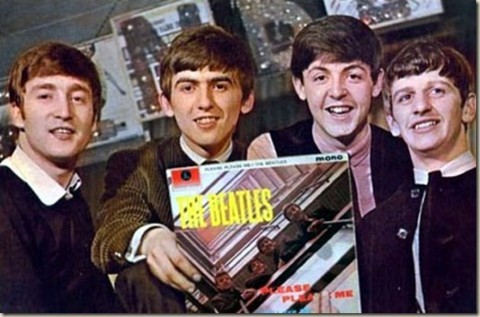
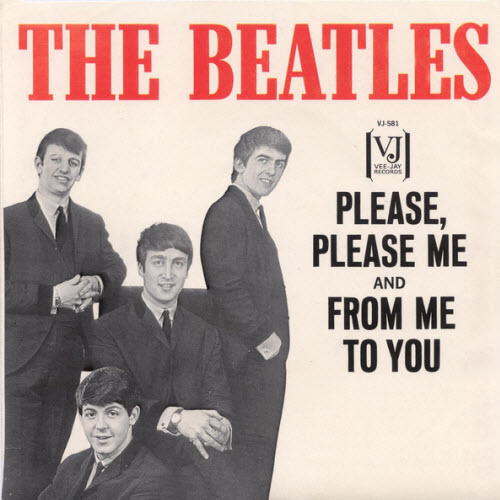
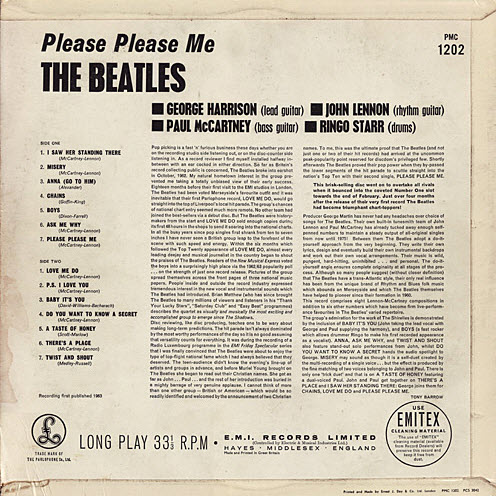
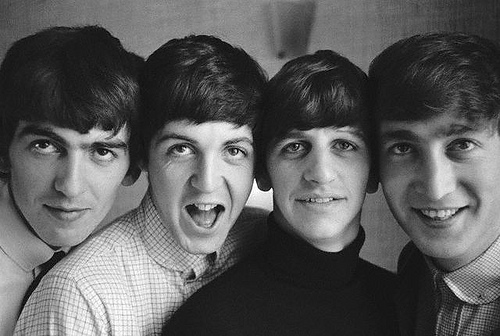
..now let’s focus on The Beatles debut album..“Please Please Me” released 50 years ago today!
….they were a group with the luck to meet opportunities, the wit to recognize them, the drive to seize them, and the talent to fullfil them. Please Please Me is the sound of them doing all four.
~Tom Ewing (pitchfork.com)
#1 – I Saw Her Standing There
Wikipedia:
Released
22 March 1963
Recorded
11 February 1963,
EMI Studios, London
Genre
Rock and roll, pop
Length
32:45
Label
Parlophone
Producer
George Martin
Please Please Me is the debut album by the English rock band the Beatles. Parlophone rush-released the album on 22 March 1963 in the United Kingdom to capitalise on the success of singles “Please Please Me” (No. 1 on most lists but only No. 2 on Record Retailer) and “Love Me Do” (No. 17).
Of the album’s fourteen songs, eight were written by Lennon–McCartney (originally credited “McCartney–Lennon”), early evidence of what Rolling Stone later called “[their invention of] the idea of the self-contained rock band, writing their own hits and playing their own instruments”. In 2012, Please Please Me was voted 39th on Rolling Stone magazine’s list of the “500 Greatest Albums of All Time”.
…It’s a blueprint of everything the Beatles would ever do, mixing up doo-wop, country, R&B, girl groups, Chuck Berry, Buddy Holly, Little Richard, and Tin Pan Alley into their own exuberant sound. John and Paul sang the openhearted originals “Ask Me Why,” “There’s a Place,” and “I Saw Her Standing There.” Ringo shouted, “All right, George!” in his gender-flipped cover of the Shirelles’ ultrafemme “Boys.” All four Beatles sang and played with total emotional urgency, holding nothing back, knowing their first shot at getting out of Liverpool could have been their last. You can hear John completely blow out his voice in the last track, “Twist and Shout.”
~Rollingstone.com
#7 – Please Please Me
Recording
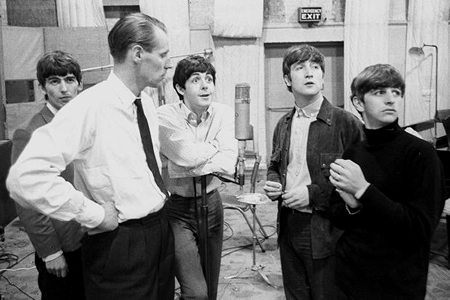
In order for the album to contain fourteen songs (the norm for British 12″ vinyl pop albums at that time was to have seven songs on each side, while American albums usually had only five or six songs per side) ten more tracks were needed to add to the four sides of their first two singles recorded and released previously. Therefore, at 10:00 am on Monday, 11 February 1963, the Beatles and George Martin started recording what was essentially their live act in 1963, and finished 585 minutes later (9 hours and 45 minutes). In three sessions that day (each lasting approximately three hours) they produced an authentic representation of the band’s Cavern Club-era sound, as there were very few overdubs and edits. Optimistically, only two sessions were originally booked by Martin—the evening session was added later.
The day ended with a cover of “Twist and Shout”, which had to be recorded last because John Lennon had a particularly bad cold and Martin feared the throat-shredding vocal would ruin Lennon’s voice for the day. This performance, captured on the first take, prompted Martin to say: “I don’t know how they do it. We’ve been recording all day but the longer we go on the better they get.”
#14 – Twist and Shout
Track Listing
All songs written by McCartney–Lennon, except where noted.
John Lennon – lead vocals, background vocals, rhythm guitar, acoustic guitar, harmonica, hand claps
Paul McCartney – lead vocals, background vocals, bass guitar, hand claps
George Harrison – background vocals, lead vocals on “Chains” and “Do You Want to Know a Secret”, lead guitar, acoustic guitar, hand claps
Ringo Starr – drums, tambourine, maracas, hand claps, lead vocals on “Boys”
Additional musicians and production
George Martin – producer, mixer, additional arrangements, piano on “Misery”, celesta on “Baby It’s You”
Norman Smith – audio engineer, mixer
Andy White – drums on “Love Me Do” and “P.S. I Love You”
Reception
Please Please Me hit the top of the UK album charts in May 1963 and remained there for thirty weeks before being replaced by With The Beatles. This was surprising because the UK album charts at the time tended to be dominated by film soundtracks and easy listening vocalists.
In 2012, Please Please Me was voted 39th on Rolling Stone magazine’s list of the “500 Greatest Albums of All Time”. It was ranked first among the Beatles’ early albums, and sixth of all of the Beatles’ albums, with Sgt. Pepper’s Lonely Hearts Club Band, Revolver,Rubber Soul, The Beatles (The White Album) and Abbey Road ranked higher.
Rolling Stone also placed two songs from the album on its list of The 500 Greatest Songs of All Time: No. 139, “I Saw Her Standing There”, and No. 184, “Please Please Me”.
According to Stephen Thomas Erlewine of Allmusic, “Decades after its release, the album still sounds fresh”, the covers are “impressive” and the originals “astonishing“.
..His talent takes many forms. He is one of the most compelling white blues singers ever recorded. He is a songwriter of exceptional facility and cleverness. He is an uncommonly skillful guitar player and harmonica player.
~Stacy Williams (“Bob Dylan” LP. liner notes)
Dylan’s first album can hardly be faulted. It is a brilliant debut, a performer’s tour de force,….
~Michael Gray (BD Encyclopedia)
Talkin’ New York:
Wikipedia:
Released
March 19, 1962
Recorded
November 20 and 22, 1961,Columbia Recording Studio, New York City, New York, United States
Genre
Folk
Length
36:54
Label
Columbia
Producer
John H. Hammond
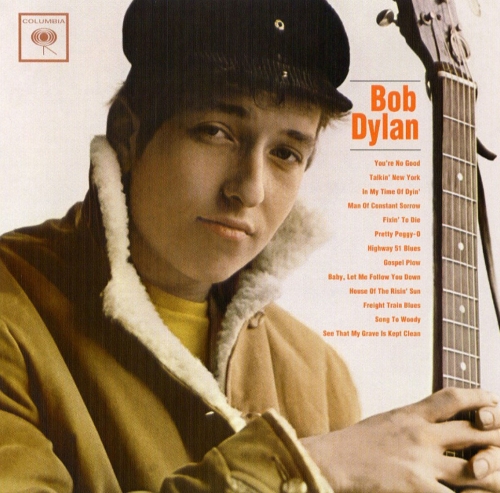
Bob Dylan is the debut album by American singer-songwriter Bob Dylan, released in March 1962 by Columbia Records. Produced by Columbia’s legendary talent scout John H. Hammond, who signed Dylan to the label, the album features folk standards, plus two original compositions, “Talkin’ New York” and “Song to Woody”.
Man of Constant Sorrow:
Recording sessions
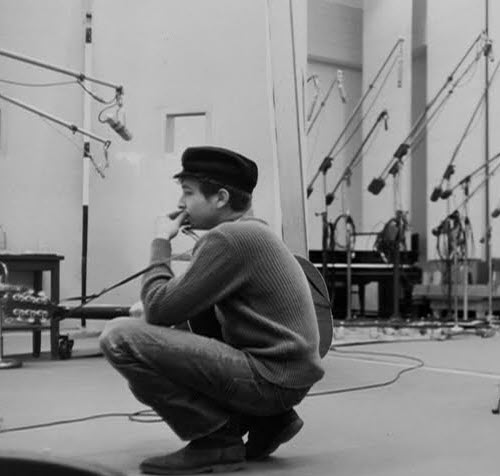
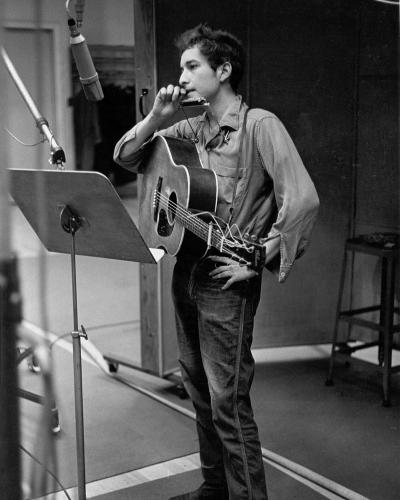
The album was ultimately recorded in three short afternoon sessions on November 20 and 22 (1961). Hammond later joked that Columbia spent “about $402” to record it, and the figure has entered the Dylan legend as its actual cost. Despite the low cost and short amount of time, Dylan was still difficult to record, according to Hammond. “Bobby popped every p, hissed every s, and habitually wandered off mike,” recalls Hammond. “Even more frustrating, he refused to learn from his mistakes. It occurred to me at the time that I’d never worked with anyone so undisciplined before.”
Seventeen songs were recorded, and five of the album’s chosen tracks were actually cut in single takes (“Baby Let Me Follow You Down,” “In My Time of Dyin’,” “Gospel Plow,” “Highway 51 Blues,” and “Freight Train Blues”) while the master take of “Song to Woody” was recorded after one false start. The album’s four outtakes were also cut in single takes. During the sessions, Dylan refused requests to do second takes. “I said no. I can’t see myself singing the same song twice in a row. That’s terrible.”
The album cover features a reversed photo of Dylan holding his acoustic guitar. It is unknown as to why the photo was flipped.
In My Time of Dyin:
In less than one year in New York, Bob Dylan has thrown the folk crowd into an uproar. Ardent fans have been shouting his praises. Devotees have found in him the image of a singing rebel, a musical Chaplin tramp, a young Woody Guthrie, or a composite of some of the best country blues singers.
~Stacy Williams (“Bob Dylan” LP. liner notes)
Track Listing:
Side one
“You’re No Good” – Jesse Fuller 1:40
“Talkin’ New York” – Bob Dylan 3:20
“In My Time of Dyin'” – trad. arr. Dylan 2:40
“Man of Constant Sorrow” – trad. arr. Dylan 3:10
“Fixin’ to Die” – Bukka White 2:22
“Pretty Peggy-O” – trad. arr. Dylan 3:23
“Highway 51” – Curtis Jones 2:52
Side two
“Gospel Plow” – trad. arr. Dylan 1:47
“Baby, Let Me Follow You Down” – trad. arr. Eric von Schmidt 2:37
“House of the Risin’ Sun” – trad. arr. Dave Van Ronk 5:20
“Freight Train Blues” – trad., Roy Acuff 2:18
“Song to Woody” – Bob Dylan 2:42
“See That My Grave Is Kept Clean” – Blind Lemon Jefferson 2:43
Personnel:
Bob Dylan – vocals, acoustic guitar, harmonica
Technical personnel
John H. Hammond – production
Baby, Let Me Follow You Down:
The Songs:
By the time sessions were held for his debut album, Dylan was absorbing an enormous amount of folk material from sitting and listening to contemporaries performing in New York’s clubs and coffeehouses. Many of these individuals were also close friends who performed with Dylan, often inviting him to their apartments where they would introduce him to more folk songs. At the same time, Dylan was borrowing and listening to a large number of folk, blues, and country records, many of which were hard to find at the time. Dylan revealed in an interview in the documentary No Direction Home that he needed to hear a song only once or twice to learn it.
The final album sequence of Bob Dylan features only two original compositions; the other eleven tracks are folk standards and traditional songs. Few of these were staples of his club/coffeehouse repertoire. Only two of the covers and both originals were in his club set in September 1961.
Dylan stated in a 2000 interview that he was hesitant to reveal too much of himself at first.
See That My Grave is Kept Clean:
Aftermath
Bob Dylan did not receive much acclaim until years later. “These debut songs are essayed with differing degrees of conviction,” writes music critic Tim Riley, “[but] even when his reach exceeds his grasp, he never sounds like he knows he’s in over his head, or gushily patronizing… Like Elvis Presley, what Dylan can sing, he quickly masters; what he can’t, he twists to his own devices. And as with the Presley Sun sessions, the voice that leaps from Dylan’s first album is its most striking feature, a determined, iconoclastic baying that chews up influences, and spits out the odd mixed signal without half trying.”
However, at the time of its release, Bob Dylan received little notice, and both Hammond and Dylan were soon dismissive of the first album’s results.
Bob Dylan’s first album is a lot like the debut albums by the Beatles and the Rolling Stones — a sterling effort, outclassing most, if not all, of what came before it in the genre, but similarly eclipsed by the artist’s own subsequent efforts. The difference was that not very many people heard Bob Dylan on its original release (originals on the early-’60s Columbia label are choice collectibles) because it was recorded with a much smaller audience and musical arena in mind.
~Bruce Eder (allmusic.com)
“Shooting star” was his first album closer since “Every Grain of Sand” to share that slightly somnambulant feel, a gorgeous melody, caressed vocal and an abiding conviction that there are two kinds of people, good (i.e. saved) and lost people.
~Clinton Heylin (Still On The Road)
MTV Unplugged version:
Grooveshark:
Spotify:
Where:
The Studio
New Orleans, Louisiana
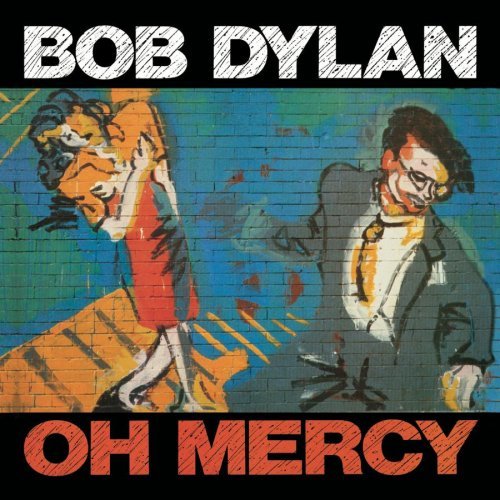
14 or 15 March 1989 6th Oh Mercy recording session, produced by Daniel Lanois
Songs:
Everything Is Broken
Everything Is Broken
Everything Is Broken
Jam
Three Of Us Be Free
Three Of Us Be Free
Shooting Star
Shooting Star
Shooting Star
Shooting Star
Shooting Star
Shooting Star
Shooting Star
Shooting Star
Master version of “Everything is Broken” was also recorded @ this session.
Lyrics:
Seen a shooting star tonight
And I thought of you
You were trying to break into another world
A world I never knew
I always kind of wondered
If you ever made it through
Seen a shooting star tonight
And I thought of you
Seen a shooting star tonight
And I thought of me
If I was still the same
If I ever became what you wanted me to be
Did I miss the mark or overstep the line
That only you could see?
Seen a shooting star tonight
And I thought of me
Listen to the engine, listen to the bell
As the last fire truck from hell
Goes rolling by
All good people are praying
It’s the last temptation, the last account
The last time you might hear the sermon on the mount
The last radio is playing
Seen a shooting star tonight
Slip away
Tomorrow will be
Another day
Guess it’s too late to say the things to you
That you needed to hear me say
Seen a shooting star tonight
Slip away