Category Archives: Music Calendar

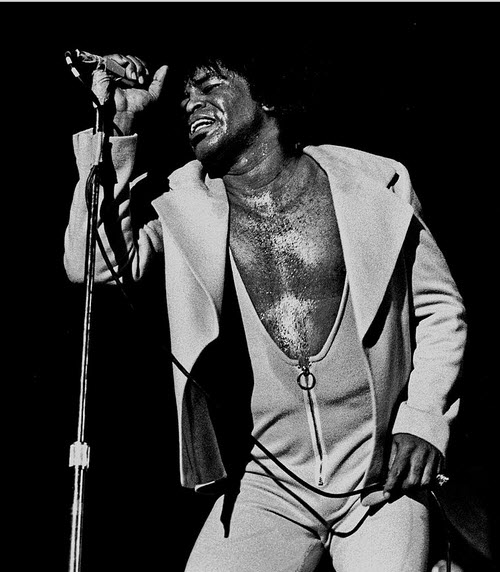
Today: The late James Brown was born in 1933 – 80 years ago

JB

When I’m on stage, I’m trying to do one thing: bring people joy. Just like church does. People don’t go to church to find trouble, they go there to lose it.
~James Brown

The one thing that can solve most of our problems is dancing.
~James Brown

“Soul Brother Number One,” “the Godfather of Soul,” “the Hardest Working Man in Show Business,” “Mr. Dynamite” — those are mighty titles, but no one can question that James Brown earned them more than any other performer. Other singers were more popular, others were equally skilled, but few other African-American musicians were so influential over the course of popular music. And no other musician, pop or otherwise, put on a more exciting, exhilarating stage show: Brown’s performances were marvels of athletic stamina and split-second timing.
~Richie Unterberger (allmusic.com)

Papa’s Got a Brand New Bag – Live at Montreux:

James Brown tribute youtube playlist:

From Wikipedia:

Birth name James Joseph Brown, Jr.
Born May 3, 1933
Barnwell, South Carolina, United States
Origin Toccoa, Georgia
Died December 25, 2006 (aged 73)
Atlanta, Georgia
Genres R&B, soul, funk, doo-wop, rock ‘n’ roll, blues, jazz
Occupations Musician, songwriter, dancer, bandleader, record producer, actor
Instruments Vocals, drums, percussion, piano, keyboards, organ
Years active 1954–2006

James Joseph Brown (May 3, 1933 – December 25, 2006) was an American singer, songwriter, musician, and recording artist. He is one of the founding fathers of funk music and is a major figure of 20th century popular music and dance. In a career that spanned six decades, Brown profoundly influenced the development of many different musical genres.
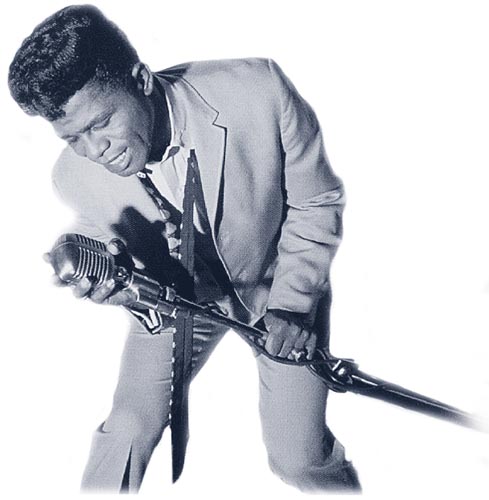
james brown


I Feel Good:

Brown moved on a continuum of blues and gospel-based forms and styles to a profoundly “Africanized” approach to music making. First coming to national public attention in the mid 1950s as a member of the R&B singing group The Famous Flames, Brown performed in concerts, first making his rounds across the Chitlin’ Circuit, and then across the country and later around the world, along with appearing in shows on television and in movies. Although he contributed much to the music world through his hitmaking, Brown holds the record as the artist who charted the most singles on the Billboard Hot 100 without ever hitting number one on that chart.
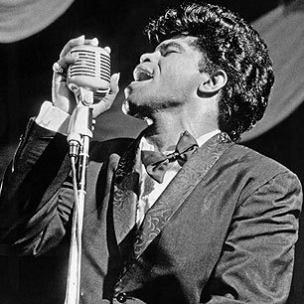
james-brown

For many years, Brown’s touring show was one of the most extravagant productions in American popular music. At the time of Brown’s death, his band included three guitarists, two bass guitar players, two drummers, three horns and a percussionist. The bands that he maintained during the late 1960s and 1970s were of comparable size, and the bands also included a three-piece amplified string section that played during ballads. Brown employed between 40 and 50 people for the James Brown Revue, and members of the revue traveled with him in a bus to cities and towns all over the country, performing upwards of 330 shows a year with almost all of the shows as one-nighters. In 1986, he was inducted into the Rock and Roll Hall of Fame and in 2000 into the Songwriters Hall of Fame. Brown died on Christmas Day 2006 from heart failure after becoming ill two days earlier and being hospitalized for hours. He is buried in Beech Island, South Carolina.

Night Train:

Playlist of the day:

Other May-03:

Continue reading Today: The late James Brown was born in 1933 – 80 years ago
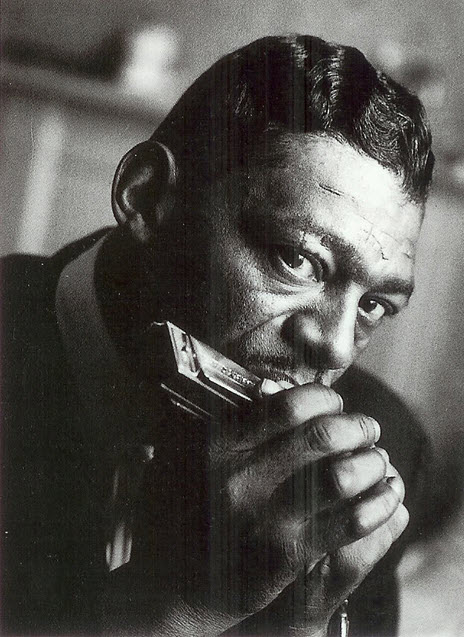
Today: The late Little Walter was born in 1930 – 83 years ago

little walter

..king of all post-war blues harpists,…. The fiery harmonica wizard took the humble mouth organ in dazzling amplified directions that were unimaginable prior to his ascendancy.
~Bill Dahl (allmusic.com)

Induction of Little Walter into R&R Hall of Fame in 2008:

Walter’s Jump – Live @ American Folk Blues Festival 1967, Germany:

Wikipedia:

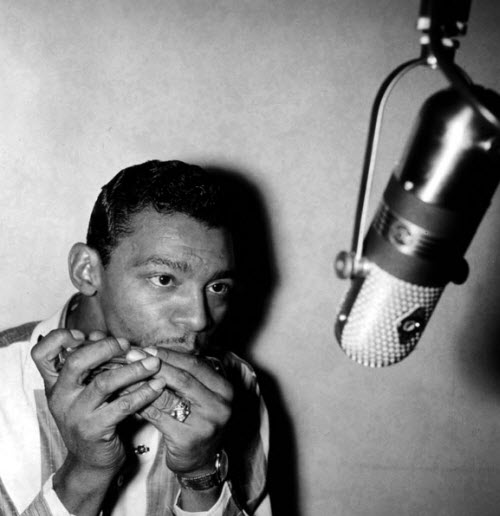
Little Walter, born Marion Walter Jacobs (May 1, 1930 – February 15, 1968), was an American blues harmonica player, whose revolutionary approach to his instrument has earned him comparisons to Charlie Parker and Jimi Hendrix, for innovation and impact on succeeding generations. His virtuosity and musical innovations fundamentally altered many listeners’ expectations of what was possible on blues harmonica. Little Walter was inducted to the The Rock and Roll Hall of Fame in 2008 in the “sideman” category making him the first and only artist ever to be inducted specifically for his work as a harmonica player.

little walter

Juke:

His legacy has been enormous: he is widely credited by blues historians as the artist primarily responsible for establishing the standard vocabulary for modern blues and blues rock harmonica players. His influence can be heard in varying degrees in virtually every modern blues harp player who came along in his wake, from blues greats such as Junior Wells, James Cotton, George “Harmonica” Smith, Carey Bell, and Big Walter Horton, through modern-day masters Sugar Blue, Billy Branch, Kim Wilson, Rod Piazza, William Clarke, and Charlie Musselwhite, in addition to blues-rock crossover artists such as Paul Butterfield and John Popper of the band Blues Traveler. Little Walter was portrayed in the 2008 film, Cadillac Records, by Columbus Short.

Awards & recognition: 

  • 1986 – Blues Hall of Fame: “Juke” (Classics of Blues Recordings – Singles or Album Tracks category)
  • 1991 – Blues Hall of Fame: Best of Little Walter (Classics of Blues Recordings – Albums category)
  • 1995 – Rock and Roll Hall of Fame: “Juke” (500 Songs that Shaped Rock and Roll)
  • 2003 – Rolling StoneBest of Little Walter (#198 on list of The 500 Greatest Albums of All Time)
  • 2008 – Grammy Awards: “Juke” (Grammy Hall of Fame Award)
  • 2008 – Rock and Roll Hall of Fame: Little Walter inducted (Sideman category)
  • 2008 – Blues Hall of Fame: “My Babe” (Classics of Blues Recordings – Singles or Album Tracks category)
  • 2009 – Grammy Awards The Complete Chess Masters: 1950–1967 (Best Historical Album Winner)

The Best Of Little Walter (full album):

Playlist of the day:

Other May-01:

Continue reading Today: The late Little Walter was born in 1930 – 83 years ago

Today – Bob Dylan – 15th Infidels recording session in 1983 – 30 years ago

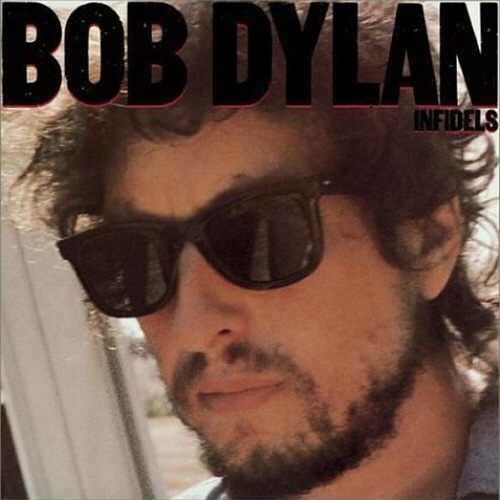
infidels

…..I did the album, and I call it that, but what it means is for other people to interpret, you know, if it means something to them. Infidels is a word that’s in the dictionary and whoever it applies to… to everybody on the album, every character. Maybe it’s all about infidels.
~Bob Dylan (to Kurt Loder in March 1984)

Foot of Pride:

 “Bob’s musical ability is limited, in terms of being able to play a guitar or a piano,….. It’s rudimentary, but it doesn’t affect his variety, his sense of melody, his singing. It’s all there. In fact, some of the things he plays on piano while he’s singing are lovely, even though they’re rudimentary. That all demonstrates the fact that you don’t have to be a great technician. It’s the same old story: If something is played with soul, that’s what’s important.
~Mark Knopfler

“I’ve made shoes for everyone, even you, while I still go barefoot”
~Bob Dylan (from “I and I”)

Studio A
Power Station
New York City, New York
27 April 1983

Produced by Mark Knopfler and Bob Dylan

  1. From Paul
  2. Foot Of Pride
  3. Foot Of Pride
  4. Foot Of Pride
  5. Foot Of Pride
    ….Composing it was alright, it probably had a bunch of extra verses that probably… most likely weren’t necessary, they should have been… they should have been combined. But, the reason why it was never used was because the tempo speeded up, but there wasn’t any drum machine used on that, the tempo just automatically took off, for some vague and curious reason.
    ~Bob Dylan (to Eliot Mintz – March 1991)

    Foot of pride is in fact, in the words Dylan used to describe the composition “Like A Rolling Stone,” “a long piece of vomit”. … it’s about how pride destroys us and turns us into monsters.
    ~Paul Williams (BD performing artist 1974-86)
  6. Union Sundown
  7. Union Sundown
  8. (Unidentified Song)
  9. (Harmonica)
  10. (Unidentified Song)
  11. I And I
  12. I And I
  13. I And I
  14. I And I
  15. I And I
  16. I And I
    …according to author/critic Tim Riley, “updates the Dylan mythos. Even though it substitutes self-pity for the [pessimism found throughout Infidels], you can’t ignore it as a Dylan spyglass: ‘Someone else is speakin’ with my mouth, but I’m listening only to my heart/I’ve made shoes for everyone, even you, while I still go barefoot.'” Riley sees the song as an exploration of the distance between Dylan’s “inner identity and the public face he wears”.
    ~Wikipedia

    “I and I”, the other epic from these sessions, is a beautiful song, powerfully sung, with a wonderfully moody and evocative instrumental setting….
    ~Paul Williams (BD perfroming artist 1974-86) 
  17. I And I
  18. I And I
  19. I And I
  20. Julius And Ethel
  21. Julius And Ethel

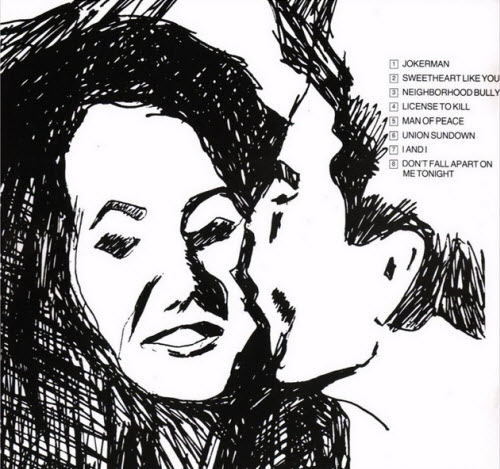
infidels back

Musicians:

  • Bob Dylan (vocal, harmonica, keyboards & guitar)
  • Mark Knopfler (guitar)
  • Mick Taylor (guitar)
  • Alan Clark (keyboards)
  • Robbie Shakespeare (bass)
  • Sly Dunbar (drums)

6, 7, 20, 21 Clydie King (backing/shared vocal)

Related articles here @ JV:

References:

Playlist of the day:

Other APR 27:

Continue reading Today – Bob Dylan – 15th Infidels recording session in 1983 – 30 years ago

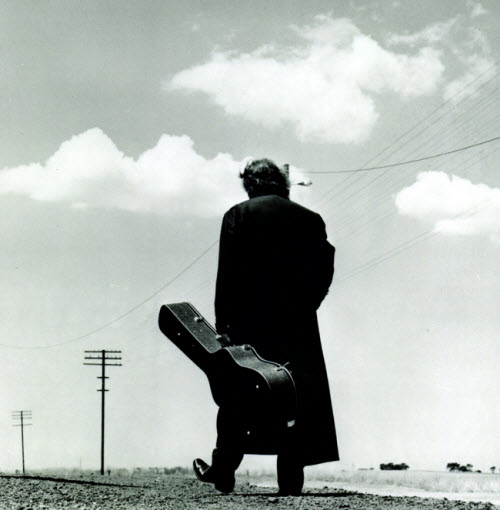
Today: Johnny Cash released American Recordings in 1994 – 19 years ago

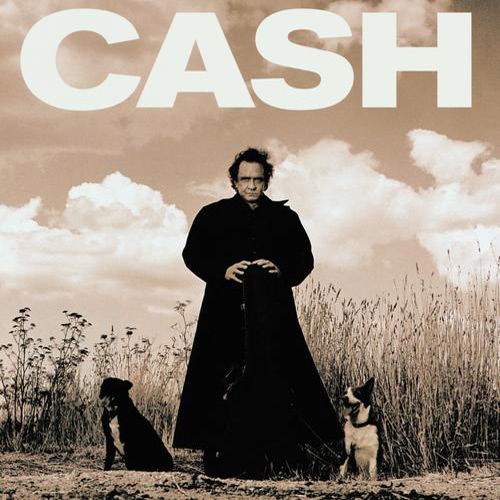
johnny cash-american-recordings

…Always, the choice of material is a revelation. The Beast In Me (written by former son-in-law, Nick Lowe) could be autobiographical. And while writers like horrorpunk figurehead Glenn Danzig or Tom Waits probably would never have figured on his radar were it not for Rubin; time and again the duo found songs that were, in Cash’s hands, to take on new life. This willingness to experiment was to set a precedent: Subsequent albums were to see him work magic on material from Nine Inch Nails to U2 and Depeche Mode. But Johnny Cash’s final road to redemption and artistic fulfillment starts here…
~Chris Jones (bbc.co.uk)

American Recordings did something very important — it gave Cash a chance to show how much he could do with a set of great songs and no creative interference, and it afforded him the respect he’d been denied for so long, and the result is a powerful and intimate album that brought the Man in Black back to the spotlight, where he belonged.
~Mark Deming (allmusic.com)

#1 – Delia’s Gone

Wikipedia:

Released April 26, 1994
Recorded May 17, 1993 – December 7, 1993
Genre Country, country folk, americana, folk rock
Length 42:45
Label American/ Sony
Producer Rick Rubin

American Recordings is the 81st album by the country singer Johnny Cash. It was released in April 1994, the first album issued by American Recordings after its name change from Def American, the album being named after the new label. In 2003, the album was ranked number 364 on Rolling Stone magazine’s list of the 500 greatest albums of all time.

Cash was approached by producer Rick Rubin and offered a contract with Rubin’s American Recordings label, better known for rap and heavy metal than for country music. Under Rubin’s supervision, he recorded the album in his living room, accompanied only by his guitar. For years Cash was often at odds with his producers after he had discovered with his first producer, Sam Phillips, that his voice was better suited to a stripped-down musical style. Most famously he disagreed with Jack Clement over his sound, Clement having tried to give Cash’s songs a “twangy” feel and to add strings and barbershop-quartet-style singers. His successful collaboration with Rick Rubin was in part due to Rubin seeking a minimalist sound for his songs.

johnny cash american recordings

#3 – The Beast In Me:

The songs “Tennessee Stud” and “The Man Who Couldn’t Cry” were recorded live at the Viper Room, a Sunset Strip, Los Angeles nightclub owned at the time by Johnny Depp. “The Beast in Me” was written and originally recorded by Cash’s former stepson-in-law Nick Lowe.

The video for the first single, the traditional song “Delia’s Gone” (directed by Anton Corbijn, featuring Kate Moss), was put into rotation on MTV, and even appeared on Beavis and Butt-head, Beavis asking if Cash was Captain Kangaroo. The album was hailed by critics and many declared it to be Cash’s finest album since the late 1960s, while his versions of songs by more modern artists such as Tom Waits and Glenn Danzig (who penned a song called “Thirteen” specifically for Cash, in just twenty minutes) helped to bring him a new audience. American Recordings received a Grammy for Best Contemporary Folk Album of the Year at the 1994 Grammy Awards. The album cover was photographed whilst Cash was visiting Australia, at Werribee near Melbourne.

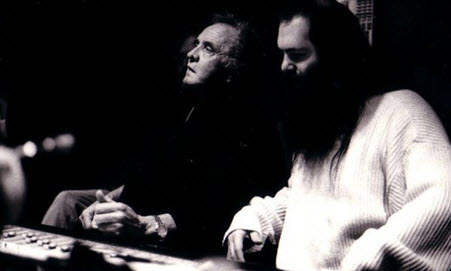
johnny cash rick rubinJohhny Cash & Rick Rubin in studio

#5 – Why Me Lord:

Track listing:

  1. “Delia’s Gone” (Karl Silbersdorf, Dick Toops) – 2:18
    Originally recorded by Cash for The Sound of Johnny Cash (1962)
  2. “Let the Train Blow the Whistle” (Cash) – 2:15
  3. “The Beast in Me” (Nick Lowe) – 2:45
    Originally recorded by Lowe for The Impossible Bird (1994)
  4. “Drive On” (Cash) – 2:23
  5. “Why Me Lord” (Kris Kristofferson) – 2:20
    Originally recorded by Kristofferson for Jesus Was a Capricorn (1972)
  6. “Thirteen” (edit) (Glenn Danzig) – 2:29
    Full-length version appears on Disc 5 of the Unearthed Box Set. Written by Glenn Danzig for Cash. Later recorded by Danzig for Danzig 6:66 Satan’s Child (1999)
  7. “Oh, Bury Me Not (Introduction: A Cowboy’s Prayer)” (John Lomax, Alan Lomax, Roy Rogers, Tim Spencer) – 3:52
    Originally recorded by Cash for Sings the Ballads of the True West (1965)
  8. “Bird on a Wire” (Leonard Cohen) – 4:01
    Originally recorded by Cohen for Songs from a Room (1969)
  9. “Tennessee Stud” (live) (Jimmy Driftwood) – 2:54
    Originally a hit single for Eddy Arnold (1959)
  10. “Down There by the Train” (Tom Waits) – 5:34
    Written by Waits for Cash. Later released by Waits on his Orphans: Brawlers, Bawlers & Bastards rarities collection.
  11. “Redemption” (Cash) – 3:03
  12. “Like a Soldier” (Cash) – 2:50
  13. “The Man Who Couldn’t Cry” (live) (Loudon Wainwright) – 5:03
    Originally recorded by Wainwright for Attempted Mustache (1973)

Personnel:

  • Rick Rubin – producer
  • Johnny Cash – acoustic guitar, vocals, main performer, liner notes
  • Jim Scott – mixing
  • David Ferguson – sound recordist
  • Stephen Marcussen – mastering
  • Christine Cano – design
  • Martyn Atkins – art director, photographer

Playlist of the day:

Other APR-26:

Continue reading Today: Johnny Cash released American Recordings in 1994 – 19 years ago

Today: Bruce Springsteen released We shall overcome – The Seeger Sessions in 2006

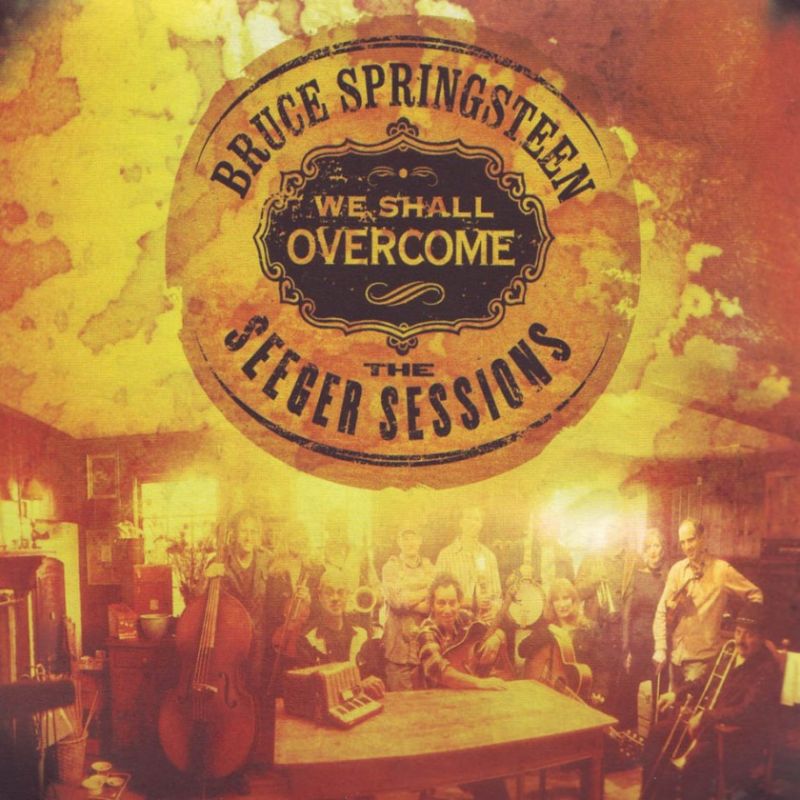
Bruce_Springsteen-We_Shall_Overcome_(The_Seeger_Sessions)-Frontal

We Shall Overcome: The Seeger Sessions was released in 2006, it is the fourteenth studio album by Bruce Springsteen.

This is Springsteen’s first and so far only album of non-Springsteen material and has his interpretation of thirteen folk music songs made popular by activist folk musician Pete Seeger.

The record began in 1997, when Springsteen recorded “We Shall Overcome” for the Where Have All the Flowers Gone: the Songs of Pete Seeger tribute album, released the following year. Springsteen had not known much about Seeger given his rock and roll upbringing and orientation, and proceeded to investigate and listen to his music.

Jacob’s Ladder (Official video):

Via Soozie Tyrell, the violinist in the E Street Band, Springsteen hooked up with a group of lesser-known musicians from New Jersey and New York, and they recorded in an informal, large band setting in Springsteen’s New Jersey farm. In addition to Tyrell, previous Springsteen associates The Miami Horns as well as wife Patti Scialfa augmented the proceedings. This group would become The Sessions Band.

Bruce Springsteen – The Seeger Sessions Live, a video recording of a May 9, 2006 performance in London’s St Luke Old Street church, was filmed by the BBC.

Here is the full broadcast, Bruce Springsteen & The Seeger Sessions Band at St. Lukes , London:

Songs played:

John Henry, Oh Mary Don’t You Weep, How Can A Poor Man Stand Such Times And Live?, Mrs. McGrath, My Oklahoma Home, Jacob’s Ladder, We Shall Overcome, Pay Me My Money Down
Continue reading Today: Bruce Springsteen released We shall overcome – The Seeger Sessions in 2006