April 27 in music history

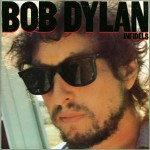
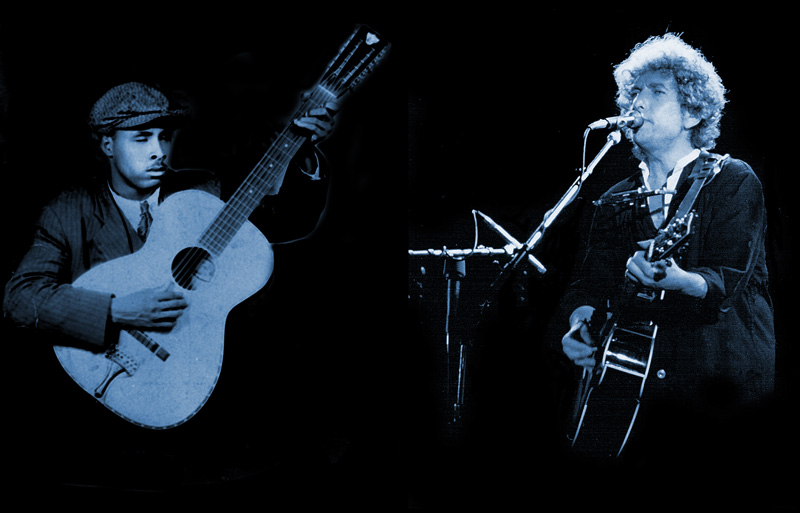
Today: Bob Dylan The 15th Infidels recording session in 1983 (read more)

…I did the album, and I call it that, but what it means is for other people to interpret, you know, if it means something to them. Infidels is a word that’s in the dictionary and whoever it applies to… to everybody on the album, every character. Maybe it’s all about infidels.
~Bob Dylan (to Kurt Loder in March 1984)
Infidels
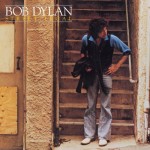
The 3rd Street-Legal session, 27 April 1978 (read more)

..“On this album, I took a few steps backward, but I also took a bunch of steps forward because I had a lot of time to concentrate on it. I also had the band sounding like I want it to sound. It’s got that organ sound from ‘Blonde on Blonde’ again. That’s something that has been missing.”
~Bob Dylan (to Robert Hilburn – May 1978)

bob dylan street-legal
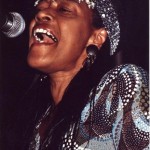
Ann Peebles (born April 27, 1947) is an African American singer-songwriter who gained celebrity for her Memphis soul albums of the 1970s on the Hi Records label. Two of her most popular songs are “I Can’t Stand the Rain” and “I’m Gonna Tear Your Playhouse Down”, which she wrote with her husband, Don Bryant, and radio broadcaster Bernard “Bernie” Miller and were subsequently popularized in cover versions by, among others, Eruption (1978) and Paul Young (1984), respectively. ann peebles
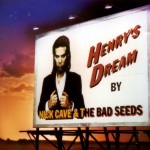
Henry’s Dream is the seventh album released by Nick Cave and the Bad Seeds, released 27th April 1992.This album remains a big favourite among Bad Seeds fans, although Nick Cave himself was reportedly unhappy with the production by David Briggs. Briggs preferred a “live-in-the-studio” method he had used with Neil Young. This led to Cave and Mick Harvey re-mixing the album, and ultimately to the Live Seeds recordings, as Cave wanted the songs “done justice”. nick cave henrys dream
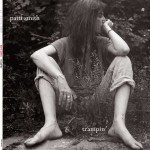
 Trampin’ is an album by Patti Smith, released April 27, 2004. It was the first album Smith released on the Columbia Records label.Rolling Stone magazine placed the record on its list of “The Top 50 Albums of 2004”  trampin_lp1
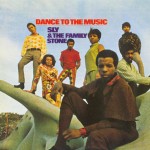
Dance to the Music is the second studio album by funk/soul band Sly and the Family Stone, released April 27, 1968 on Epic/CBS Records. It contains the Top Ten hit single of the same name, which was influential in the formation and popularization of the musical subgenre of psychedelic soul and helped lay the groundwork for the development of funk music. Sly_and_the_Family_Stone-Dance_To_The_Music_b
Gordon Haskell (born 27 April 1946, in Verwood, England) is a Pop, Rock & Blues music vocalistsongwriter, and bassist. He first gained recognition as a member of the British band Les Fleur de Lys. He sang on one of the songs of King Crimson‘s second album, then played bass and sang on their third album. After departing from King Crimson, he continued his musical career as a solo musician & gained international recognition in 2001 with his hit song How Wonderful You Are.  Gordon-Haskell1
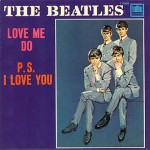
Love Me Do is the Beatles‘ first ever single, backed by “P.S. I Love You“. When the single was originally released in the United Kingdom on 5 October 1962, it peaked at No. 17; in 1982 it was re-promoted (not re-issued, retaining the same catalogue number) and reached No. 4. In the United States the single was a No. 1 hit in 1964. It was released 27 April 1964 in the US.  Love_Me_Do


– Hallgeir

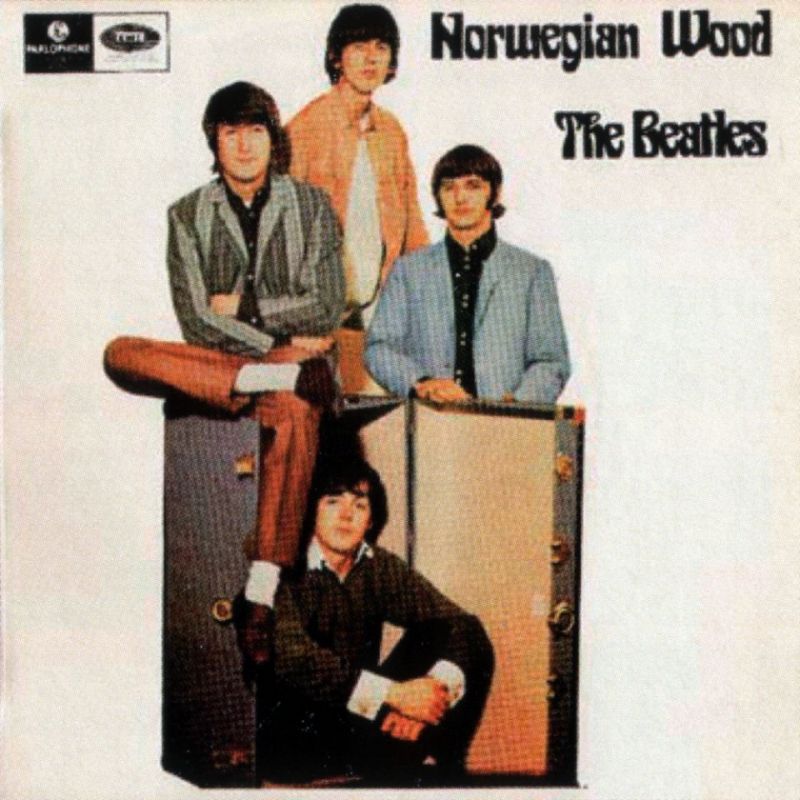
The Beatles 40 best songs: at 25 “Norwegian Wood (This Bird Has Flown)”

norwegian_wood_ep
Australian EP

Norwegian Wood (This Bird Has Flown)” (also known as simply “Norwegian Wood“)  by The Beatles, mainly written by John Lennon, with the middle eight co-written with Paul McCartney, released on the 1965 album Rubber Soul. It was the first example of a rock band including a sitar in one of their songs, played by lead guitarist George Harrison.

 “George had just got the sitar and I said, ‘Could you play this piece?’ We went through many different sort of versions of the song, it was never right and I was getting very angry about it, it wasn’t coming out like I said. They said, ‘Just do it how you want to do it,’ and I said, ‘I just want to do it like this.’ They let me go and I did the guitar very loudly into the mike and sang it at the same time, and then George had the sitar and I asked him could he play the piece that I’d written, dee diddley dee diddley dee, that bit – and he was not sure whether he could play it yet because he hadn’t done much on the sitar but he was willing to have a go, as is his wont, and he learnt the bit and dubbed it on after. I think we did it in sections.”
– John Lennon (1970)

“… anyway, we were at the point where we’d recorded the Norwegian Wood backing track and it needed something. We would usually start looking through the cupboard to see if we could come up with something, a new sound, and I picked the sitar up – it was just lying around; I hadn’t really figured out what to do with it. It was quite spontaneous: I found the notes that played the lick. It fitted and it worked.”
– George Harrison (Anthology)

Continue reading The Beatles 40 best songs: at 25 “Norwegian Wood (This Bird Has Flown)”

April 26 in music history

20 year anniversary for Johnny Cash’s American RecordingsAmerican Recordings did something very important — it gave Cash a chance to show how much he could do with a set of great songs and no creative interference, and it afforded him the respect he’d been denied for so long, and the result is a powerful and intimate album that brought the Man in Black back to the spotlight, where he belonged.
~Mark Deming (allmusic.com)
cash american 1
William “Count” Basie (August 21, 1904 – April 26, 1984)
was an American jazz pianist, organist, bandleader, and composer. Basie led his jazz orchestra almost continuously for nearly 50 years. Many notable musicians came to prominence under his direction, including tenor saxophonists Lester Young and Herschel Evans, guitarist Freddie Green, trumpeters Buck Clayton and Harry “Sweets” Edison and singers Jimmy Rushing and Joe Williams. Basie’s theme songs were “One O’Clock Jump” and “April In Paris”.
Count_Basie_in_Rhythm_and_Blues_Revue
Johnny Shines (April 26, 1915 – April 20, 1992)
was an American blues singer and guitarist. According to the music journalist Tony Russell, “Shines was that rare being, a blues artist who overcame age and rustiness to make music that stood up beside the work of his youth. When Shines came back to the blues in 1965 he was 50, yet his voice had the leonine power of a dozen years before, when he made records his reputation was based on”.
johnny shines
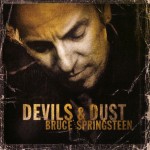
 Devils & Dust is the 13th studio album by American recording artist Bruce Springsteen, and his third folk album (after Nebraska and The Ghost of Tom Joad). It was released on April 25, 2005 in Europe and on April 26 in the US. It debuted at the top of the US Billboard 200 album chart.  bruce devil and dust
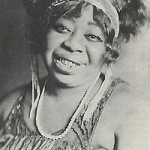
Ma Rainey (April 26, 1886? – December 22, 1939)
was one of the earliest known American professional blues singers and one of the first generation of such singers to record. She was billed as The Mother of the Blues.
MaRainey
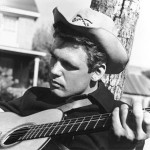
Duane Eddy (born April 26, 1938)
is a Grammy Award-winning American guitarist. In the late 1950s and early 1960s he had a string of hit records, produced by Lee Hazlewood, which were noted for their characteristically “twangy” sound, including “Rebel Rouser”, “Peter Gunn”, and “Because They’re Young”. He was inducted into the Rock and Roll Hall of Fame in 1994.
 duane eddy


– Hallgeir

April 25 in music history

The late Albert King was born in 1923 “If it wasn’t for bad luck, I wouldn’t have no luck at all.”
~”Born Under A Bad Sign”

Albert King is truly a “King of the Blues,” although he doesn’t hold that title (B.B. does). Along with B.B. and Freddie King, Albert King is one of the major influences on blues and rock guitar players. Without him, modern guitar music would not sound as it does — his style has influenced both black and white blues players from Otis Rush and Robert Cray to Eric Clapton and Stevie Ray Vaughan.
~Stephen Thomas Erlewine (allmusic.com)
albert-king
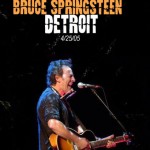
Bruce Springsteen: Fox Theatre, Detroit, MI, USA April 25, 2005 (Videos)This is the first concert from Springsteen’s “Devils & Dust Solo Acoustic” tour. bruce springsteen 2005-04-25-2
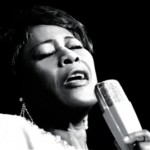
Ella Fitzgerald (April 25, 1917 – June 15, 1996), also known as the “First Lady of Song”, “Queen of Jazz”, and “Lady Ella”, was an American jazz vocalist with a vocal range spanning three octaves (D♭3 to D♭6). She was noted for her purity of tone, impeccablediction, phrasing and intonation, and a “horn-like” improvisational ability, particularly in her scat singing.Fitzgerald was a notable interpreter of the Great American Songbook. Over the course of her 59-year recording career, she sold 40 million copies of her 70-plus albums, won 13 Grammy Awards and was awarded the National Medal of Arts by Ronald Reagan and the Presidential Medal of Freedom by George H. W. Bush. Ella Fitzgerald Copenhagen April 1970
 Jerome “Jerry” Leiber (April 25, 1933 – August 22, 2011) and Mike Stoller (born March 13, 1933) were American songwriting and record producing partners. Stoller was the composer and Leiber the lyricist. Their most famous songs include “Hound Dog”, “Jailhouse Rock”, “Don’t”, “Kansas City”, “Stand By Me” (with Ben E. King), and “On Broadway” (with Barry Mann and Cynthia Weil). Today, their songs are managed by Sony/ATV Music Publishing.  jerry leiber
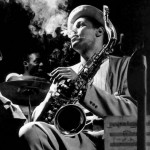
 Dexter Gordon (February 27, 1923 – April 25, 1990) was an American jazz tenor saxophonist and an Academy Award-nominated actor (Round Midnight, Warner Bros, 1986). He is regarded as one of the first and most important musicians to adapt the bebop musical language of people like Charlie Parker, Dizzy Gillespie, and Bud Powell to the tenor saxophone. His studio and live performance career were both extensive and multifaceted, spanning over 50 years in recorded jazz history.  dexter gordon 1948
 Bob Dylan recorded master version of “Let Me Die In My Footsteps” @ Studio A – Columbia Recording Studios, NYC in 1962  – 51 years ago.Let Me Die in My Footsteps is a song written by American singer-songwriter Bob Dylan in February 1962. The song was selected for the original sequence of Dylan’s 1963 album, The Freewheelin’ Bob Dylan, but was replaced by “A Hard Rain’s A-Gonna Fall”. This version was recorded at Columbia studios on April 25, 1962, during the first Freewheelin’ session, and was subsequently released in March 1991 on The Bootleg Series Volumes 1-3 (Rare & Unreleased) 1961-1991.
 Derek William Dick, better known as Fish, (born 25 April 1958, Dalkeith, Midlothian, Scotland) is a Scottish singer, lyricist and occasional actor, best known as the former lead singer of the neo-progressive rock band Marillion.  fish


-Egil

Bob Dylan’s Blind Willie McTell cover versions audio and video

Blind-Willie-McTell cover versions

Well, God is in heaven And we all want what’s his 
But power and greed and corruptible seed Seem to be all that there is

Blind Willie McTell was voted the best 80s song in our little poll, deservedly so.

Blind Willie McTell” is a song by Bob Dylan, titled after the blues singer Blind Willie McTell. It was recorded in 1983 but left off Dylan’s album Infidels and officially released in 1991 on the The Bootleg Series Volumes 1–3 (Rare & Unreleased) 1961–1991. The melody has a resemblance to  “St. James Infirmary Blues”. For the song, Dylan, seated at the piano and accompanied by Mark Knopfler on the twelve-string acoustic guitar, sings a series of plaintive verses depicting allegorical scenes which reflect on the history of American music and slavery. Each verse ends with the same refrain: “Nobody can sing the blues like Blind Willie McTell”.

Following three albums with overt Christian themes, Infidels struck most major rock critics as dealing largely with secular concerns, and they hailed it as a comeback. The mysterious exclusion of “Blind Willie McTell” complicates the story. When bootleggers released the outtakes from Infidels, the song was recognized as a composition approaching the quality of such classics as “Tangled Up In Blue”, “Like a Rolling Stone” and “All Along the Watchtower”.

Bob Dylan – Blind Willie McTell (audio, Bootleg series 1-3):

This is the spookiest important record since Heartbreak Hotel, and is built upon the perfect interweaving of guitar, piano, voice and silence – an interweaving that has the space for the lovely clarity of single notes – a guitar string stroking the air here, a piano note pushing back the distance there. And if anything, the still-unreleased performance is even better,  for its more original melody (less dependent upon the conventional St. James Infirmary structure) and its incandescent vocal, which soars to possess the heights of reverie and inspiration. No one can sing the blues like Blind Willie McTell, but no one can write or sing a blues like Blind Willie McTell like Bob Dylan.
– Michael Gray

Bob Dylan – Blind Willie McTell (audio, electric version):

“One of Bob Dylan’s absolute masterpieces, “Blind Willie McTell” is the jewel of The Bootleg Series and arguably one of the finest songs ever written. Recorded in 1983 for the album Infidels, it was deemed superfluous to requirements, and all that remains is one take of the song with a full band (yet to be officially released) and this haunting demo, with Dylan playing piano with accompaniment from Mark Knopfler.”
– Thomas Ward (allmusic)

The best!

Now let’s listen to 10 very good takes on Blind Willie McTell!

Continue reading Bob Dylan’s Blind Willie McTell cover versions audio and video