“If you run into my sister tell her Elvis is cool but the Rolling Stones will sweep her away”
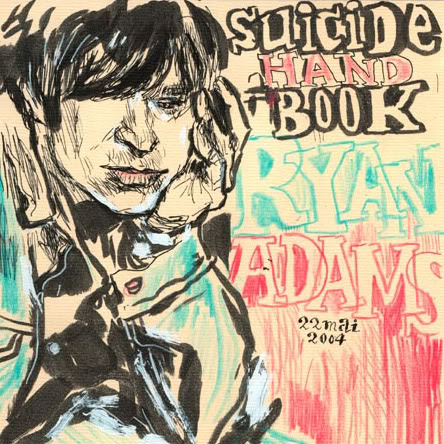
Cracks in a photograph is from the unreleased album that was supposed to be the follow-up to Adams’ solo debut Heartbreaker. We can only speculate why the album was shelved, but it is a bleak affair and the title was/is Suicide Handbook. I’m guessing the record company wasn’t too thrilled by what they got served.
The song is the 4th song on the second disc and I will describe it as a hidden gem or a buried treasure, to my knowledge it has never been performed live. It is one of his finest compositions, but maybe it is too close and too true to those bad feelings from before, even for Ryan Adams. The song could be interpreted as part of a suicide note, or at least the notes from a man making amends and leaving “the old life”.
I like this town, it’s really great. They’ve put me in The Nashville Songwriters Hall of Fame. This town is about music. It’s about the kind of music I like.
~Otis Blackwell
I used to go down every year for the remembrance of Elvis’ birthday. Memphis State College invited me to sit in the auditorium and speak to the people for one of those Elvis days.
~Otis Blackwell
Blackwell’s songwriting style is as identifiable as that of Willie Dixon or Jerry Leiber & Mike Stoller. He helped formulate the musical vocabulary of rock & roll when the genre was barely breathing on its own.
~Bill Dahl (allmusic.com)
All Shook Up – Elvis Presley:
Great Balls Of Fire – Jerry Lee Lewis:
Wikipedia:
Also known as
John Davenport
Born
February 16, 1931
Origin
Brooklyn, New York, United States
Died
May 6, 2002 (aged 71)
Nashville, Tennessee, U.S.
Genres
East Coast blues, rock and roll,R&B
Occupations
Singer, pianist, songwriter
Instruments
Piano
Years active
1950s–2002
Labels
RCA, Groove, Atlantic
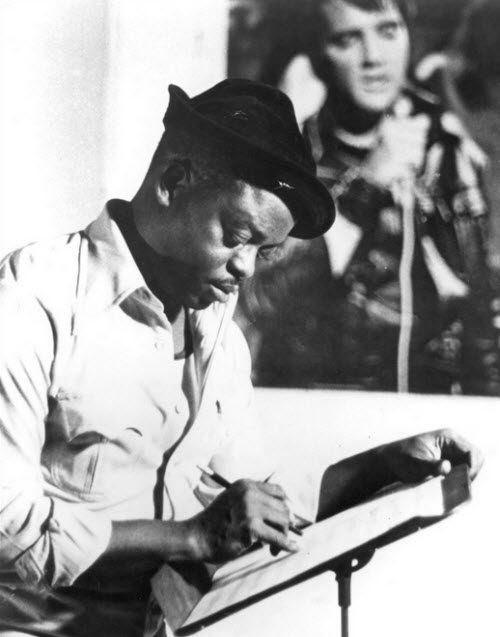
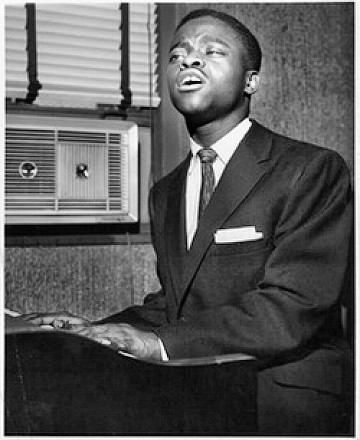
Otis Blackwell (February 16, 1931 – May 6, 2002) was an American songwriter, singer, and pianist, whose work significantly influenced rock and roll. His compositions include Little Willie John’s “Fever”, Jerry Lee Lewis’ “Great Balls of Fire” and “Breathless”, Elvis Presley’s “Don’t Be Cruel”, “All Shook Up” and “Return to Sender” (with Winfield Scott), and Jimmy Jones’ “Handy Man”. He should not be confused with another songwriter and producer Robert “Bumps” Blackwell.
Fever – Little Willie John:
Awards:
Otis Blackwell was inducted into the Nashville Songwriters Hall of Fame in 1986
in 1991 into the National Academy of Popular Music’s Songwriters Hall of Fame
Blackwell’s crowning moment came in the late 1980s when the Black Rock Coalition, a prominent organization of black rock musicians, led by Vernon Reid, the lead guitarist of the band, Living Colour, held a tribute for him at the Prospect Park Bandshell in his native Brooklyn. Many prominent musicians and singers took part including Blackwell himself, who performed an assortment of his best songs, including “One Broken Heart for Sale,” “Black Trail,” “Don’t Be Cruel” and “Daddy Rolling Stone.”
Blackwell was named one of the 2010 recipients of Ahmet Ertegun Award in the Rock and Roll Hall of Fame. This category encompasses those who primarily work behind the scenes in the music industry.
And I know no one can sing the blues
Like Blind Willie McTell
~Bob Dylan (“Blind Willie McTell”)
He was a songster of wide repertoire and as fine a 12-string guitarist as ever lived. The dexterity of his playing was extraordinary, and his voice was an unusually smooth tenor. The interplay between voice and guitar also brought into the equation McTell’s intelligence and wit, and it was the fusion of all these elements that led Bob Dylan to write in his 1983 tribute song that ‘no-one can sing the blues like Blind Willie McTell.’
~Michael Gray (BD Encyclopedia)
Willie Samuel McTell was one of the blues’ greatest guitarists, and also one of the finest singers ever to work in blues.
~Bruce Eder (allmusic.com)
Statesboro Blues:
Wikipedia:
Birth name
William Samuel McTier
Also known as
Blind Sammie, Georgia Bill, Hot Shot Willie, Blind Willie, Barrelhouse Sammy, Pig & Whistle Red, Blind Doogie, Red Hot Willie Glaze, Red Hot Willie, Eddie McTier
Born
May 5, 1898
Thomson, Georgia, U.S.
Origin
Statesboro, Georgia, U.S.
Died
August 19, 1959 (aged 61)
Milledgeville, Georgia, U.S.
Genres
Country blues, Piedmont blues, ragtime, Delta blues, gospel
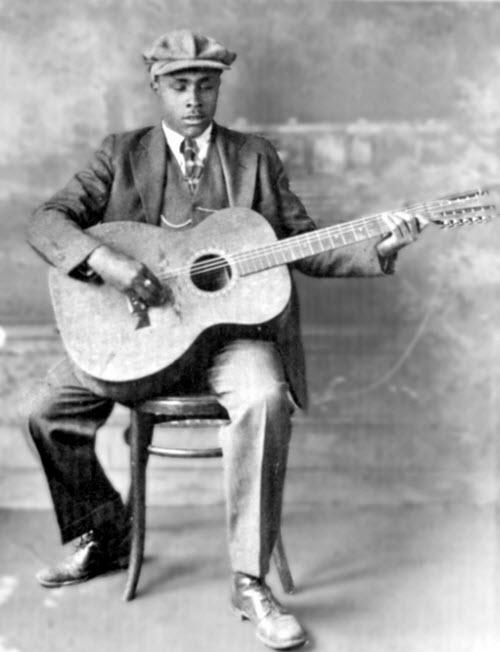
Blind Willie McTell (born William Samuel McTier May 5, 1898 – August 19, 1959), was a Piedmont and ragtime blues singer and guitarist. He played with a fluid, syncopated fingerstyle guitar technique, common among many exponents of Piedmont blues, although, unlike his contemporaries, he came to use twelve-string guitars exclusively. McTell was also an adept slide guitarist, unusual among ragtime bluesmen. His vocal style, a smooth and often laid-back tenor, differed greatly from many of the harsher voice types employed by Delta bluesmen, such as Charley Patton. McTell embodied a variety of musical styles, including blues, ragtime, religious music and hokum.
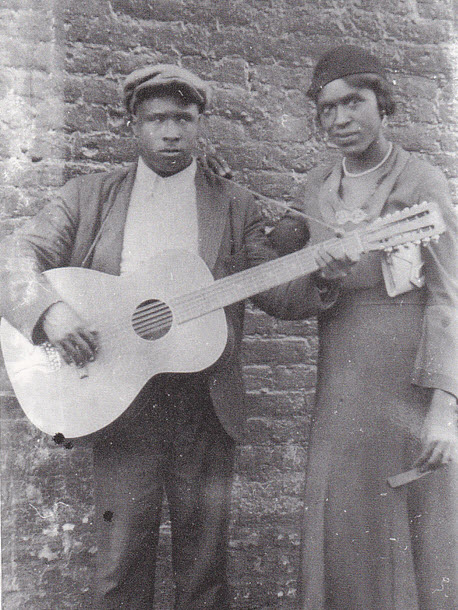
Blind Willie and Kate McTell in Atlanta, 1930s
Travelin’ Blues:
Born blind in the town of Thomson, Georgia, McTell learned how to play guitar in his early teens. He soon became a street performer around several Georgia cities including Atlanta and Augusta, and first recorded in 1927 for Victor Records. Although he never produced a major hit record, McTell’s recording career was prolific, recording for different labels under different names throughout the 1920s and 30s. In 1940, he was recorded by John Lomax for the Library of Congress’s folk song archive. He would remain active throughout the 1940s and 50s, playing on the streets of Atlanta, often with his longtime associate, Curley Weaver. Twice more he recorded professionally. McTell’s last recordings originated during an impromptu session recorded by an Atlanta record store owner in 1956. McTell would die three years later after suffering for years from diabetes and alcoholism. Despite his mainly failed releases, McTell was one of the few archaic blues musicians that would actively play and record during the 1940s and 50s. However, McTell never lived to be “rediscovered” during the imminent American folk music revival, as many other bluesmen would.
McTell’s influence extended over a wide variety of artists, including The Allman Brothers Band, who famously covered McTell’s “Statesboro Blues”, and Bob Dylan, who paid tribute to McTell in his 1983 song “Blind Willie McTell”; the refrain of which is, “And I know no one can sing the blues, like Blind Willie McTell”. Other artists influenced by McTell include Taj Mahal, Alvin Youngblood Hart, Ralph McTell, Chris Smither and The White Stripes.
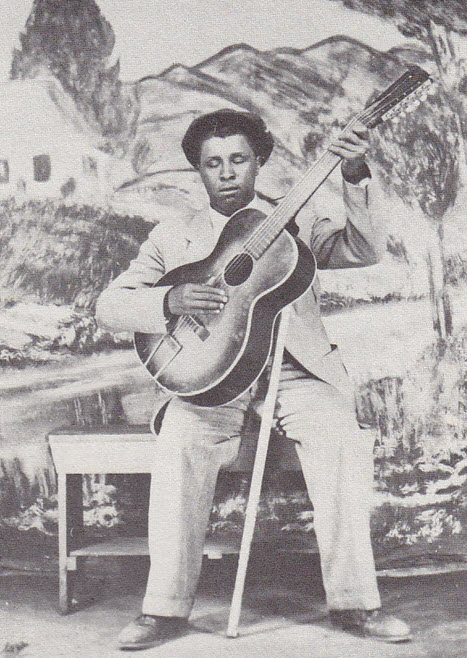
Blind Willie McTell, circa 1950
Pal of Mine:
Bob Dylan has paid tribute to McTell on at least four occasions:
Firstly, in his 1965 song “Highway 61 Revisited“, the second verse begins with “Georgia Sam he had a bloody nose”, referring to one of Blind Willie McTell’s many recording names
later in his song “Blind Willie McTell“, recorded in 1983 but released in 1991 on The Bootleg Series Volumes 1-3
then with covers of McTell’s “Broke Down Engine” and “Delia” on his 1993 album, World Gone Wrong
in his song “Po’ Boy“, on 2001’s “Love & Theft”, which contains the lyric, “had to go to Florida dodging them Georgia laws”, which comes from McTell’s “Kill It Kid”
Bob Dylan – Blind Willie McTell – Hollywood Palladium Theater, Los Angeles, California – 12 January 2012:
When I’m on stage, I’m trying to do one thing: bring people joy. Just like church does. People don’t go to church to find trouble, they go there to lose it.
~James Brown
The one thing that can solve most of our problems is dancing.
~James Brown
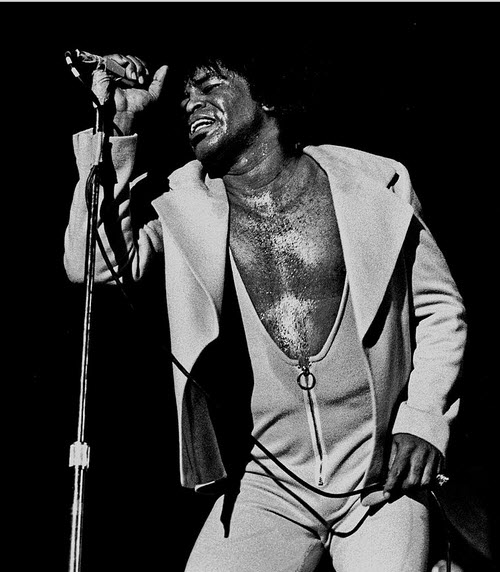
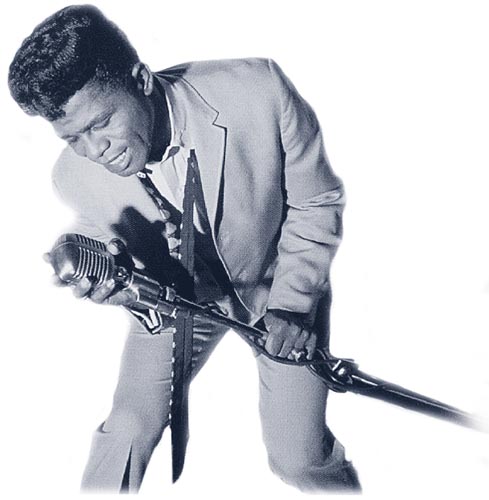
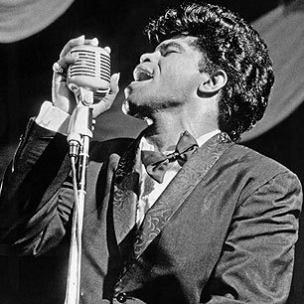
“Soul Brother Number One,” “the Godfather of Soul,” “the Hardest Working Man in Show Business,” “Mr. Dynamite” — those are mighty titles, but no one can question that James Brown earned them more than any other performer. Other singers were more popular, others were equally skilled, but few other African-American musicians were so influential over the course of popular music. And no other musician, pop or otherwise, put on a more exciting, exhilarating stage show: Brown’s performances were marvels of athletic stamina and split-second timing.
~Richie Unterberger (allmusic.com)
Papa’s Got a Brand New Bag – Live at Montreux:
James Brown tribute youtube playlist:
From Wikipedia:
Birth name
James Joseph Brown, Jr.
Born
May 3, 1933
Barnwell, South Carolina, United States
Origin
Toccoa, Georgia
Died
December 25, 2006 (aged 73)
Atlanta, Georgia
Genres
R&B, soul, funk, doo-wop, rock ‘n’ roll, blues, jazz
Occupations
Musician, songwriter, dancer, bandleader, record producer, actor
Instruments
Vocals, drums, percussion, piano, keyboards, organ
Years active
1954–2006
James Joseph Brown (May 3, 1933 – December 25, 2006) was an American singer, songwriter, musician, and recording artist. He is one of the founding fathers of funk music and is a major figure of 20th century popular music and dance. In a career that spanned six decades, Brown profoundly influenced the development of many different musical genres.
I Feel Good:
Brown moved on a continuum of blues and gospel-based forms and styles to a profoundly “Africanized” approach to music making. First coming to national public attention in the mid 1950s as a member of the R&B singing group The Famous Flames, Brown performed in concerts, first making his rounds across the Chitlin’ Circuit, and then across the country and later around the world, along with appearing in shows on television and in movies. Although he contributed much to the music world through his hitmaking, Brown holds the record as the artist who charted the most singles on the Billboard Hot 100 without ever hitting number one on that chart.
For many years, Brown’s touring show was one of the most extravagant productions in American popular music. At the time of Brown’s death, his band included three guitarists, two bass guitar players, two drummers, three horns and a percussionist. The bands that he maintained during the late 1960s and 1970s were of comparable size, and the bands also included a three-piece amplified string section that played during ballads. Brown employed between 40 and 50 people for the James Brown Revue, and members of the revue traveled with him in a bus to cities and towns all over the country, performing upwards of 330 shows a year with almost all of the shows as one-nighters. In 1986, he was inducted into the Rock and Roll Hall of Fame and in 2000 into the Songwriters Hall of Fame. Brown died on Christmas Day 2006 from heart failure after becoming ill two days earlier and being hospitalized for hours. He is buried in Beech Island, South Carolina.
“Maybe I had something nobody saw, blame it on the wall”
Ryan Adams is fantastic songwriter and musician, maybe he is one of the very few geniuses in the art form. Many reviewers are complaining about his vast output, I’m not, I think his body of work is remarkably high in quality. What is even more remarkable is that much of his songwriting is unavailable to the public. His output could have been double of what his discography tells us. A lot of his recorded material is of equally high quality, and in some cases even higher, than his official albums/songs.
I have more than 2000 Ryan Adams related songs on my hard disk, many of them are unreleased songs in studio quality, it was quite a task to pick one to present to you…
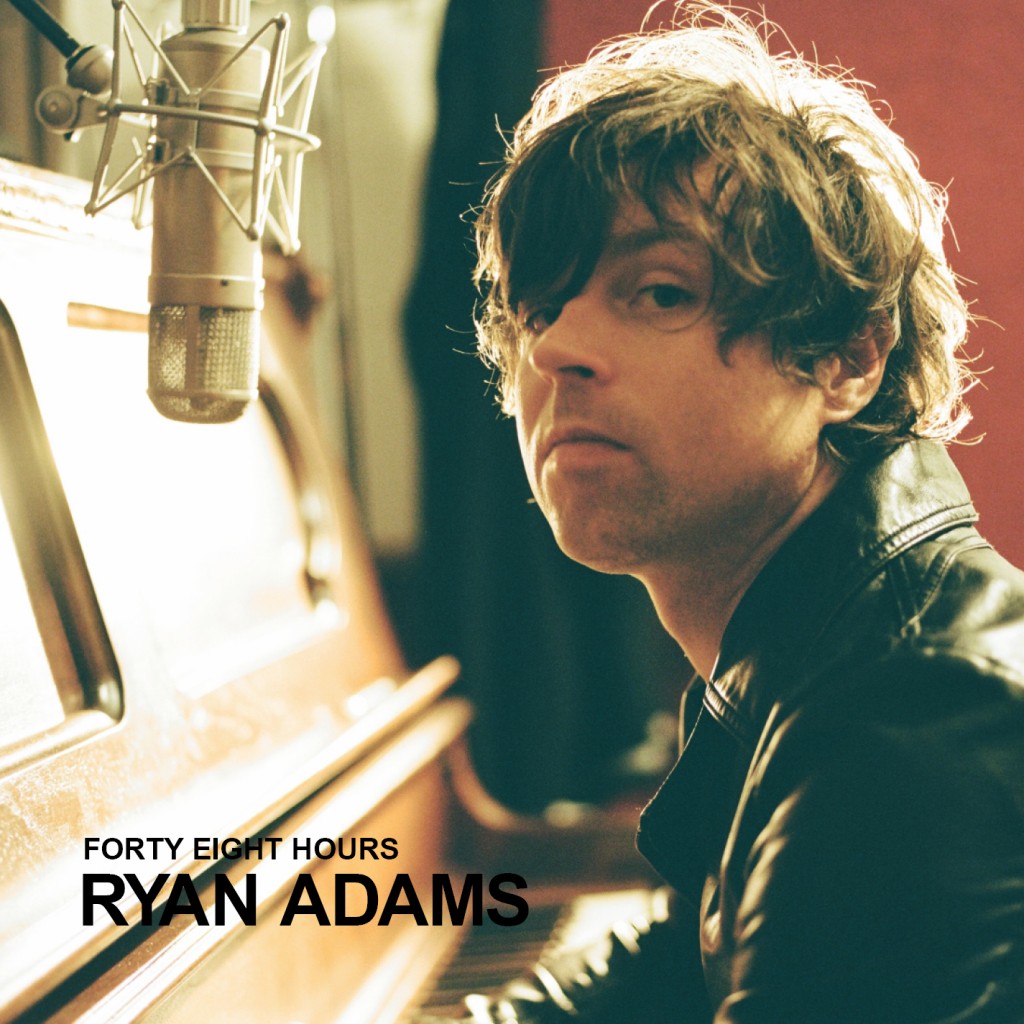
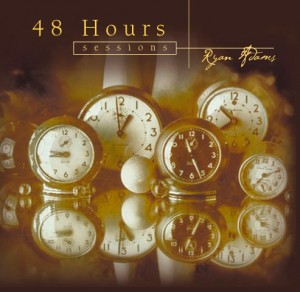
In 2001, Ryan Adams made one of the best albums of his career, and never released it. It’s one of my favorite albums and it has never seen the light of day. The name of the album is 48 Hours. It was recorded during a, yes you guessed it, 48 hour intense session. 48 Hours is the stuff og legends. It was recorded shortly after Gold, and it was helmed by multi-instrumentalist Ethan Johns who produced Adams’ Heartbreaker. For reasons unknown, 48 Hours was shelved in favor of Demolition (which does include a few tracks from the session). I love Demolition but 48 Hours is another league.
There are so many good songs on the album, there are at least 5 masterpieces and no fillers. I should’ve done a post on the whole record, but…
I’ve chosen a country song from 48 Hours as my fifth in the Unreleased series, the song is called Walls:
Great pedal-steel work by Greg Leitz!
I see Walls as a song about looking back at your life, discovering that you maybe should have been more open, it’s about “the walls” between people.
Walls, lyrics:
These are the walls
Walls are emptiness made
Yeah, and this is the storm
Looks like it’s gonna hold
Yeah, nobody knows
Who they are around here anymore
Cigarettes and some beers
Then it’s back in the car to the store
Ain’t it funny how we forgot who we were through the years
Put your fist through the wall cryin’ television tears
Maybe I had something nobody saw
Blame it on the walls
Well the rain’s gonna come
Come and wash away all of our sins
And if the damn doesn’t break
Going to wash it away with some gin
Cause they got money to make
And I’ve always got a reason to go
Sheets don’t move from the bed
My head doesn’t move from the floor
Ain’t it funny how we forgot who we were through the years
Put your fist through the wall cryin’ television tears
Maybe I had something nobody saw
Blame it on the walls
Ain’t it funny how we forgot who we were through the years
Put your fist through the wall cryin’ television tears
Put your fist through the wall cryin’ television tears
Put your fist through the wall cryin’ television tears
Put your fist through the wall cryin’ television tears
Put your fist through the wall cryin’ television tears
Yeah . . . yeah . . . yeah
Oh . . . oh