Category Archives: Great albums

Bruce Springsteen: Born To Run

OLD post … You’re being redirected to a newer version……
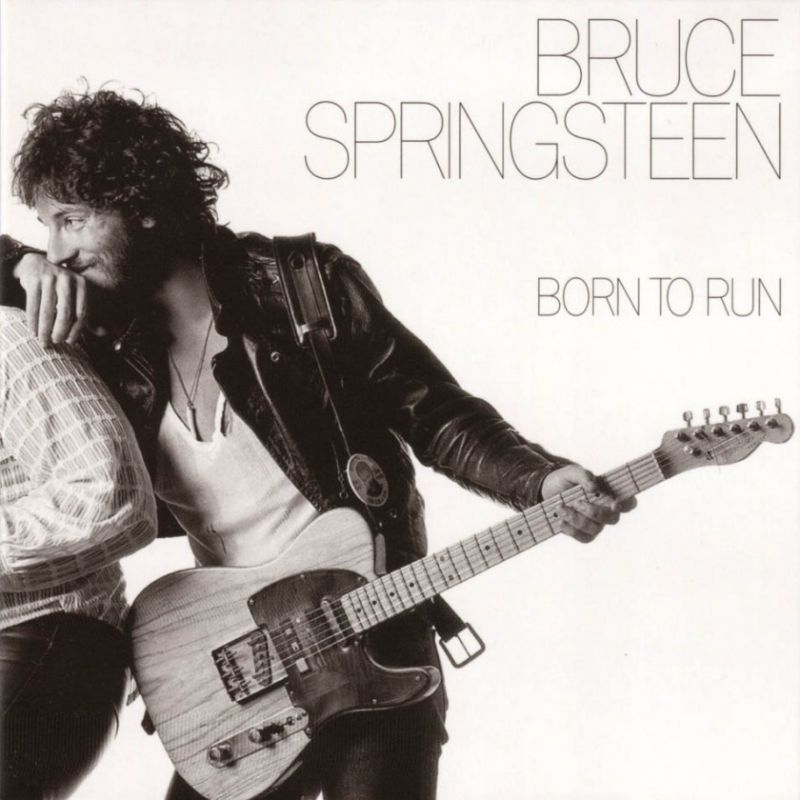
bruce springsteen born to run

Don’t run back inside
Darling you know just what I’m here for
So you’re scared and you’re thinking
That maybe we ain’t that young anymore
Show a little faith there’s magic in the night
You ain’t a beauty but hey you’re alright
Oh and that’s alright with me
~From “Thunder Road”

To hear Springsteen sing the line “Hiding on the backstreets” is to be captured by an image; the details can come later. Who needed to figure out all the words to “Like a Rolling Stone” to understand it?
~Greil Marcus (rollingstone.com)

Born to Run is a powerhouse release that takes you on an open-ended cinematic rock and roll journey.
~Bill Pulice (puluche.com)

Happy Birthday to my fav Springsteen album!

Thunder Road – best version – Live @ Hammersmith 1975-11-18:

Wings For Wheels – The Making of Born to Run (GREAT documentary – ~90min)
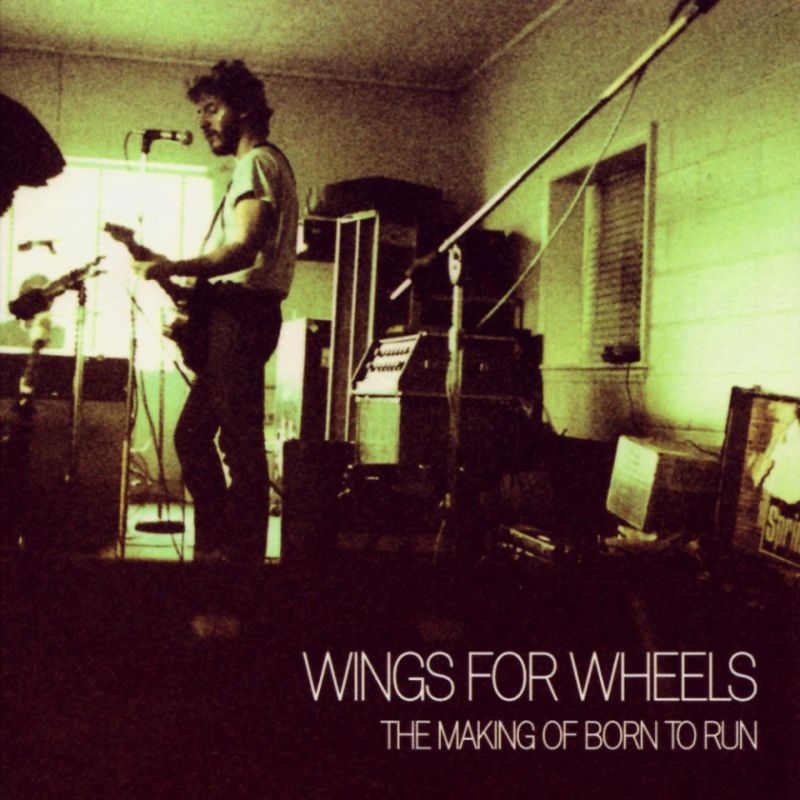
wings_for_wheels_the_making_of_born_to_run

From Wikipedia:

Released August 25, 1975 – (38 years old:)
Recorded Record Plant, New York
914 Sound Studios, Blauvelt, New York
January 1974 – July 1975
Genre Rock
Length 39:26
Label Columbia
Producer Bruce Springsteen, Mike Appel, Jon Landau

Born to Run is the third album by the American singer-songwriter Bruce Springsteen. It was released on August 25, 1975 through Columbia Records. It captured the heaviness of Springsteen’s earlier releases while displaying a more diverse range of influences.

Born to Run was a critical and commercial success and became Springsteen’s breakthrough album. It peaked at number three on the Billboard 200, eventually selling six million copies in the US by the year 2000. Two singles were released from the album: “Born to Run” and “Tenth Avenue Freeze-Out”; the first helped Springsteen to reach mainstream popularity. The tracks “Thunder Road” and “Jungleland” became staples of album-oriented rock radio and Springsteen concert high points.

On November 14, 2005, a “30th Anniversary” remaster of the album was released as a box set including two DVDs: a production diary film and a concert movie.
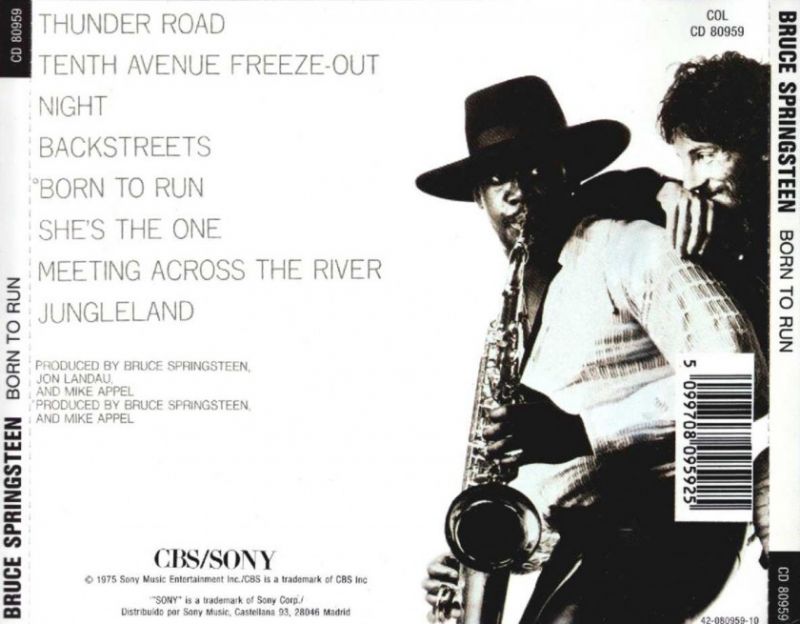
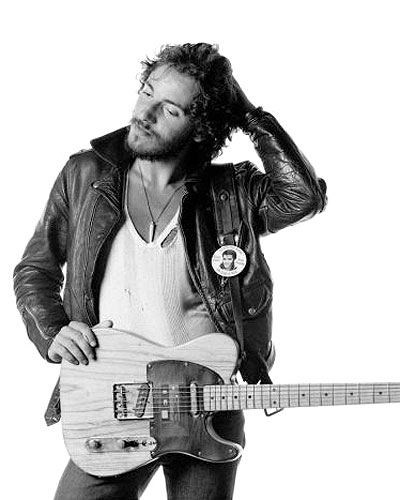
bruce springsteen - born to run (back)

Continue reading Bruce Springsteen: Born To Run

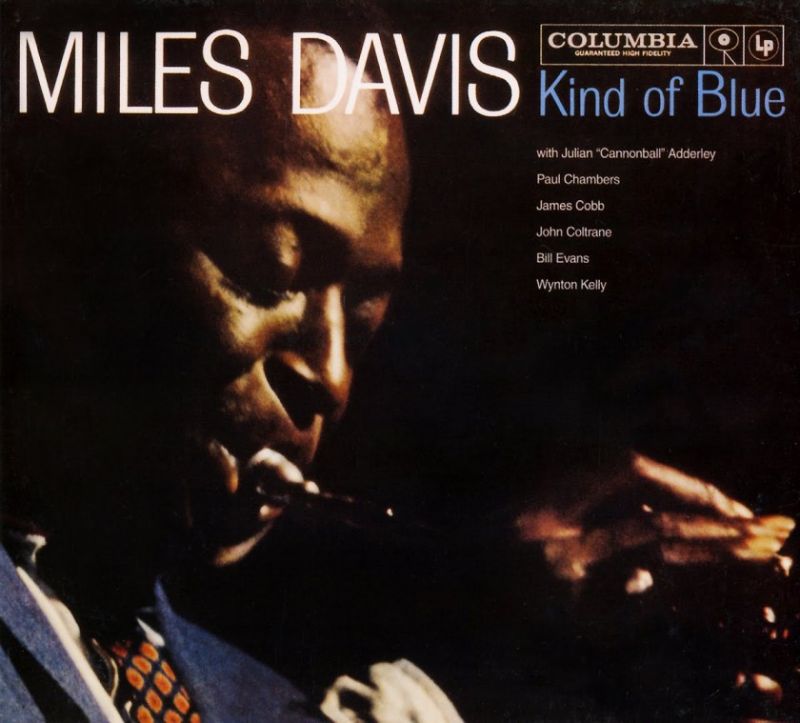
Today: Miles Davis released Kind of Blue in 1959 – 54 years ago

kind-of-blue

“It must have been made in heaven.”
– Jimmy Cobb

Kind of Blue is a studio album by American jazz musician Miles Davis, released August 17, 1959, on Columbia Records in the United States. Recording sessions for the album took place at Columbia’s 30th Street Studio in New York City on March 2 and April 22, 1959. The sessions featured Davis’s ensemble sextet, which consisted of pianist Bill Evans (Wynton Kelly on one track), drummer Jimmy Cobb, bassist Paul Chambers, and saxophonists John Coltrane and Julian “Cannonball” Adderley.

Though precise figures have been disputed, Kind of Blue has been described by many music writers not only as Davis’s best-selling album, but as the best-selling jazz record of all time. On October 7, 2008, it was certified quadruple platinum in sales by the Recording Industry Association of America (RIAA). It has been regarded by many critics as the greatest jazz album of all time and Davis’s masterpiece.

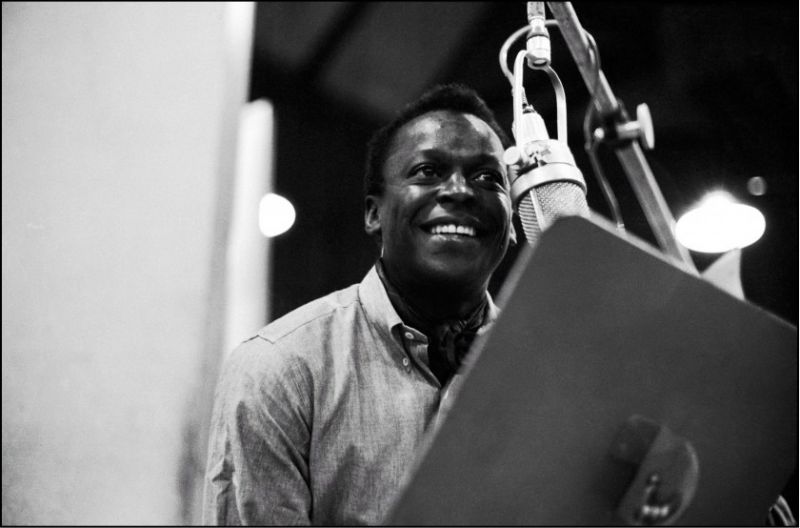
milesdavis2

The album’s influence on music, including jazz, rock, and classical music, has led music writers to acknowledge it as one of the most influential albums ever made. In 2002, it was one of fifty recordings chosen that year by the Library of Congress to be added to the National Recording Registry. In 2003, the album was ranked number 12 on Rolling Stone magazine’s list of the 500 greatest albums of all time.

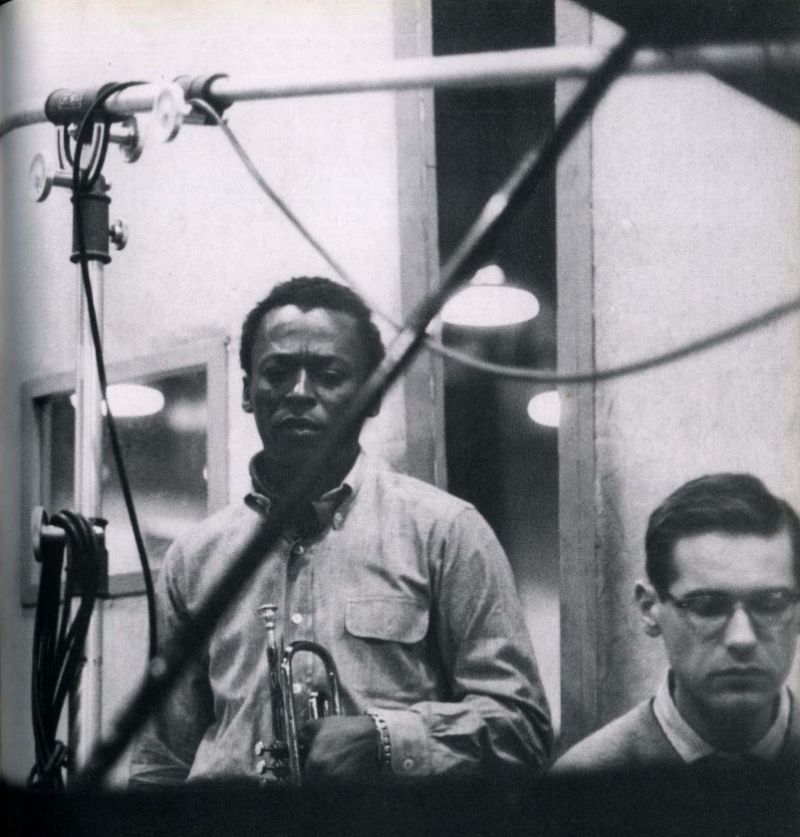
A Quartet In The Studio

Kind of Blue was recorded in two sessions at Columbia Records’ 30th Street Studio in New York City. On March 2, the tracks “So What”, “Freddie Freeloader”, and “Blue in Green” were recorded for side one of the original LP, and on April 22 the tracks “All Blues”, and “Flamenco Sketches” were recorded, making up side two. Production was handled by Teo Macero, who had produced Davis’s previous two LPs, and Irving Townsend.

miles davis4

TV performance from 1959, incredible archival footage where Miles Davis and his Quintette play So What from Kind of Blue:

Kind of Blue isn’t merely an artistic highlight for Miles Davis, it’s an album that towers above its peers, a record generally considered as the definitive jazz album, a universally acknowledged standard of excellence. Why does Kind of Blue posses such a mystique? Perhaps because this music never flaunts its genius… It’s the pinnacle of modal jazz — tonality and solos build from the overall key, not chord changes, giving the music a subtly shifting quality… It may be a stretch to say that if you don’t like Kind of Blue, you don’t like jazz — but it’s hard to imagine it as anything other than a cornerstone of any jazz collection.
—Stephen T. Erlewine (allmusic)

Track listing:
All songs written and composed by Miles Davis except where noted 

1. “So What”
2. “Freddie Freeloader”
3. “Blue in Green” (Miles Davis and Bill Evans)
4. “All Blues”
5. “Flamenco Sketches” (Miles Davis and Bill Evans)

Musicians


Miles Davis – Kind of Blue 50th Anniversary:


1959 – The Year that changed Jazz.
A very good documentary from BBC.   Four absolutely canonical LPs were recorded that year: Kind of Blue by Miles DavisTime Out by Dave Brubeck; Mingus Ah Um by Charles Mingus; and The Shape of Jazz to Come by Ornette Coleman. Good interviews and great music:

Album of the day:

Other August-17:

Continue reading Today: Miles Davis released Kind of Blue in 1959 – 54 years ago

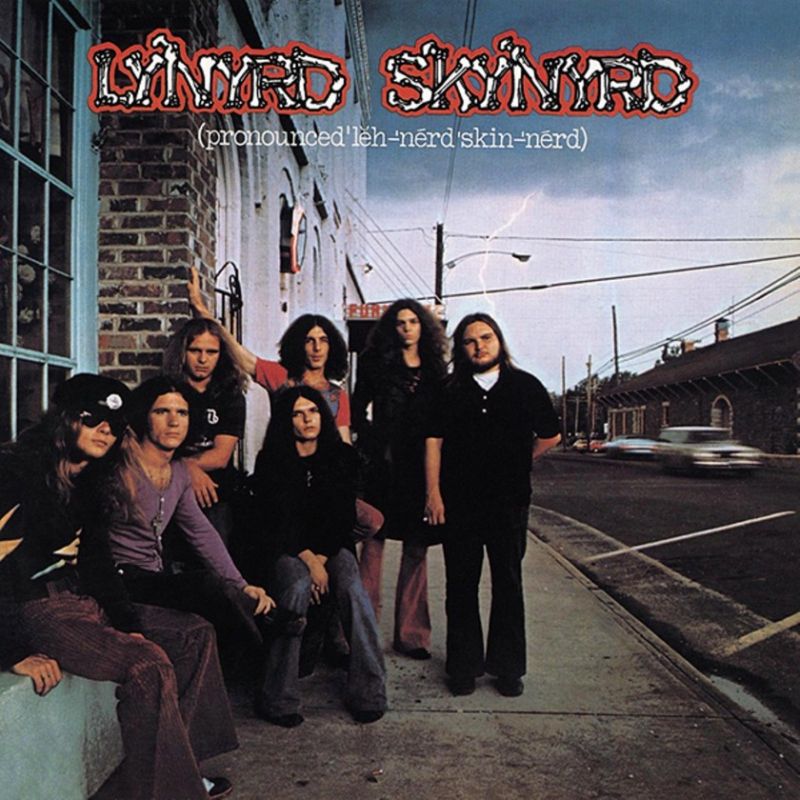
Today: Lynyrd Skynyrd released Pronounced ‘Lĕh-‘nérd ‘Skin-‘nérd 40 years ago

lynyrd_skynyrd_pronounced_leh_nerd_skin_nerd_remastered_2001_retail_cd-front

(Pronounced ‘lĕh-‘nérd ‘skin-‘nérd) is the debut album from Lynyrd Skynyrd, released in 1973. The album features several of the band’s most well-known songs, including “Gimme Three Steps”, “Simple Man”, “Tuesday’s Gone” and “Free Bird”, the latter of which launched the band to national stardom.

Bassist Leon Wilkeson left the band during the album’s early recording sessions only playing on two tracks. Strawberry Alarm Clock guitarist Ed King was asked to fill in for Wilkeson on bass during the remaining sessions, as Wilkeson already wrote many of the bass parts. This left Skynyrd with only six official members at the time of the album’s release. Not long after, King remained with the band, and was made a member, so that they could replicate the triple-guitar lead during live performances. Wilkeson returned to the band when it was time to take the photo for the album cover and embark on the tour for the album. It was certified gold on December 18, 1974, platinum and 2x platinum on July 21 1987 by the RIAA.

Rolling Stone Magazine named it the 39 best debut album of all time:

From the git-go, these shaggy folks from deepest Jacksonville, Florida played hard, lived harder and shot from the hip, all three guitars blazing in music that blew past the Mason-Dixon line to become America’s next top boogie-rock. Discovered and produced by from essential mid-Sixties Dylan sideman Al Kooper, Skynyrd offered taut rockers including “Poison Whiskey” and the perpetual lighter (well, now iPhone) waving anthem “Freebird.” Perhaps the ultimate Southern rock band and this record aged shockingly well; just ask the Drive-By Truckers.

Here’s Lynyrd Skynyrd in their prime, a full set from BBC’s Old Grey Whistle Test:

“Skynyrd was nothing but rockers, and they were Southern rockers to the bone. This didn’t just mean that they were rednecks, but that they brought it all together — the blues, country, garage rock, Southern poetry” – Stephen Thomas Erlewine (allmusic)

Let’s include another great set. Here’s  Lynyrd Skynyrd at 1976 Knebworth Fair Festival, England:

And the Album from Spotify:


What a great album, what a great band!

– Hallgeir

Sources: Allmusic, Wikipedia, Rolling Stone Magazine

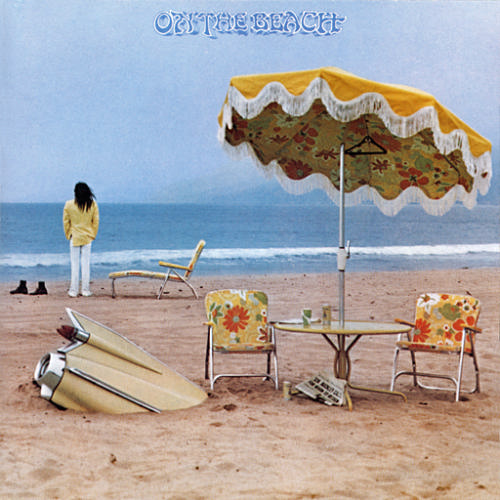
Today: Neil Young released “On The Beach” in 1974 – 39 years ago

Neil Young - on-the-beach

“Good album. One side of it particularly—the side with ‘Ambulance Blues’, ‘Motion Pictures’ and ‘On the Beach’ — it’s out there. It’s a great take.”
~Neil Young

The second in Neil’s ditch trilogy, On the Beach was also disavowed by Young and unreleased on CD until 2003. It is weirder but sharper than Time Fades Away, with harrowing lows and amazing highs, including the off-the-cuff, eight-minute folk jam “Ambulance Blues.”
~rollingstone.com

Walk on:

From Wikipedia:

Released July 16, 1974
Recorded November 30, 1973 – April 7, 1974Arrow Ranch, Woodside, California;Sunset Sound Recorders,Hollywood
Genre Rock, folk rock, blues rock
Length 39:40
Label Reprise
Producer Neil Young, David Briggs (tracks 1 4),
Mark Harman (tracks 2 3 5),
Al Schmitt (tracks 6 7 8)

On the Beach is the fifth studio album by Neil Young, released in 1974. It was unavailable on compact disc until it was released as a HDCD-encoded remastered version on August 19, 2003 as part of his Archives Digital Masterpiece Series.

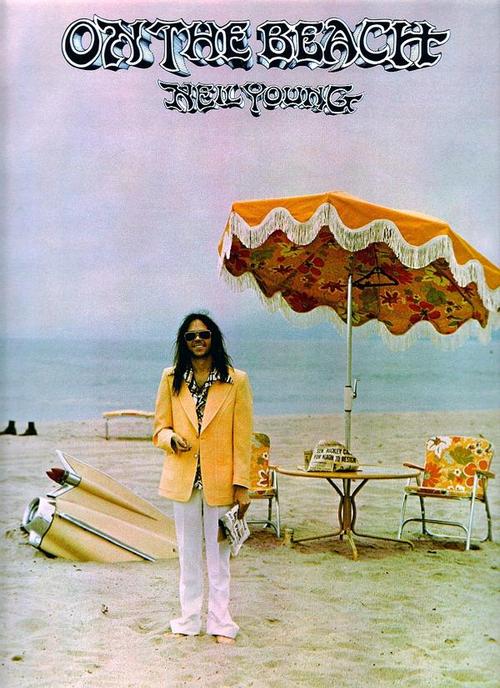
Neil Young - on-the-beach

Recorded after (but released before) Tonight’s the NightOn the Beach shares some of that album’s bleakness and crude production—which came as a shock to fans and critics alike, as this was the long-awaited studio follow-up to the commercially and critically successful Harvest—but also included hints pointing towards a more subtle outlook, particularly on the opener, “Walk On”.

While the original Rolling Stone review described it as “One of the most despairing albums of the decade”, later critics such as Allmusic’s William Ruhlmann used the benefit of hindsight to conclude that Young “[w]as saying goodbye to despair, not being overwhelmed by it”. The despair of Tonight’s the Night, communicated through intentional underproduction and lyrical pessimism, gives way to a more polished album that is still pessimistic but to a lesser degree.

Neil Young - on-the-beach

Much like Tonight’s the NightOn the Beach was not a commercial success at the time of its release but over time attained a high regard from fans and critics alike. The album was recorded in a haphazard manner, with Young utilizing a variety of session musicians, and often changing their instruments while offering only bare-bones arrangements for them to follow (in a similar style to Tonight’s the Night). He also would opt for rough, monitor mixes of songs rather than a more polished sound, alienating his sound engineers in the process.

On the Beach:

The world is turnin’,
I hope it don’t turn away,
The world is turnin’,
I hope it don’t turn away.
All my pictures are fallin’
from the wall where
I placed them yesterday.
The world is turnin’,
I hope it don’t turn away.

[The best song on the album…] Ambulance Blues:

“Ambulance Blues” closes the album. The melody ‘unintentionally’ quotes Bert Jansch’s “Needle of Death”. In a 1992 interview for the French “Guitare & Claviers” magazine, Young discussed Jansch’ influence:

“As for acoustic guitar, Bert Jansch is on the same level as Jimi (Hendrix). That first record of his is epic. It came from England, and I was especially taken by “Needle of Death”, such a beautiful and angry song. That guy was so good. And years later, on On the Beach, I wrote the melody of “Ambulance Blues” by styling the guitar part completely on “Do You Hear Me Now?”. I wasn’t even aware of it, and someone else drew my attention to it.”

The song explores Young’s feelings about his critics, Richard Nixon and the state of CSNY. The line “You’re all just pissing in the wind” was a direct quote from Young’s manager regarding the inactivity of the quartet.

Ambulance Blues:

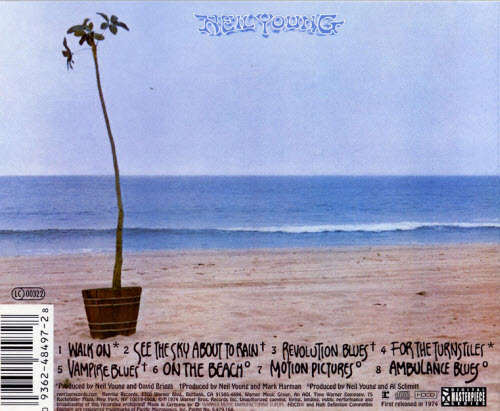
Track Listing:

All songs written by Neil Young.

Side one

  1. “Walk On” – 2:42
  2. “See the Sky About to Rain” – 5:02
  3. “Revolution Blues” – 4:03
  4. “For the Turnstiles” – 3:15
  5. “Vampire Blues” – 4:14

Side two

  1. “On the Beach” – 6:59
  2. “Motion Pictures” – 4:23
  3. “Ambulance Blues” – 8:56

The real engine of the album’s brilliance, though, is the trio of slow, long, lonely hotel room folk songs that closes out the album, peaking with Neil’s “Desolation Row”, “Ambulance Blues.”
~Rob Mitchum (pitchfork.com)

Personnel:

  • Neil Young – guitar on 1 3 5 6 7 8, vocal, Wurlitzer electric piano on 2, banjo on 4, harmonica on 7 8
  • Ben Keith – slide guitar on 1, vocal on 1 4, steel guitar on 2, Dobro on 4, Wurlitzer electric piano on 3, organ on 5, hand drums on 6, bass on 7 8
  • Tim Drummond – bass on 2 5 6, percussion on 5
  • Ralph Molina – drums on 1 5 6, vocal on 1, hand drums on 7 8

Additional personnel

  • Billy Talbot – bass on 1
  • Levon Helm – drums on 2 3
  • Joe Yankee – harp on 2, electric tambourine on 8
  • David Crosby – guitar on 3
  • Rick Danko – bass on 3
  • George Whitsell – guitar on 5
  • Graham Nash – Wurlitzer electric piano on 6
  • Rusty Kershaw – slide guitar on 7, fiddle on 8

..On the Beach was savage and, ultimately, triumphant. “I’m a vampire, babe,” Young sang, and he proceeded to take bites out of various subjects: threatening the lives of the stars who lived in L.A.’s Laurel Canyon (“Revolution Blues”); answering back to Lynyrd Skynyrd, whose “Sweet Home Alabama” had taken him to task for his criticisms of the South in “Southern Man” and “Alabama” (“Walk On”); and rejecting the critics (“Ambulance Blues”). But the barbs were mixed with humor and even affection, as Young seemed to be emerging from the grief and self-abuse that had plagued him for two years. But the album was so spare and under-produced, its lyrics so harrowing, that it was easy to miss Young’s conclusion: he was saying goodbye to despair, not being overwhelmed by it.
~William Ruhlmann (allmusic.com)

Complete album @ youtube:

Album @ spotify:

Other July 16:

Continue reading Today: Neil Young released “On The Beach” in 1974 – 39 years ago

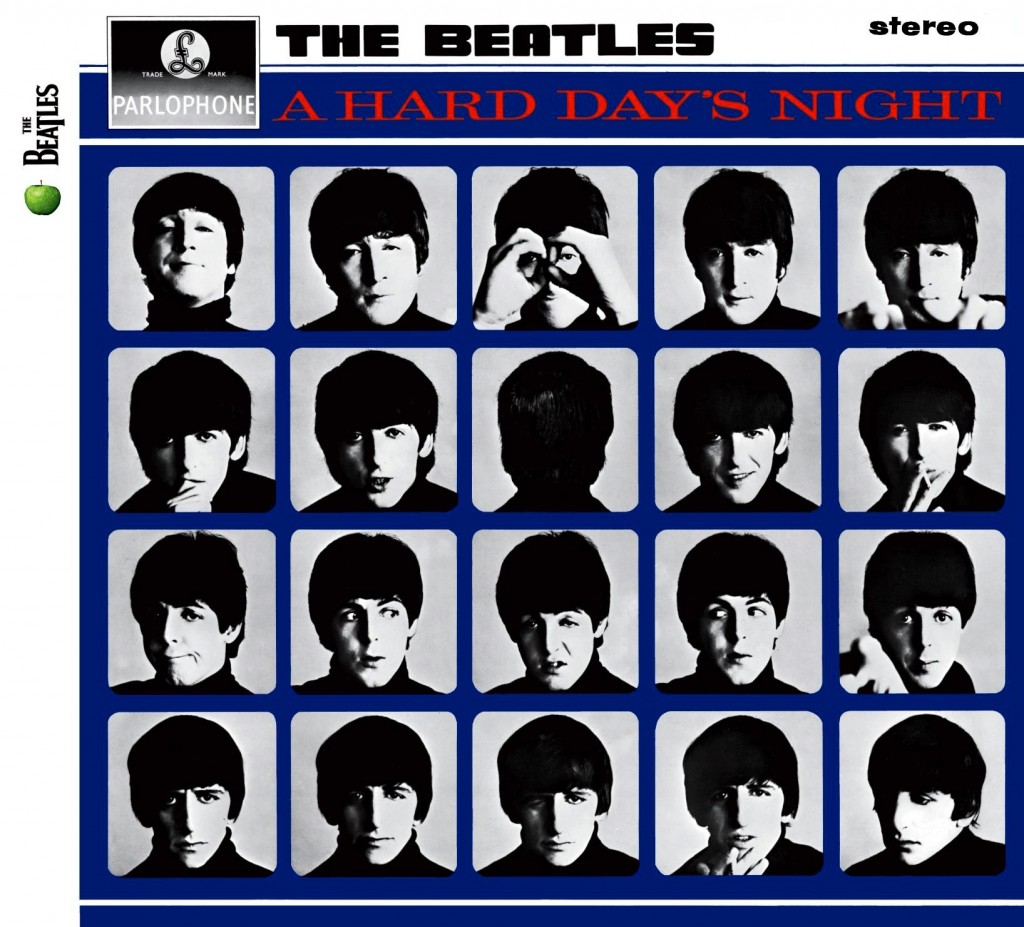
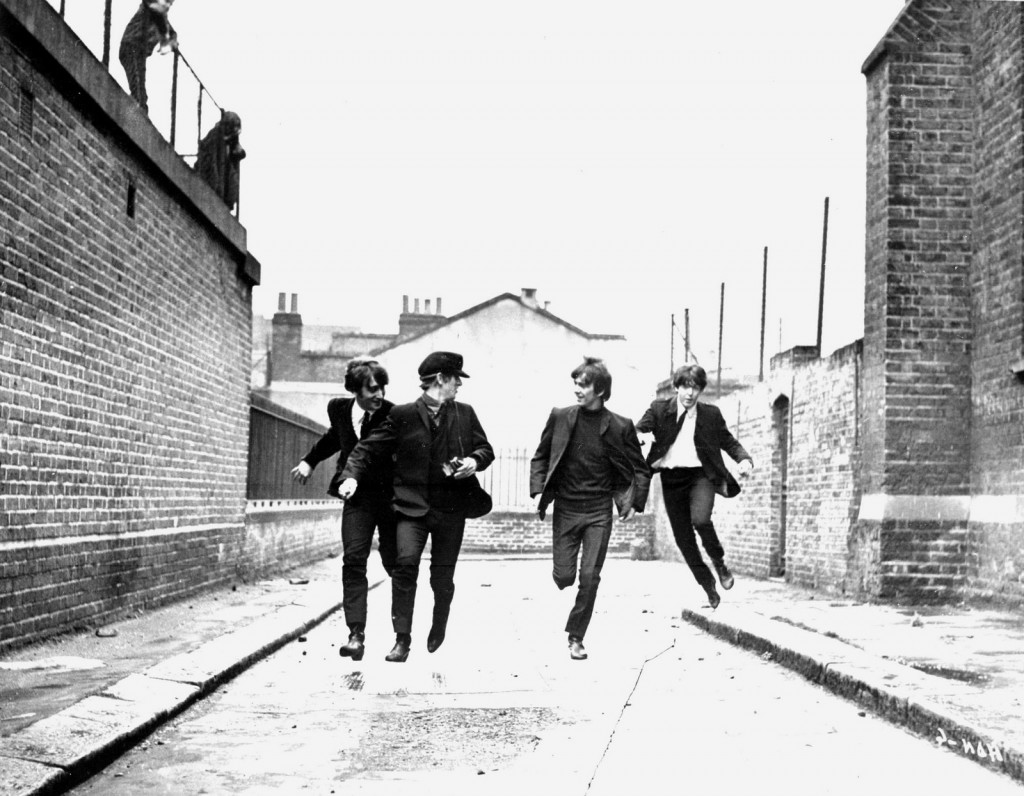
Today: A Hard Days Night by The Beatles was released in 1964

A_Hard_Day's_Nigth

“We were different. We were older. We knew each other on all kinds of levels that we didn’t when we were teenagers. The early stuff – the Hard Day’s Night period, I call it – was the sexual equivalent of the beginning hysteria of a relationship. And the Sgt Pepper-Abbey Road period was the mature part of the relationship.”
– John Lennon (1980)

A Hard Day’s Night is the third album by The Beatles; it was released on July 10, 1964. The album is a soundtrack to the A Hard Day’s Night film, starring the Beatles. The American version of the album was released two weeks earlier, on 26 June 1964 by United Artists Records, with a different track listing. This is the first Beatles album to be recorded entirely on four-track tape, allowing for good stereo mixes.

HDN

In 2000, Q placed A Hard Day’s Night at number 5 in its list of the 100 Greatest British Albums Ever. In 2003, the album was ranked number 388 on Rolling Stone magazine’s list of the 500 Greatest Albums of All Time.

The soundtrack songs were recorded in late February, and the non-soundtrack songs were recorded in June. The title song itself was recorded on April 16.

“…but A Hard Day’s Night is perhaps the band’s most straightforward album: You notice the catchiness first, and you can wonder how they got it later.

The best example of this is the title track– the clang of that opening chord to put everyone on notice, two burning minutes thick with percussion (including a hammering cowbell!) thanks to the new four-track machines George Martin was using, and then the song spiraling out with a guitar figure as abstractedly lovely as anything the group had recorded.”

– Tom Ewing, Pitchfork

A Hard Day’s Night (Paris, 1965):

japan_a_hard_days_night_lp-580x572

I saw the movie before I bought the album, and the pictures roll before my eyes as I listen to the album. The film is a masterpiece and so is the album.
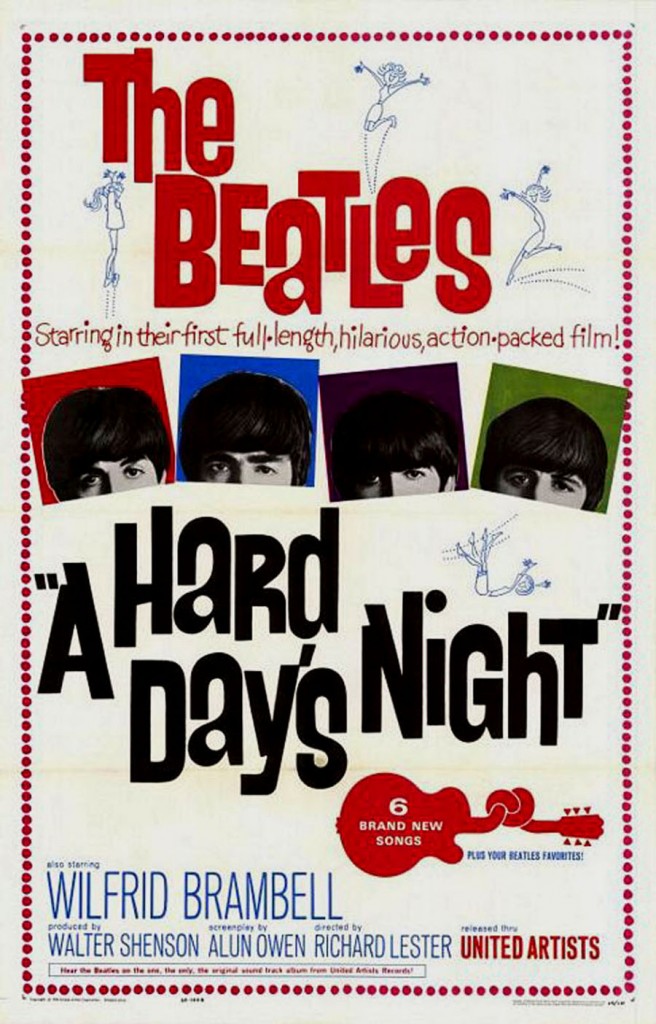
a-hard-days-night movie

“Considering the quality of the original material on With the Beatles, it shouldn’t have been a surprise that Lennon & McCartney decided to devote their third album to all-original material. Nevertheless, that decision still impresses, not only because the album is so strong, but because it was written and recorded at a time when the Beatles were constantly touring, giving regular BBC concerts, appearing on television and releasing non-LP singles and EPs, as well as filming their first motion picture. In that context, the achievement of A Hard Day’s Night is all the more astounding.”
– Allmusic (Stephen Thomas Erlewine)

It was my first Beatles album, and even if it has lost it’s top spot on my Beatles list, I love it dearly. It always makes me happy when i put it on.

John Lennon was the main contributor to the album. He wrote A Hard Day’s Night,  I Should Have Known Better, Tell Me Why, Any Time At All, I’ll Cry Instead, When I Get Home and You Can’t Do That.

He also wrote the majority of If I Fell and I’ll Be Back, and wrote I’m Happy Just To Dance With You with McCartney.

I Should Have Known Better (my favorite song on the album):

That doesn’t mean that Paul McCartney was  left off the record. He wrote the  ballads Things We Said Today plus And I Love Her , and lets not forget the lovely single Can’t Buy Me Love.

Can’t Buy Me Love:

As always the lines blur on some of the songs, but there are a lot of indications that this was the way the songs were composed, or rather, who wrote the songs.

“When we knew we were writing for something like an album John would write a few in his spare moments, like this batch here. He’d bring them in, we’d check ’em. I’d write a couple and we’d throw ’em at each other, and then there would be a couple that were more co-written. But you just had a certain amount of time.”
– Paul McCartney

A Hard Day’s Night is classic album that is a true testament to their collaborative writing powers, and, man, they had become a tight band!

– Hallgeir

Sources: Wikipedia, Allmusic, Pitchfork, John Lennon Interview with David Sheff in 1980, Many Years From Now by Barry Miles (book)