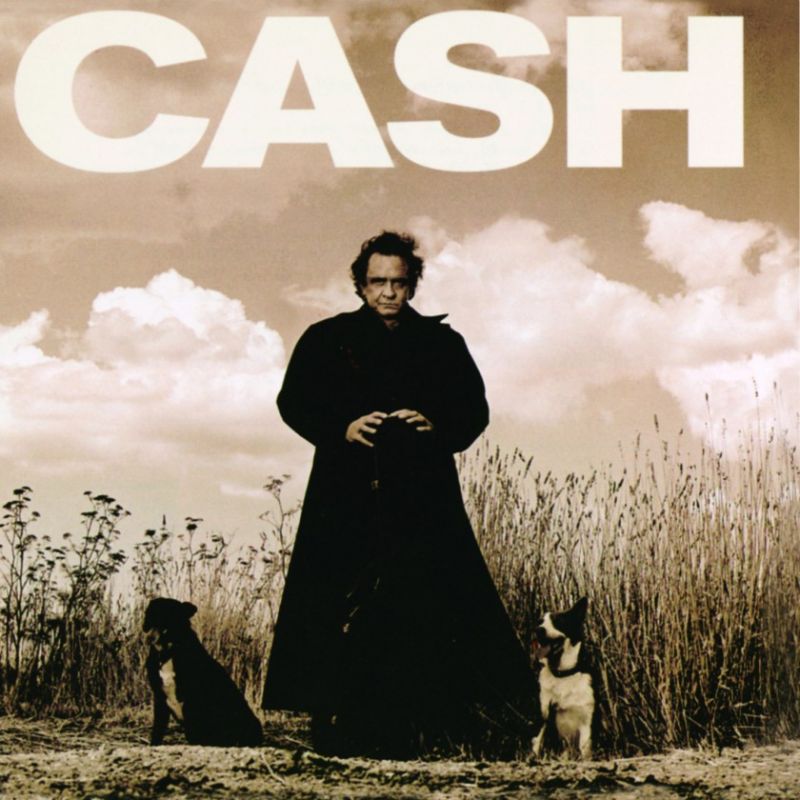
April 26: Johnny Cash American Recordings was released in 1994
…Always, the choice of material is a revelation. The Beast In Me (written by former son-in-law, Nick Lowe) could be autobiographical. And while writers like horrorpunk figurehead Glenn Danzig or Tom Waits probably would never have figured on his radar were it not for Rubin; time and again the duo found songs that were, in Cash’s hands, to take on new life. This willingness to experiment was to set a precedent: Subsequent albums were to see him work magic on material from Nine Inch Nails to U2 and Depeche Mode. But Johnny Cash’s final road to redemption and artistic fulfillment starts here…
~Chris Jones (bbc.co.uk)
American Recordings did something very important — it gave Cash a chance to show how much he could do with a set of great songs and no creative interference, and it afforded him the respect he’d been denied for so long, and the result is a powerful and intimate album that brought the Man in Black back to the spotlight, where he belonged.
~Mark Deming (allmusic.com)
“If it wasn’t for bad luck, I wouldn’t have no luck at all.”
~”Born Under A Bad Sign”
–
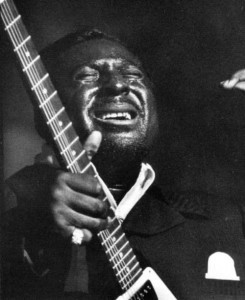
Albert King is truly a “King of the Blues,” although he doesn’t hold that title (B.B. does). Along with B.B. and Freddie King, Albert King is one of the major influences on blues and rock guitar players. Without him, modern guitar music would not sound as it does — his style has influenced both black and white blues players from Otis Rush and Robert Cray to Eric Clapton and Stevie Ray Vaughan.
~Stephen Thomas Erlewine (allmusic.com)
Albert King & Stevie Ray Vaughan — In Session (1h28m):
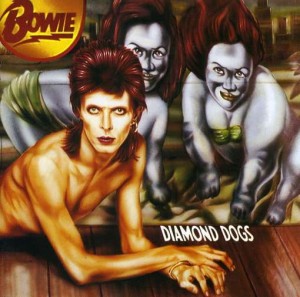
When this came out in 1974, it was roundly dismissed as Ziggy Stardust’s last strangled gasp. In hindsight, Diamond Dogs is marginally more worthwhile; its resigned nihilism inspired interesting gloom and doom from later goth and industrial acts such as Bauhaus and Nine Inch Nails. ~Mark Kemp (rollingstone.com in 2004)
April 24: David Bowie released Diamond Dogs in 1974
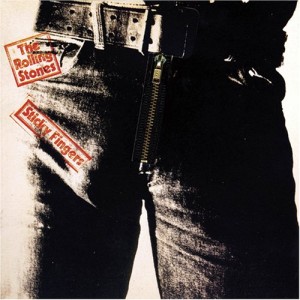
Sticky Fingers was never meant to be the title. It’s just what we called it while we were working on it. Usually though, the working titles stick.
~Keith Richards 1971
—
While many hold their next album, Exile On Main St., as their zenith, Sticky Fingers, balancing on the knife edge between the 60s and 70s, remains their most coherent statement.
~Chris Jones (bbc.co.uk)
April 23: The Rolling Stones released Sticky Fingers in 1971
Just because I’m playing jazz I don’t forget about me. I play or write me the way I feel through jazz, or whatever. Music is, or was, a language of the emotions.
~Charles Mingus
–
Irascible, demanding, bullying, and probably a genius, Charles Mingus cut himself a uniquely iconoclastic path through jazz in the middle of the 20th century, creating a legacy that became universally lauded only after he was no longer around to bug people.
~Richard S. Ginell (allmusic.com)
Charles Mingus Triumph of the Underdog (1998 documentary film)
April 22: The late Charles Mingus was born in 1922