If you can’t play the blues… you might as well hang it up.
~Dexter Gordon
Jazz to me is a living music. It’s a music that since its beginning has expressed the feelings, the dreams, hopes, of the people.
~Dexter Gordon
Montmartre, Copenhagen, 1971:
Wikipedia:
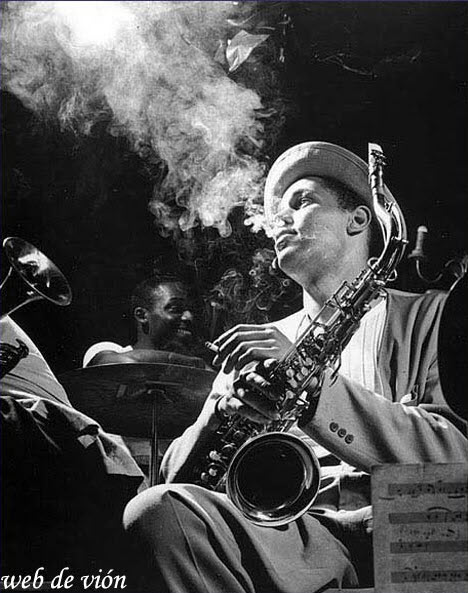
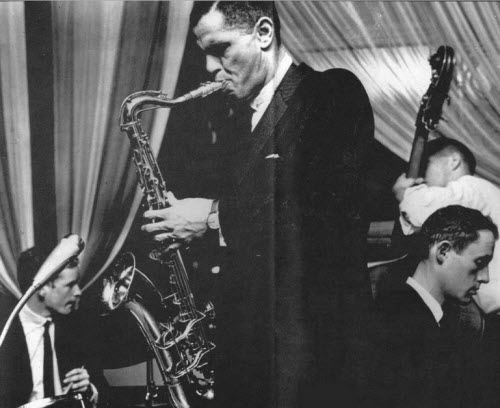
Dexter Gordon (February 27, 1923 – April 25, 1990) was an American jazz tenor saxophonist. He was among the earliest tenor players to adapt the bebop musical language of people like Charlie Parker, Dizzy Gillespie, and Bud Powell to the instrument. His studio and live performance career spanned over 40 years.
Gordon’s height was 6 feet 6 inches (198 cm), so he was also known as “Long Tall Dexter” and “Sophisticated Giant”. He played a Conn 10M ‘Ladyface’ tenor until it was stolen in a Paris airport in 1961. He then switched over to a Selmer Mark VI. His saxophone was fitted with an Otto Link metal mouthpiece, which can be seen in various photos.
Lady Bird (Belgium, 1964):
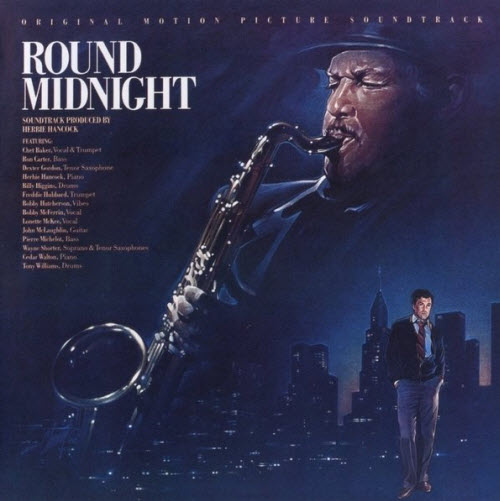
Dexter Gordon was named a member and Officer of the French Order of Arts and Letters in 1986 by the Ministry of Culture in France. His performance in Round Midnight (Warner Bros, 1986) was nominated for an Academy Award for Best Leading Role and he won a Grammy for Best Soundtrack. Dexter Gordon died on April 25, 1990, in Philadelphia, Pennsylvania.
Chan’s song (from the Round Midnight):
Album of the day:
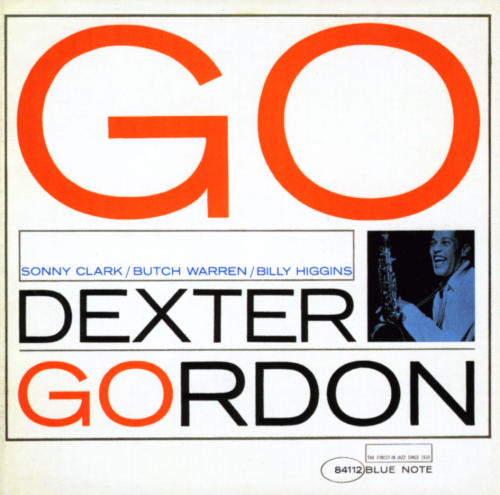
Go (1962)
From the first moments when Dexter Gordon sails into the opening song full of brightness and confidence, it is obvious that Go! is going to be one of those albums where everything just seems to come together magically. A stellar quartet including the stylish pianist Sonny Clark, the agile drummer Billy Higgins, and the solid yet flexible bassist Butch Warren are absolutely crucial in making this album work, but it is still Gordon who shines.
~Stacia Proefrock (allmusic.com)
Standing on the waters casting your bread
While the eyes of the idol with the iron head are glowing
Distant ships sailing into the mist
You were born with a snake in both of your fists while a hurricane was blowing
Freedom just around the corner for you
But with the truth so far off, what good will it do?
#2 – Jokerman
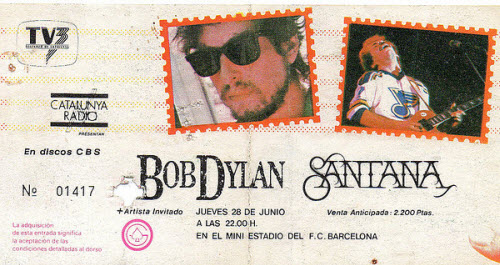
Setlist
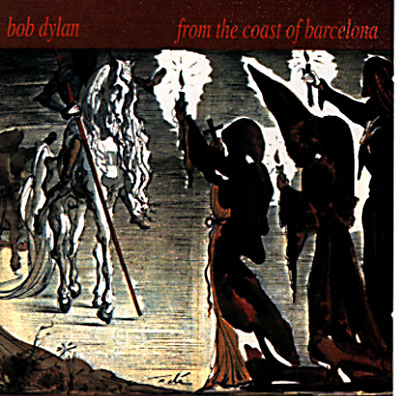
Highway 61 Revisited
Jokerman
All Along The Watchtower
Just Like A Woman
Maggie’s Farm
I And I
License To Kill
Greg Sutton: I’ve Got To Use My Imagination (Gerry Goffin & Barry Goldberg)
A Hard Rain’s A-Gonna Fall
It Ain’t Me, Babe
It’s Alright, Ma (I’m Only Bleeding)
Simple Twist Of Fate
Masters Of War
Ballad Of A Thin Man
Enough Is Enough
Every Grain Of Sand
Lay Lady Lay
Like A Rolling Stone
–
Mr. Tambourine Man
Don’t Think Twice, It’s All Right
Girl From The North Country
Knockin’ On Heaven’s Door
Señor (Tales Of Yankee Power)
The Times They Are A-Changin’
Tombstone Blues
Blowin’ In The Wind
Musicians:
Bob Dylan (vocal & guitar)
Mick Taylor (guitar)
Ian McLagan (keyboards)
Greg Sutton (bass)
Colin Allen (drums).
8-10, 18-20 Bob Dylan solo (vocal & guitar).
4, 9, 18 Bob Dylan harmonica.
21-25 Carlos Santana (guitar)
Been so long since a strange woman has slept in my bed
Look how sweet she sleeps, how free must be her dreams
In another lifetime she must have owned the world, or been faithfully wed
To some righteous king who wrote psalms beside moonlit streams
OLD post … You’re being redirected to a newer version……
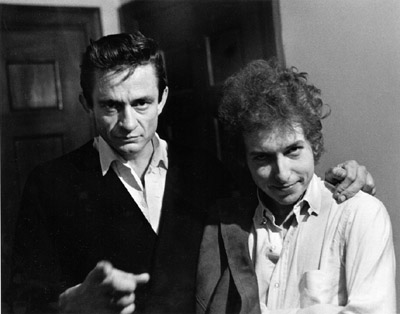
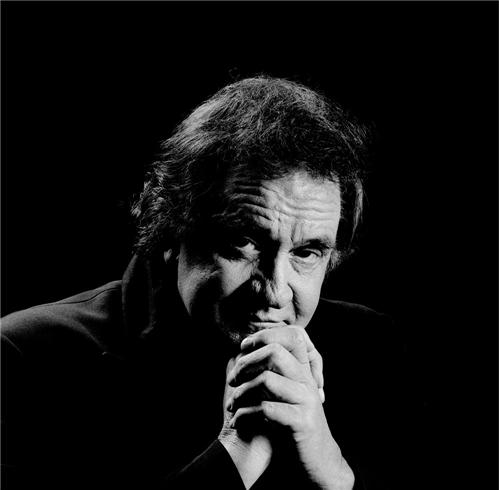
..Johnny was and is the North Star; you could guide your ship by him – the greatest of the greats then and now. I first met him in ‘62 or ‘63 and saw him a lot in those years. Not so much recently, but in some kind of way he was with me more than people I see every day.
~Bob Dylan (Statement on Johnny Cash – Sept 2003)
I love to go to the studio and stay there 10 or 12 hours a day. I love it. What is it? I don’t know. It’s life.
~Johnny Cash
You build on failure. You use it as a stepping stone. Close the door on the past. You don’t try to forget the mistakes, but you don’t dwell on it. You don’t let it have any of your energy, or any of your time, or any of your space.
~Johnny Cash
Lyle Lovett Inducts Johnny Cash into the Rock and Roll Hall of Fame:
I Walk The Line – 1956:
Wikipedia:
Birth name
John R. Cash
Born
February 26, 1932
Kingsland, Arkansas, United States
Died
September 12, 2003 (aged 71)
Nashville, Tennessee, United States
Genres
Country, rock and roll, gospel
Occupations
Singer-songwriter, musician, actor
Instruments
Vocals, guitar
Years active
1954–2003
Labels
Sun, Columbia, Mercury, American, House of Cash, Legacy Recordings
Associated acts
The Tennessee Three, The Highwaymen, June Carter Cash, The Statler Brothers, The Carter Family, Area Code 615
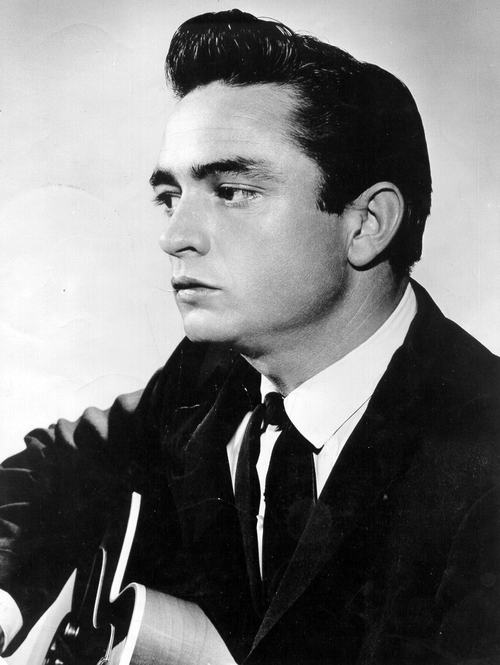
John R. “Johnny” Cash (February 26, 1932 – September 12, 2003) was an American singer-songwriter, actor, and author who was considered one of the most influential musicians of the 20th century. Although he is primarily remembered as a country music icon, his songs and sound spanned other genres including rockabilly and rock and roll—especially early in his career—and blues, folk, and gospel. This crossover appeal won Cash the rare honor of induction in the Country Music Hall of Fame, the Rock and Roll Hall of Fame, and the Gospel Music Hall of Fame.
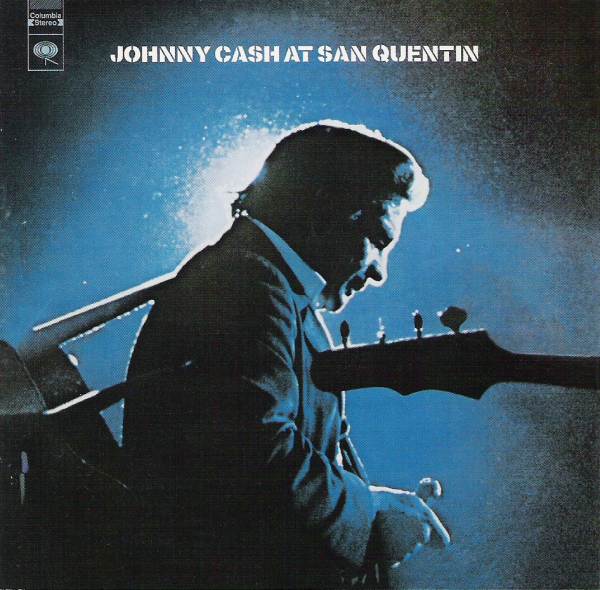
San Quentin (Live):
Cash was known for his deep, distinctive bass-baritone voice, for the “boom-chicka-boom” sound of his Tennessee Three backing band; for a rebelliousness, coupled with an increasingly somber and humble demeanor; for providing free concerts inside prison walls; and for his dark performance clothing, which earned him the nickname “The Man in Black”. He traditionally began his concerts with the phrase “Hello, I’m Johnny Cash.”, followed by his standard “Folsom Prison Blues”.
Much of Cash’s music echoed themes of sorrow, moral tribulation and redemption, especially in the later stages of his career. His best-known songs included “I Walk the Line”, “Folsom Prison Blues”, “Ring of Fire”, “Get Rhythm” and “Man in Black”. He also recorded humorous numbers like “One Piece at a Time” and “A Boy Named Sue”; a duet with his future wife, June Carter, called “Jackson”; and railroad songs including “Hey, Porter” and “Rock Island Line”. During the last stage of his career, Cash covered songs by several late 20th-century rock artists, most notably “Hurt” by Nine Inch Nails.
Hurt:
Some awards & Honors:
His diversity was evidenced by his presence in three major music halls of fame:
Nashville Songwriters Hall of Fame (1977)
Country Music Hall of Fame (1980)
Rock and Roll Hall of Fame (1992)
Only thirteen performers are in both of the last two, and only Hank Williams Sr., Jimmie Rodgers, Bob Wills, and Bill Monroe share the honor with Cash of being in all three. However, only Cash was inducted into the Rock and Roll Hall of Fame in the regular manner, unlike the other country members, who were inducted as “early influences.”
His pioneering contribution to the genre has also been recognized by the Rockabilly Hall of Fame. He received the Kennedy Center Honors in 1996. Cash stated that his induction into the Country Music Hall of Fame, in 1980, was his greatest professional achievement. In 2001, he was awarded the National Medal of Arts. He was nominated for an MTV Video Music Award for best cinematography for “Hurt” and was supposed to appear, but died during the night.
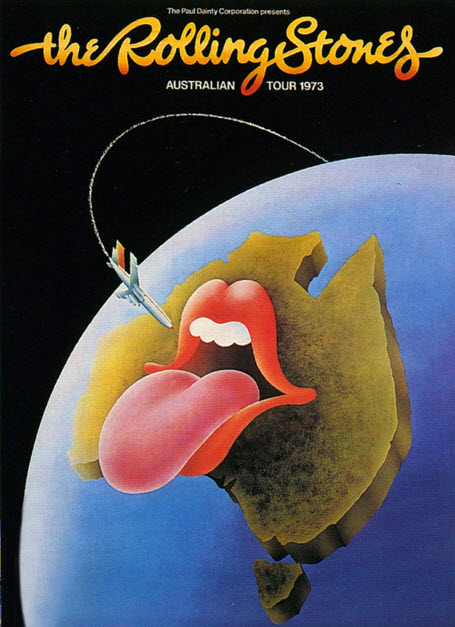
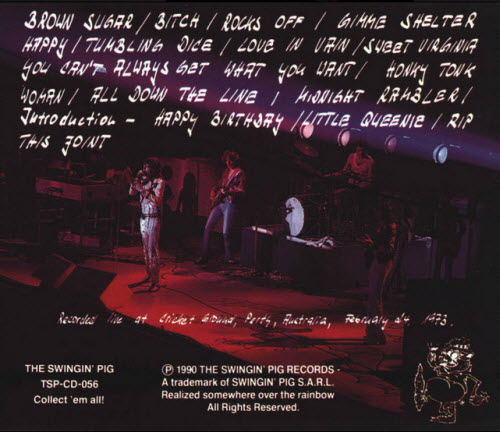
The Rolling Stones Pacific Tour 1973 was a concert tour of countries bordering the Pacific Ocean in January and February 1973 by The Rolling Stones. The tour is sometimes referred to as the Winter Tour 1973. However this title is misleading, as much of it took place in the Southern Hemisphere, where it was summer at the time.
#4 Gimme Shelter:
Setlist
Brown Sugar
Bitch
Rocks Off
Gimmie Shelter
Happy
Tumbling Dice
Love In Vain
Sweet Virginia
You Can’t Always Get What You Want
Honky Tonk Women
All Down The Line
Midnight Rambler
Band Introductions / Happy Birthday Nicky
Little Queenie
Rip This Joint
#12 Midnight Rambler
Tour Band:
Mick Jagger – lead vocals, harmonica
Keith Richards – guitar, backing vocals
Mick Taylor – guitar
Bill Wyman – bass guitar
Charlie Watts – drums
Additional musicians
Nicky Xenakis – drums
Bobby Keys – saxophones
Jimmy Price – trumpet, trombone
Nicky Hopkins – piano
#1 Brown Sugar
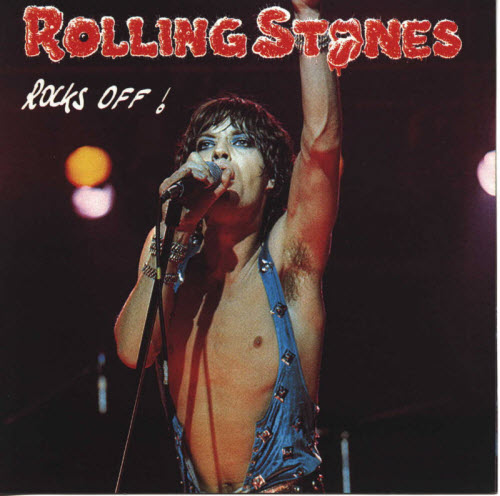
#3 Rocks Off
and here:
Brown Sugar * Bitch * Rocks Off * Gimme Shelter * Happy * Tumbling Dice * Honky Tonk Women * All Down The Line * Midnight Rambler * Little Queenie
“Now!… Well for one thing, the music, the rhyming and rhythm, what I call the mathematics of a song, are more second-nature to me. I used to have to go after a song, seek it out. But now, instead of going to it I stay where I am and let everything disappear and the song rushes to me. Not just the music, the words, too.
~Bob Dylan (to Margaret Steen, Nov 1965)
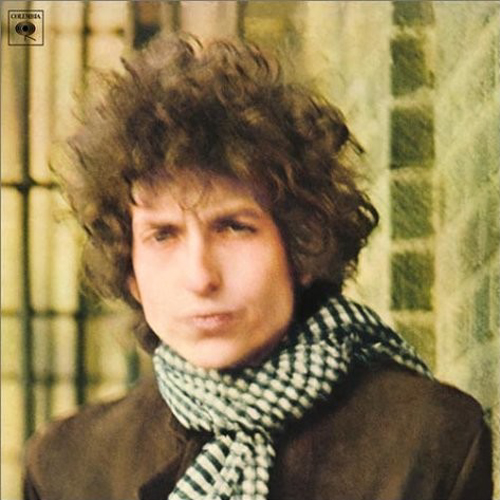
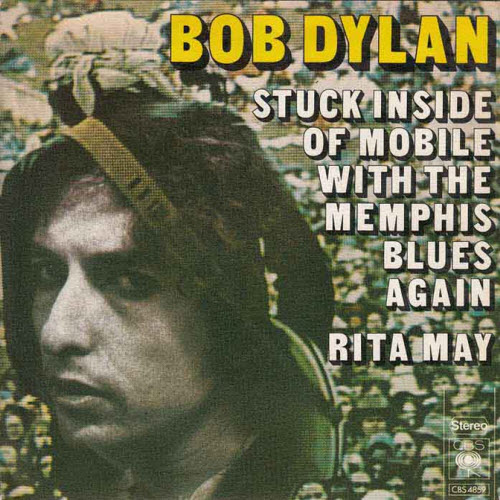
[SIoMWTMBA].. goes beyond being an exciting rock-music performance. It shares with those slower Blonde on Blonde songs ‘Visions of Johanna’ and ‘Sad-Eyed Lady of the Lowlands’ a greater-than-average duration and a general high seriousness of intention.
~Michael Gray (BD Encyclopedia)
@ #5 on my list of Dylan’s 200 best songs.. the second best song on Blonde On Blonde.
The master version (Blonde On Blonde version) was recorded @ Columbia Music Row Studios – Nashville, Tennessee –17 February 1966 (47 years ago).
This was the the 8th Blonde On Blonde session, produced by Bob Johnston.. and after 20 attempts Dylan was satisfied … with take 20. No other songs were tried @ this session.
….and those lovely drums….
…I know it sounds silly, but I love that song and how it pulls me in, but once I’m in there I always focus on the drummer. It’s a song with so much soul, but the more I listen, I always go back to those killer drums.
~Frank Black (Pixies, etc) (to MOJO’s “Dylan 100 best songs edition” )