Tag Archives: Bob Dylan

Bob Dylan: Huck’s Tune, Fukuoka & Osaka versions, April 2014 (Videos) – update

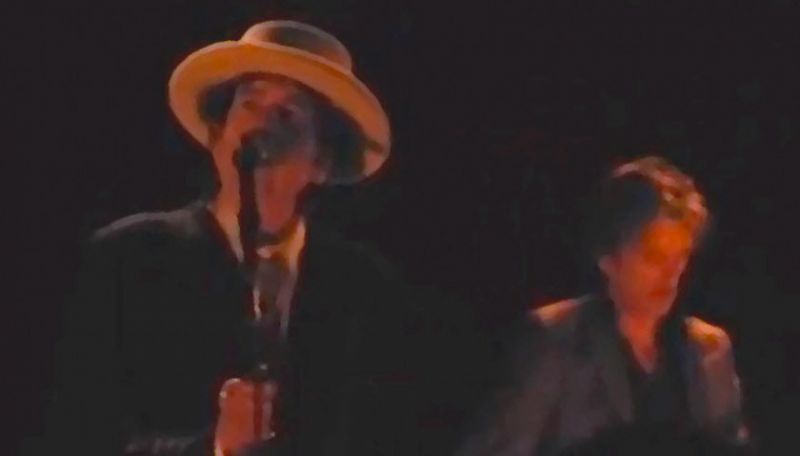
bob dylan & charlie sexton osaka 2014

Well I wandered alone through a desert of stone
And I dreamt of my future wife
My sword’s in my hand and I’m next in command
In this version of death called life
My plate and my cup are right straight up
I took a rose from the hand of a child
When I kiss your lips, the honey drips
But I’m gonna have to put you down for a while

NOTE: Some visitors report that the video’s doesn’t work. To soften the blow I’ve embedded three GREAT audios (that should work anywhere) of “Huck’s Tune” from Japan 2014.

Two video versions of “Huck’s Tune” from this April in Japan.

Musicians:

  • Bob Dylan – piano, harp
  • Tony Garnier – bass
  • George Recile – drums
  • Stu Kimball – rhythm guitar
  • Charlie Sexton on lead guitar
  • Donnie Herron – banjo, viola, violin, electric mandolin, pedal steel, lap steel

Continue reading Bob Dylan: Huck’s Tune, Fukuoka & Osaka versions, April 2014 (Videos) – update

April 28 in music history

Bob Dylan: Together Through Life (released 5 years ago today)
…Sure, I try to stick to the rules. Sometimes I might shift paradigms within the same song, but then that structure also has its own rules. And I combine them both, see what works and what doesn’t. My range is limited. Some formulas are too complex and I don’t want anything to do with them.
~Bob Dylan (to Bill Flanagan, in 2009)–

“Dylan, who turns 68 in May, has never sounded as ravaged, pissed off and lusty”
~David Fricke (rollingstone.com)

bob dylan Together-Through-Life
Charley Patton (between April 1887 and 1891 – April 28, 1934), also known as Charlie Patton, was an American Delta blues musician. He is considered by many to be the “Father of the Delta Blues”, and is credited with creating an enduring body of American music and personally inspiring just about every Delta blues man (Palmer, 1995). Musicologist Robert Palmer considers him among the most important musicians that America produced in the twentieth century. Many sources, including musical releases and his gravestone, spell his name “Charley” even though the musician himself spelled his name “Charlie.”Check out:

charlie patton
Kim Althea Gordon (born April 28, 1953, Rochester, New York) is an American musician, vocalist, artist, record producer, video director and actress. She has sung and played bass and guitar in the alternative rock band Sonic Youth, and in Free Kitten with Julia Cafritz (of Pussy Galore). Gordon has collaborated with a number of musicians, including Ikue Mori, DJ Olive, William Winant, Lydia Lunch, Courtney Love, Alan Licht, Mike Watt, and Chris Corsano.  KimGordon
Classic Interview: Bob Dylan – Klas Burling Interview, Stockholm, Sweden – 28 April 1966 (Read more)

Immediately after the official press conference at the Hotel Flamingo at Stockholm, Dylan was interviewed for Swedish Radio 3: Stockholm: Radiohuset by Sweden’s first disc jockey, Klas Burling. Burling asked all the questions that Dylan had clearly grown sick and tired of hearing and got a really hard time as a result. You have to give poor Burling credit for lasting the distance and carrying the interview through to the end.
(~Every Mind Polluting Word)

 bob Dylan klas burling interview 1966

April 27 in music history

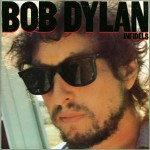
Today: Bob Dylan The 15th Infidels recording session in 1983 (read more)

…I did the album, and I call it that, but what it means is for other people to interpret, you know, if it means something to them. Infidels is a word that’s in the dictionary and whoever it applies to… to everybody on the album, every character. Maybe it’s all about infidels.
~Bob Dylan (to Kurt Loder in March 1984)
Infidels
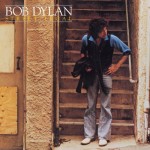
The 3rd Street-Legal session, 27 April 1978 (read more)

..“On this album, I took a few steps backward, but I also took a bunch of steps forward because I had a lot of time to concentrate on it. I also had the band sounding like I want it to sound. It’s got that organ sound from ‘Blonde on Blonde’ again. That’s something that has been missing.”
~Bob Dylan (to Robert Hilburn – May 1978)

bob dylan street-legal
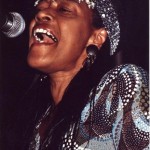
Ann Peebles (born April 27, 1947) is an African American singer-songwriter who gained celebrity for her Memphis soul albums of the 1970s on the Hi Records label. Two of her most popular songs are “I Can’t Stand the Rain” and “I’m Gonna Tear Your Playhouse Down”, which she wrote with her husband, Don Bryant, and radio broadcaster Bernard “Bernie” Miller and were subsequently popularized in cover versions by, among others, Eruption (1978) and Paul Young (1984), respectively. ann peebles
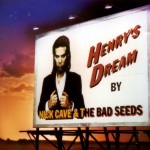
Henry’s Dream is the seventh album released by Nick Cave and the Bad Seeds, released 27th April 1992.This album remains a big favourite among Bad Seeds fans, although Nick Cave himself was reportedly unhappy with the production by David Briggs. Briggs preferred a “live-in-the-studio” method he had used with Neil Young. This led to Cave and Mick Harvey re-mixing the album, and ultimately to the Live Seeds recordings, as Cave wanted the songs “done justice”. nick cave henrys dream
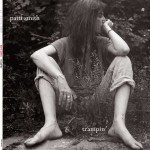
 Trampin’ is an album by Patti Smith, released April 27, 2004. It was the first album Smith released on the Columbia Records label.Rolling Stone magazine placed the record on its list of “The Top 50 Albums of 2004”  trampin_lp1
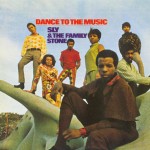
Dance to the Music is the second studio album by funk/soul band Sly and the Family Stone, released April 27, 1968 on Epic/CBS Records. It contains the Top Ten hit single of the same name, which was influential in the formation and popularization of the musical subgenre of psychedelic soul and helped lay the groundwork for the development of funk music. Sly_and_the_Family_Stone-Dance_To_The_Music_b
Gordon Haskell (born 27 April 1946, in Verwood, England) is a Pop, Rock & Blues music vocalistsongwriter, and bassist. He first gained recognition as a member of the British band Les Fleur de Lys. He sang on one of the songs of King Crimson‘s second album, then played bass and sang on their third album. After departing from King Crimson, he continued his musical career as a solo musician & gained international recognition in 2001 with his hit song How Wonderful You Are.  Gordon-Haskell1
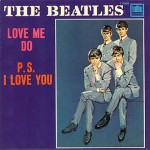
Love Me Do is the Beatles‘ first ever single, backed by “P.S. I Love You“. When the single was originally released in the United Kingdom on 5 October 1962, it peaked at No. 17; in 1982 it was re-promoted (not re-issued, retaining the same catalogue number) and reached No. 4. In the United States the single was a No. 1 hit in 1964. It was released 27 April 1964 in the US.  Love_Me_Do


– Hallgeir

April 26 in music history

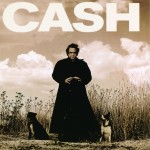
20 year anniversary for Johnny Cash’s American RecordingsAmerican Recordings did something very important — it gave Cash a chance to show how much he could do with a set of great songs and no creative interference, and it afforded him the respect he’d been denied for so long, and the result is a powerful and intimate album that brought the Man in Black back to the spotlight, where he belonged.
~Mark Deming (allmusic.com)
cash american 1
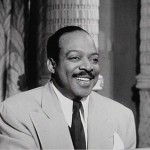
William “Count” Basie (August 21, 1904 – April 26, 1984)
was an American jazz pianist, organist, bandleader, and composer. Basie led his jazz orchestra almost continuously for nearly 50 years. Many notable musicians came to prominence under his direction, including tenor saxophonists Lester Young and Herschel Evans, guitarist Freddie Green, trumpeters Buck Clayton and Harry “Sweets” Edison and singers Jimmy Rushing and Joe Williams. Basie’s theme songs were “One O’Clock Jump” and “April In Paris”.
Count_Basie_in_Rhythm_and_Blues_Revue
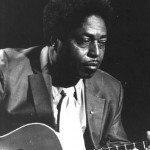
Johnny Shines (April 26, 1915 – April 20, 1992)
was an American blues singer and guitarist. According to the music journalist Tony Russell, “Shines was that rare being, a blues artist who overcame age and rustiness to make music that stood up beside the work of his youth. When Shines came back to the blues in 1965 he was 50, yet his voice had the leonine power of a dozen years before, when he made records his reputation was based on”.
johnny shines
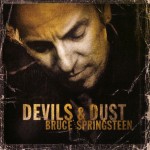
 Devils & Dust is the 13th studio album by American recording artist Bruce Springsteen, and his third folk album (after Nebraska and The Ghost of Tom Joad). It was released on April 25, 2005 in Europe and on April 26 in the US. It debuted at the top of the US Billboard 200 album chart.  bruce devil and dust
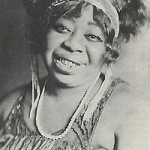
Ma Rainey (April 26, 1886? – December 22, 1939)
was one of the earliest known American professional blues singers and one of the first generation of such singers to record. She was billed as The Mother of the Blues.
MaRainey
Duane Eddy (born April 26, 1938)
is a Grammy Award-winning American guitarist. In the late 1950s and early 1960s he had a string of hit records, produced by Lee Hazlewood, which were noted for their characteristically “twangy” sound, including “Rebel Rouser”, “Peter Gunn”, and “Because They’re Young”. He was inducted into the Rock and Roll Hall of Fame in 1994.
 duane eddy


– Hallgeir

Bob Dylan’s Blind Willie McTell cover versions audio and video

Blind-Willie-McTell cover versions

Well, God is in heaven And we all want what’s his 
But power and greed and corruptible seed Seem to be all that there is

Blind Willie McTell was voted the best 80s song in our little poll, deservedly so.

Blind Willie McTell” is a song by Bob Dylan, titled after the blues singer Blind Willie McTell. It was recorded in 1983 but left off Dylan’s album Infidels and officially released in 1991 on the The Bootleg Series Volumes 1–3 (Rare & Unreleased) 1961–1991. The melody has a resemblance to  “St. James Infirmary Blues”. For the song, Dylan, seated at the piano and accompanied by Mark Knopfler on the twelve-string acoustic guitar, sings a series of plaintive verses depicting allegorical scenes which reflect on the history of American music and slavery. Each verse ends with the same refrain: “Nobody can sing the blues like Blind Willie McTell”.

Following three albums with overt Christian themes, Infidels struck most major rock critics as dealing largely with secular concerns, and they hailed it as a comeback. The mysterious exclusion of “Blind Willie McTell” complicates the story. When bootleggers released the outtakes from Infidels, the song was recognized as a composition approaching the quality of such classics as “Tangled Up In Blue”, “Like a Rolling Stone” and “All Along the Watchtower”.

Bob Dylan – Blind Willie McTell (audio, Bootleg series 1-3):

This is the spookiest important record since Heartbreak Hotel, and is built upon the perfect interweaving of guitar, piano, voice and silence – an interweaving that has the space for the lovely clarity of single notes – a guitar string stroking the air here, a piano note pushing back the distance there. And if anything, the still-unreleased performance is even better,  for its more original melody (less dependent upon the conventional St. James Infirmary structure) and its incandescent vocal, which soars to possess the heights of reverie and inspiration. No one can sing the blues like Blind Willie McTell, but no one can write or sing a blues like Blind Willie McTell like Bob Dylan.
– Michael Gray

Bob Dylan – Blind Willie McTell (audio, electric version):

“One of Bob Dylan’s absolute masterpieces, “Blind Willie McTell” is the jewel of The Bootleg Series and arguably one of the finest songs ever written. Recorded in 1983 for the album Infidels, it was deemed superfluous to requirements, and all that remains is one take of the song with a full band (yet to be officially released) and this haunting demo, with Dylan playing piano with accompaniment from Mark Knopfler.”
– Thomas Ward (allmusic)

The best!

Now let’s listen to 10 very good takes on Blind Willie McTell!

Continue reading Bob Dylan’s Blind Willie McTell cover versions audio and video