Van Morrison Summer Setlists, Statistics & videos – UPDATED

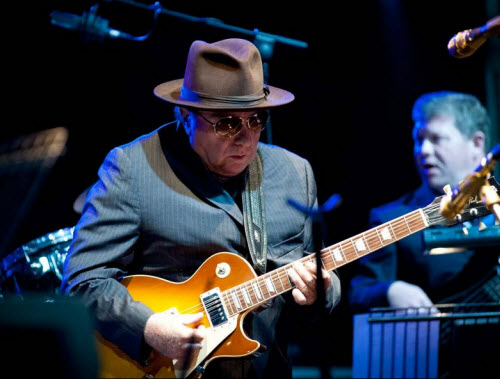
van morrison 201318-July-2013 – Hebridean Celtic Festival – Stornoway, Scotland

In order to prepare well for an upcoming Van Morrison concert @ Notodden Blues Festival in early August, I’ve collected setlists & put together some statistics from this summer’s concerts. Videos are also embedded in this post.

Summer Tour 2013

  • Castleward Bread Festival – May 26
  • Dunluce Castle 7th June, 2013
  • Dunluce Castle 8th June, 2013 —
  • Cornbury Festival, Oxford – July 7
  • Larmer Tree Festival, Salisbury – July 17
  • Heb Celt Festival, Stornoway – July 18
  • Slieve Donard Resort & Spa, Belfast – 21 July
  • Slieve Donard Resort & Spa, Belfast – 22 July
  • Notodden Blues Festival, Notodden (Norway) – 2 August

 Setlists – July:

Slieve Donard Resort & Spa, Belfast – 22 July

  1. Coney Island
  2. Celtic Excavation
  3. Into the Mystic
  4. In the Garden
  5. What Am I Living For
  6. Playhouse
  7. Sometimes We Cry
  8. Going Down to Monte Carlo
  9. Retreat and View
  10. Haunts of Ancient Peace
  11. Common One
  12. Enlightenment
  13. Thanks For The Information
  14. Baby Please Don’t Go/Rock Island Line/Boogie Chillin
  15. Help Me
  16. Gloria

Slieve Donard Resort & Spa, Belfast – 21 July

  1. Coney Island
  2. Higher Than The World
  3. Stranded
  4. Pay The Devil
  5. What Am I Living For
  6. Open The Door (To Your Heart)
  7. Have I Told You Lately
  8. Stormy Monday/Lonely Avenue
  9. Sometimes We Cry
  10. Playhouse
  11. Going Down to Monte Carlo
  12. Retreat and View
  13. Fame
  14. Too Many Myths
  15. Take Your Hand Outta My Pocket
  16. Whenever God Shines His Light
  17. Help Me
  18. Gloria

Heb Celt Festival, Stornoway – July 18

sorry… can’t find VM’s setlist for this concert…. yet…

Larmer Tree Festival, Salisbury – July 17

  1. Avalon Of The Heart
  2. Got To Go Back
  3. The Mystery
  4. Days Like This
  5. Baby Please Don’t Go
  6. Here Comes The Night
  7. Moondance
  8. What Am I Living For
  9. Playhouse
  10. Tupelo Honey
  11. Open The Door (To Your Heart)
  12. Sometimes We Cry
  13. Brown Eyed Girl
  14. In The Garden
  15. Haunts Of Ancient Peace
  16. Whenever God Shines His Light
  17. Help Me
  18. Gloria

Cornbury Festival, Oxford – July 7

  1. Only A Dream
  2. Precious Time
  3. Baby Please Don’t Go
  4. Days Like This
  5. Moondance
  6. Jackie Wilson Said
  7. Real Real Gone
  8. Here Comes the Night
  9. Have I Told You Lately
  10. Help Me
  11. My Pagan Heart
  12. I Can’t Stop Loving You
  13. Crazy Love
  14. Whenever God Shines His Light
  15. Brown Eyed Girl
  16. Gloria

Statistics – after 7* concerts:

*8 concerts played, but I miss one setlist..
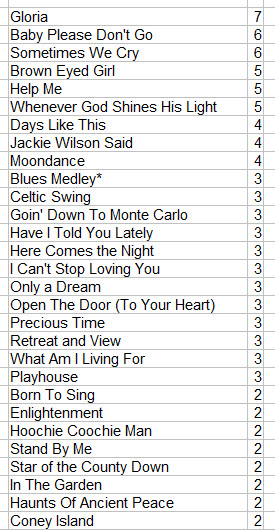
van morrison statistikk

The clips from this tour shows he’s in excellent form… 

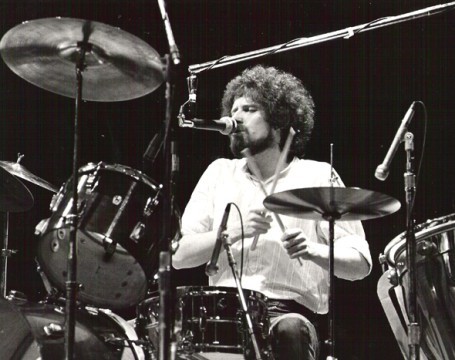
Today: Don Henley is 66

Donald Hugh “Don” Henley (born July 22, 1947, in Gilmer, Texas) is an American singer, songwriter and drummer, best known as a founding member of the Eagles before launching a successful solo career. Henley was the drummer and lead vocalist for the Eagles from 1971–1980, when the band broke up. Henley sings lead vocals on Eagles hits such as “Witchy Woman”, “Desperado”, “Best of My Love”, “One of These Nights”, “Hotel California”, “Life in the Fast Lane”, and “The Long Run”. He and Glenn Frey formed one of the most successful songwriting partnerships in music history.

The Eagles are an American rock band formed in Los Angeles, California in 1971 by Glenn Frey, Don Henley, Bernie Leadon, and Randy Meisner.

With five number one singles, six Grammys, five American Music Awards, and six number one albums, the Eagles were one of the most successful musical acts of the 1970s. At the end of the 20th century, two of their albums, Their Greatest Hits (1971–1975) and Hotel California, ranked among the 20 best-selling albums in the U.S. according to the Recording Industry Association of America. Hotel California is ranked 37th in Rolling Stone’s 500 Greatest Albums of All Time, and the band was ranked #75 on the magazine’s 2004 list of the 100 Greatest Artists of All Time.

Awards:

  • Eagles have won six Grammy Awards:
    • (1975) Best Pop Vocal Performance by a Duo, Group or Chorus: “Lyin’ Eyes”
    • (1977) Record of the Year: “Hotel California” (single)
    • (1977) Best Arrangement for Voices: “New Kid in Town”
    • (1979) Best Rock Vocal Performance by a Duo or Group: “Heartache Tonight”
    • (2008) Best Country Performance by a Duo or Group with Vocals: “How Long”
    • (2009) Best Pop Instrumental Performance: “I Dreamed There Was No War”
  • The group was inducted into the Rock and Roll Hall of Fame in 1998.
  • On December 7, 1999 the Recording Industry of America honored the group with the Best Selling Album of the Century for Their Greatest Hits (1971–1975).
  • Eagles were inducted into the Vocal Group Hall of Fame in 2001.
  • The group ranked number 34 on Country Music Television’s 40 Greatest Men of Country Music in 2003. They were one of four artists who were either a duo or a group on the list with the others being Alabama at number eleven, Flatt & Scruggs at number 24, and Brooks & Dunn at number 25.
Take it easy – central Park, NYC 1972:

Album of the day:

Other july-22:

Continue reading Today: Don Henley is 66

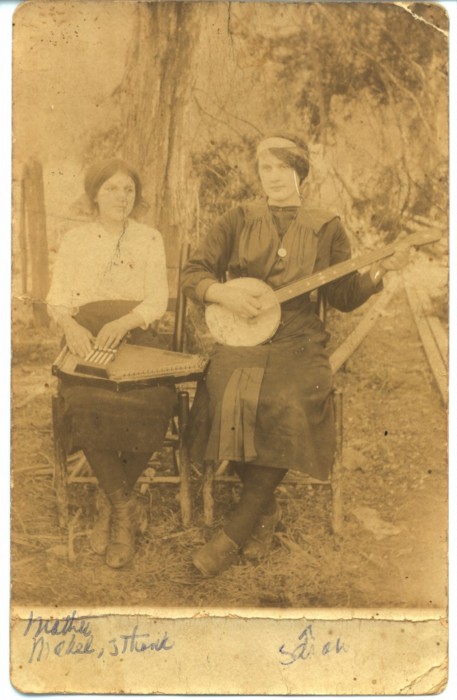
Today: The late Sara Carter was born in 1898 – 115 years ago

sara_carterSara Carter (with banjo)

Sara Carter (July 21, 1898 – January 8, 1979) was an American Country music musician. Known for her deep and distinctive singing voice, she was the lead singer on most of the recordings of the historic Carter Family act in the 1920s and 1930s.

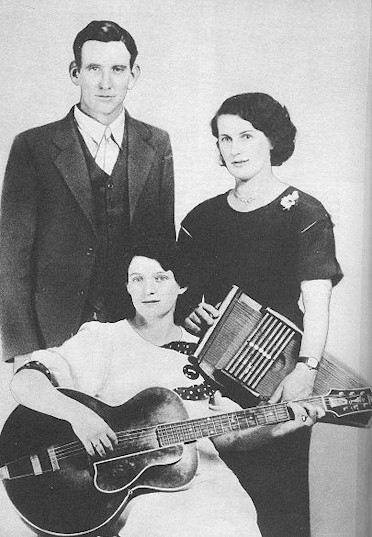
The Carter Family:

The Carter Family was a traditional American folk music group that recorded between 1927 and 1956. Their music had a profound impact on bluegrass, country, Southern Gospel, pop and rock musicians as well as on the U.S. folk revival of the 1960s. They were the first vocal group to become country music stars. Their recordings of such songs as “Wabash Cannonball”, “Can the Circle Be Unbroken”, “Wildwood Flower” and “Keep On the Sunny Side” made them country standards.

BBC Documentary on Country Music – here is 15 glorious minutes about The Carter Family:

The original group consisted of Alvin Pleasant “A.P.” Delaney Carter (1891–1960), his wife Sara Dougherty Carter (1898–1979), and his sister-in-law Maybelle Addington Carter (1909–1978). Maybelle was married to A.P.’s brother Ezra (Eck) Carter and was also Sara’s first cousin. All three were born and raised in southwestern Virginia, where they were immersed in the tight harmonies of mountain gospel music and shape note singing.

This is an excerpt from the upcoming music documentary The Winding Stream – The Carters, the Cashes and the Course of Country Music (we were participating in the funding of this kickstarter project). It tells the story of how A.P. Carter met his future wife Sara while selling fruit trees in the hills of southwest Virginia:

Throughout the group’s career, Sara Carter sang lead vocals; Maybelle sang harmony and accompanied the group instrumentally; on some songs A.P. did not perform at all but at times sang harmony and background vocals and once in a while, lead vocal. Maybelle’s distinctive guitar playing style became a hallmark of the group.

Legacy:

  • The Carter Family was elected to the Country Music Hall of Fame in 1970 and were given the nickname “The First Family of Country Music”.
  •  In 1988, the Carter Family was inducted into the Grammy Hall of Fame and received its Award for the song “Will the Circle Be Unbroken”.
  • In 1993, the U.S. Postal Service issued a commemorative postage stamp honoring A.P., Sara, and Maybelle.
  • In 2001, the group was inducted into the International Bluegrass Music Hall of Honor.
  • In 2005, the group received the Grammy Lifetime Achievement Award.

Mother Maybelle & Sara Carter – While The Band Plays Dixie:

Album of the day:


Other July-21:

Continue reading Today: The late Sara Carter was born in 1898 – 115 years ago

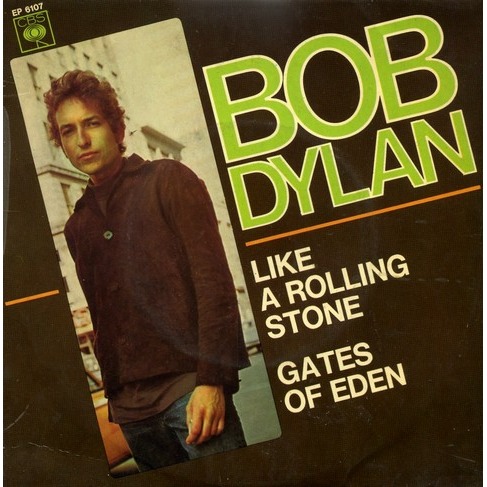
Today: Bob Dylan released Like A Rolling Stone in 1965

Bob-Dylan-like-a-rolling-stone

“This is about growing up, this is about discovering what is going on around you, realizing that life isn’t all you’ve been told. So now you’re without a home, you’re on your own, complete unknown, like a rolling stone. That’s a liberating thing. This is a song about liberation.”
— Jann Wenner, Rolling Stone magazine (Greil Marcus – Like A Rolling Stone: Bob Dylan at the Crossroads (book))

“The first time I heard Bob Dylan, I was in the car with my mother listening to WMCA, and on came that snare shot that sounded like somebody had kicked open the door to your mind” – Bruce Springsteen (Jan 1988)

“When I heard Like a Rolling Stone, I wanted to quit the music business because I felt: ‘If this wins and it does what it’s supposed to do, I don’t need to do anything else.'”
– Frank Zappa (1965 )

The first time I really listened to “Like A Rolling Stone”, I felt I entered a parallel universe.. a place of intense beauty.. a place filled with this wonderful blues-fueled rock music… and a spellbinding ..organ! I had never heard anything like it.. anything this good..

That was the day I understood that there is bad music, good music, great music & then there is Bob Dylan. He plays in another league. His musical universe is still as beautiful now as it was first time I flew into it.. “Like A Rolling Stone” still sounds as fresh as it did the first time I listened ~25 years ago. (Egil, Johannasvisions)

Like A  Rolling Stone:

Everything is changed now from before. Last spring I guess I was going to quit singing. I was very drained and the way things were going it was a very draggy situation – I mean, when you do Everybody Loves You For Your Black Eye and meanwhile the back of your head is caving in. Anyway, I was playing a lot of songs I didn’t want to play. I was singing words I didn’t really want to sing. I don’t mean words like “God” and “mother” and “president” and “suicide” and “meat cleaver”. I mean simple little words like “if” and “hope” and “you”. 

But Like A Rolling Stone changed it all; I didn’t care any more after that about writing books or poems or whatever. I mean it was something that I myself could dig. 

It’s very tiring having other people tell you how much they dig you if you yourself don’t dig you. It’s also very deadly entertainment-wise. Contrary to what some scary people think, I don’t play with a band now for any kind of propaganda-type or commercial-type reasons. It’s just that my songs are pictures and the band makes the sound of the pictures.
-Bob Dylan (to Nat Hentoff – March 1966)

Like A Rolling Stones (Live at London’s Albert Hall, May, 1966):

“Like A Rolling Stone” was recorded @ the second “Highway 61 Revisited” recording sessions on June 16 – 1965,  produced by Tom Wilson.

“The voice is infinitely nuanced — at times almost an authoritarian monotone (not unlike Ginsberg reading “Howl”), at times compassionate, tragic (the voice of Jacques-Louis David in his painting of Marat) — but also angry, vengeful, gleeful, ironic, weary, spectral, haranguing.

And it would sound this way in ancient Greek or contemporary Russian. There is so much desire and so much power in this voice, translated into a sensitivity that enables it to detect tiny vibrations…”
—  Michael Pisaro (composer)

Like a Rolling Stone” is a 1965 song by the American singer-songwriter Bob Dylan. Its confrontational lyrics originate in an extended piece of verse Dylan wrote in June 1965, when he returned exhausted from a grueling tour of England. After the lyrics were heavily edited, “Like a Rolling Stone” was recorded a few weeks later as part of the sessions for the forthcoming album Highway 61 Revisited.

During a difficult two-day pre-production, Dylan struggled to find the essence of the song, which was demoed without success in 3/4 time. A breakthrough was made when it was tried in a rock music format, and rookie session musician Al Kooper improvised the organ riff for which the track is known.

However, Columbia Records was unhappy with both the song’s length at over six minutes and its heavy electric sound, and was hesitant to release it. It was only when a month later a copy was leaked to a new popular music club and heard by influential DJs that the song was put out as a single. Although radio stations were reluctant to play such a long track, “Like a Rolling Stone” reached number two in the US charts and became a worldwide hit. (Wikipedia)

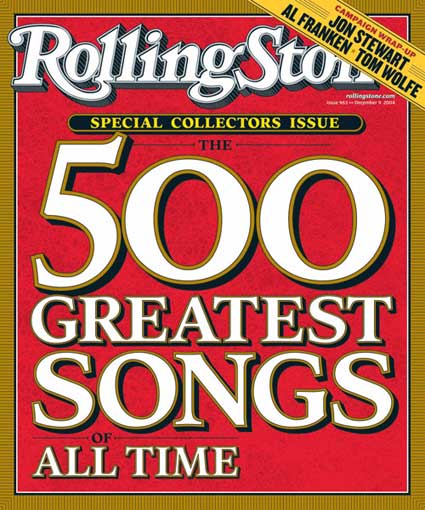
In 2004 Rolling Stone magazine placed the song at number one on its list of “The 500 Greatest Songs of All Time”
RS_963_-_RS_500_Songs_cover_-_gallery_-_lg.6635701

Like A Rolling Stone, Manchester 1966:

Other 20 July:

Continue reading Today: Bob Dylan released Like A Rolling Stone in 1965

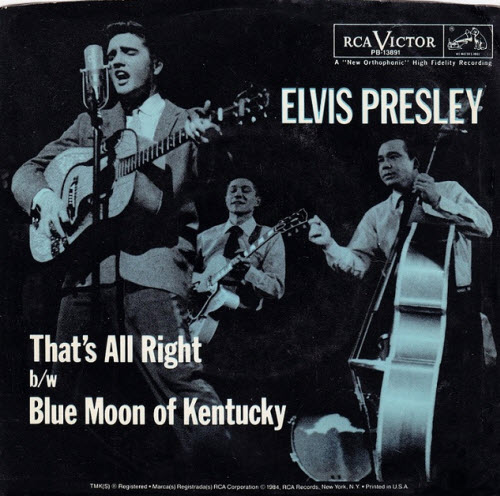
Today: Elvis Presley released “That’s All Right” in 1954 – 59 years ago

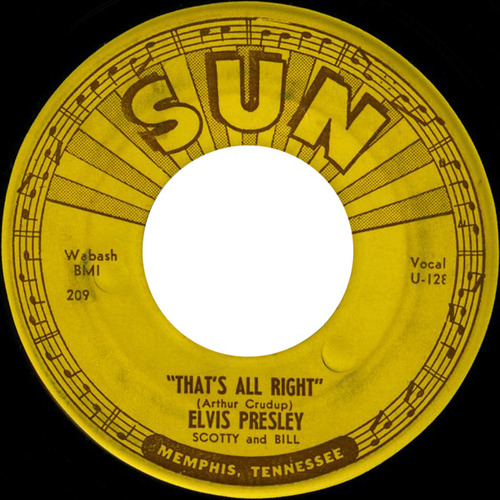
elvis presley that's all right single

In 2004, Elvis Presley’s “That’s All Right Mama” and Bill Haley’s “Rock Around the Clock” both celebrated their 50th anniversaries. Rolling Stone Magazine felt that Presley’s song was the first rock and roll recording. At the time Presley recorded the song, Big Joe Turner’s “Shake, Rattle & Roll”, later covered by Haley, was already at the top of the Billboard R&B charts. The Guardian felt that while there were rock’n’roll records before Presley’s, his recording was the moment when all the strands came together in “perfect embodiment”. (wikipedia)

“A lot of people seem to think I started this business, but rock ‘n’ roll was here a long time before I came along. Nobody can sing that kind of music like colored people. Let’s face it; I can’t sing it like Fats Domino can. I know that. But I always liked that kind of music.”
~Elvis Presley

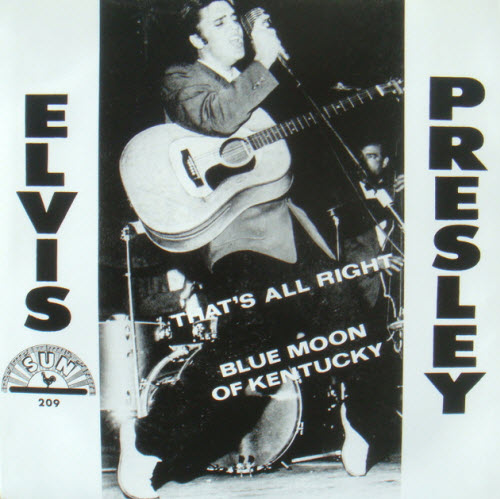
elvis presley that's all right single2

Wikipedia:

B-side “Blue Moon of Kentucky”
Released 19 July 1954
Format 7″ single
Recorded 5 July 1954
Genre Rockabilly
Length 1:57
Label Sun
Writer(s) Arthur Crudup
Producer Sam Phillips

That’s All Right” is the name of the first commercial single released by Elvis Presley, written and originally performed by blues singer Arthur Crudup. Presley’s version was recorded on 5 July 1954, and released on 19 July 1954 with “Blue Moon of Kentucky” as the B-side. It is #112 on the 2004 Rolling Stone magazine list of the “500 Greatest Songs of All Time”.

Arthur Crudup – That’s All Right (original version):

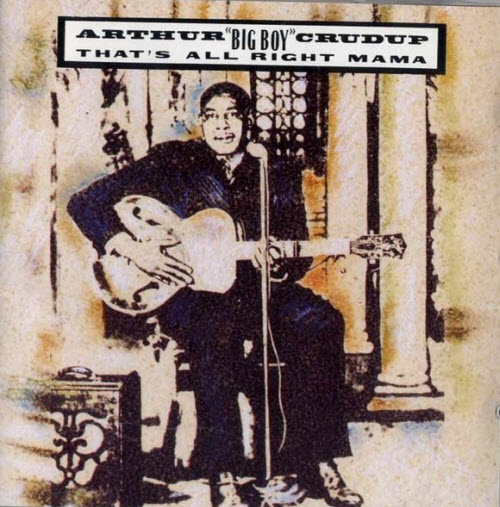
arthur crudup

The song was written by Arthur “Big Boy” Crudup, and originally recorded by him in Chicago on 6 September 1946, as “That’s All Right”. It was released as a single on RCA Victor 20-2205, but was less successful than some of Crudup’s previous recordings. In early March 1949, the song was re-released under the title, “That’s All Right, Mama” (RCA Victor 50-0000), which was issued as RCA’s first rhythm and blues record on their new 45 rpm single format, on bright orange vinyl.

Elvis Presley’s version was recorded in July 1954, and released with “Blue Moon of Kentucky” as the B-side. Its catalogue number was Sun 209. The label reads “That’s All Right” (omitting “Mama” from the original title), and names the performers as Elvis Presley,Scotty and Bill. Arthur Crudup was credited as the composer on the label of Presley’s single, but Crudup had to wait until the 1960s when he received an estimated $60,000 in back royalties. Crudup used lines in his song that had been present in earlier blues recordings, including Blind Lemon Jefferson’s 1926 song That Black Snake Moan”.

elvis presley that's all right single

Live @ NBC Studio’s 1968:

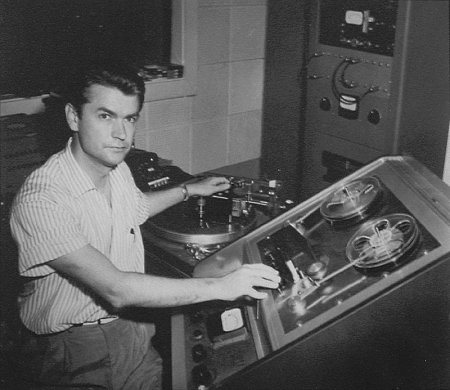
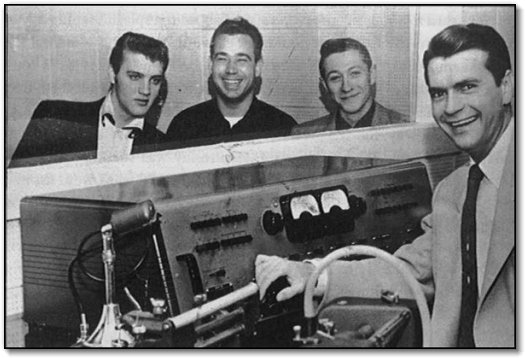
During an uneventful recording session at Sun Studios on the evening of July 5, 1954, Presley, Moore, and Black were taking a break between recordings when Presley started fooling around with an up-tempo version of Arthur Crudup’s song “That’s All Right, Mama”. Black began joining in on his upright bass, and soon they were joined by Moore on guitar. Producer Sam Phillips, taken aback by this sudden upbeat atmosphere, asked the three of them to start again so he could record it.

sam phillips prestoampex

Black’s bass and guitars from Presley and Moore provided the instrumentation. The recording contains no drums or additional instruments. The song was produced in the style of a “live” recording (all parts performed at once and recorded on a single track). The following evening the trio recorded “Blue Moon of Kentucky” in a similar style, and it was selected as the B-side to “That’s All Right”.

Upon finishing the recording session, according to Scotty Moore, Bill Black remarked, “Damn. Get that on the radio and they’ll run us out of town.

Elvis Sam Phillips Scotty moore Bill blackAt Sun

Sam Phillips gave copies of the record to local disc jockeys Dewey Phillips (no relation) of WHBQ, Uncle Richard of WMPS, and Sleepy Eyed John Lepley of WHHM. On July 7, 1954, Dewey Phillips played “That’s All Right” on his popular radio show “Red, Hot & Blue”. 

Interest in the record was so intense that Dewey reportedly played the record 14 times and received over 40 telephone calls. Presley was persuaded to go to the station for an on-air interview that night. 

“That’s All Right” was officially released on July 19, 1954, and sold around 20,000 copies. This number was not enough to chart nationally, but the single reached number four on the local Memphis charts.

Live – That’s The Way It Is (1970):

Album of the day – Sunrise:

elvis_presley-sunrise-front

Other July 19:

Continue reading Today: Elvis Presley released “That’s All Right” in 1954 – 59 years ago