Category Archives: Music Calendar

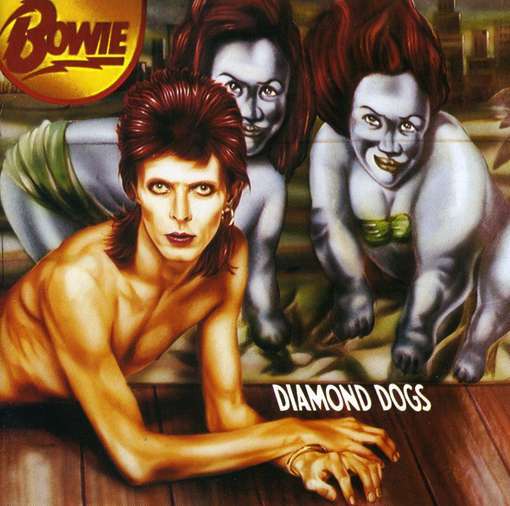
Today: David Bowie released Diamond Dogs in 1974 – 39 years ago

david bowie diamond dogs

Throughout the album, there are hints that he’s tired with the Ziggy formula, particularly in the disco underpinning of “Candidate” and his cut-and-paste lyrics. However, it’s not enough to make Diamond Dogs a step forward, and without Mick Ronson to lead the band, the rockers are too stiff to make an impact. Ironically, the one exception is one of Bowie’s very best songs — the tight, sexy “Rebel Rebel.”
~Stephen Thomas Erlewine (allmusic.com)

When this came out in 1974, it was roundly dismissed as Ziggy Stardust’s last strangled gasp. In hindsight, Diamond Dogs is marginally more worthwhile; its resigned nihilism inspired interesting gloom and doom from later goth and industrial acts such as Bauhaus and Nine Inch Nails.
~Mark Kemp (rollingstone.com in 2004)

#2 – Diamond Dogs:

Well.. most the critics dismissed (and still – in hindsight – dismisses) this album. I’ve always liked it. Best to play it all through in one sitting…

Wikipedia:

Released 24 April 1974
Recorded October 1973 – February 1974 at Olympic Studios and Island Studios, London, and Ludolf Studios, Hilversum, Netherlands
Genre Rock, glam rock
Length 38:25
Label RCA
Producer David Bowie

Diamond Dogs is a concept album by David Bowie, originally released in 1974 on RCA Records, his eighth album. Thematically, it was a marriage of the novel Nineteen Eighty-Four by George Orwell and Bowie’s own glam-tinged vision of a post-apocalyptic world. Bowie had wanted to make a theatrical production of Orwell’s book and began writing material after completing sessions for his 1973 album Pin Ups, but the late author’s estate denied the rights. The songs wound up on the second half of Diamond Dogs instead where, as the titles indicated, the Nineteen Eighty-Four theme was prominent.
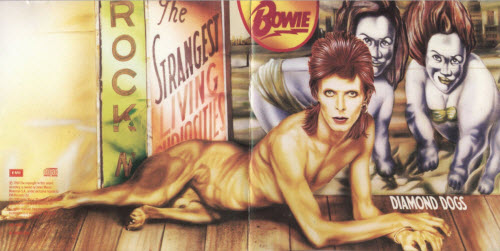
david bowie diamond dogs 2

#6 – Rebel Rebel:

Although Diamond Dogs was the first Bowie album since 1969 to not feature any of the ‘Spiders from Mars’, the backing band made famous by Ziggy Stardust, many of the arrangements were already worked out and played on tour with Mick Ronson prior to the studio recordings, including “1984” and “Rebel Rebel”.

In the studio, however, Herbie Flowers played bass with drums being shared between Aynsley Dunbar and Tony Newman. In a move that surprised some commentators, Bowie himself took on the lead guitar role previously held by Mick Ronson, producing what NME critics Roy Carr and Charles Shaar Murraydescribed as a “scratchy, raucous, semi-amateurish sound that gave the album much of its characteristic flavour”. Diamond Dogs was also a milestone in Bowie’s career as it reunited him with Tony Visconti, who provided string arrangements and helped mix the album at his own Good Earth Studios in London, on a Trident B-range console, brand new from Trident at the time. Visconti would go on to co-produce much of Bowie’s work for the rest of the decade.
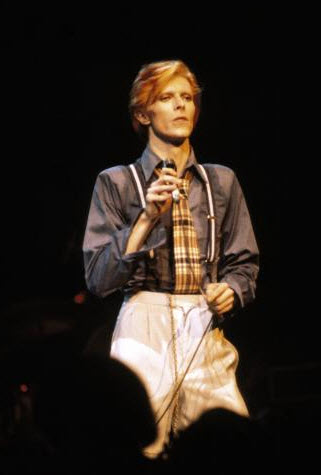
david bowie diamond dogs tour

#7 – Rock’n Roll With Me:

The record was Bowie’s glam swansong; according to author David Buckley, “In the sort of move which would come to define his career, Bowie jumped the glam-rock ship just in time, before it drifted into a blank parody of itself”. At the time of its release Bowie described Diamond Dogsas “a very political album. My protest … more me than anything I’ve done previously”.

Diamond Dogs’ raw guitar style and visions of urban chaos, scavenging children and nihilistic lovers (“We’ll buy some drugs and watch a band / And jump in the river holding hands”) have been credited with anticipating the punk revolution that would take place in the following years.

Track Listing:

All songs written by David Bowie, except where noted.[14]

  1. “Future Legend” – 1:05
  2. “Diamond Dogs” – 5:56
  3. “Sweet Thing” – 3:39
  4. “Candidate” – 2:40
  5. “Sweet Thing (Reprise)” – 2:31
  6. “Rebel Rebel” – 4:30
  7. “Rock ‘n’ Roll with Me” (lyrics: Bowie; music: Bowie, Warren Peace) – 4:00
  8. “We Are the Dead” – 4:58
  9. “1984” – 3:27
  10. “Big Brother” – 3:21
  11. “Chant of the Ever Circling Skeletal Family” – 2:00
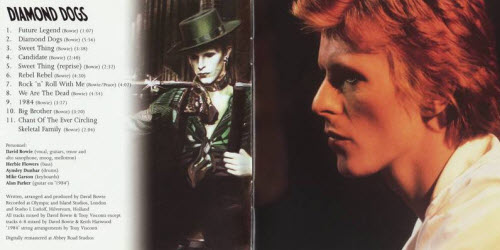
david bowie diamond dogs 3


Personnel:

  • David Bowie – vocals, guitars, saxes, Moog synthesizer, Mellotron, producer, mixing engineer
  • Earl Slick – guitar on “Rock ‘n’ Roll with Me”
  • Mike Garson – keyboards
  • Herbie Flowers – bass guitar
  • Tony Newman – drums
  • Aynsley Dunbar – drums
  • Alan Parker – guitar on “1984”
  • Tony Visconti – strings, mixing engineer
  • Keith Harwood – engineer, mixing engineer

Playlist of the day:

Other APR-24:

Continue reading Today: David Bowie released Diamond Dogs in 1974 – 39 years ago
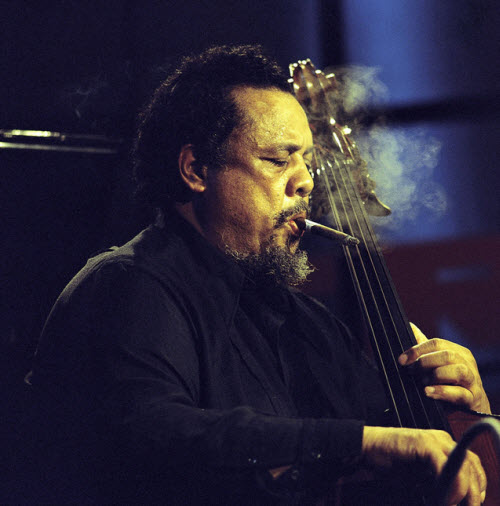
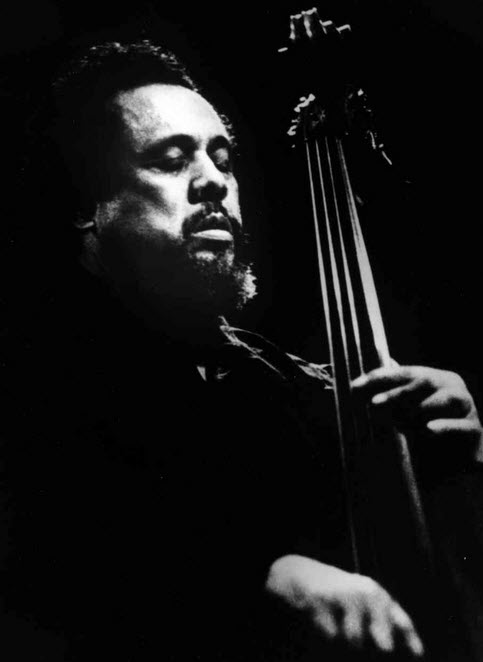
Today: The late Charles Mingus was born in 1922 – 91 years ago

charles mingus2

Just because I’m playing jazz I don’t forget about me. I play or write me the way I feel through jazz, or whatever. Music is, or was, a language of the emotions.
~Charles Mingus

Anyone can make the simple complicated. Creativity is making the complicated simple.
~Charles Mingus

Irascible, demanding, bullying, and probably a genius, Charles Mingus cut himself a uniquely iconoclastic path through jazz in the middle of the 20th century, creating a legacy that became universally lauded only after he was no longer around to bug people.
~Richard S. Ginell (allmusic.com)

Goodbye Pork Pie Hat – Live at Montreux 1975:

Wikipedia:

Birth name Charles Mingus Jr.
Born April 22, 1922
US Army Base in Nogales, Arizona, United States
Origin Los Angeles, California, United States
Died January 5, 1979 (aged 56)
Cuernavaca, Mexico
Genres Jazz, hard bop, bebop, avant-garde jazz, post-bop, Third Stream, gospel, orchestral jazz, free jazz
Occupations Double bassist, composer, bandleader
Instruments Double bass, piano, cello, trombone
Years active 1943–1979

Charles Mingus Jr. (April 22, 1922 – January 5, 1979) was a highly influential American jazz double bassist, composer and bandleader. Mingus’s compositions retained the hot and soulful feel of hard bop and drew heavily from black gospel music while sometimes drawing on elements of Third Stream, free jazz, and classical music. Yet Mingus avoided categorization, forging his own brand of music that fused tradition with unique and unexplored realms of jazz. He once cited Duke Ellington and church as his main influences.

Mingus focused on collective improvisation, similar to the old New Orleans jazz parades, paying particular attention to how each band member interacted with the group as a whole. In creating his bands, Mingus looked not only at the skills of the available musicians, but also their personalities. Many musicians passed through his bands and later went on to impressive careers. He recruited talented and sometimes little-known artists whom he assembled into unconventional and revealing configurations. As a performer, Mingus was a pioneer in double bass technique, widely recognized as one of the instrument’s most proficient players.

charles mingus

Charles Mingus Sextet featuring Eric Dolphy – Take The A Train (Live in Oslo – Norway 1964):

Nearly as well known as his ambitious music was Mingus’ often fearsome temperament, which earned him the nickname “The Angry Man of Jazz”. His refusal to compromise his musical integrity led to many on-stage eruptions, exhortations to musicians, and dismissals. Because of his brilliant writing for mid-size ensembles, and his catering to and emphasizing the strengths of the musicians in his groups, Mingus is often considered the heir of Duke Ellington, for whom he expressed great admiration. Indeed, Dizzy Gillespie had once claimed Mingus reminded him “of a young Duke”, citing their shared “organizational genius”.

Mingus’ music was once believed to be too difficult to play without Mingus’ leadership. However, many musicians play Mingus compositions today, from the repertory bands Mingus Big Band, Mingus Dynasty, and Mingus Orchestra, to the high school students who play the charts and compete in the Charles Mingus High School Competition.

charles_mingus_std

Orange Was The Color Of Her Dress, Then Blue Silk (Live in Oslo 1964):

Gunther Schuller has suggested that Mingus should be ranked among the most important American composers, jazz or otherwise. In 1988, a grant from the National Endowment for the Arts made possible the cataloging of Mingus compositions, which were then donated to the Music Division of the New York Public Library for public use. In 1993, The Library of Congress acquired Mingus’s collected papers—including scores, sound recordings, correspondence and photos—in what they described as “the most important acquisition of a manuscript collection relating to jazz in the Library’s history”.

Mingus: Charlie Mingus 1968” (Thomas Reichman documentary) – 58min:

Playlist of the day

Other APR-22:

Continue reading Today: The late Charles Mingus was born in 1922 – 91 years ago

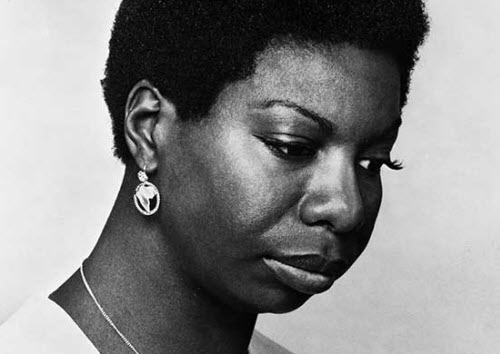
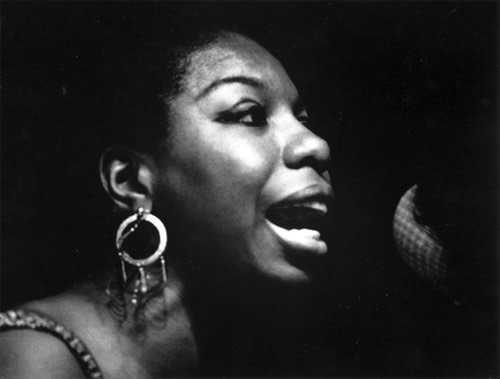
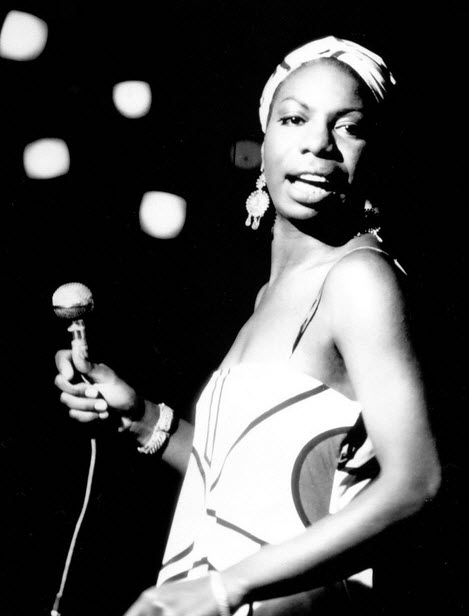
Today: Nina Simone passed away in 2003 – 10 years ago

nina_simone 2

Jazz is a white term to define black people. My music is black classical music.
~Nina Simone

Once I understood Bach’s music, I wanted to be a concert pianist. Bach made me dedicate my life to music, and it was that teacher who introduced me to his world.
~Nina Simone

Nina Simone was one of the most gifted vocalists of her generation, and also one of the most eclectic.
~Mark Deming (allmusic.com)

Ain’t Got No…I’ve Got Life:

Wikipedia:

Birth name Eunice Kathleen Waymon
Born February 21, 1933
Tryon, North Carolina, United States
Died April 21, 2003 (aged 70)
Carry-le-Rouet, Bouches-du-Rhône, France
Genres Jazz, blues, R&B, folk, gospel
Occupations Singer, songwriter, pianist,arranger, activist
Years active 1954–2003
Labels Bethlehem, Colpix, Philips, RCA Victor, CTI, Legacy Recordings
Website http://www.ninasimone.com/

Eunice Kathleen Waymon (February 21, 1933 – April 21, 2003), better known by her stage name Nina Simone /ˈniːnə sɨˈmoʊn/, was an American singer, songwriter, pianist, arranger, and civil rights activist widely associated with jazz music. Simone aspired to become a classical pianist while working in a broad range of styles including classical, jazz, blues, folk, R&B, gospel, and pop.

Born the sixth child of a preacher’s family in North Carolina, Simone aspired to be a concert pianist. Her musical path changed direction after she was denied a scholarship to the prestigious Curtis Institute of Music in Philadelphia, despite a well-received audition. Simone was later told by someone working at Curtis that she was rejected because she was black. When she began playing in a small club in Philadelphia to fund her continuing musical education and become a classical pianist she was required to sing as well. She was approached for a recording by Bethlehem Records, and her rendering of “I Loves You, Porgy” was a hit in the United States in 1958. Over the length of her career Simone recorded more than 40 albums, mostly between 1958—when she made her debut with Little Girl Blue—and 1974.

nina_simone

“Feelings” (Montreux Jazz Festival):

Her musical style arose from a fusion of gospel and pop songs with classical music, in particular with influences from her first inspiration, Johann Sebastian Bach, and accompanied with her expressive jazz-like singing in her characteristic contralto. She injected as much of her classical background into her music as possible to give it more depth and quality, as she felt that pop music was inferior to classical. Her intuitive grasp on the audience–performer relationship was gained from a unique background of playing piano accompaniment for church revivals and sermons regularly from the early age of six years old.

In the early 1960s, she became involved in the civil rights movement and the direction of her life shifted once again. Simone’s music was highly influential in the fight for equal rights in the United States. In later years, she lived abroad, finally settling in France in 1992.

nina_simone 3

Love Me Or Leave Me:

15 min clips from 1984 Interview:

Playlist of the day:

Other APR-21:

Continue reading Today: Nina Simone passed away in 2003 – 10 years ago

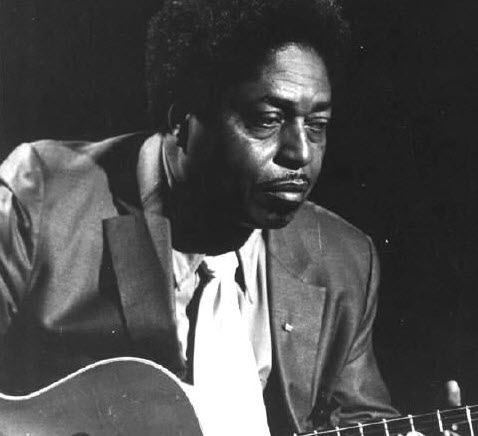
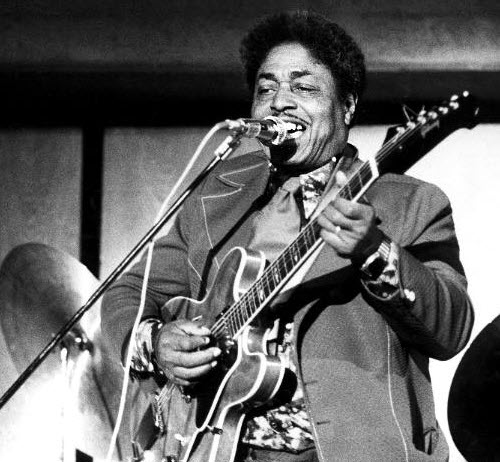
Today: Johnny Shines passed away in 1992 – 11 years ago

johnny shines

That’s what I am, a Delta bluesman. And now I’m considered the king of the Delta blues.
~Johnny Shines (1989 Living Blues Interview)

Best known as a traveling companion of Robert Johnson, Johnny Shines’ own contributions to the blues have often been unfairly shortchanged, simply because Johnson’s own legend casts such a long shadow. In his early days, Shines was one of the top slide guitarists in Delta blues, with his own distinctive, energized style; one that may have echoed Johnson’s spirit and influence, but was never a mere imitation.
~Steve Huey (allmusic.com)

Sweet Home Chicago:

Long before becoming a force in Chicago blues, Johnny Shines hoboed with Robert Johnson through Depression-era America. They hopped freights, played on street corners, shared rooms and whiskey, and made it as far north as Canada. Johnson, the Mississippi Delta’s most celebrated blues performer, perished in 1938, and for the next half-century, his spirit haunted the music of Johnny Shines. It echoed in his turnarounds, mournful bottleneck slides, impassioned lyrics, and falsetto moans. At clubs, house parties, and other gatherings, Johnny Shines was just as likely to launch into Johnson’s “Crossroads Blues,” “Terraplane Blues,” and “Sweet Home Chicago” as he was his own “Evil-Hearted Woman Blues,” “A Little Tenderness,” and “Evening Sun.”
~Jas Obrecht (jasobrecht.com)

johnny shines 2

Ramblin (live ~mid 1970’s):

Wikipedia:

Johnny Shines (April 26, 1915 – April 20, 1992) was an American blues singer and guitarist.

Birth name John Ned Shines
Born April 26, 1915
Frayser, Memphis, United States
Died April 20, 1992 (aged 76)
Genres Blues
Instruments guitar
Years active 1932–1992
Labels Chess Records
J.O.B. Records
Vanguard Records
Various

“Shines was that rare being, a blues artist who overcame age and rustiness to make music that stood up beside the work of his youth. When Shines came back to the blues in 1965 he was 50, yet his voice had the leonine power of a dozen years before, when he made records his reputation was based on”.
~Tony Russell

He was born John Ned Shines in Frayser, Memphis, United States. He spent most of his childhood in Memphis, Tennessee playing slide guitar at an early age in local “jukes” and for tips on the streets. He was “inspired by the likes of Charley Patton, Blind Lemon Jefferson, Lonnie Johnson, and the young Howlin’ Wolf”, but he was taught to play the guitar by his mother. Shines moved to Hughes, Arkansas in 1932 and worked on farms for three years putting his musical career on hold. It was a chance meeting with Robert Johnson, his greatest influence, that gave him the inspiration to return to music. In 1935, Shines began traveling with Johnson, touring the south and heading as far north as Ontario where they appeared on a local radio program. The two went their separate ways in 1937, one year before Johnson’s death.

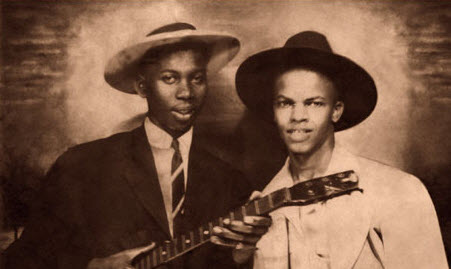
robert johnson johnny shinesRobert Johnson & Johnny Shines

Shines played throughout the southern United States until 1941 when he settled in Chicago. There Shines found work in the construction industry but continued to play in local bars.

Sittin’ on top of the world:

Check out –> Illustrated Johnny Shines discography

Playlist of the day:

Other APR-20:

Continue reading Today: Johnny Shines passed away in 1992 – 11 years ago

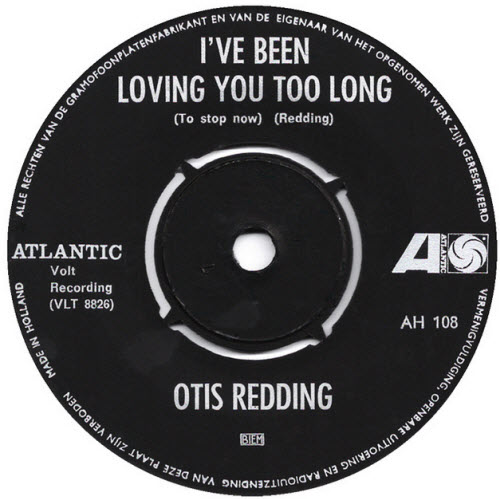
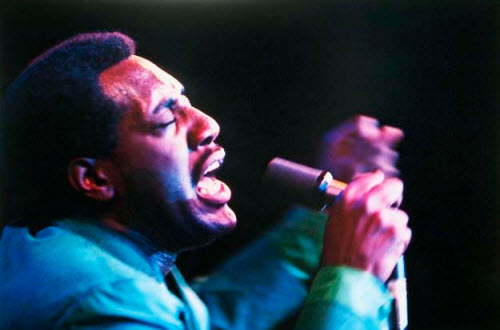
Today: Otis Redding released I’ve Been Loving You Too Long in 1965 – 48 years ago

otis redding i've been loving you

Otis Redding’s “I’ve Been Loving You Too Long” is an R&B hit love ballad of the ’60s that has lost none of its soulful power with the passing decades. Redding’s success with the single was second only to that of his ever-popular classic “Sittin’ on the Dock of the Bay.”
~Joslyn Lane (allmusic.com)

I’ve Been Loving You Too Long” became Redding’s first Top 40 single, in June 1965. And when Redding performed a scorching drawn-out version at the Monterey Pop Festival in 1967 — in front of the audience he called “the love crowd” — the single made the transition from hit to legend.
~rollingstone.com

I’ve Been Loving You Too Long (Monterey ’67):

otis redding 1967 montery

Wikipedia:

Released April 19, 1965
Format 7″ single
Recorded Miami: 1965
Genre Soul
Length 2:49 (mono version, April 1965)
3:09 (stereo version, July 1965)
Label Volt/Atco
V-126
Producer Otis Redding
Jerry Butler

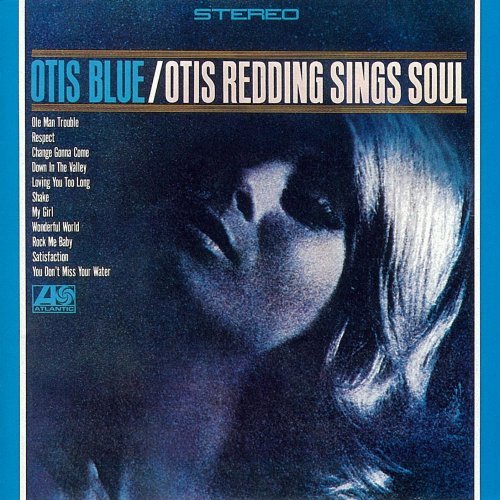
I’ve Been Loving You Too Long” (sometimes issued as “I’ve Been Loving You Too Long (To Stop Now)”) is a song written by Otis Redding and Jerry Butler. It appeared as the A-side of a 1965 hit single by Otis Redding – and subsequently appeared on his thirdalbum, Otis Blue: Otis Redding Sings Soul. Although Redding had been appearing in the U.S. Billboard Pop and R&B charts as early as 1962, this was his first big hit, reaching #21 on the Billboard Hot 100, and was his first Top 5 Billboard R&B chart, peaking at #2. The B-side of the single “Just One More Day,” was also a minor hit, reaching #15 on the R&B and #85 on the Pop chart. The song is ranked #110 on the Rolling Stone magazine’s list of The 500 Greatest Songs of All Time.

otis blue

Album version:

Lyrics:

I’ve Been Loving You Too Long (To Stop Now) by Otis Redding
I’ve been loving you too long to stop now

There were time and you want to be free
My love is growing stronger, as you become a habit to me
Oh I’ve been loving you a little too long
I dont wanna stop now, oh
With you my life,
Has been so wonderful
I can’t stop now

There were times and your love is growing cold
My love is growing stronger as our affair [affair] grows old
I’ve been loving you a little too long, long,
I don’t want to stop now
oh, oh, oh
I’ve been loving you a little bit too long
I don’t wanna stop now
No, no, no

Don’t make me stop now
No baby
I’m down on my knees Please, don’t make me stop now
I love you, I love you,
I love you with all of my heart
And I can’t stop now
Don’t make me stop now
Please, please don’t make me stop now
Good god almighty I love you
I love you, I love you, I love you
I love you, I love you
I love you in so many different ways…
I love you in so many different ways….

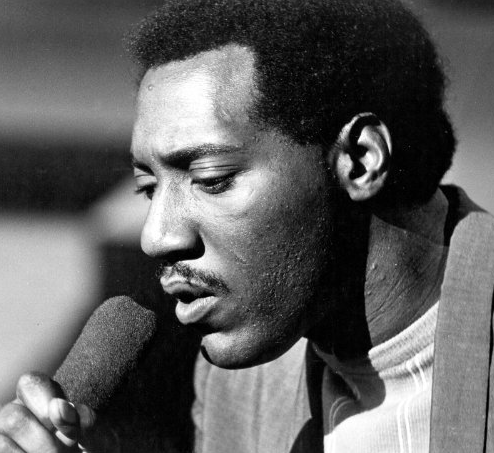
otis redding

Live 1967 – London:

Notable cover versions:

  • The first cover of the song was a recording by The Rolling Stones in 1965 — shortly after Redding’s original version became a hit.
  • The most widely known cover version of the song was by Ike & Tina Turner in 1968. It was the lead track from their 1968 Blue Thumb album entitled Outta Season.
    Live at Altamont Festival 1969:
  • Aretha Franklin recorded a cover for her album Young, Gifted and Black (1972).

Playlist of the day:

Other APR-19:

Continue reading Today: Otis Redding released I’ve Been Loving You Too Long in 1965 – 48 years ago